
Превращайте аналитические выводы ИИ в реальные действия

В тренде
Categories
Air India Dreamliner Grounded Over Technical Defect, Prompting Safety Review
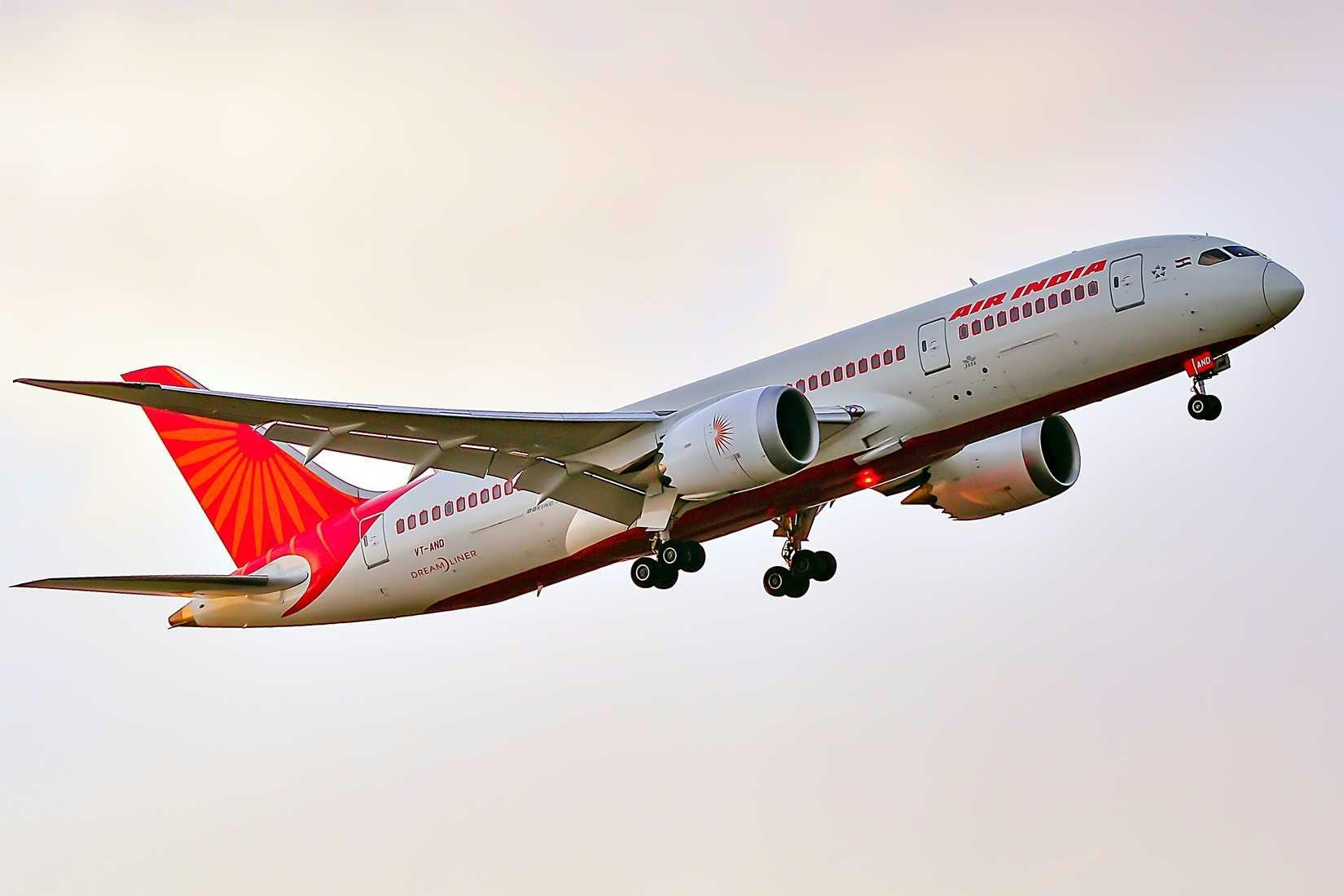
Air India Grounds Dreamliner Over Fuel Control Defect, Prompting Safety and Regulatory Review
New Delhi — Air India has grounded one of its Boeing 787 Dreamliners following the detection of a critical defect in the aircraft’s fuel control system. The issue was reported by the pilot of Flight AI-132, operating from London Heathrow to Bengaluru, who observed that the left engine’s fuel control switch failed to remain locked in the “RUN” position during engine start-up, instead intermittently shifting toward “CUTOFF.” This malfunction raised serious concerns about the risk of an in-flight engine shutdown, prompting immediate action from the airline.
Context and Safety Concerns
This grounding occurs amid intensified scrutiny of fuel control systems, which were implicated in the tragic crash of Air India Flight AI-171 on June 12, 2025, an accident that claimed 260 lives. The Safety Matters Foundation (SMF) highlighted that the recent defect closely mirrors the technical issues under investigation in last year’s disaster, emphasizing ongoing vulnerabilities within the Dreamliner’s operational systems.
Air India has informed India’s Directorate General of Civil Aviation (DGCA) and engaged Boeing for technical assistance. The airline maintains that prior fleet-wide inspections did not reveal any faults in the fuel control mechanisms. Nevertheless, aviation safety experts have expressed skepticism regarding the comprehensiveness of these inspections, pointing to a series of previous incidents. These include the AI-161 electrical malfunction, the 2025 flooding of a Dreamliner’s electronic bay that sidelined an aircraft, and an engine rollback event involving an ANA Dreamliner in Osaka in 2019.
Implications for Aviation Oversight and Industry Impact
Analysts warn that the recurrence of fuel control and electrical system failures suggests deeper systemic issues related to oversight, maintenance practices, and regulatory enforcement within India’s civil aviation framework. They caution that without more rigorous and transparent inspection protocols, passenger safety may continue to be compromised.
The current grounding is expected to trigger heightened regulatory scrutiny of Air India’s operations and could result in further delays or disruptions as safety reviews proceed. Industry observers also note potential market repercussions. Boeing, already under pressure from previous safety concerns, may face a temporary decline in its stock value due to its association with the affected aircraft. Conversely, competitors such as Airbus might experience a short-term boost in market confidence.
While the long-term consequences for Boeing’s reputation and sales remain uncertain, analysts emphasize that if the defect proves widespread or if ongoing investigations reveal additional faults, the manufacturer could face significant challenges.
As the investigation unfolds, regulators and airlines alike confront mounting pressure to enforce stringent oversight measures and restore public trust in the safety of India’s rapidly growing aviation sector.

Etihad Airways Suspends Airbus A380 Flights on Key Route

Aditya Birla Group Seeks Approval for Aircraft Leasing in GIFT City

Qatar Airways Highlights Innovation and Connectivity at Arabian Travel Market 2026

Hong Kong's Five-Year Plan Includes Andrew Fan's Aircraft Parts Processing Hub Proposal

ACIA Aero Leasing Delivers ATR72-600 to Air Nostrum

RTX Appoints Jill Albertelli as Head of Pratt & Whitney

TAT Technologies Joins Beyond Aero Hydrogen Aircraft Program

AURAK Study Highlights Barriers to Air Taxi Adoption in Emerging Economies

Xiamen Air Selects Altitude for 787 Maintenance at Heathrow

Etihad and Swissport Extend Global Partnership
