
Превращайте аналитические выводы ИИ в реальные действия

В тренде
Categories
Air India Pilots Divert Wrong 777 Aircraft to Canada, Return Mid-Flight Without Clearance
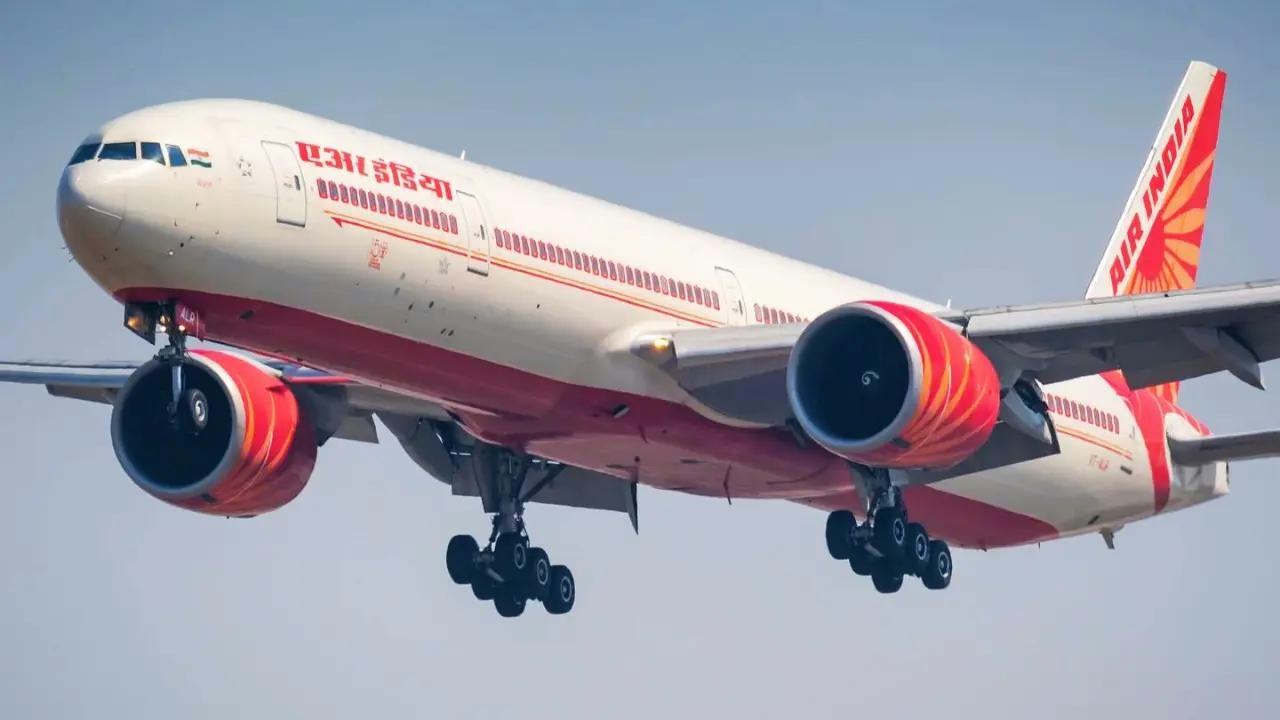
Air India Flight Diverted Mid-Flight Due to Aircraft Clearance Error
Tata Group-owned Air India encountered a significant operational disruption when flight AI185, scheduled from Delhi to Vancouver on March 19, 2026, was compelled to return mid-flight after an aircraft clearance oversight. The Boeing 777-200LR assigned to the service lacked the necessary regulatory approval to operate into Canadian airspace, a clearance held exclusively by Air India’s Boeing 777-300ER fleet for routes to Canada.
The error came to light more than four hours into the journey, as the aircraft entered Chinese airspace near Kunming. Upon discovery, the airline promptly initiated a return to Delhi to comply with international aviation regulations. The flight, which departed Delhi at 11:34 AM, landed back at 7:19 PM, resulting in nearly nine hours of flying time without reaching its intended destination.
Regulatory Context and Industry Impact
International aviation operates under stringent bilateral agreements and aircraft-specific certifications. In this case, Canadian authorities had authorized only the 777-300ER model for Air India’s Canadian operations. Despite the 777-200LR’s long-range capabilities, it lacked the required certification for Canadian routes. Such fleet-specific restrictions are standard industry practice, designed to uphold safety and operational compliance.
This incident has attracted considerable attention within aviation circles due to its unusual and avoidable nature. While disruptions caused by geopolitical factors have become more frequent, a diversion stemming from an internal clearance oversight on an eastern routing highlights the critical need for rigorous compliance protocols.
Financial and Reputational Consequences
Operating a Boeing 777 for nearly nine hours without reaching the destination imposes substantial financial costs, especially amid elevated fuel prices. The incident intensifies the challenges Air India faces as it pursues cost efficiency and operational restructuring. Reports indicate that internal disciplinary measures are under consideration for those responsible for the lapse.
Beyond immediate financial implications, the diversion has prompted increased scrutiny from aviation regulators and may adversely affect Air India’s reputation. Market analysts predict a potential short-term decline in the airline’s stock value due to negative publicity. Competitors may leverage the situation to emphasize their own safety records, while the episode could trigger broader regulatory reviews across the sector.
This event coincides with ongoing technical difficulties at Air India. A recent internal report revealed a marked rise in technical incidents, complicating efforts to restore passenger confidence and raising concerns about the airline’s operational oversight.
Passenger Care and Airline Response
Air India confirmed that the flight’s return was due to an operational issue and was handled in accordance with established procedures. Passengers were safely assisted upon arrival in Delhi, provided with hotel accommodations, and rebooked on the next available flight. Service to Vancouver resumed the following day for all affected travelers. The airline reiterated its commitment to passenger safety and expressed regret for the inconvenience caused.
Implications for Aviation Compliance
This incident underscores the paramount importance of strict regulatory adherence and operational vigilance within the aviation industry. As Air India addresses both technical and procedural shortcomings, the broader sector is likely to face heightened scrutiny aimed at preventing similar lapses in the future.

Etihad Airways Suspends Airbus A380 Flights on Key Route

Aditya Birla Group Seeks Approval for Aircraft Leasing in GIFT City

Qatar Airways Highlights Innovation and Connectivity at Arabian Travel Market 2026

Hong Kong's Five-Year Plan Includes Andrew Fan's Aircraft Parts Processing Hub Proposal

ACIA Aero Leasing Delivers ATR72-600 to Air Nostrum

RTX Appoints Jill Albertelli as Head of Pratt & Whitney

TAT Technologies Joins Beyond Aero Hydrogen Aircraft Program

AURAK Study Highlights Barriers to Air Taxi Adoption in Emerging Economies

Xiamen Air Selects Altitude for 787 Maintenance at Heathrow

Etihad and Swissport Extend Global Partnership
