Изображение

Превращайте аналитические выводы ИИ в реальные действия

Присоединяйтесь к списку ожидания AeroGenie уже сегодня!

В тренде

Categories

Airbus and Volaris Back Sustainable Aviation Fuel Study in Mexico
June 9, 2025By ePlane AI
Airbus and Volaris Back Sustainable Aviation Fuel Study in Mexico
0
0
Sustainable Aviation Fuel
Airbus
Volaris

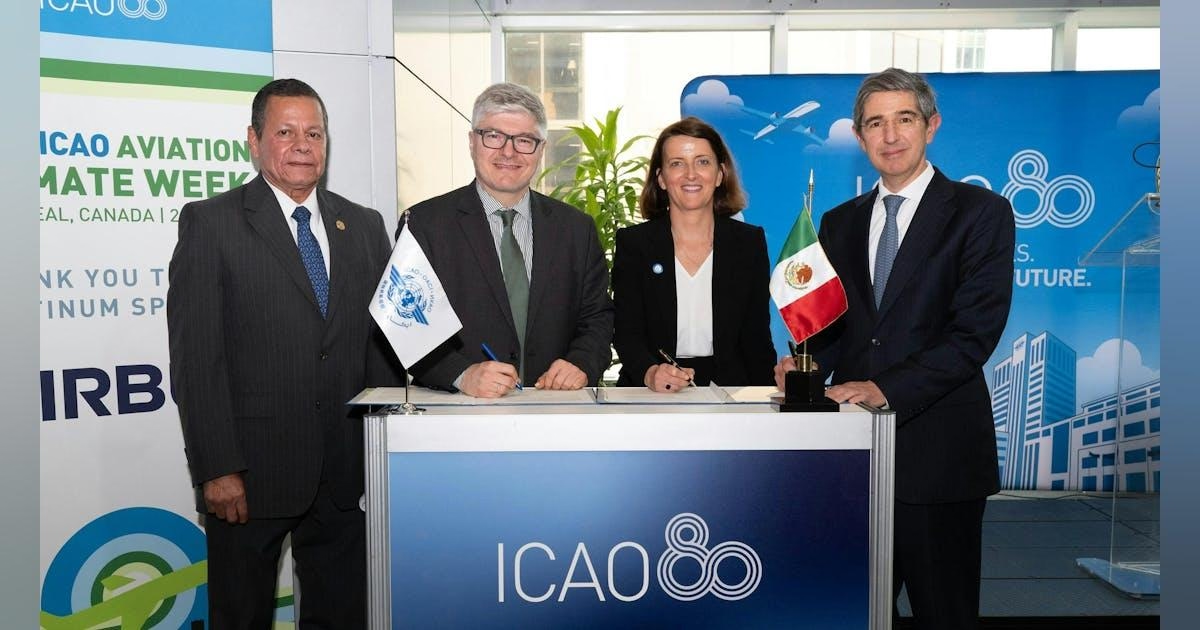
Airbus and Volaris Collaborate on Sustainable Aviation Fuel Initiative in Mexico

During the 2025 ICAO Aviation Climate Week, Airbus and Volaris formalized a partnership by signing a Letter of Intent to support the International Civil Aviation Organization’s (ICAO) Voluntary Environment Fund. This collaboration aims to promote the development and deployment of Sustainable Aviation Fuel (SAF) in Mexico through a feasibility study conducted under ICAO’s Assistance, Capacity Building and Training for SAF (ACT-SAF) Program. The initiative will be coordinated with Mexican Technical Working Groups responsible for the SAF Roadmap, co-led by the Federal Civil Aviation Authority (AFAC) and Aeropuertos y Servicios Auxiliares (ASA).

Advancing SAF Implementation in Mexico

The ACT-SAF program is designed to assist countries in evaluating their capacity for SAF adoption by providing comprehensive guidance on policy frameworks, regulatory measures, feedstock evaluation, production pathways, and financing strategies. Volaris’s participation marks a significant milestone as the first airline in the Americas to invest directly in the ICAO Voluntary Environment Fund, signaling a growing regional commitment to sustainable aviation practices.

Despite this progress, the aviation sector faces considerable challenges in scaling SAF usage. Persistent aircraft delivery backlogs and the slow expansion of green fuel production continue to impede rapid adoption. Additionally, the high cost of SAF poses a risk of increased airfares, which could affect consumer demand. Nonetheless, the industry is witnessing a gradual shift toward sustainability, even as it navigates funding limitations and complex regulatory environments. Responses from competitors vary, but the overall trend reflects heightened engagement with environmental initiatives.

Reinforcing Global Decarbonization Efforts

The partnership between Airbus and Volaris aligns with ICAO’s ambitious target of achieving net zero emissions by 2050. It complements similar feasibility studies recently announced in Argentina, Panama, and Peru, underscoring Airbus’s leadership role in aviation decarbonization across the Americas.

Sustainable Aviation Fuel is widely recognized as a critical tool for reducing greenhouse gas emissions, with the potential to lower CO2 emissions by up to 80% over its lifecycle compared to conventional jet fuel. Airbus continues to champion the large-scale development of SAF by collaborating with airlines, airports, fuel producers, research institutions, and civil aviation authorities worldwide. These efforts address the technical, regulatory, and market challenges essential to expanding the SAF ecosystem and advancing sustainable aviation globally.

More news
Significant Advancement for Local Aviation

Significant Advancement for Local Aviation

Significant Advancement for Local Aviation New State-of-the-Art MRO Facility Strengthens Malaysia’s Aviation Sector SHAH ALAM — Malaysia’s aviation industry has reached a significant milestone with the inauguration of a cutting-edge maintenance, repair, and overhaul (MRO) hangar. Operated by Base Maintenance Malaysia (BMM), a subsidiary of SIA Engineering Company Ltd, the facility is poised to enhance the country’s standing within the regional MRO ecosystem. Deputy Investment, Trade and Industry Minister Sim Tze Tzin highlighted that the new hangar will not only improve Malaysia’s competitiveness but also accelerate the development of local expertise in the aviation maintenance sector. Equipped with advanced technologies, the hangar is designed to service next-generation wide-body aircraft such as the Airbus A350, Boeing 777, and Boeing 787. These twin-aisle aircraft, characterized by fuselage diameters exceeding five meters and passenger capacities ranging from 200 to over 800, require sophisticated maintenance capabilities. The facility incorporates a digital dashboard system that monitors all aspects of aircraft maintenance, providing real-time updates and estimated return-to-service timelines. BMM has ambitious plans to expand its workforce from 350 to 700 employees by next year. Local Malaysian talent will benefit from world-class MRO training programs conducted in Singapore, complemented by specialist training delivered by SIA experts within Malaysia. At the opening ceremony near Sultan Abdul Aziz Shah Airport, Minister Sim underscored the importance of such capability-driven investments in achieving Malaysia’s target of RM55 billion in annual MRO revenue by 2030. Industry Challenges and Future Expansion Despite these advancements, Malaysia’s MRO sector faces significant challenges amid evolving industry dynamics. Regulatory complexities, particularly concerning the adoption of sustainable aviation fuels (SAF) and emerging technologies like vibrational anti-icing systems, are expected to influence the sector’s future trajectory. As environmental regulations become more stringent, airlines and MRO providers may encounter increased scrutiny and rising operational costs to ensure compliance. Meanwhile, competitors are intensifying research into hydrogen propulsion and other sustainable technologies, while advocating for adjustments to international regulations such as the ReFuelEU initiative to preserve competitive balance. BMM’s Chief Executive Officer Lee Yang Loong revealed plans for a second hangar at Subang Airport, scheduled to become operational by the end of the year. This expansion aims to double the company’s capacity, enabling up to six simultaneous aircraft MRO operations. Lee emphasized the company’s commitment to rigorous manpower training and adherence to the highest standards of quality and safety across both facilities. With 95% of BMM’s workforce comprising Malaysian nationals, the company intends to establish additional local training centers to support its operational growth and regional talent development. However, the sector must also navigate potential resistance to SAF mandates and related taxation, which could complicate the green transition for business aviation. Lee concluded by reaffirming BMM’s vision to position Malaysia as a core MRO hub in the region, noting that further investments will be evaluated following the completion of the second hangar.
McCormick, aviation industry leaders to attend Aerium Innovation Summit

McCormick, aviation industry leaders to attend Aerium Innovation Summit

McCormick and Aviation Industry Leaders to Convene at Aerium Innovation Summit **Johnstown, PA** – Leading figures from the aviation sector, including representatives from McCormick, are preparing to attend the forthcoming Aerium Innovation Summit. The event will serve as a critical forum for addressing some of the most urgent challenges and emerging opportunities facing the industry today. Navigating Industry Challenges Amid Geopolitical and Supply Chain Pressures The summit arrives at a crucial juncture for aviation, as the sector continues to contend with ongoing supply chain disruptions and escalating geopolitical tensions, notably conflicts in the Middle East. These factors, underscored in recent analyses such as the Aviation Week MRO Americas 2026 Wrap Program, are expected to dominate discussions. Attendees will focus on strategies to sustain operational stability and foster growth despite these external pressures. McCormick’s involvement is attracting particular attention, given the company’s significant role in aviation maintenance and the increasing scrutiny it faces amid shifting market dynamics. The competitive landscape is evolving rapidly; for example, Frontier Airlines anticipates a potential revenue increase following Spirit Airlines’ market exit, a development likely to influence strategic planning across the industry. Innovation and Market Expansion as Key Themes In response to these shifts, competitors are poised to launch initiatives centered on cabin innovation and enhanced in-flight connectivity. Recent trends highlighted in the AIX 2026 report emphasize a growing commitment to improving passenger experience through advanced cabin designs and superior Wi-Fi capabilities. Furthermore, India’s expanding presence in the aviation market is expected to be a focal point, as companies seek to leverage new growth opportunities in the region. As the Aerium Innovation Summit convenes, industry leaders will deliberate on how best to navigate these multifaceted challenges while pursuing innovation and expansion. The summit’s outcomes are anticipated to significantly influence the future trajectory of aviation maintenance, passenger experience enhancements, and global market strategies.
38 Years After TACA Flight 110’s Emergency Landing at Michoud

38 Years After TACA Flight 110’s Emergency Landing at Michoud

38 Years After TACA Flight 110’s Emergency Landing at Michoud A Remarkable Feat of Aviation Skill This weekend marks the 38th anniversary of one of aviation’s most extraordinary emergency landings. On May 24, 1988, TACA Flight 110, a Boeing 737-300 traveling from Belize to New Orleans, encountered a severe storm east of the city that caused both engines to fail. Captain Carlos Dardano, confronted with a powerless descent, successfully executed an emergency landing on a narrow strip of land near Michoud in New Orleans East—an area not designed for aircraft landings and far from any official runway. Despite the New Orleans region being served by three airports, the location where the plane touched down was wholly unexpected. Reflecting on the incident, Captain Dardano recently revisited the site and recounted the harrowing moments when hail and heavy rain overwhelmed the aircraft’s relatively new engines. “We hit a lot of turbulence, and the engines quit on us... both at the same time,” he told Fox 8. After briefly restarting the engines only for them to fail again, air traffic controllers suggested Interstate 10 as a potential landing site. Dardano rejected this option, concerned about the risk to both passengers and motorists. Instead, he aimed for the Intracoastal Waterway until his co-pilot spotted a narrow strip of land alongside a levee. “We saw some cables over there we had to jump a little bit and I said I got it baby I got it, and then the rest is history,” Dardano recalled. The crew’s quick thinking, combined with the 737’s gliding capabilities, ensured the safety of all 45 people on board. Legacy and Renewed Focus on Flight Safety The successful landing, immortalized by Times-Picayune photographer Ted Jackson, concluded without any fatalities, underscoring the crew’s exceptional skill and composure under pressure. After evacuating the passengers, Captain Dardano observed as the aircraft was repaired and flown out two weeks later, an event that drew crowds from across the city. The TACA Flight 110 incident remains a benchmark in emergency aviation response. In recent years, however, a series of high-profile airline emergencies have brought renewed public attention to flight safety. Southwest Airlines Flight 2665 made headlines after a cracked windshield forced an emergency landing in Oklahoma. American Airlines Flight 5318 diverted to Kansas City due to smoke in the cabin, while United Airlines Flight 1551 landed in Washington D.C. following a passenger’s attempt to open a door mid-flight. Additionally, Delta Flight DL478 was rerouted to Portland when a passenger gave birth onboard. These incidents highlight the unpredictable challenges faced by flight crews and have intensified scrutiny of airline safety protocols. As passengers and investors respond to such events, the legacy of TACA Flight 110 serves as a powerful reminder of the vital importance of rigorous training, preparedness, and decisive action in ensuring safety in the skies.
Airlines Expand Long-Haul Narrowbody Flights Across the Atlantic

Airlines Expand Long-Haul Narrowbody Flights Across the Atlantic

Airlines Expand Long-Haul Narrowbody Flights Across the Atlantic Emerging Strategy in Transatlantic Travel A growing number of airlines across North America and Europe are adopting a novel approach to transatlantic travel by deploying single-aisle, long-range aircraft to connect secondary cities on both continents. This strategy, initially pioneered by Canadian leisure carrier Air Transat, is gaining traction industry-wide as carriers seek to unlock new markets and enhance route economics. Air Transat has focused on underserved destinations in southern Europe, recently launching thrice-weekly flights between Ottawa and London Gatwick—the first direct connection between the Canadian and UK capitals via Gatwick. Sebastian Ponce, Transat’s chief revenue officer, emphasized that this route, combined with connections offered by partner Porter Airlines from multiple cities across Canada and the United States, positions Ottawa as a genuine gateway to Europe. Additionally, the airline introduced once-weekly flights from Quebec City to Marseille and Nantes in France, all operated with Airbus A321LR aircraft—narrowbody jets designed for longer-range routes that cannot economically support widebody aircraft. The Rise of the Airbus A321XLR and Market Impact The trend toward long-haul narrowbody operations is accelerating with the introduction of the Airbus A321XLR, a next-generation narrowbody aircraft boasting an advertised range of 4,700 nautical miles (8,700 km). Its lower trip costs and improved fuel efficiency enable airlines to serve smaller, secondary cities and launch seasonal routes that were previously unviable with larger jets. Persistently high fuel prices, exacerbated by ongoing geopolitical tensions such as the United States’ conflict with Iran, have further increased the appeal of these more efficient aircraft. Data from aviation analytics firm Cirium reveals an 11% year-on-year increase in transatlantic narrowbody flights originating in North America for July, accompanied by a 12% rise in available seats. This contrasts with flat or declining capacity on widebody transatlantic routes. Air Transat’s July schedule alone reflects a 22% increase in narrowbody flights to Europe compared to the same month last year. Air Canada, which recently introduced its first A321XLRs, is expanding such flights by 80%. Other notable increases include Aer Lingus (19%) and Iberia (87%), both operators of the A321XLR. American Airlines is deploying its new A321XLRs on routes between New York and Edinburgh, as well as on transcontinental flights between New York and Los Angeles. Alaska Airlines is also entering the long-haul narrowbody market with a seasonal Seattle–Reykjavik service operating from late May to early September. Challenges and Competitive Dynamics Despite the promising expansion, long-haul narrowbody operations face significant challenges. Rising fuel costs and operational complexities present ongoing risks, while competition from established Gulf carriers remains a critical factor. Some European airlines are responding by adjusting capacity; for instance, Lufthansa is reducing approximately 1% of its total capacity to mitigate higher fuel expenses. Emirates president Tim Clark has attributed the decline of certain European long-haul operations to strategic missteps by those airlines rather than competition from Gulf carriers. As airlines continue to navigate shifting market dynamics and economic pressures, the deployment of long-range narrowbody jets is reshaping the transatlantic aviation landscape. This evolution offers passengers increased options and connects cities that were previously beyond the reach of direct flights.
Why the Boeing 777X May Not Suit This European Airline

Why the Boeing 777X May Not Suit This European Airline

Why the Boeing 777X May Not Suit This European Airline Scandinavian Airlines (SAS) is currently undertaking a significant widebody fleet renewal, with the Boeing 777X among the aircraft under consideration alongside established competitors such as the Airbus A350 and Boeing 787. Despite the 777X’s impressive range and passenger capacity, its suitability for SAS’s network and strategic direction remains uncertain, particularly as the airline undergoes a period of substantial transformation. Scale and Network Compatibility The Boeing 777-9, the flagship model of the 777X family, is designed primarily for high-density routes and mega-hubs like Dubai or Doha, where daily passenger volumes can consistently fill its expansive cabin of over 400 seats. In contrast, SAS’s hubs in Copenhagen and Stockholm typically operate routes that are better served by aircraft seating between 250 and 300 passengers. Consistently filling a 400-plus seat aircraft would pose a considerable challenge for SAS, potentially necessitating a reduction in flight frequencies to maintain high load factors. Such a shift could alienate business travelers who value schedule flexibility over aircraft size, thereby undermining a key segment of SAS’s customer base. Operational and Economic Challenges Introducing the 777X would also disrupt SAS’s current technical commonality. The airline’s existing fleet includes six Airbus A350-900s, averaging just 3.8 years in service, which efficiently cover its long-haul operations. Incorporating a small sub-fleet of 777X aircraft would require significant investment in pilot training, spare parts, and ground support equipment, particularly due to the 777-9’s distinctive folding wingtips. Unless SAS commits to a fleet size of at least 18 to 20 units, the costs associated with maintaining a separate 777X operation could outweigh the potential benefits, especially if passenger demand does not meet projections. Market Timing and Competitive Pressures The timing of any potential 777X order is further complicated by ongoing delivery delays. Boeing’s backlog for the 777X has grown to nearly 600 aircraft, with Singapore Airlines not expected to receive its first delivery until after April 2027. This high demand and delayed availability could affect pricing and delivery schedules for European carriers like SAS, increasing the risk of falling behind in the competitive race for next-generation widebodies. Boeing’s recent surge in orders during April highlights the aircraft’s popularity but also underscores the urgency for airlines to act swiftly or risk missing out. Strategic Considerations Amid Alliance Shifts SAS’s decision extends beyond considerations of aircraft size and range to encompass long-term alignment with manufacturers and airline alliances. With Air France-KLM set to increase its stake in SAS to approximately 60.5% by 2026, the airline is transitioning away from its Star Alliance roots toward the SkyTeam alliance. This strategic shift coincides with the pressing need to replace SAS’s aging fleet of eight Airbus A330-300s. Evaluating the A330neo and A350 alongside the 787 and 777X allows SAS to leverage its market position, but operational realities and evolving network strategies suggest that the 777X may be too large and complex for the airline’s current needs. While the Boeing 777X represents a technological advancement, its scale, cost implications, and market timing present significant challenges for SAS. The airline’s forthcoming fleet decisions will require a careful balance between ambition and operational pragmatism as it navigates a new chapter in European aviation.
Red Arrows to Operate with Seven Aircraft Until 2030 Due to Aging Engines

Red Arrows to Operate with Seven Aircraft Until 2030 Due to Aging Engines

Red Arrows to Operate with Seven Aircraft Until 2030 Amid Engine Aging Concerns The Royal Air Force’s renowned aerobatic team, the Red Arrows, will reduce their display formation from the traditional nine jets to seven aircraft for most performances until 2030. This adjustment is driven by the aging engines of their Hawk T1 fleet, which have become increasingly difficult to maintain due to the scarcity of critical spare parts, particularly engines. RAF leadership has confirmed the decision as a necessary measure to sustain the team’s operations amid growing maintenance challenges. Operational Adjustments and Display Commitments While the Red Arrows will continue to perform nine-aircraft flypasts on significant occasions—such as the King’s official birthday and the 250th anniversary of American Independence on July 4th—the majority of their displays across the UK, Europe, and internationally will feature the smaller seven-jet formation. The Hawk T1 jets, which have been the backbone of the team’s nearly 4,000 worldwide displays, are facing increasing maintenance difficulties as parts become harder to source, a situation initially reported by Sky News. An RAF spokesperson emphasized that scaling down the number of aircraft in future flypasts is intended to support sustainable management of the Hawk T1 fleet and to prepare the Red Arrows for a transition to a new aircraft type. The spokesperson reaffirmed the team’s status as a national symbol, celebrated globally for their precision, speed, and teamwork. Broader Industry Challenges and Future Prospects The Hawk T1s are slated for retirement in 2030, following a service life extension granted by the UK government in 2021. Although most of the UK’s original Hawk T1s were retired in 2022, the Red Arrows retained their aircraft to fulfill ongoing display commitments. The difficulties faced by the Red Arrows reflect wider challenges within the aviation sector, including the global grounding of Pratt & Whitney PW1100G turbofan engines, which has strained maintenance resources. Recent efforts have reduced grounded aircraft by 15% through increased production of critical components, while competitors such as GE Aerospace have accelerated deliveries of their Leap engines. Additionally, the US Air Force’s approval of the T-7A Red Hawk for production signals a broader shift toward newer trainer aircraft. In the UK, market pressures are also evident. Modular trainer developer Aeralis recently entered administration due to cash flow issues and delays in the UK Defence Investment Plan. These industry-wide difficulties highlight the importance of prudent fleet management and strategic planning as the Red Arrows prepare for their eventual transition to a new generation of aircraft. Despite these challenges, the RAF remains committed to maintaining the high standards of the Red Arrows’ displays. The team will continue to showcase British aviation excellence at airshows and events, adapting their operations to ensure the legacy of the Red Arrows endures through the conclusion of the Hawk T1 era and beyond.
Demetrios Bradshaw’s Efforts to Address Challenges in Aviation

Demetrios Bradshaw’s Efforts to Address Challenges in Aviation

Demetrios Bradshaw’s Efforts to Address Challenges in Aviation Addressing Core Industry Challenges In recent years, the aviation industry has confronted a series of persistent challenges that often go insufficiently acknowledged. Central among these are issues related to engine availability, constrained maintenance capacity, and the growing demand for efficient Maintenance, Repair, and Overhaul (MRO) solutions. Demetrios Bradshaw, CEO of Aeras Aviation, has positioned himself as a pivotal figure in addressing these systemic problems, drawing on extensive experience within the aftermarket sector. Bradshaw’s career in aviation began with a focus on the aftermarket, where he quickly identified the critical importance of engine availability in maintaining the reliability and efficiency of the broader aviation ecosystem. He emphasizes that “aviation is not just about aircraft; it is about timing, logistics, maintenance cycles, and reliability.” This insight has fundamentally shaped Aeras Aviation’s business model, which prioritizes a holistic approach to operational challenges. A Global Platform for MRO Solutions Since its establishment, Aeras Aviation has developed into a global platform with operational bases in the United States, the Middle East, and the United Kingdom. This international presence allows the company to engage comprehensively across the MRO value chain, offering real-time insights into the interplay between supply chains, maintenance demands, and operational pressures. Such a broad vantage point enables Aeras Aviation not only to identify industry-wide challenges but also to devise practical, scalable solutions. Despite these efforts, Bradshaw’s work takes place amid broader industry difficulties. The aviation sector continues to suffer from significant workforce shortages, which impede growth and result in substantial financial losses. The absence of a unified career pipeline exacerbates this issue, with current initiatives to address the shortage remaining fragmented and insufficient. Additionally, ongoing supply chain disruptions and geopolitical tensions—particularly in the Middle East—compound the complexity of operating in a high-growth environment. Strategic Vision and Future Directions Responses from industry competitors vary, with some, such as Singapore Airlines, demonstrating long-term strategic commitment by supporting carriers like Air India despite recent challenges. Navigating these evolving dynamics demands not only operational expertise but also adaptability and forward-looking vision. Looking ahead, Bradshaw and Aeras Aviation are concentrating on enhancing engine lifecycle management through improved global positioning, logistics, and the integration of artificial intelligence technologies. With expansion plans underway in Dubai and the United States, the company aims to transcend traditional service models and establish itself as a critical component of the global MRO infrastructure. As the aviation industry continues to grapple with workforce shortages, supply chain instability, and shifting geopolitical landscapes, Bradshaw’s initiatives exemplify a comprehensive approach to these interconnected challenges. By leveraging global operations and technological innovation, Aeras Aviation seeks to contribute to a more resilient and efficient future for the sector.
Why the SR-71 Blackbird Used Twin Buick V8 Engines for Starting

Why the SR-71 Blackbird Used Twin Buick V8 Engines for Starting

Why the SR-71 Blackbird Used Twin Buick V8 Engines for Starting The Lockheed SR-71 Blackbird remains one of the most remarkable feats in aviation history, with only 32 units ever constructed. Its legendary status is attributed not only to its advanced titanium airframe and powerful Pratt & Whitney J58 turbojet engines but also to an unexpected ground-based starting system powered by twin Buick V8 engines. This article examines the engineering considerations behind this unconventional choice, the mechanics of the AG330 start cart, and the operational demands that necessitated such a solution. Engineering Constraints and the Weight-Saving Imperative Developed by Lockheed’s Skunk Works under the leadership of Clarence “Kelly” Johnson, the SR-71 was designed to sustain flight at speeds exceeding Mach 3.2 and altitudes above 85,000 feet. In this extreme performance envelope, every pound of weight was critical. Excess weight would reduce the aircraft’s range and increase fuel consumption, while also complicating the management of intense aerodynamic heating. To optimize performance, Johnson’s team made a deliberate decision to exclude any onboard engine starter system. The weight savings achieved by this omission were considered more valuable than the convenience of self-starting capability. The Challenge of Starting the J58 Engines This design choice introduced significant operational challenges. The J58 engines, among the few turbojets engineered for continuous afterburner operation at supersonic speeds, each weighed approximately 6,500 pounds. Their compressor stages demanded immense torque to accelerate to ignition speed—far beyond the capacity of conventional pneumatic or electric starters. Any starter system capable of delivering the required power would have been prohibitively heavy for onboard installation, necessitating a ground-based solution. The Selection of Buick V8 Engines The solution emerged from two Skunk Works engineers with backgrounds in automotive racing, who opted to utilize proven American automotive technology rather than develop a bespoke starter. They selected the Buick 401-cubic-inch (6.6-liter) “Nailhead” V8 engines for their robust construction, reliability, and ability to generate the high torque essential for the demanding startup sequence of the J58 engines. Each Buick V8 produced 325 horsepower and 445 lb-ft of torque. When paired in the AG330 start cart, these engines provided sufficient power to spin the J58 compressors to the necessary speed for fuel ignition. This choice was both practical and strategic. Given the critical nature of the SR-71’s reconnaissance missions during the Cold War, mechanical reliability was paramount. The Buick V8 engines offered a dependable, field-tested solution that minimized the risk of startup failure and ensured the Blackbird could launch as scheduled. Operation of the AG330 Start Cart During engine startup, the AG330’s twin Buick V8s powered a shaft connected to the J58’s accessory gearbox, rapidly accelerating the engine’s compressors. Once the J58 reached the required rotational speed, fuel and ignition systems were engaged, bringing the engine to life. This process was complex and occasionally hazardous, demanding precise coordination from ground crews. Any malfunction, such as a misfire or mechanical fault, necessitated halting and resetting the entire sequence, highlighting the critical importance of the starter cart’s reliability. Conclusion The SR-71 Blackbird’s reliance on twin Buick V8 engines for starting exemplifies innovative engineering under stringent constraints. By harnessing the strength and dependability of these automotive powerplants, Lockheed’s engineers ensured that one of the world’s most advanced aircraft could meet its exacting operational requirements. This approach underscores how sophisticated technological solutions can sometimes arise from practical mechanical ingenuity.
EU Today Editor Discusses Sanctions and Russia’s Shadow Aviation Supply Chains

EU Today Editor Discusses Sanctions and Russia’s Shadow Aviation Supply Chains

EU Today Editor Discusses Sanctions and Russia’s Shadow Aviation Supply Chains Following an extensive investigation by EU Today into Russia-linked aviation supply chains and potential sanctions circumvention, Editor Gary Cartwright spoke with the Ukrainian news outlet Podrobnosti about the findings, the pressures encountered after publication, and the broader challenges faced by journalists covering sanctions-sensitive issues. Originally published in Ukrainian, the interview is presented here in English. Investigating Sanctions Evasion in Russia’s Aviation Sector Cartwright outlined EU Today’s sustained focus on sanctions enforcement, particularly in relation to Russia’s aviation industry. He emphasized that uncovering evidence of sanctions evasion is a complex and often hazardous endeavor. Journalists, researchers, and civil society organizations meticulously analyze contracts, invoices, customs records, and procurement trails to expose hidden networks before governmental authorities intervene. Since Russia’s annexation of Crimea in 2014, the European Union has relied heavily on sanctions as a key instrument in responding to Moscow’s aggression against Ukraine. These measures expanded significantly following the full-scale invasion in 2022, targeting sectors including finance, energy, transport, dual-use goods, aviation, shipping, technology, and military-industrial supply chains. However, as Cartwright noted, the effectiveness of sanctions depends largely on rigorous enforcement. Russia has repeatedly adapted by rerouting supplies through third countries, brokers, logistics firms, and intermediaries, complicating efforts to stem the flow of restricted goods. EU Today has maintained dedicated coverage of sanctions since 2014, including a specialized Sanctions section and extensive reporting on Russia’s shadow fleet, Western components embedded in Russian weaponry, and the networks facilitating the continued movement of prohibited items. Its White Paper on Russia’s shadow fleet has attracted over 32,000 views. Cartwright himself has actively participated in demonstrations in Brussels advocating for the renewal of sanctions—a process that was not always politically assured prior to 2022. For Cartwright, EU Today functions as more than a news outlet; it serves as a public-interest platform designed to highlight issues that might otherwise remain obscured within technical documentation. This mission has also informed the outlet’s earlier advocacy efforts, such as its Holodomor petition submitted to the British Parliament. Unveiling the Opaque Russian Aviation Supply Chains In May 2026, EU Today published an article delving into the opaque world of Russian aviation supply chains. Despite sanctions restricting spare parts, maintenance, insurance, and certification, many Western-owned aircraft leased to Russia—primarily Boeing and Airbus models—continue to operate both within and beyond Russian borders. This situation raises a critical question: how are parts, repairs, and services still reaching Russian aviation entities under such restrictions? The investigation was grounded in a comprehensive review of documents including contracts, invoices, purchase orders, licensing materials, and freight records. While the article named several companies involved, Cartwright clarified that the documents alone did not constitute proof of unlawful conduct or sanctions violations by every party mentioned. The publication prompted swift responses, including legal demands and private communications directed at EU Today. The report also underscored broader market implications. Sanctions targeting Russia’s shadow aviation supply chains have contributed to increased costs and delays for European airlines, as access to aircraft and parts becomes more constrained. This dynamic risks placing EU carriers at a competitive disadvantage, potentially allowing non-EU airlines to capture greater market share. In response, European airlines are lobbying for regulatory reforms aimed at mitigating disruptions and bolstering their global competitiveness. Cartwright concluded by stressing the need for stronger protections for journalists, researchers, and civil society actors investigating sanctions evasion. As enforcement challenges persist and market pressures intensify, transparent reporting remains vital to understanding both the risks involved and the wider economic consequences of sanctions policy.
Why US Airlines Pay Long-Haul Pilots More to Fly the Boeing 787 Than the 777

Why US Airlines Pay Long-Haul Pilots More to Fly the Boeing 787 Than the 777

Why US Airlines Pay Long-Haul Pilots More to Fly the Boeing 787 Than the 777 Technical Complexity and Pilot Expertise Recent data from United Airlines’ 2025 pilot salary tables indicate that pilots flying the Boeing 787 generally earn higher wages than those operating the Boeing 777. This pay disparity is largely attributed to the advanced technology and operational demands of the 787, commonly known as the Dreamliner. Unlike the 777, the 787 employs a “more-electric” architecture, replacing traditional pneumatic bleed-air systems with electrically driven alternatives. This design shift requires pilots to closely monitor electrical loads, system redundancies, and automated responses, necessitating a greater level of technical proficiency. Consequently, airlines tend to assign their most experienced and senior pilots to the 787, which further elevates the average compensation for those flying this aircraft. Operational Advantages and Market Position Beyond its technical sophistication, the Boeing 787 offers significant operational benefits that enhance its appeal to airlines. The aircraft is celebrated for its superior fuel efficiency, lower maintenance costs, and improved passenger comfort. These factors contribute to increased profitability and operational efficiency on long-haul routes, incentivizing airlines to offer higher pay to pilots operating these flights. The competitive edge of the 787 is exemplified by recent route expansions, such as Alaska Airlines’ new Seattle-Rome service, which utilizes the Dreamliner to capitalize on its long-range capabilities and cost advantages. Pay Structures and Industry Variations While aircraft type plays a crucial role in pilot compensation, other factors such as seniority, total flight hours, and overall experience remain significant determinants of wages. Additionally, pilots often weigh benefits like 401(k) plans alongside salary when evaluating employment options. The pay gap between 787 and 777 pilots is most pronounced at United Airlines. According to reporting by Simple Flying, a United 777 captain with 12 years of service earns approximately $438 per hour, whereas a 787 captain with similar seniority receives about $465 per hour, reflecting a nearly $30 hourly premium. This difference underscores both the complexity of the 787 and the seniority of the pilots typically assigned to it. Not all US carriers adopt this differentiated pay model. For instance, American Airlines maintains parity in base salaries for its 777 and 787 pilots. This approach may evolve with the introduction of newer aircraft such as the Boeing 777X, which is expected to command higher pilot salaries due to its increased complexity. However, since no US airline has yet placed orders for the 777X, this factor has not yet influenced current pay structures. Challenges of Long-Haul Operations Although the 787’s advanced systems do not necessarily make flying more difficult, the nature of its long-haul missions demands seasoned pilots. Flights often exceed ten hours, requiring crews to manage the cognitive effects of fatigue and jet lag. This operational environment further justifies the assignment of experienced pilots to the Dreamliner, reinforcing the rationale behind the higher compensation offered for these roles. In essence, the premium pay for Boeing 787 pilots at US airlines reflects a combination of the aircraft’s technological complexity, its operational advantages, and the seniority of the pilots entrusted with its operation, solidifying the Dreamliner’s position as a coveted assignment in the long-haul market.
line









