
Превращайте аналитические выводы ИИ в реальные действия

В тренде
Categories
Airbus Falls Short on Delivery Targets, Says Leeham Analysis
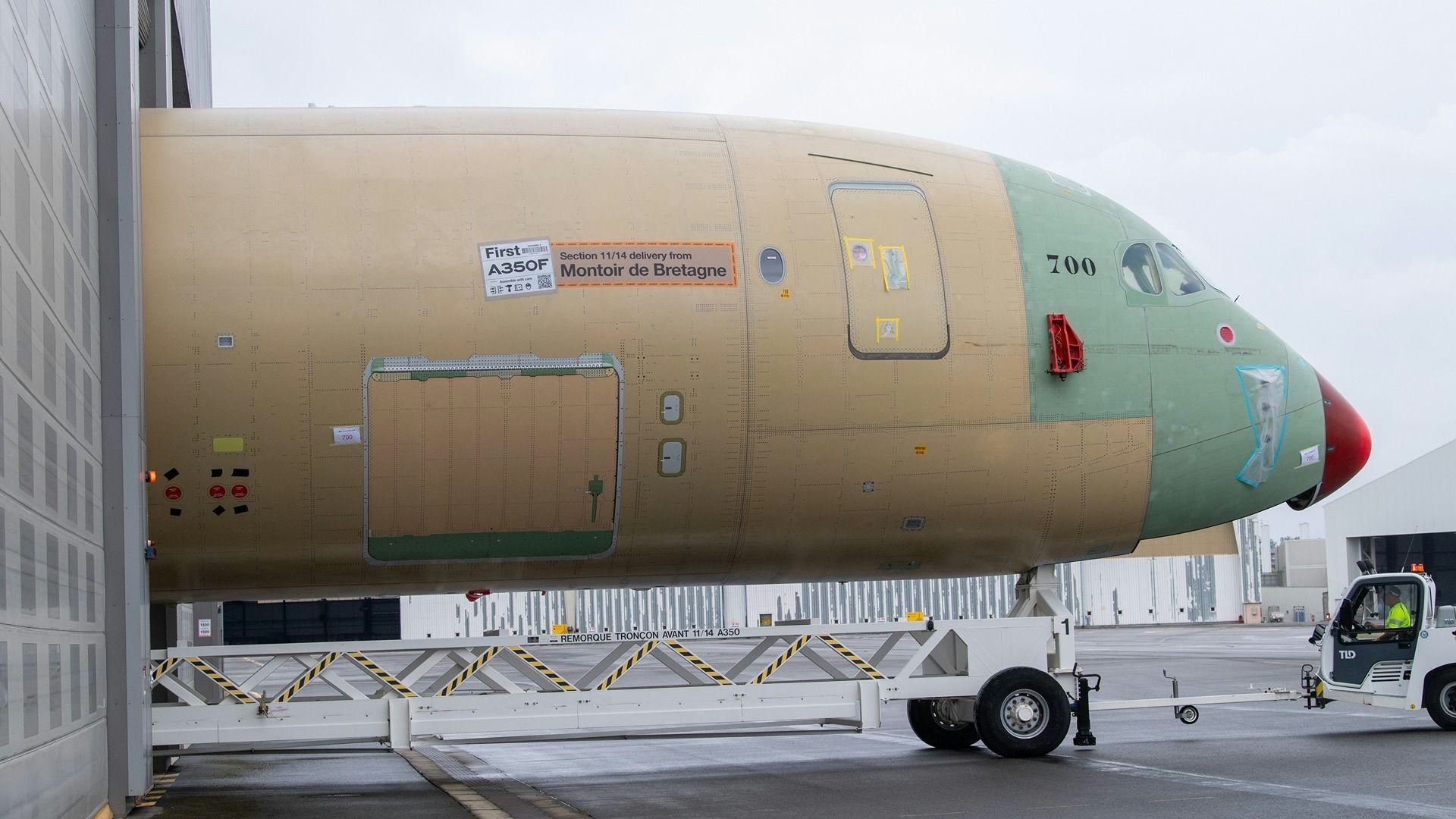
Airbus Misses Delivery Targets Amid Persistent Supply Chain Challenges
As Airbus SE concludes its 2025 financial year, the European aerospace leader faces intensified scrutiny over its ability to meet commercial aircraft delivery targets. A comprehensive analysis by Leeham News reveals that Airbus has failed to achieve its annual delivery guidance for three consecutive years, highlighting ongoing difficulties within its intricate global supply chain.
Delivery figures serve as a crucial indicator for investors and industry analysts, reflecting not only Airbus’s operational efficiency but also the stability of its extensive supplier network. The absence of a single component—ranging from engines to interiors or other buyer-furnished equipment—can ground an aircraft and disrupt production schedules. Industry insiders frequently emphasize this vulnerability, noting that “when a supplier has a problem, Airbus has a problem.”
Supply Chain Disruptions and Revised Targets
These persistent supply chain disruptions have compelled Airbus to repeatedly adjust its delivery forecasts. The company’s CEO recently acknowledged the challenges, pointing to a significant backlog of aircraft awaiting completion and delivery. Shortages of critical parts, particularly engines, coupled with ongoing quality control issues, have prevented Airbus from meeting its initial projections.
For 2026, Airbus has set a revised target of 870 commercial aircraft deliveries, falling short of analyst expectations, which were approximately 880. This adjustment reflects the company’s difficulties in scaling up production, especially for its flagship A320neo family. Efforts to achieve an ambitious production rate of 75 A320neo aircraft per month have been hindered by the inability to secure firm engine delivery commitments from supplier Pratt & Whitney.
The delivery shortfall occurs amid intensifying competition from Boeing, Airbus’s primary rival, which has reported increased deliveries and net orders in the opening month of 2026. This competitive pressure adds urgency to Airbus’s efforts to resolve supply chain bottlenecks and restore confidence in its delivery forecasts.
Leeham’s analysis scrutinizes Airbus’s guidance accuracy over the past three years, comparing initial projections with year-end outcomes and examining the adjustments made throughout each period. The findings raise concerns about the reliability of long-term delivery estimates and underscore the risks inherent in a tightly integrated, globalized manufacturing process.
As Airbus advances into 2026, investors and industry observers will closely monitor whether the company can overcome its supply chain challenges and meet its revised targets or if further downward revisions will be necessary.

Etihad Airways Suspends Airbus A380 Flights on Key Route

Aditya Birla Group Seeks Approval for Aircraft Leasing in GIFT City

Qatar Airways Highlights Innovation and Connectivity at Arabian Travel Market 2026

Hong Kong's Five-Year Plan Includes Andrew Fan's Aircraft Parts Processing Hub Proposal

ACIA Aero Leasing Delivers ATR72-600 to Air Nostrum

RTX Appoints Jill Albertelli as Head of Pratt & Whitney

TAT Technologies Joins Beyond Aero Hydrogen Aircraft Program

AURAK Study Highlights Barriers to Air Taxi Adoption in Emerging Economies

Xiamen Air Selects Altitude for 787 Maintenance at Heathrow

Etihad and Swissport Extend Global Partnership
