
Превращайте аналитические выводы ИИ в реальные действия

В тренде
Categories
Aircraft Considered to Replace the Airbus A380 on High-Capacity Routes
Aircraft Considered to Replace the Airbus A380 on High-Capacity Routes
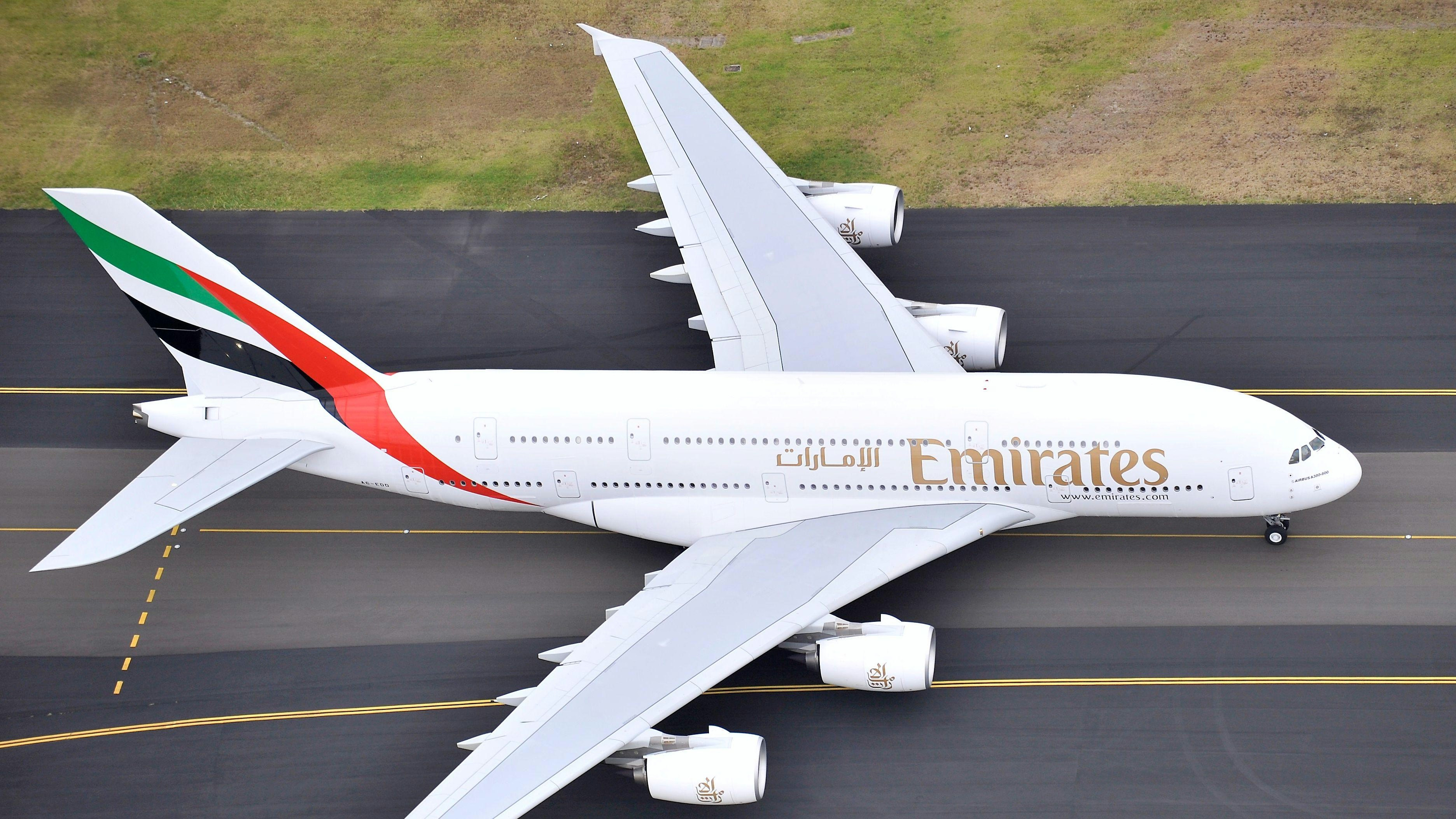
The Airbus A380, once the pinnacle of high-capacity air travel, has experienced a steady decline since Airbus ceased its production in 2021. The COVID-19 pandemic significantly undermined the economic viability of quadjet aircraft, hastening the retirement of these iconic double-decker planes. Emirates, the Dubai-based airline, remains the most dedicated operator of the A380, maintaining a fleet exceeding 100 aircraft—approximately half of all A380s ever produced. The carrier has even acquired secondhand A380s from other airlines and operates specialized terminals at Dubai International Airport (DXB) tailored specifically for the superjumbo.
Despite Emirates’ appeals for a new, more efficient A380neo model, Airbus has consistently declined, citing insufficient market demand. As more A380s are retired, scrapped, or preserved in museums, airlines are compelled to explore alternative aircraft capable of servicing high-capacity routes.
The Boeing 777X: A Leading Successor
The foremost contender to replace the A380 is the forthcoming Boeing 777X, anticipated to become the largest twin-engine jet ever produced upon its entry into service, currently scheduled for 2027. Although the 777X will not match the A380’s passenger capacity or its distinctive second deck, it offers substantial improvements in efficiency, operational flexibility, and cost-effectiveness—critical considerations in today’s volatile aviation environment.
The transition away from quadjets such as the A380 and Boeing 747 has been influenced not only by the pandemic-induced downturn but also by rising fuel prices and geopolitical tensions. Recent surges in oil costs, intensified by conflicts including the U.S.-Israeli standoff with Iran, have exerted additional pressure on airline operations, resulting in stock market volatility and flight cancellations. These factors have compelled airlines to reassess their fleet strategies. For instance, Brazilian carrier GOL has expressed interest in diversifying its fleet to access new markets, while Lufthansa has chosen to retire its A380s, repurposing them as parts donors rather than sustaining costly operations.
Market responses to these developments remain varied. Some airlines, such as Etihad Airways, have reported robust profits and continue to pursue expansion plans despite industry challenges. Others adopt a more cautious stance, carefully evaluating the operational and financial implications of maintaining large aircraft on densely trafficked routes.
Efficiency and Practicality in a Changing Market
The Boeing 777X represents a pragmatic compromise. Its passenger capacity approaches that of the Boeing 747-8, though it remains below the A380’s maximum. However, it compensates with lower operating costs, simplified maintenance, and the capability to serve a broader range of airports due to its lighter airframe and quieter engines. Unlike the A380, which struggled to find a viable second life as a cargo aircraft, the 777X is purpose-built for passenger service.
As airlines navigate a landscape shaped by fluctuating fuel prices, geopolitical uncertainty, and shifting passenger demand, the Boeing 777X is positioned to become the new benchmark for high-capacity, long-haul routes. It offers a practical and efficient successor to the era of the superjumbo, aligning with the evolving priorities of the global aviation industry.

Etihad Airways Suspends Airbus A380 Flights on Key Route

Aditya Birla Group Seeks Approval for Aircraft Leasing in GIFT City

Qatar Airways Highlights Innovation and Connectivity at Arabian Travel Market 2026

Hong Kong's Five-Year Plan Includes Andrew Fan's Aircraft Parts Processing Hub Proposal

ACIA Aero Leasing Delivers ATR72-600 to Air Nostrum

RTX Appoints Jill Albertelli as Head of Pratt & Whitney

TAT Technologies Joins Beyond Aero Hydrogen Aircraft Program

AURAK Study Highlights Barriers to Air Taxi Adoption in Emerging Economies

Xiamen Air Selects Altitude for 787 Maintenance at Heathrow

Etihad and Swissport Extend Global Partnership
