
Превращайте аналитические выводы ИИ в реальные действия

В тренде
Categories
Aircraft Turbofan Engine Market Projected to Reach $186 Billion by 2035
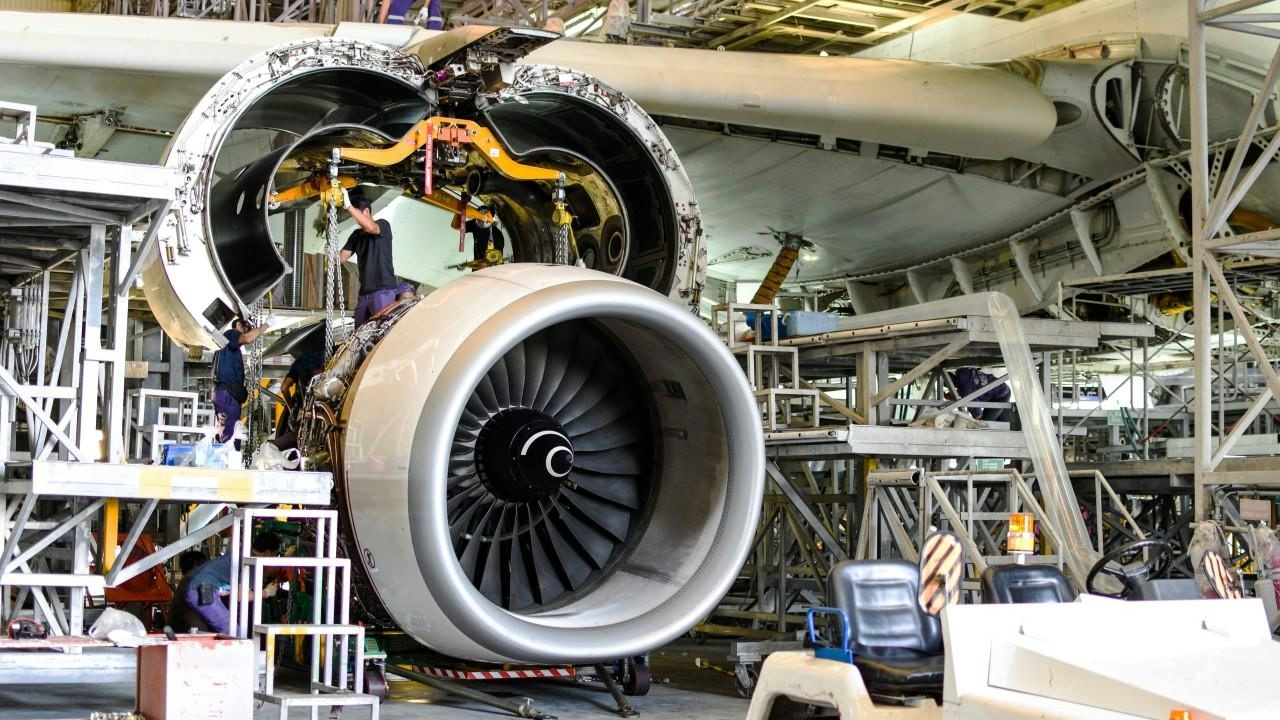
Aircraft Turbofan Engine Market Projected to Reach $186 Billion by 2035
The global aircraft turbofan engine market is anticipated to experience substantial growth over the coming decade. Industry forecasts project the market size to expand from $117.89 billion in 2026 to approximately $186.20 billion by 2035, reflecting a compound annual growth rate (CAGR) of 5.21%. This growth is primarily driven by increasing demand for air travel alongside significant investments in advanced materials and cutting-edge technologies.
Market Dynamics and Regional Trends
In 2025, North America held a dominant position in the turbofan engine market, accounting for 37% of the global share. Meanwhile, the Asia Pacific region is expected to register the fastest growth rate through 2035, fueled by expanding commercial aviation sectors and rising infrastructure development. Within the engine type segment, high bypass turbofan engines commanded roughly 60% of the market in 2025, although the geared turbofan (GTF) segment is projected to experience the most rapid expansion.
Component-wise, the fan and compressor segment contributed about 30% of the market in 2025, with the gearbox segment anticipated to grow at the fastest pace. Commercial aviation applications represented approximately 68% of the market share in 2025, yet business and general aviation are forecasted to expand at the highest rate. Regarding thrust categories, engines producing more than 50,000 pounds-force (lbf) accounted for around half of the market in 2025, while the 20,000–50,000 lbf segment is expected to see the most accelerated growth.
Technological Foundations and Innovations
Aircraft turbofan engines serve as the cornerstone of modern aviation propulsion. These air-breathing jet engines feature a large, ducted fan that channels bypass air around a central core, combining the efficiency of a propeller with the speed of a turbojet. This architecture, which includes a front fan, core compressor, and rear turbine, allows the majority of air to bypass the engine core, thereby optimizing performance and enhancing fuel efficiency at subsonic speeds.
The integration of artificial intelligence (AI) is rapidly reshaping the turbofan engine landscape. AI-driven predictive maintenance, generative design, and real-time health monitoring are improving operational efficiency and shortening development cycles. Machine learning algorithms, coupled with Internet of Things (IoT) sensors, enable precise forecasting of maintenance requirements, reducing downtime and preventing failures. Furthermore, AI contributes to optimizing engine aerodynamics, material selection, and flight path management, resulting in improved fuel economy and reduced emissions.
Challenges and Market Pressures
Despite promising growth prospects, the turbofan engine market faces several significant challenges. Intense competition within the used serviceable material market is complicating supply chains, as exemplified by AerSale’s recent difficulties in sourcing feedstock. Additionally, the surge in demand for aero-derivative gas turbines—driven by the rapid expansion of AI data centers—is placing strain on manufacturing capacity and diverting resources away from traditional aerospace production.
Supply chain pressures are further exacerbated by ongoing disputes, such as the conflict between Airbus and Pratt & Whitney over engine delivery delays. This highlights the fierce competition for limited engine supplies and the potential repercussions on production schedules. Moreover, the bifurcated competitive landscape in aircraft floor panels, divided between commoditized and customized demands, introduces additional complexity for manufacturers and suppliers.
Outlook
The aircraft turbofan engine market is poised for robust expansion through 2035. However, industry stakeholders must adeptly navigate evolving technological requirements, supply chain constraints, and shifting competitive dynamics. Strategic investments in AI, advanced materials, and supply chain resilience will be essential to harness emerging opportunities and sustain long-term growth in this critical sector.

Etihad Airways Suspends Airbus A380 Flights on Key Route

Aditya Birla Group Seeks Approval for Aircraft Leasing in GIFT City

Qatar Airways Highlights Innovation and Connectivity at Arabian Travel Market 2026

Hong Kong's Five-Year Plan Includes Andrew Fan's Aircraft Parts Processing Hub Proposal

ACIA Aero Leasing Delivers ATR72-600 to Air Nostrum

RTX Appoints Jill Albertelli as Head of Pratt & Whitney

TAT Technologies Joins Beyond Aero Hydrogen Aircraft Program

AURAK Study Highlights Barriers to Air Taxi Adoption in Emerging Economies

Xiamen Air Selects Altitude for 787 Maintenance at Heathrow

Etihad and Swissport Extend Global Partnership
