
Превращайте аналитические выводы ИИ в реальные действия

В тренде
Categories
Airlines Dismantle New Planes to Salvage Engines
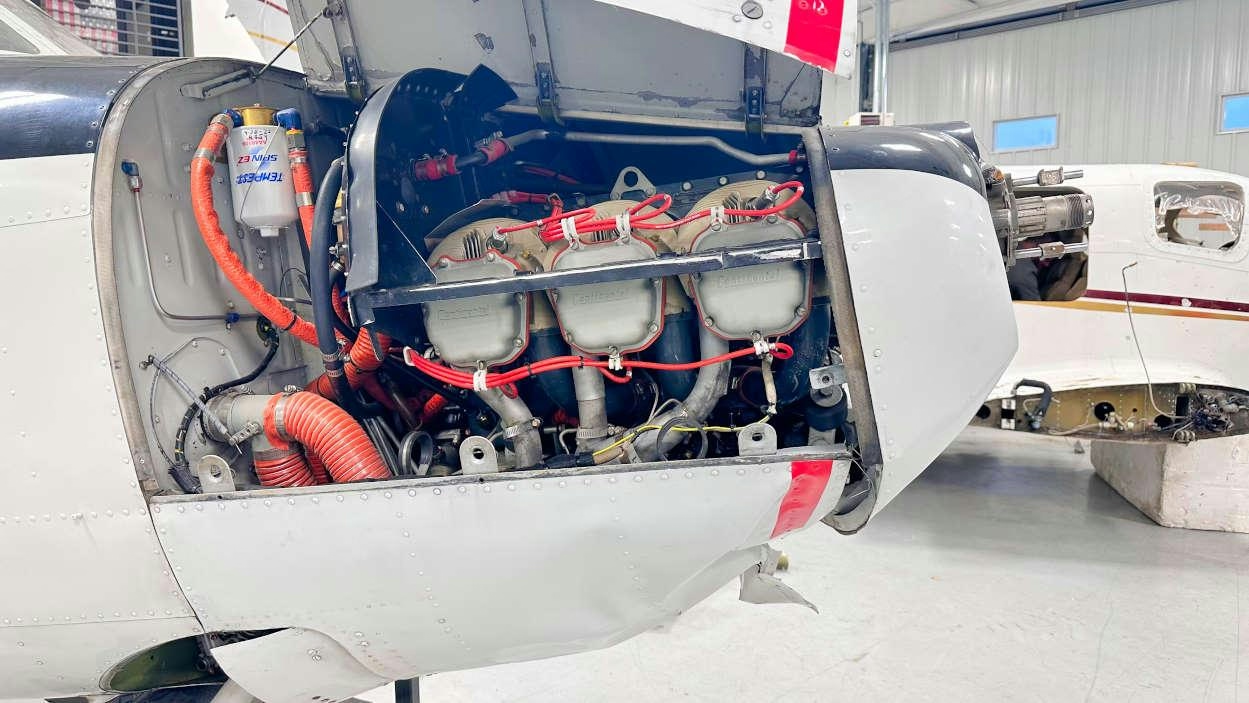
Airlines Dismantle New Planes to Salvage Engines Amid Supply Chain Crisis
The ongoing turmoil in global supply chains took center stage at this week’s Singapore Airshow, where industry leaders confronted the persistent challenges facing aviation. Despite a robust rebound in passenger demand following the pandemic, airlines and suppliers continue to struggle with severe parts shortages and geopolitical tensions. These pressures have revealed deeper structural vulnerabilities within the sector, giving rise to what has been termed the “cannibalization economy”—a phenomenon in which airlines are dismantling even relatively new aircraft to recover valuable engines and components.
Supply Chain Disruptions: The New Industry Norm
Executives at the airshow characterized prolonged delays and bottlenecks as the prevailing condition in aviation supply chains. ST Engineering, the world’s largest airframe maintenance provider, reported that lead times for essential components and materials have extended beyond a year, a stark contrast to the pre-pandemic norm of a few months. Jeffrey Lam, ST Engineering’s Chief Operating Officer, emphasized the global nature of the shortage, noting that early ordering no longer guarantees timely delivery: “The shortage is worldwide, so you actually can’t even buy anything early if you wanted to.”
Gael Meheust, CEO of engine manufacturer CFM International, highlighted the paradox confronting the industry. Although production has increased since the pandemic, it remains insufficient to meet the unprecedented demand from airlines and lessors. “It’s not just that the supply chain cannot deliver on the ramp-up, it’s that the demand is at a level that we had never imagined,” Meheust explained.
Engine Shortages Drive Aircraft Cannibalization
The crisis is especially severe for operators of Airbus A320neo and A321neo aircraft powered by Pratt & Whitney’s PW1000G Geared Turbofan engines. Manufacturing defects linked to contaminated powdered metal in turbine and compressor disks have triggered extensive recalls and groundings. By late 2025, over 800 aircraft equipped with these engines were grounded or stored worldwide, accounting for roughly one-third of the fleet.
This shortage has compelled airlines to dismantle nearly new jets to harvest spare parts. A notable case involved two IndiGo A321neos, each only six years old, which were taken apart because their components held greater value than the aircraft themselves. While such measures address immediate operational demands, they also introduce significant challenges, including increased costs, potential regulatory scrutiny, and intensified competitive pressures.
Industry Implications and Strategic Responses
The repercussions of these supply chain disruptions are reverberating throughout the aviation sector. Airlines with more efficient maintenance operations or superior access to spare parts are gaining a competitive advantage, whereas others grapple with escalating operational expenses and uncertainty. In response, some carriers are investing in in-house maintenance capabilities or forging strategic partnerships to manage engine overhauls more cost-effectively.
Compounding these difficulties are regional uncertainties, particularly in Latin America and the Caribbean, which complicate demand forecasting and fleet renewal planning. The persistent backlog in new aircraft deliveries further exacerbates the situation, forcing airlines to make difficult decisions as they navigate an increasingly complex environment.
As the aviation industry adapts to these challenges, the dismantling of young aircraft for parts starkly illustrates the severity of the supply chain crisis and the extraordinary measures airlines must undertake to maintain operational continuity.
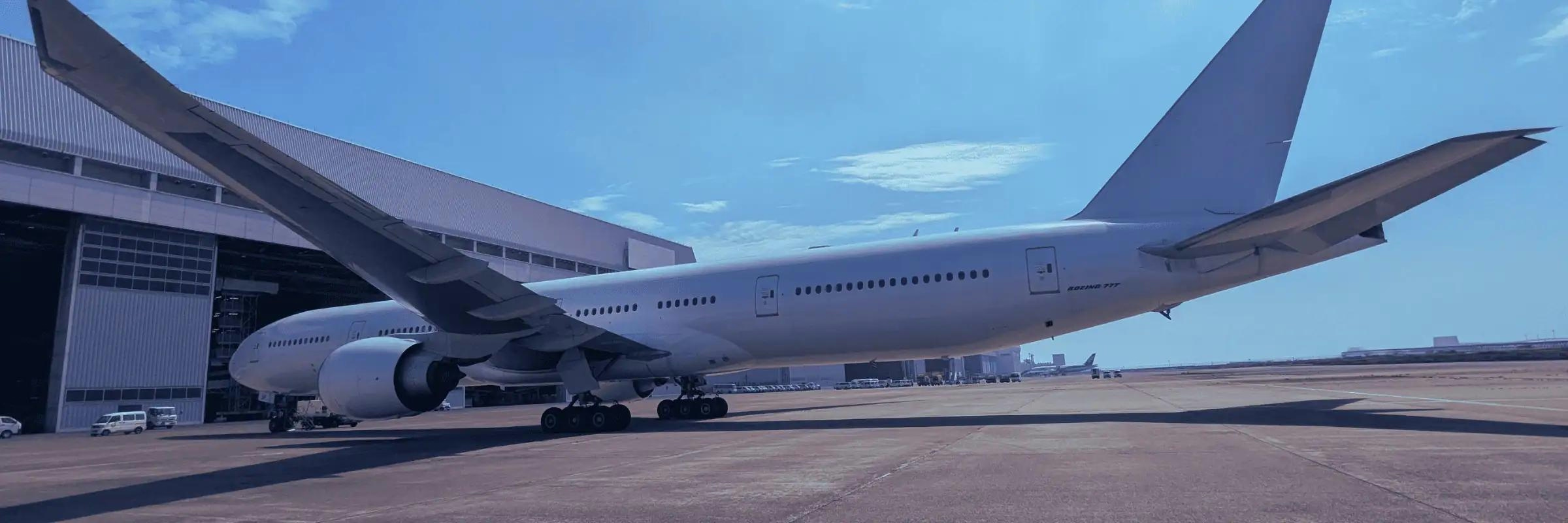
AerFin Expands Boeing 777 Fleet

Chromalloy Celebrates 75 Years in Aerospace Engineering and Engine Lifecycle Management
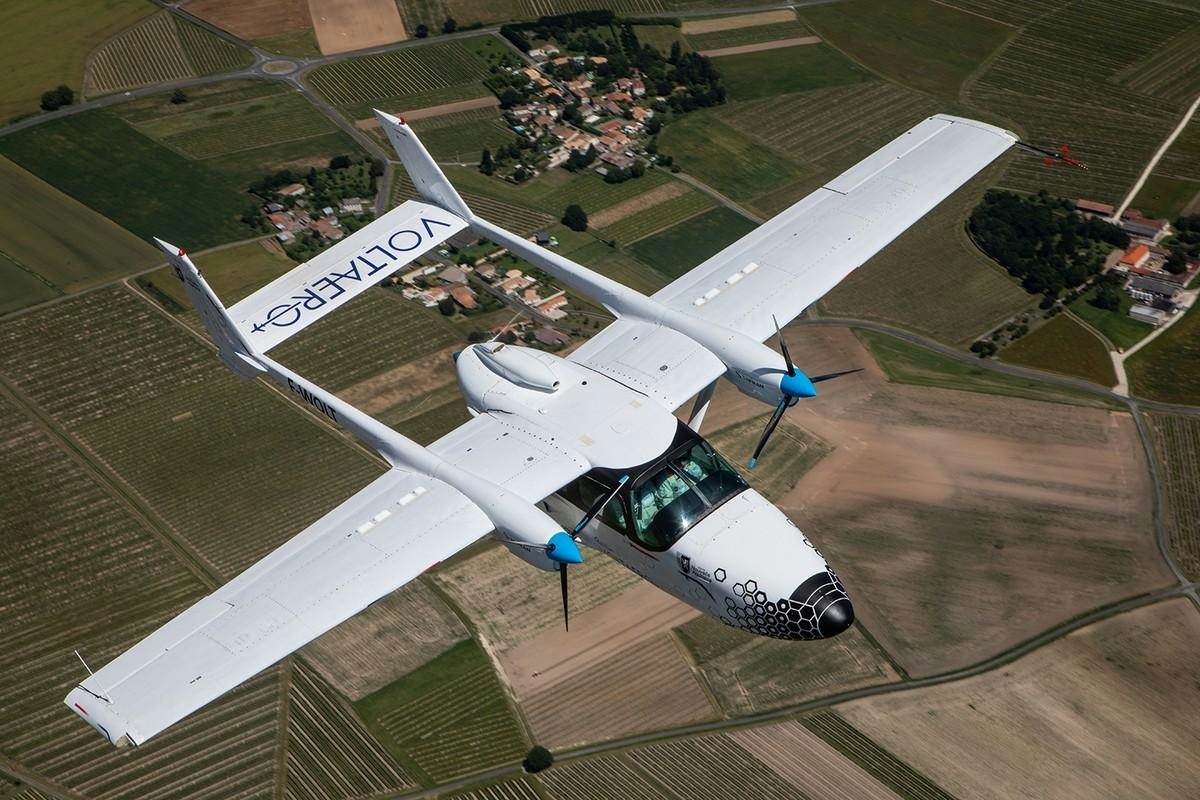
FLYTO Employs Digital Twins to Evaluate New Aircraft
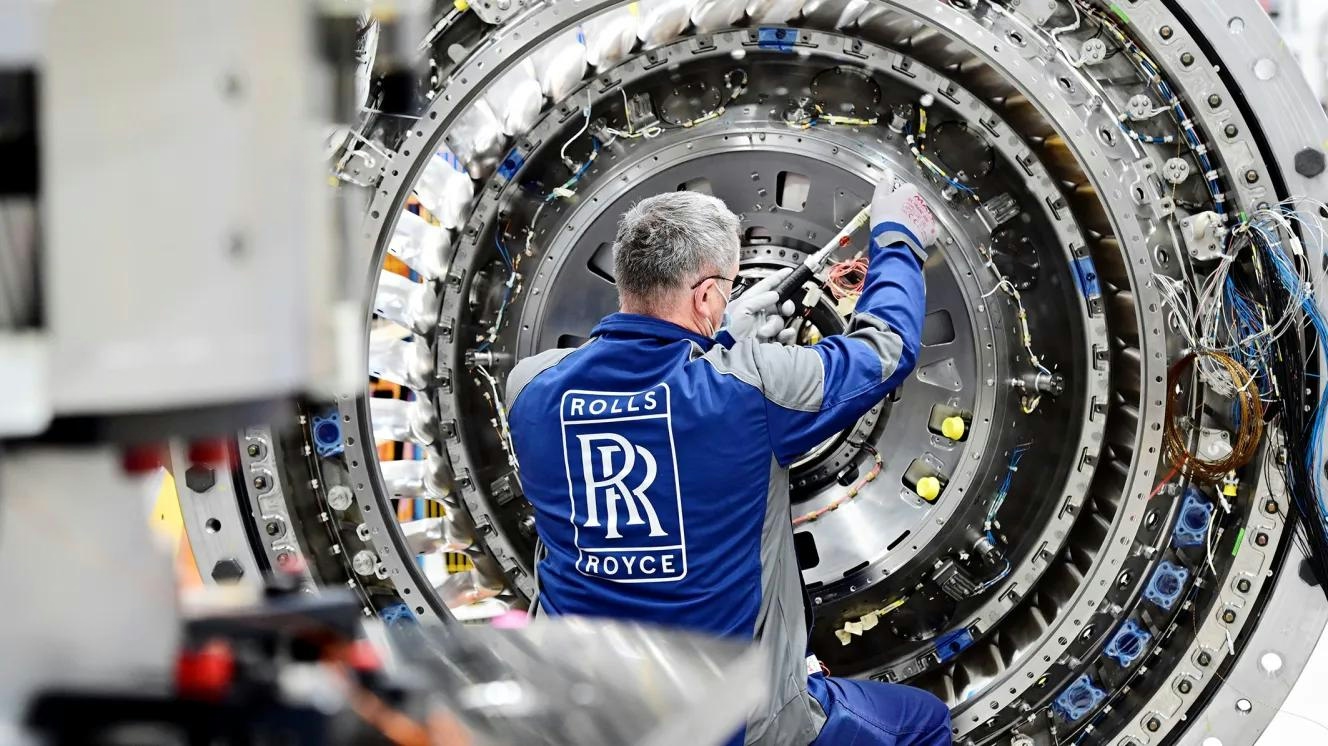
Rolls-Royce Engine Repair Cuts Annual Airline Costs by $450,000 Per Aircraft

Delta Air Lines Focuses on Premium Travel and AI Amid Valuation Debate
How Companies Are Preparing for the Future of eVTOL Aircraft
Macchi M.C.72: Record-Breaking Speed of the Fastest Seaplane
Air Transat to Implement AI for Disruption Recovery
United CEO Scott Kirby Outlines Future Vision from JFK to Artificial Intelligence
European Union Backs Aviation Safety and Innovation Talks in Nepal
