
Превращайте аналитические выводы ИИ в реальные действия

В тренде
Categories
Austrian Airlines Transfers Embraer Fleet to Air Dolomiti
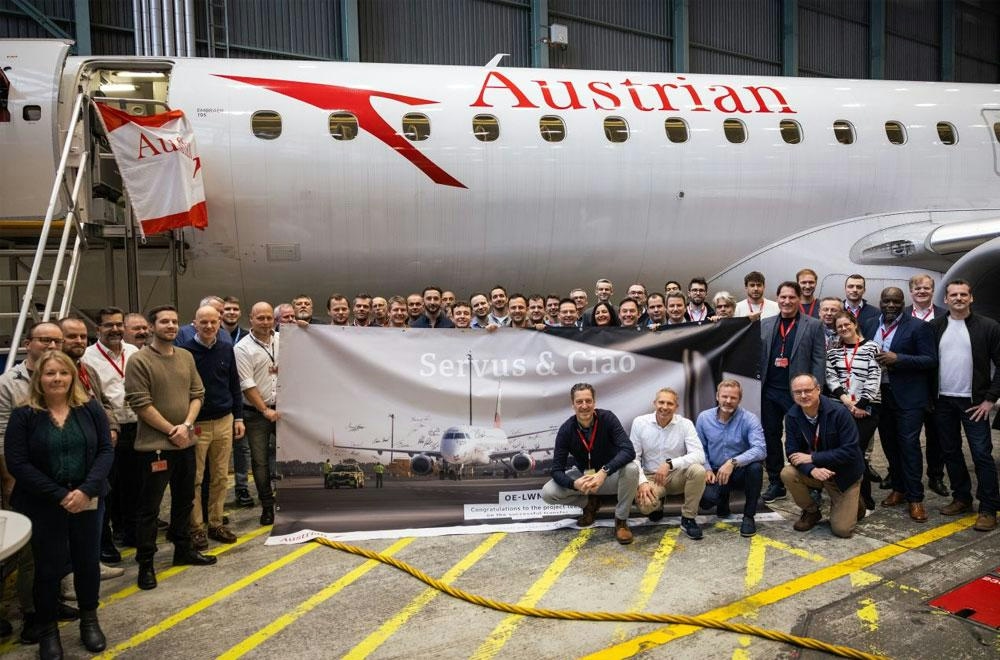
Austrian Airlines Transfers Embraer Fleet to Air Dolomiti Amid Strategic Renewal
Austrian Airlines has initiated the transfer of its Embraer 195 aircraft to its Italian subsidiary, Air Dolomiti, marking a pivotal phase in the airline’s comprehensive fleet renewal program. The first aircraft to complete this transition, formerly registered as OE-LWM and now operating under the registration I-ENJA, joined Air Dolomiti’s fleet on December 12. This transfer signals the beginning of Austrian’s plan to phase out all seventeen Embraer 195 jets by the end of 2028.
Fleet Transition and Operational Strategy
According to the current schedule, thirteen of the Embraer 195s will be absorbed into Air Dolomiti’s operations, while the remaining four are earmarked for sale starting in early 2026. The process is set to continue with a second Embraer 195 leaving Austrian’s fleet in February. This reshuffling forms part of Austrian Airlines’ broader strategy to streamline its fleet composition, reducing the number of aircraft types from five to two primary models: the Airbus A320 family and the Boeing 787-9.
As part of this modernization effort, Austrian plans to introduce six new Airbus A320neo family aircraft beginning in the summer of 2026, augmenting its existing narrowbody fleet of approximately forty Airbus planes. Concurrently, the airline will take delivery of ten Boeing 787-9 Dreamliners by the end of 2028, enabling the retirement of its older widebody aircraft, including three Boeing 767-300ERs and seven Boeing 777-200ERs.
Historical Role and Challenges of the Embraer 195 Fleet
The Embraer 195 jets have been integral to Austrian’s regional operations since their introduction in January 2016, when they replaced the airline’s former Fokker fleet. Notably, the fourth Embraer 195 delivered, known as “Whisky Mike,” entered service in April 2016 and accumulated over 21,400 flight hours before its recent retirement.
The transfer of the Embraer fleet to Air Dolomiti presents a series of operational and financial challenges. Coordinating the logistics of moving regional jets between carriers requires meticulous planning and may result in additional costs. Market responses to the transition have been mixed; while some investors regard the move as a strategic optimization of fleet utilization within the Lufthansa Group, others express concern over the financial implications of phasing out the Embraer aircraft.
Market Implications and Competitive Landscape
The fleet realignment is also attracting attention from competitors. LATAM Airlines Group, for instance, is preparing to introduce new premium fleet types and may view Austrian’s transfer as an opportunity to further distinguish its own market offerings. This shift could alter competitive dynamics within the regional jet segment, influencing positioning and market share.
Despite the complexities involved, Austrian Airlines asserts that its fleet renewal and simplification strategy will ultimately enhance operational efficiency and strengthen the carrier’s prospects for future growth.

Etihad Airways Suspends Airbus A380 Flights on Key Route

Aditya Birla Group Seeks Approval for Aircraft Leasing in GIFT City

Qatar Airways Highlights Innovation and Connectivity at Arabian Travel Market 2026

Hong Kong's Five-Year Plan Includes Andrew Fan's Aircraft Parts Processing Hub Proposal

ACIA Aero Leasing Delivers ATR72-600 to Air Nostrum

RTX Appoints Jill Albertelli as Head of Pratt & Whitney

TAT Technologies Joins Beyond Aero Hydrogen Aircraft Program

AURAK Study Highlights Barriers to Air Taxi Adoption in Emerging Economies

Xiamen Air Selects Altitude for 787 Maintenance at Heathrow

Etihad and Swissport Extend Global Partnership
