image

AeroGenie — ваш интеллектуальный второй пилот.

Спрашивайте о чём угодно. Анализируйте всё. Действуйте мгновенно.

В тренде

Categories

British Airways Increases Boeing 777 Service on Short European Route

December 8, 2025By ePlane AI
British Airways Increases Boeing 777 Service on Short European Route
0
0
British Airways
Boeing 777-200ER
Short-Haul Widebody Service

British Airways Expands Boeing 777 Operations on London–Madrid Route

British Airways will reintroduce the Boeing 777-200ER on its London Heathrow to Madrid service starting March 29, coinciding with the launch of the IATA summer schedule. This marks the first time since 2022 that the airline will deploy widebody aircraft on this short-haul European route, making BA the sole oneworld member to offer scheduled widebody flights on such a corridor this summer.

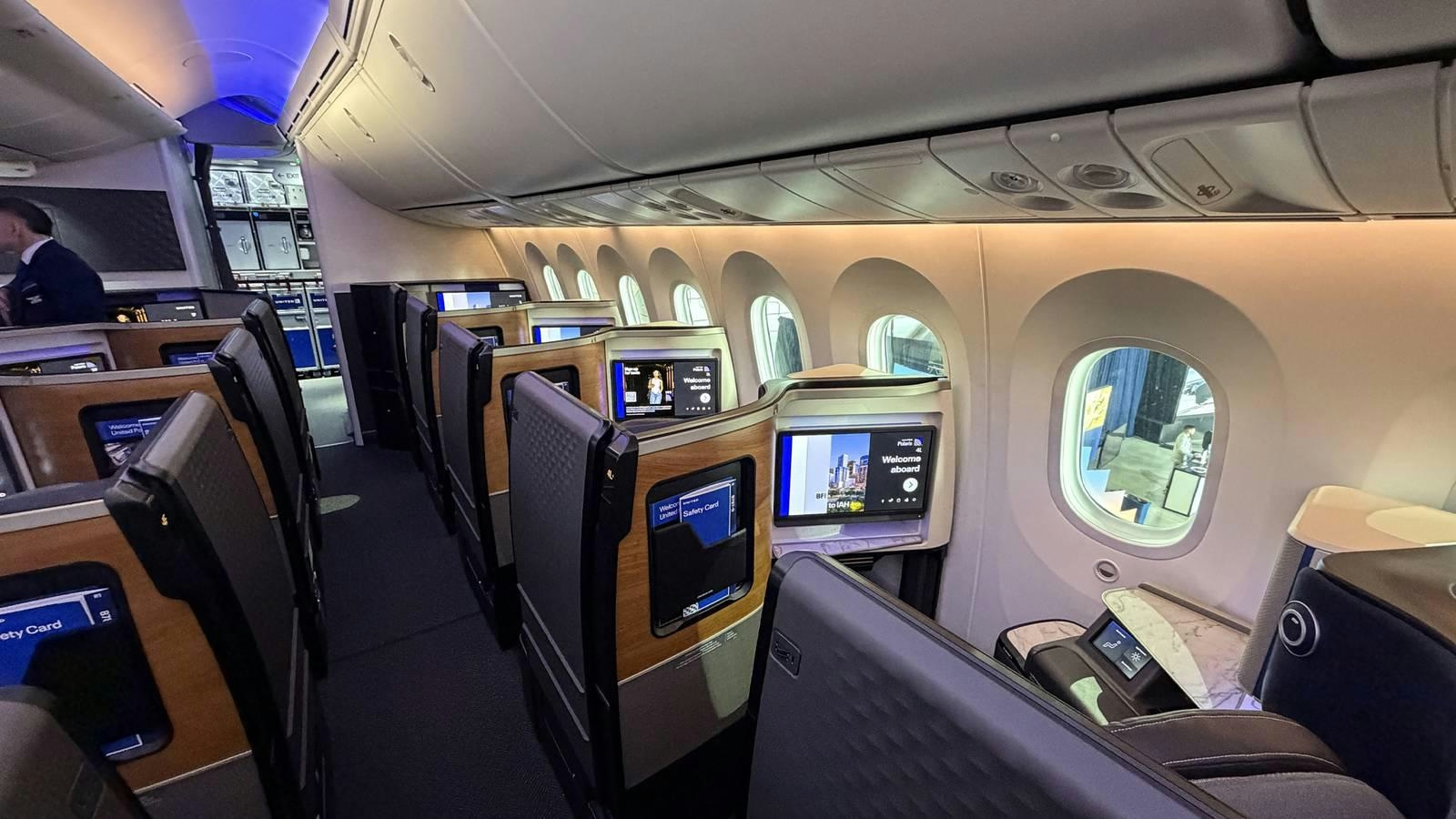
The daily 777 flights will operate until October 25, covering the 672-nautical-mile (1,245 km) journey in approximately two and a half hours each way. According to British Airways’ schedule filed with Cirium, 163 round-trip flights will utilize a 272-seat configuration, while an additional 47 round-trips—primarily on Mondays and Saturdays—will feature a 235-seat layout equipped with the airline’s new Club Suites. This lower-capacity variant includes eight First Suites, 49 Club Suites, 40 World Traveller Plus seats, and 138 World Traveller seats. However, First Suites will not be available for booking on this short sector, and it remains uncertain whether passengers with high-status Club Suite bookings might be eligible for upgrades.

The scheduled flight times in April are as follows: departures from Heathrow at 12:20 pm, arriving in Madrid at 3:50 pm, with return flights leaving Madrid at 5:30 pm and landing at Heathrow at 6:55 pm.

Market Context and Industry Implications

While British Airways increases its widebody presence on the London–Madrid route, fellow International Airlines Group (IAG) carrier Iberia will continue operating twin-aisle aircraft—including the A330-200, A330-300, and A350-900—between the two capitals, albeit with reduced frequency compared to previous summers. Both airlines primarily deploy these larger aircraft to meet freight demand on routes connecting Europe and South America.

Looking ahead to August 2026, Heathrow is projected to handle an average of nine daily European departures on twin-aisle aircraft. Turkish Airlines will operate four to five daily flights from Istanbul using A330-300s or 777-300ERs, Finnair will maintain twice-daily A350-900 services from Helsinki, British Airways will continue its daily 777-200ER flights to Madrid, Iberia will offer six weekly Madrid flights, and Icelandair will operate five weekly services from Keflavik with 767-300ERs, although the latter is expected to retire its 767 fleet by late 2026.

This strategic redeployment of widebody aircraft occurs amid a shifting market environment. IAG recently experienced a roughly 10% decline in its share price following third-quarter earnings, as investors reacted to softer yields and lower load factors on transatlantic routes. Meanwhile, competitors such as Wizz Air are adjusting their Airbus A321XLR commitments and delivery schedules in response to evolving market conditions.

On the manufacturing front, Boeing’s stock is trading near $189 per share, supported by a strong commercial backlog and optimism regarding production, cash flow, and safety targets. Emirates’ recent $41.4 billion order for Boeing 777-9s and Airbus A350-900s at the Dubai Airshow 2025 further underscores sustained confidence in widebody aircraft. Boeing’s share price has surged following its 2026 cash-flow commitments, even as rival Airbus has trimmed delivery targets amid technical challenges.

British Airways’ decision to increase Boeing 777 service on a short European route reflects a nuanced operational strategy within the broader dynamics shaping the aviation industry, as airlines and manufacturers adapt to shifting demand patterns, competitive pressures, and evolving fleet plans.
More news
The Cost of an Airbus A350

The Cost of an Airbus A350

The Cost of an Airbus A350 The Airbus A350 is widely regarded as one of the most advanced and efficient widebody aircraft in operation today. Its design emphasizes operational savings and environmental efficiency, positioning it as a preferred choice for airlines seeking to modernize their long-haul fleets. The success of the A350 has notably contributed to the decline of the Airbus A380 Superjumbo, as carriers increasingly prioritize more versatile and fuel-efficient aircraft. Nevertheless, the acquisition of an A350 represents a significant financial commitment, prompting many airlines to favor leasing arrangements over outright purchases. Pricing and Demand The price of an Airbus A350 varies considerably depending on the specific configuration, airline customization, and prevailing market conditions. In 2025, Emirates placed a substantial order for the A350-900 variant, with a reported price tag of $3.4 billion per aircraft. This figure reflects the premium associated with new, highly tailored jets. Market prices are subject to fluctuations influenced by factors such as inflation, supply chain challenges, and the particular features selected by customers. Airbus has experienced strong demand for the A350 family. As of November 2025, the company’s order book included 75 new aircraft, largely driven by commitments for the A350 widebody series. By January 2025, Airbus had secured orders for 1,363 A350s, delivered 644 units, and maintained a backlog of 643 aircraft. This backlog indicates that approximately half of all orders have been fulfilled to date. Features and Capabilities The A350 serves as Airbus’s flagship long-haul aircraft, directly competing with Boeing’s 777 and 787 families, as well as the forthcoming 777X. Developed at an estimated cost of $15 billion, the A350 incorporates advanced materials, with 53% of its structure composed of composite materials by weight. This construction makes the aircraft lighter, stronger, and more durable than previous models. The A350 holds the highest ETOPS certification—ETOPS-370—allowing it to operate flights up to 370 minutes from the nearest suitable airport, thereby covering 99.7% of the Earth’s surface. The A350-900ULR (Ultra Long Range) variant is notable for holding the record as the world’s longest-range commercial aircraft. This capability enables Singapore Airlines to operate nonstop flights from Singapore to New York-JFK and Newark Liberty airports. The A350-900 and the larger A350-1000 variants typically accommodate between 300 and 410 passengers in three-class configurations, with a maximum capacity of up to 480 passengers in a single-class layout. These aircraft are capable of flying routes up to 9,700 nautical miles. Market Trends and Future Developments Demand for the A350 family continues to grow, supported by market intelligence from firms such as IBA, which has observed rising values for midlife widebody aircraft. This trend is attributed to slow production ramp-ups and a limited supply of airworthy jets. Airbus has also reported interest in a stretched version of the A350, potentially equipped with a more powerful Rolls-Royce Trent XWB-97 engine. However, this variant has not yet been officially launched. Despite robust sales, Airbus has encountered challenges. In 2025, a supplier quality issue involving fuselage panels on certain A320 aircraft compelled the company to lower its commercial aircraft delivery target for the year to approximately 790 units. The Airbus A350 remains a pivotal asset in modern long-haul aviation, combining efficiency, range, and passenger comfort. While the acquisition cost is substantial, often reaching into the billions for some variants, the aircraft’s operational benefits and sustained market demand affirm its significance in the competitive commercial aviation sector.
Air Algérie Launches Tour Operator and MRO Subsidiary to Boost African Aviation

Air Algérie Launches Tour Operator and MRO Subsidiary to Boost African Aviation

Air Algérie Launches Tour Operator and MRO Subsidiary to Boost African Aviation Air Algérie has announced a comprehensive restructuring plan designed to reinforce its presence in the African aviation and tourism sectors. Central to this strategy is the establishment of a dedicated tour operator alongside the creation of a standalone subsidiary for its Maintenance, Repair, and Overhaul (MRO) division. These initiatives aim to enhance the airline’s operational capacity and competitiveness, with a target of transporting 8.5 million passengers by 2025. The airline’s renewed focus seeks to expand its influence across both aviation and tourism, fostering collaboration and improving service offerings. The introduction of the tour operator is intended to simplify travel arrangements for customers, while the MRO subsidiary is expected to elevate service reliability and unlock new business opportunities in aircraft maintenance throughout Africa. Tour Operator: Streamlining Travel Across Africa The newly launched tour operator is poised to transform the African tourism landscape by providing customized travel packages, booking services, and destination management for both outbound and inbound travelers. Leveraging Air Algérie’s extensive flight network, the operator will facilitate seamless multi-country itineraries, thereby easing access to Algeria and other African destinations. This initiative also aims to position Algeria as an emerging tourism hub, showcasing the country’s natural landscapes, historical landmarks, and rich cultural heritage. By partnering with regional and international stakeholders, the tour operator will offer bespoke travel experiences that align with Algeria’s broader national tourism objectives and enhance the continent’s attractiveness to global visitors. MRO Subsidiary: Strengthening Maintenance Capabilities Amid Competition Concurrently, Air Algérie’s MRO subsidiary will deliver comprehensive maintenance, repair, and overhaul services not only for its own fleet but also for other African carriers. By separating MRO operations from its core airline activities, Air Algérie intends to improve operational efficiency and responsiveness, addressing the increasing demand for reliable and cost-effective aircraft maintenance within the region. This expansion occurs in a competitive environment dominated by established players such as Lufthansa Technik and Rolls-Royce’s CorporateCare, both of which maintain a strong foothold in Africa. The market also includes companies like ExecuJet MRO Services, which recently renewed its FAA and African certifications, and Elevate MRO, known for engine maintenance services through StandardAero. These competitors may intensify efforts to broaden their service offerings or reinforce their market positions in response to Air Algérie’s entry. Despite these challenges, the new MRO subsidiary is expected to reduce Africa’s dependence on foreign service providers and contribute to the development of a more self-sufficient aviation industry. It is positioned to become a pivotal component of regional aviation infrastructure, supporting the growth and fleet management needs of African airlines. Strategic Outlook The simultaneous launch of a tour operator and an MRO subsidiary represents a significant advancement in Air Algérie’s growth strategy, aimed at enhancing travel experiences and aviation services across Africa. While the airline confronts competitive pressures from established industry leaders, these initiatives have the potential to foster improved connectivity, operational reliability, and tourism development throughout the continent.
UC Davis Advances Development of Air Taxi Technology

UC Davis Advances Development of Air Taxi Technology

UC Davis Advances Development of Air Taxi Technology The concept of flying cars has long been relegated to the realm of science fiction, yet the emergence of urban air mobility (UAM) suggests that this futuristic vision may soon become a practical reality. At the forefront of this technological evolution is Seongkyu Lee, a professor of mechanical and aerospace engineering at the University of California, Davis. Lee is actively engaged in advancing electric vertical takeoff and landing aircraft (eVTOLs) with the goal of integrating them into everyday urban transportation. Lee anticipates that air taxis could enter commercial use within the next few years. As eVTOL technology nears readiness for widespread deployment, researchers are addressing critical challenges, particularly in the field of aeroacoustics—the study of noise generated by moving air—to ensure these vehicles operate efficiently while meeting public expectations for noise levels. The Sound of Progress eVTOLs present several advantages over conventional helicopters. Powered by batteries, they produce zero greenhouse gas emissions and combine vertical takeoff and landing capabilities with airplane-like cruising, making them well-suited for congested urban environments. A key benefit is their significantly reduced noise footprint, achieved through the use of multiple small rotors rather than a single large one. However, Lee emphasizes that “quieter than a helicopter does not mean silence.” For instance, Joby Aviation, founded by UC Davis alumnus JoeBen Bevirt, conducted NASA tests on its S4 prototype in 2022. The aircraft registered approximately 45.2 decibels when flying overhead at 500 meters—comparable to the ambient noise of a refrigerator or moderate rainfall. During takeoff and landing, noise levels remained below 65 decibels, akin to normal conversation or a running vacuum cleaner. By comparison, helicopters typically generate noise levels between 78 and 87 decibels at similar altitudes. Lee’s research employs computational fluid dynamics to examine the interactions between tiltrotors, wings, and airflow, with the objective of further reducing noise emissions without compromising performance. He notes that the public is likely to accept eVTOLs more readily than helicopters due to their quieter operation, but stresses the importance of balancing noise reduction with vehicle efficiency. Industry Challenges and Competitive Landscape Despite significant technological advancements, the widespread adoption of air taxis faces considerable hurdles. Regulatory uncertainty remains a major obstacle, as aviation authorities in the United States and Europe have yet to establish definitive certification standards for eVTOL operations. Some companies’ intentions to launch air taxi services in regions such as the Middle East prior to securing these certifications have sparked criticism, raising concerns about safety and regulatory oversight. The competitive landscape is also evolving rapidly. Beta Technologies recently experienced a surge in its stock price following a substantial agreement with Eve Air Mobility, while Joby Aviation’s lawsuit against Archer Aviation highlights the intense rivalry within the sector. Additionally, Hopscotch Air’s plans for a mini-IPO underscore the financial and operational challenges confronting new entrants. As UC Davis and its collaborators continue to refine air taxi technologies, the future of urban air mobility will depend not only on engineering innovations but also on successfully navigating regulatory frameworks, market dynamics, and competitive pressures. For now, the prospect of quiet, efficient urban air travel is steadily transitioning from science fiction to tangible reality.
Côte d'Ivoire Explores the Impact of AI on Civil Aviation Jobs

Côte d'Ivoire Explores the Impact of AI on Civil Aviation Jobs

Côte d'Ivoire Explores the Impact of AI on Civil Aviation Jobs Commemorating International Civil Aviation Day On December 7, Côte d’Ivoire marked International Civil Aviation Day with a focused dialogue on “The Future of Jobs in the Civil Aviation Sector,” emphasizing the transformative role of Artificial Intelligence (AI) in reshaping employment within the industry. The event convened unions, industry experts, and workers to deliberate on the challenges and opportunities presented by rapid technological advancements in civil aviation. The Changing Landscape of Employment in Civil Aviation Industry expert Bayla Sow underscored the rapid evolution of the sector, stressing the imperative for proactive adaptation and continuous professional development to maintain workforce versatility. Sow cautioned that AI integration could potentially render certain roles, such as ground handling and check-in agents, obsolete within the next two decades. This looming displacement highlights the critical need for workers to upskill and diversify their competencies to remain relevant. Despite these concerns, Sow pointed to optimistic growth projections for international air transport, which is expected to reach 9.8 billion passengers annually between 2025 and 2030, with annual growth rates estimated between 3.6 and 4.8 percent. However, the adoption of AI also introduces broader challenges, including risks of data exclusion and increased global consumption of energy and water due to AI-intensive systems. These factors may deepen inequalities among nations, as not all countries possess equal capacity to leverage AI’s benefits or mitigate its associated risks. Union Perspectives and the Call for Decent Work Guy Georges Sere, President of the Union of Air Transport Unions of Côte d’Ivoire, emphasized the significance of the day for industry workers and reaffirmed the unions’ commitment to collaborating with companies to enhance working conditions and secure decent employment. Bayla Sow further elaborated on the concept of decent work, defining it as encompassing fair wages, social protection, and the right to strike. Moussa Sangare, responsible for traffic management at the International Transport Workers’ Federation (ITF), reiterated the federation’s focus on labor rights, social protection, and gender equality. He highlighted that technological progress demands continuous adaptation to safeguard workers’ rights and uphold decent employment standards. In response to competitive pressures, there is an increasing call for robust ethical frameworks and globally recognized type certification for AI systems, moving beyond corporate self-regulation to ensure their safe and equitable deployment in civil aviation. Addressing Gender Disparities and Future Challenges Assita Ouedraogo, ITF Africa Regional Women’s Coordinator, addressed the persistent gender gap in the sector, particularly in high-responsibility positions such as air traffic controllers. She advocated for enhanced female representation and capacity-building initiatives, alongside stronger measures to combat violence and harassment against women in aviation. Ouedraogo also echoed concerns regarding AI-driven job losses, citing research into pilotless aircraft as a significant threat to employment levels by 2050. She urged workers to strengthen their skills to remain resilient amid technological disruption. Emphasizing Adaptation and Collaboration Supported by the ITF and its sub-regional office, the event underscored the critical importance of adaptation and ongoing training in the face of technological change. The ITF National Coordination of Affiliates in Côte d’Ivoire, comprising 20 unions, was recognized as a model of effective collaboration in promoting workers’ rights within the evolving civil aviation landscape.
HRA Finalizes First ICBC Deal with Acquisition of 737 MAX 8 Aircraft

HRA Finalizes First ICBC Deal with Acquisition of 737 MAX 8 Aircraft

HRA Finalizes First ICBC Deal with Acquisition of 737 MAX 8 Aircraft High Ridge Aviation (HRA) has completed its inaugural transaction with ICBC Aviation Leasing (ICBC) through the acquisition of two Boeing 737 MAX 8 aircraft, identified by manufacturer serial numbers 43917 and 43918. These aircraft will be leased to Aerolíneas Argentinas, the national airline of Argentina, supporting the carrier’s ongoing efforts to modernize its fleet. Strategic Partnership and Industry Implications Greg Conlon, CEO of High Ridge Aviation, expressed his appreciation for the collaboration with ICBC, underscoring the company’s commitment to delivering sustained value across the aviation sector. He emphasized HRA’s extensive industry experience and robust partnerships as essential to providing sustainable solutions for financiers, operators, and stakeholders. The transaction reflects HRA’s broader growth strategy, which prioritizes the development of a diversified and modern fleet in cooperation with leading industry players. Despite the strategic benefits, integrating the newly acquired 737 MAX 8 aircraft poses several challenges for HRA. These include ensuring smooth operational integration, maintaining strict compliance with regulatory standards, and managing the financial complexities associated with the deal. The transaction is likely to attract scrutiny from competitors and investors, who will assess its strategic merit amid a rapidly evolving competitive landscape. Market Context and Industry Developments Aerolíneas Argentinas recently announced an ambitious fleet renewal plan involving 18 new aircraft, including 14 Boeing 737 MAX jets, signaling a significant shift in the regional aviation market. This move may prompt rival lessors and airlines to accelerate their own fleet modernization initiatives. Concurrently, Boeing continues to influence the market through major developments such as its acquisition of Spirit AeroSystems and securing new orders from carriers including Air Senegal, Ethiopian Airlines, and Emirates. These industry dynamics present both opportunities and challenges for lessors like HRA as they seek to expand their portfolios and strengthen their roles as trusted partners for airlines and capital providers. HRA’s successful execution of this complex transaction with ICBC reinforces its reputation as a reliable leasing platform. As the aviation sector undergoes continued transformation, the company’s focus on strategic growth and operational excellence will be pivotal in navigating an increasingly competitive environment.
Mega Orders May Strain Aviation Supply Chains

Mega Orders May Strain Aviation Supply Chains

Mega Orders May Strain Aviation Supply Chains Record-Breaking Deals at the Dubai Airshow The Dubai Airshow has solidified its position as a pivotal event in the global aviation industry, showcasing cutting-edge innovations and facilitating landmark commercial agreements. This year, Airbus and Boeing emerged as the primary beneficiaries of the event’s robust order book. Airbus secured significant contracts from carriers including Flydubai, Etihad Airways—covering both passenger and freighter aircraft—Ethiopian Airlines, Emirates, Buraq Air, and Air Europa. Boeing, meanwhile, announced a monumental $38 billion order from Emirates for multiple 777-9 aircraft, complemented by substantial commitments from Flydubai, Ethiopian Airlines, Air Senegal, and Gulf Air. These mega orders underscore the Gulf region’s growing prominence as a key aviation hub and signal a considerable expansion in the capacity of regional airline fleets. Supply Chain Pressures and Industry Response The surge in aircraft orders is poised to place considerable strain on global aviation supply chains. The unprecedented volume of demand threatens to challenge production capabilities, potentially leading to delivery delays and heightened scrutiny of supply chain resilience. Industry analysts warn that such large-scale commitments may influence investor confidence as manufacturers and suppliers strive to meet escalating requirements. In response, competitors are expected to increase production rates or diversify their supplier networks to mitigate the risk of disruption. The expansion of airline fleets will also stimulate growth in the maintenance, repair, and overhaul (MRO) sector, which is critical to minimizing aircraft downtime. The United Arab Emirates has emerged as a regional MRO hub, leveraging its strategic airport connectivity, frequent airline operations, and access to free trade zones. This has fostered dense MRO ecosystems, with leading companies such as Etihad Engineering, Emirates Engineering, Sanad, and Dubai Aerospace Enterprise playing central roles. Saudi Arabia is similarly investing in this sector, with plans underway for a new “MRO village” at King Abdulaziz International Airport in Jeddah, supported by the Public Investment Fund. Engine manufacturers are expanding their regional footprints to support this growth. GE Aerospace recently announced a new 120,000 square foot “On Wing Support” facility at Dubai South’s Mohammed Bin Rashid Aerospace Hub, replacing its existing 29,000 square foot site and servicing Leap engines widely used in the latest aircraft orders. GE is also enhancing its facility in Doha. Pratt & Whitney, part of RTX Corporation, is developing a new facility in Abu Dhabi in partnership with Sanad Group, scheduled for completion in 2028. Rolls-Royce continues its collaboration with Sanad, with Emirates Airlines set to gain rights to perform certain engine repairs starting in 2027. Beyond engine maintenance, the MRO market encompasses a broad range of services including airframe servicing, auxiliary power unit maintenance, landing gear inspections, and interior refurbishments—all essential to sustaining the operational readiness of expanding fleets. Strategic Moves to Strengthen Supply Chains Industry stakeholders are actively addressing supply chain challenges through strategic initiatives. Boeing Defense’s recent union contract ratification in St. Louis and Northrop Grumman’s appointment of a new chief financial officer reflect efforts to enhance supply chain management and operational efficiency. Additionally, the $2.2 billion sale of Novaria to a private equity firm signals a strategic realignment aimed at bolstering supply chain stability and financial agility. As the aviation sector embarks on this new phase of growth, the capacity of manufacturers and suppliers to adapt and innovate will be crucial in fulfilling demand and sustaining the momentum generated by these record-breaking orders.
MRO Facility for C-130J Super Hercules Planned in Bengaluru, First Aircraft Expected in 2027

MRO Facility for C-130J Super Hercules Planned in Bengaluru, First Aircraft Expected in 2027

MRO Facility for C-130J Super Hercules to be Established in Bengaluru A new Maintenance, Repair, and Overhaul (MRO) facility dedicated to the C-130J Super Hercules aircraft is set to be developed in Bengaluru, representing a significant advancement for India’s aerospace and defence sectors. The project, a collaboration between Tata Advanced Systems and Lockheed Martin, was officially announced on December 8, with construction expected to conclude by 2026. The first C-130 aircraft is anticipated to arrive for MRO operations in early 2027. Strategic Location and Capabilities Situated at Bhatramarenahalli near Kempegowda International Airport, the facility will become part of Lockheed Martin’s global network of certified service centers. It is designed to support a range of aircraft including the C-130J Super Hercules, KC-130J, and legacy C-130 B-H models. The centre will offer comprehensive depot-level and heavy maintenance services, component repair and overhaul, structural inspections and restoration, avionics upgrades, and expanded training programs for Indian engineers and maintenance personnel. Furthermore, the initiative is expected to generate new opportunities for Indian suppliers involved in the C-130 supply chain, thereby strengthening the domestic aerospace ecosystem. Frank St. John, Chief Operating Officer of Lockheed Martin, emphasized the importance of the partnership, noting that the groundbreaking reflects the deepening collaboration between Lockheed Martin, Tata Advanced Systems, and India’s aerospace industry. He highlighted that the facility will enhance sustainment capabilities within India, improve operational readiness for the Indian Air Force, and support regional and global C-130 operators. Rod McLean, vice-president and general manager of Lockheed Martin Air Mobility and Maritime Missions, underscored the strategic value of the C-130J Super Hercules for India’s military and humanitarian efforts. He stated that the new MRO facility will improve response times and security in the Pacific region, while aligning with India’s broader ambitions to develop world-class sustainment capabilities domestically and globally. Challenges and Competitive Landscape The establishment of the Bengaluru MRO facility faces several challenges, particularly in navigating India’s complex regulatory environment. Compliance with import and export controls, aviation safety standards, environmental regulations, and waste management protocols will be essential for the facility’s successful operation. Additionally, the Indian MRO market is becoming increasingly competitive. Other players, such as Germany’s Inavia Aviation, which recently inaugurated a dismantling and full-service MRO centre in Bhopal, Madhya Pradesh, are also seeking to expand their market share. This competitive pressure may drive rival facilities to enhance their capabilities and sustainability practices to meet the high standards set by the Bengaluru centre. Despite these hurdles, the new MRO facility is expected to significantly bolster India’s position in the global aerospace supply chain. It will improve the operational readiness of the Indian Air Force and provide critical support to C-130 operators across the region. The project reflects India’s growing ambition to become a major hub for aerospace maintenance and sustainment, serving both domestic and international fleets.
Riyadh Air and IBM Collaborate to Launch AI-Native Airline

Riyadh Air and IBM Collaborate to Launch AI-Native Airline

Riyadh Air and IBM Launch the World’s First AI-Native Airline **Riyadh, Saudi Arabia and Armonk, N.Y., December 8, 2025** – Riyadh Air and IBM have jointly announced the creation of the world’s first airline conceived and built as an AI-native enterprise. Unveiled at IBM Think Riyadh 2025, this initiative represents a transformative milestone in the aviation sector, positioning Riyadh Air to redefine operational agility and deliver a unified experience for both employees and passengers. Building an AI-Driven Aviation Enterprise Riyadh Air’s operations have been developed from the ground up without reliance on legacy technology, leveraging IBM Consulting’s industry expertise alongside the IBM watsonx Orchestrate platform. The collaboration involved coordinating 59 distinct workstreams and engaging over 60 partners, including major technology firms such as Adobe, Apple, FLYR, and Microsoft. This integrated, AI-powered technology strategy, supported by the IBM Consulting Advantage platform, aims to accelerate value creation and streamline the airline’s end-to-end processes. With initial flights already in progress and the first commercial service anticipated in early 2026, the three-year partnership has reached a critical juncture. Riyadh Air’s Chief Financial Officer, Adam Boukadida, underscored the airline’s visionary approach, stating, “We had a clear choice—be the last airline built on legacy technology or the first built on the platforms that will define the next decade of aviation. With IBM, we’ve stripped out fifty years of legacy in a single stroke. Riyadh Air isn’t just built for today; it’s built for the future and creating a pathway for many airlines to follow in the years to come.” IBM Consulting Senior Vice President Mohamad Ali emphasized the broader implications for the industry, noting, “By embedding AI into the very foundation of its operations, Riyadh Air is setting a new blueprint for what it means to build a modern, adaptive enterprise from the ground up. As a company born in the AI era, Riyadh Air is redefining what’s possible in aviation.” Transforming Passenger and Employee Experiences Central to Riyadh Air’s innovation is the integration of generative and agentic AI capabilities into daily workflows, fostering a synchronized environment where technology and personnel collaborate seamlessly. This approach is designed to enhance both employee efficiency and passenger experience, creating a new standard for travel interactions. Despite these advancements, the airline and IBM face considerable challenges in pioneering this AI-native model. The integration of advanced AI technologies must navigate complex regulatory frameworks across international jurisdictions, while ensuring stringent data security and privacy protections. Industry analysts observe that traditional carriers may approach this transformation with skepticism, questioning the practicality and benefits of such a radical shift. It is anticipated that competitors will respond by exploring similar AI-driven solutions or forming strategic alliances with AI technology providers to maintain their market positions. Looking ahead, Riyadh Air aims to expand its network to over 100 destinations by 2030, relying on IBM’s technological expertise to drive this ambitious growth and reshape the future landscape of air travel.
Future Aero Festival Highlights Embraer’s Innovations

Future Aero Festival Highlights Embraer’s Innovations

Future Aero Festival Highlights Embraer’s Innovations Amid Rising Competition The Future Aero Festival, held in Amsterdam on December 1-2, 2025, brought together leading innovators and investors from across the Atlantic to explore the rapidly evolving aviation technology landscape. Organized by Sustainable Aero Lab, the event featured a notable discussion with Daniel Moczydlower, President and CEO of Embraer-X, the innovation division of the Brazilian aerospace giant Embraer. Embraer-X: Autonomy and Innovation Embraer-X operates with a distinct level of autonomy, reporting directly to Embraer’s parent company rather than being integrated into the group’s four primary divisions: Commercial Aircraft, Executive Aviation, Defense, and Services. This unique structure enables Embraer-X to pursue disruptive and agile innovation while still benefiting from the broader organization’s resources. Moczydlower highlighted that maintaining this balance—close enough to leverage Embraer’s capabilities yet independent enough to innovate freely—is central to Embraer-X’s mission. In 2024, Embraer’s four business units delivered strong performances. The commercial division secured significant orders for the E2 family, executive jets outpaced market growth, and the defense segment expanded its international footprint, driven by the success of the C-390 multi-role transport aircraft. The services division also experienced increased demand, reflecting the group’s overall positive momentum. Embraer-X’s physical separation from the main company further reinforces its innovative approach. Headquartered in San Francisco, with additional centers in Boston and the Netherlands, Embraer-X strategically positions itself within global innovation hubs. This geographic presence facilitates close collaboration with leading universities, research institutions, and the European technology ecosystem. EVE Air Mobility and Market Challenges The most prominent project emerging from Embraer-X is EVE Air Mobility, a developer of electric vertical takeoff and landing (eVTOL) aircraft. EVE was spun off and listed on the New York Stock Exchange in 2022, with Embraer retaining a significant stake. Despite industry uncertainties and development delays, EVE remains committed to launching its eVTOL flight testing program in 2026. This steadfast commitment distinguishes EVE from several major original equipment manufacturers, including Airbus and Hyundai, which paused their advanced air mobility initiatives in 2025. However, Embraer faces intensifying competition in the advanced air mobility sector. At the Future Aero Festival, rival manufacturers such as Archer and Aerofugia showcased their own advanced eVTOL aircraft, escalating the race for market leadership. The market’s response will depend heavily on Embraer’s ability to clearly articulate the unique advantages of its technologies relative to emerging competitors. In turn, these rivals are expected to increase their marketing and innovation efforts, signaling a more aggressive competitive environment. Moczydlower expressed pride in Embraer-X’s critical role in launching EVE Air Mobility, emphasizing the division’s dedication to pioneering new frontiers in aviation. As the industry confronts both technological and commercial challenges, Embraer-X’s combination of independence and integration within the Embraer group positions it as a key player in shaping the future of flight.
Range Comparison Between Airbus A321XLR and Boeing 737 MAX

Range Comparison Between Airbus A321XLR and Boeing 737 MAX

Range Comparison Between Airbus A321XLR and Boeing 737 MAX In the increasingly competitive single-aisle aircraft market, range has emerged as a pivotal factor influencing airline fleet strategies. Carriers are seeking narrowbody jets capable of flying longer distances to open new city pairs and replace widebodies on long-thin routes. This dynamic has brought the Airbus A321XLR and Boeing 737 MAX families into sharp focus. With the A321XLR now certified and entering service, and the 737 MAX-10 still pending FAA approval, the question of how much greater range Airbus offers compared to Boeing is more pertinent than ever. Range: The Defining Difference Airbus markets the A321XLR with a maximum range of up to 4,700 nautical miles and an endurance of approximately 11 hours. This extended reach is achieved through increased fuel capacity and aerodynamic improvements, representing a significant advancement for the A320 family. The A321XLR now enables missions traditionally served by smaller widebodies such as the Boeing 767 or Airbus A310. By contrast, Boeing’s largest MAX variant, the 737 MAX-10, offers a maximum range of 3,100 nautical miles. Even the longest-range MAX model, the MAX-7, reaches only 3,800 nautical miles. This results in the A321XLR having a range advantage of roughly 1,600 nautical miles over the MAX-10, equating to more than 50% greater reach. Operationally, this allows the A321XLR to connect city pairs like New York–Rome, London–Vancouver, Delhi–London, and Sydney–Kuala Lumpur—routes that exceed the capabilities of the 737 MAX-10. Strategic and Operational Implications The additional range of the A321XLR enables airlines to pursue hub-bypass long-haul flights, thereby opening new markets and enhancing efficiency on thinner routes. The aircraft’s 101-tonne maximum takeoff weight, permanent Rear Center Tank, and aerodynamic refinements contribute to fuel burn reductions of up to 30% compared to previous-generation competitors. This efficiency is particularly significant as airlines increasingly prioritize cost management and sustainability. Industry Context: Challenges and Shifting Dynamics Both Airbus and Boeing face notable challenges amid these developments. Airbus recently confronted a quality issue involving metal panels and a software recall affecting approximately 6,000 A320 family aircraft, which unsettled investors and led to a decline in its share price. Additionally, Wizz Air has reduced its commitment to the A321XLR and delayed deliveries, reflecting some market caution. Boeing continues to manage the repercussions of safety concerns and production delays, most recently underscored by a door-plug blow-out incident on the 737 MAX. Despite these setbacks, Boeing has received positive developments: the FAA has approved an increase in MAX production to 42 aircraft per month, and TUI has acknowledged improvements at Boeing. Furthermore, Turkish Airlines’ selection of GE Aerospace engines for its new Boeing 787s signals sustained confidence in Boeing’s widebody offerings. Conclusion While both manufacturers navigate operational and reputational challenges, the A321XLR’s substantial range advantage positions it as a transformative option for airlines aiming to expand long-haul narrowbody operations. The 737 MAX-10, although offering high capacity, remains focused on shorter routes. As the A321XLR enters service and the MAX-10 awaits certification, the evolving landscape of single-aisle long-haul travel is poised to reshape global airline networks.
Ask AeroGenie