Изображение

Превращайте аналитические выводы ИИ в реальные действия

Присоединяйтесь к списку ожидания AeroGenie уже сегодня!

В тренде

Categories

Crestone Funds LEAP-1B Engines for Arajet
February 19, 2026By ePlane AI
Crestone Funds LEAP-1B Engines for Arajet
0
0
Crestone Air Partners
LEAP-1B Engine
Arajet

Crestone Funds LEAP-1B Engines for Arajet Amid Industry Shifts

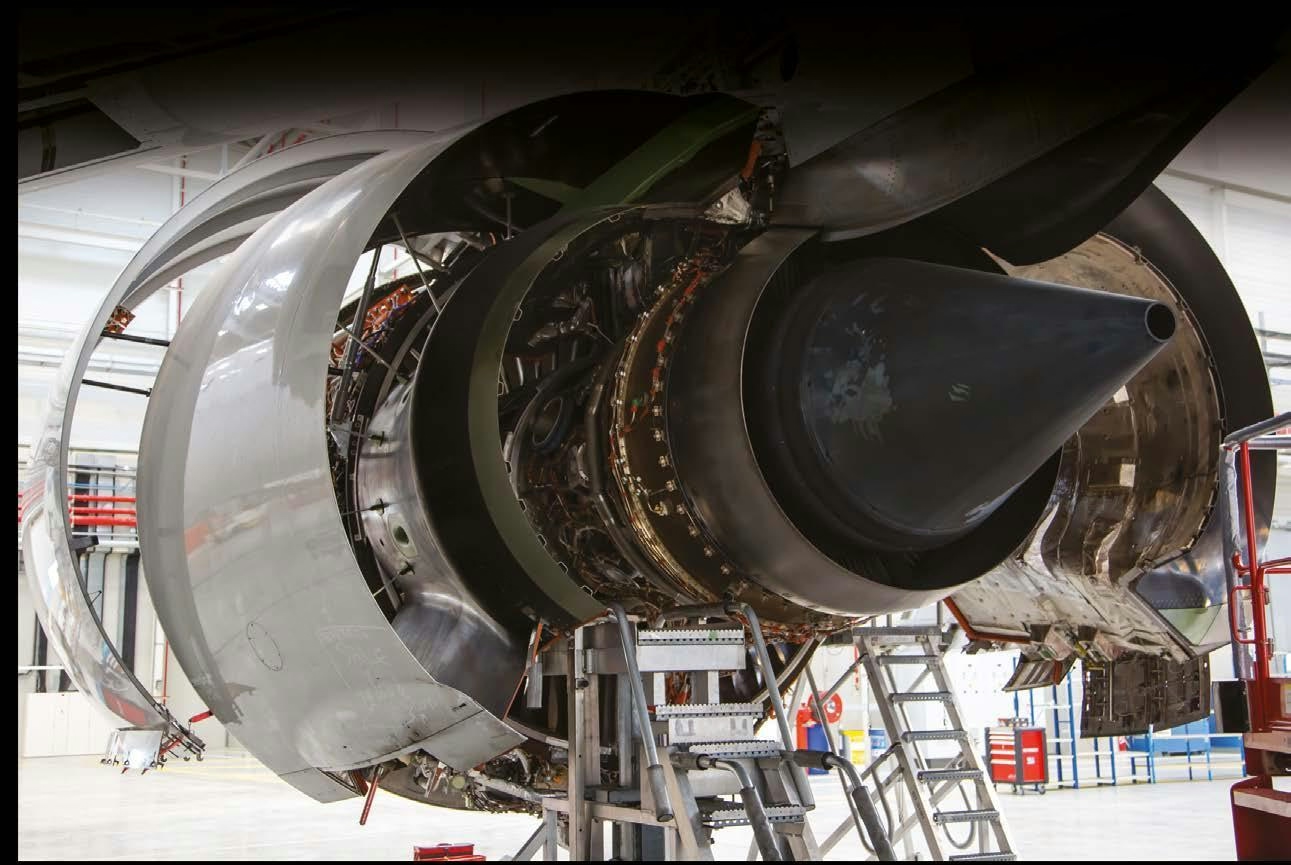
Crestone Air Partners has completed pre-delivery payment (PDP) financing alongside a sale and leaseback arrangement for four CFM LEAP-1B engines with Dominican Republic-based carrier Arajet. This transaction represents Crestone’s first engagement in PDP financing and marks its entry into next-generation engine assets, thereby expanding the firm’s capabilities across the aircraft lifecycle.

Supporting Arajet’s Fleet Expansion

The financing deal is designed to underpin Arajet’s ongoing fleet growth and engine operations, while simultaneously providing Crestone with a stable, long-term contracted cash flow. Istvan Jambor, Vice President of Fleet at Arajet, highlighted the importance of reliable capital partners in scaling the airline’s operations. He noted that Crestone demonstrated a clear understanding of Arajet’s financing requirements and delivery timeline, structuring a solution tailored to the airline’s expansion strategy.

Kevin Milligan, CEO of Crestone Air Partners, underscored the significance of the agreement, emphasizing the company’s ability to offer flexible financing solutions across the asset lifecycle. He welcomed Arajet as a new airline partner and described the deal as a pivotal step in Crestone’s expansion into next-generation engine assets.

Industry Context and Challenges

The LEAP-1B engines, which power Boeing’s 737 MAX family, are recognized as the latest generation of fuel-efficient narrow-body technology. As airlines worldwide seek to modernize their fleets and enhance operational efficiency, demand for these engines is expected to increase, particularly in light of Boeing’s plans to ramp up 737 MAX production.

However, the industry is contending with significant challenges. Supply chain constraints and potential delays in engine availability have surfaced, partly due to CFM’s imposition of a capped life limit on a critical LEAP-1B component. Southwest Airlines has publicly expressed concerns regarding these limitations, warning of possible delivery delays. Such issues pose risks for both lessors and operators as they strategize fleet growth and maintenance schedules.

Market dynamics are also evolving amid heightened demand for GE Aerospace’s LEAP engines, placing pressure on suppliers and competitors alike. Engine manufacturers including Rolls-Royce and Safran are closely monitoring these developments and may adjust their strategic approaches in response to shifting market conditions.

Preparing for Maintenance Demands

The maintenance, repair, and overhaul (MRO) sector is proactively preparing for the anticipated increase in LEAP-1B-powered aircraft. New facilities, such as Lufthansa Technik’s engine MRO shop in Calgary, are being established to support the expanding Boeing 737 MAX fleet. These developments aim to ensure operators have access to essential maintenance services as the number of next-generation engines in service continues to grow.

Crestone’s investment strategy, which centers on engine leasing, remains a foundational element of its platform. By extending its focus to include the latest generation of engine technology, the company is positioning itself to navigate both the opportunities and challenges presented by a rapidly evolving aviation landscape.

More news
Southwest Airlines Opens Global Innovation Center to Enhance Travel Experience

Southwest Airlines Opens Global Innovation Center to Enhance Travel Experience

Southwest Airlines Opens Global Innovation Center to Enhance Travel Experience Southwest Airlines has embarked on a transformative journey in modernizing air travel with the inauguration of its first Global Innovation Center outside the United States, located in Hyderabad, India. This strategic expansion underscores the Dallas-based carrier’s commitment to harnessing advanced technologies aimed at optimizing flight scheduling, enhancing passenger safety, and minimizing airport delays. A Strategic Leap in Aviation Technology In response to the surge in global air traffic and the growing demands of modern travelers, Southwest’s new facility at Sattva Knowledge City in Hyderabad is envisioned as a digital command center that will directly support the airline’s core operations in Texas. The center is projected to grow to accommodate up to 1,000 engineering and technology professionals specializing in artificial intelligence, machine learning, cybersecurity, and next-generation product development. This initiative places Southwest alongside other leading aviation and hospitality companies, such as American Airlines and Marriott International, which have also established significant technology operations in India. The overarching objective is to cultivate a robust innovation ecosystem that delivers a more stable and seamless travel experience for passengers worldwide. Navigating Opportunities and Challenges The choice of India for the Global Innovation Center was influenced by the region’s abundant engineering talent. Lauren Woods, Executive Vice President and Chief Information Officer at Southwest Airlines, emphasized that the Hyderabad team will be fully integrated into the company’s core software engineering and enterprise operations, distinguishing it from a conventional back-office support function. Despite the promising outlook, the expansion presents several challenges. Southwest must carefully navigate complex international regulations, ensure that the integration of advanced technologies does not disrupt existing operations, and manage the considerable costs associated with establishing and maintaining a global hub. These factors have elicited mixed reactions from investors, with some expressing concerns over the financial implications, while others regard the move as a forward-looking strategy to enhance customer experience and operational efficiency. Industry Impact and Competitive Response Southwest’s substantial investment in digital transformation is poised to influence the broader aviation industry. Competitors may respond by accelerating their own technology initiatives to preserve market competitiveness, whereas others might pursue cost-cutting measures to counterbalance the perceived threat posed by Southwest’s innovation efforts. Looking Ahead The Hyderabad Global Innovation Center represents a significant commitment by Southwest Airlines to future-proof its operations and improve the overall travel experience. As the airline expands its technology workforce and integrates cutting-edge solutions, the success of this endeavor will hinge on its ability to balance innovation with operational stability and financial prudence. For travelers, the anticipated benefits include fewer disruptions, enhanced reliability, and a more enjoyable journey from check-in to touchdown.
EVA Air Increases Kaohsiung Flights Using Wide-Body Jets

EVA Air Increases Kaohsiung Flights Using Wide-Body Jets

EVA Air Expands Kaohsiung Operations with Introduction of Wide-Body Aircraft EVA Air has commenced the deployment of larger aircraft on key routes from Kaohsiung, reflecting its strategic intent to capitalize on growing travel and business demand in southern Taiwan. Beginning Wednesday, the airline’s Airbus A330-300 jets, each accommodating 309 passengers, will service flights from Kaohsiung to Macau, Shanghai Pudong, and Tokyo Narita. This upgrade increases seat capacity on these routes by nearly 70%, according to the Central News Agency (CNA). This expansion forms part of EVA Air’s broader initiative to develop Kaohsiung as a secondary hub, thereby strengthening its network in southern Taiwan. EVA Air President Sun Chia-ming acknowledged the crucial support from the Ministry of Transportation and Communications and the Civil Aviation Administration, which facilitated the airline’s capacity enhancement at Kaohsiung International Airport. The launch of the upgraded service was celebrated with a traditional water salute and a boarding area designed to highlight the A330-300 aircraft. Passengers expressed enthusiasm for the change, with one traveler, identified as Lin, emphasizing that the introduction of wide-body jets would simplify access to larger aircraft for residents of southern Taiwan, eliminating the need to transit through northern airports. EVA Air emphasized the advantages of the A330-300, including its twin-aisle configuration, modernized entertainment systems, increased cabin space, and complimentary in-flight Wi-Fi. The airline’s Kaohsiung network now offers 56 weekly flights to destinations such as Seoul, Hong Kong, Fukuoka, Osaka, Macau, Shanghai Pudong, and Tokyo Narita. Industry Challenges and Competitive Landscape EVA Air’s expansion occurs amid a complex and challenging aviation environment. Rising fuel costs continue to exert pressure on Asia-Pacific carriers, compelling airlines to carefully balance competitive pricing with operational expenditures. The shift to wide-body jets also raises considerations regarding fuel efficiency and environmental impact, as the aviation industry faces heightened scrutiny over sustainability practices. The competitive landscape is further intensified by regional developments. Airlines such as Vietnam Airlines are broadening their route networks, while established carriers including Cathay Pacific, Singapore Airlines, and Malaysia Airlines are adjusting their flight frequencies to Europe in response to shifting demand patterns away from the Middle East. These dynamics may influence passenger preferences and heighten competition on critical routes. As EVA Air advances its strategy of deploying larger aircraft and expanding services from Kaohsiung, it must navigate fluctuating demand, cost pressures, and evolving expectations related to environmental sustainability. The effectiveness of this approach will depend on the airline’s capacity to adapt to market changes while addressing the needs of travelers in southern Taiwan.
The Development of the Jet Engine in America

The Development of the Jet Engine in America

The Development of the Jet Engine in America Early Vision and Innovation Sir Frank Whittle, a pioneering Royal Air Force officer, envisioned a transformative future for aviation, one in which aircraft would fly higher, faster, and more safely than those powered by conventional piston engines and propellers. His groundbreaking ideas emerged in the late 1920s, culminating in a graduation thesis that emphasized the necessity for aircraft to achieve altitudes and speeds beyond the capabilities of existing technology. In 1930, Whittle secured a patent for his initial jet engine design. However, the economic hardships of the Great Depression and the political uncertainties preceding World War II hindered early support for his concept. Despite these challenges, Whittle’s design remained technically sound and continued to evolve. Although a French inventor had previously filed a patent for a jet engine, the technology was not yet practical. Concurrently, German engineers were developing their own prototypes during the 1930s. Whittle, after gaining admission to Cambridge University, persisted in refining his engine despite financial difficulties. By 1939, as Europe approached war, British military leaders began to recognize the potential of his work, particularly in light of Germany’s rapid advancements in military technology. Transatlantic Collaboration and Wartime Advancements A pivotal moment occurred in October 1941, just two months before the attack on Pearl Harbor, when British officials discreetly introduced Whittle’s jet engine to American military representatives at a Boston airport. This event marked the beginning of significant U.S. involvement in jet engine development. American engineers, both civilian and military, swiftly engaged in refining the technology. During World War II, jet engines revolutionized aviation by enabling aircraft to reach unprecedented altitudes and speeds, fundamentally altering the nature of aerial combat and military strategy. Challenges and Industry Evolution The journey toward widespread adoption of jet engines in the United States was not without obstacles. Development efforts were periodically disrupted by fluctuations in government funding and shifting defense budget priorities, often influenced by broader economic instability and changes in legislation and regulation. The global economy also played a critical role; for instance, geopolitical tensions such as the Iran war impacted demand within the civil aviation engine market. As competition intensified within the aviation sector, companies adapted by revising their strategies, implementing cost-reduction measures, and embracing new technologies to maintain their competitive edge. Firms like Jet Aviation exemplified this drive for innovation by incorporating drones for aircraft inspections, reflecting the industry’s ongoing commitment to technological advancement. The development of the jet engine in America thus stands as a testament to international collaboration, technological perseverance, and adaptability amid evolving economic and political conditions. Beyond its transformative impact on military aviation during World War II, the jet engine laid the groundwork for the modern era of commercial flight, fundamentally reshaping global transportation of people and goods.
Qatar Airways Reports $1.94 Billion Profit Amid Order for 210 Boeing Widebodies

Qatar Airways Reports $1.94 Billion Profit Amid Order for 210 Boeing Widebodies

Qatar Airways Reports $1.94 Billion Profit Amid Record Boeing Order Strong Financial Performance Despite Regional Challenges Qatar Airways has announced a post-tax profit of $1.94 billion for the financial year ending March 31, 2026, highlighting its resilience and growth amid ongoing geopolitical tensions in the Middle East. The Doha-based flag carrier, a member of the oneworld alliance, recorded its highest-ever operating profit of $4.1 billion (QAR 15.2 billion), according to Group Chief Executive Officer Hamad Al-Khater. This robust financial performance underscores the airline’s ability to navigate a complex operating environment while maintaining strong demand. During the 2025/26 financial year, Qatar Airways transported 41.8 million passengers and moved over 1.43 million tons of cargo, solidifying its position as the world’s largest air freight carrier with a 12% share of the global market. The airline’s success was driven by sustained passenger demand, efficient cargo operations, and ongoing operational improvements, despite persistent economic uncertainty and regional conflicts. “It is not often that a single financial year asks an organisation to demonstrate both the best of what it can achieve and the depth of what it can withstand. The 2025/26 financial year did both, and the Qatar Airways Group rose to each in turn,” Al-Khater remarked, emphasizing the company’s resilience. Fleet Expansion and Strategic Growth Qatar Airways currently operates a fleet of approximately 270 aircraft, serving over 160 destinations worldwide. Its network is primarily supported by widebody aircraft, including the Airbus A350-900 and A350-1000, Boeing 777s, and 787 Dreamliners. Although its Airbus A380s remain grounded, the airline is preparing for significant expansion through a landmark order for up to 210 new Boeing widebody jets. This includes 130 Boeing 787s—the largest Dreamliner order ever placed—30 Boeing 777-9s, and options for an additional 50 aircraft. This transaction represents the largest widebody order in Boeing’s history and secures vital delivery slots amid strong demand for next-generation aircraft. This substantial investment aligns with Qatar Airways’ broader strategy to maintain a younger, more fuel-efficient fleet while supporting its ambitious growth objectives. The airline is also expanding its global reach, with new routes planned for Latin America, including Venezuela and Colombia, underscoring its commitment to international network development. Market Context and Outlook Qatar Airways’ financial achievements come amid a highly competitive aviation market. Rival carriers such as Ryanair have also reported strong results, partly due to effective fuel price hedging strategies. Boeing’s improved first-quarter deliveries and reduced losses have further bolstered confidence among major customers, likely influencing Qatar Airways’ recent fleet decisions. Despite the operational impacts of regional conflicts in the latter part of the financial year, Qatar Airways’ strong financial and operational results reflect the continued strength of its recovery and growth strategy. The carrier is well positioned for further success in the coming years, supported by its strategic investments and expanding global footprint.
Maxamation Introduces AI-Based Flight Management System for Airlines

Maxamation Introduces AI-Based Flight Management System for Airlines

Maxamation Launches AI-Powered Flight Management System to Enhance Airline Profitability Aviation technology company Maxamation has introduced RM Flight Management, an AI-driven, fully managed revenue optimization service aimed at helping airlines increase profitability without expanding their internal teams. By integrating advanced automation with continuous expert oversight, the system addresses the widespread shortage of skilled revenue management analysts in the aviation industry. This hybrid approach enables airlines to maximize yields, optimize seat inventory, and improve operational efficiency amid ongoing market challenges. Addressing Talent Shortages in Revenue Management The launch of RM Flight Management comes at a critical juncture for the aviation sector. As airlines rebuild their networks and capacity in the face of economic uncertainty, many are struggling to recruit and retain experienced revenue management professionals. This talent gap, exacerbated by the pandemic recovery, is especially pronounced among smaller and mid-sized carriers that find it difficult to compete with larger airlines on compensation packages. Maxamation warns that airlines lacking dedicated revenue optimization expertise risk leaving significant revenue opportunities unexploited. A Hybrid Model Combining AI and Expert Oversight At the heart of RM Flight Management lies Maxamation’s proprietary revenue optimization platform, which is complemented by a team of airline revenue specialists. These experts actively monitor and manage flight inventory, pricing strategies, and demand patterns in real time. Unlike traditional software-only solutions, RM Flight Management provides continuous operational support, with specialists working directly within an airline’s inventory systems to adjust pricing and availability dynamically. Maxamation estimates that this approach can yield revenue increases of up to 15% through more effective optimization and accelerated decision-making. The service offers several key advantages. It enables airlines to increase revenue per flight by continuously optimizing seat utilization across their networks. It also grants carriers direct access to experienced revenue management professionals without the need to recruit or train additional internal staff. Furthermore, the solution provides flexible resourcing options, allowing airlines to scale support in line with operational demands, seasonal fluctuations, or network expansions. Industry Challenges and Competitive Landscape While RM Flight Management presents clear benefits, Maxamation acknowledges several challenges that could affect its adoption. Integrating the AI-based system with existing airline infrastructure, ensuring compliance with regulatory requirements, and maintaining stringent data security standards are critical considerations. Additionally, some traditional industry players may exhibit skepticism toward AI-driven solutions, potentially slowing their acceptance. The competitive landscape is also evolving, with companies such as Salesforce and Intuit enhancing their AI offerings in response to innovations like Maxamation’s. Although current AI demand is concentrated among early adopters, industry analysts suggest that expanding adoption to mid-cap airlines could foster a more stable and sustainable growth trajectory for AI-driven aviation technologies. CEO Remarks on Operational Pressures Maxamation’s CEO highlighted the operational strain airlines face due to shortages of revenue management analysts. He noted, “We hadn’t previously appreciated how many airlines face either short- or long-term shortages of revenue management analysts. Airlines know they are leaving money on the table if these staffing gaps remain unresolved.” As the aviation industry continues to adapt to a rapidly changing environment, solutions such as RM Flight Management offer a pragmatic approach that combines the capabilities of artificial intelligence with the expertise of seasoned professionals to enhance profitability and operational efficiency.
Berjaya Air Receives First ATR HighLine Aircraft

Berjaya Air Receives First ATR HighLine Aircraft

Berjaya Air Introduces the World’s First ATR HighLine Aircraft Berjaya Air has become the launch customer for the world’s first ATR 72-600 equipped with ATR’s new HighLine all-business class cabin, following regulatory approvals from both the European Union Aviation Safety Agency (EASA) and Malaysian civil aviation authorities. This certification marks a significant milestone, enabling the airline to commence commercial operations on the new Subang–Koh Samui route within days. Innovative Cabin Design and Features The HighLine configuration, certified earlier this month, is now authorized for commercial service globally and is available to any operator with an ATR order. The aircraft features a 26-seat layout arranged in a 1-by-1 single-aisle configuration, outfitted with Geven ETEREA seats, which ATR describes as the widest ever installed on this platform. The design replaces traditional overhead bins with valence panels, thereby enhancing interior space and allowing more natural light into the cabin. ATR positions this premium cabin as an appealing option for resort and charter operators, while preserving the turboprop’s well-known operational efficiency. Strategic Deployment and Market Challenges Berjaya Air intends to deploy the new aircraft across a regional network that includes Malaysia, Thailand, Vietnam, and Indonesia, focusing on resort destinations such as Redang and Langkawi, which complement the Berjaya Group’s hotel and resort portfolio. The aircraft will also be available for charter services throughout the Asia-Pacific region. A second ATR 72-600 with the same HighLine configuration is scheduled for delivery in the third quarter of 2026. Despite the promising prospects, Berjaya Air faces several challenges in introducing this all-business class service. The operating costs associated with maintaining a premium cabin are considerably higher, requiring the airline to attract sufficient high-paying passengers to justify the elevated ticket prices. This initiative also arrives amid intensifying competition in the region, where rival carriers may respond by launching their own premium offerings, potentially triggering price wars or aggressive marketing efforts. Industry Perspectives and Future Outlook Market response will be pivotal to the success of Berjaya Air’s HighLine service. Should the airline effectively capitalize on the growing demand for premium regional travel, it could establish itself as a leader in this emerging segment. However, the competitive landscape is expected to evolve rapidly as other operators seek to capture a share of the premium market. ATR chief executive Nathalie Tarnaud Laude remarked, “The ATR HighLine cabin collection opens new possibilities for operators seeking exceptional onboard comfort while leveraging all the efficiency and operational benefits of the aircraft. Together with Berjaya Air, we are demonstrating the inherent versatility of the ATR platform, capable of adapting to a wide range of operator needs without compromising its core strengths.” As Berjaya Air prepares to launch this new service, industry observers and competitors will closely monitor the airline’s ability to balance premium offerings with operational sustainability.
Amca Secures $300 Million Series B to Expand Defense and Aviation Manufacturing

Amca Secures $300 Million Series B to Expand Defense and Aviation Manufacturing

Amca Secures $300 Million Series B to Expand Defense and Aviation Manufacturing Amca has successfully raised $300 million in a Series B funding round, achieving a valuation exceeding $1 billion. The company intends to utilize this capital to scale its engineering and manufacturing infrastructure, aiming to reinforce the resilience of U.S. defense and aviation supply chains. This infusion of funds comes at a critical juncture, as the domestic industrial base confronts increasing challenges. Defense contractors, aerospace manufacturers, and government agencies continue to face persistent bottlenecks related to component sourcing, qualification timelines, and production scalability. Addressing Legacy Supply Chain Challenges Amca is focused on resolving a fundamental operational issue within aerospace and defense manufacturing: the reliance on fragmented, legacy production systems originally designed for slower procurement cycles and limited production variability. In an era marked by rising geopolitical tensions and accelerated defense modernization efforts, manufacturers are under mounting pressure to shorten qualification timelines, enhance domestic production resiliency, and expand flexible manufacturing capacity for mission-critical systems. The company’s platform is engineered to streamline the design, qualification, and manufacture of complex aviation and defense components, delivering faster and more efficient workflows compared to traditional industrial processes. The substantial size of this financing round underscores growing investor confidence in industrial infrastructure firms that support national security and advanced manufacturing priorities, particularly those focused on modernizing production workflows within highly regulated and high-reliability sectors. Navigating a Competitive and Constrained Ecosystem Amca’s expansion occurs within a competitive landscape dominated by established industry leaders such as Lockheed Martin and Pratt & Whitney Canada, both of which maintain significant contracts and market presence. These incumbents may respond by enhancing their own production capabilities or securing additional funding to preserve their competitive positions. Furthermore, emerging companies like Astranis, which are expanding satellite production, could indirectly intensify competition by diverting attention and resources from traditional defense manufacturing. Supply chain constraints remain a pervasive concern across the aerospace and defense ecosystem. Aging supplier networks, workforce shortages, and extended lead times continue to impede the production of critical systems and replacement parts. In response, manufacturers are increasingly seeking methods to compress engineering validation, procurement, and qualification cycles while maintaining stringent regulatory and performance standards. Building a Vertically Integrated, Technology-Enabled Platform Amca’s strategic approach centers on developing a vertically integrated, technology-enabled production platform capable of supporting both low-volume specialized manufacturing and larger-scale deployment across defense and aviation applications. The company positions this funding round as a step toward enhancing broader industrial resiliency, emphasizing the necessity for domestic manufacturing systems that operate with greater speed, flexibility, and responsiveness amid today’s complex geopolitical environment. This transaction also reflects a broader shift in U.S. industrial policy and private capital markets, where manufacturing infrastructure adjacent to defense is increasingly recognized as a strategic capability rather than a cyclical sector. Investors are demonstrating heightened interest in companies linked to aerospace production, critical infrastructure, advanced materials, supply chain digitization, and domestic manufacturing capacity. This trend aligns with government and major contractor efforts to reduce operational dependencies and improve production readiness. Amca highlights that much of the existing industrial base was constructed around outdated operating assumptions that no longer align with the pace and flexibility demanded by modern defense and aviation systems. The new capital will support the scaling of manufacturing capacity, expansion of engineering and qualification capabilities, and acceleration of production infrastructure deployment for critical component programs. With this financing, Amca joins a growing cohort of industrial technology companies dedicated to modernizing the operational mechanics underpinning defense and aerospace manufacturing, focusing on production innovation rather than solely on next-generation weapons systems or software platforms.
Archer Aviation Sees Growth Across Three Revenue Streams, Prompting Rating Upgrade

Archer Aviation Sees Growth Across Three Revenue Streams, Prompting Rating Upgrade

Archer Aviation Sees Growth Across Three Revenue Streams, Prompting Rating Upgrade Archer Aviation has garnered increased attention from equity research analysts, notably First Principles Partners, due to its significant growth across three distinct revenue streams. This development has led to a rating upgrade, signaling growing optimism about the company’s prospects within the rapidly evolving urban air mobility sector. Analytical Perspective and Market Context First Principles Partners, recognized for its emphasis on technology, innovation, and sustainability investments, employs a "First Principles" methodology that deconstructs complex financial and technological challenges to their fundamental components. This approach has enabled the firm to identify undervalued opportunities in emerging industries, including the electric vertical takeoff and landing (eVTOL) aircraft market where Archer Aviation operates. Archer’s recent momentum unfolds amid a highly competitive environment. Its key rival, Joby Aviation, is preparing to release its first quarter 2026 financial results, highlighting the intensifying competition within the eVTOL space. Archer’s forthcoming Q1 earnings report is anticipated with interest by investors and analysts, who will be closely monitoring whether the company’s increased cash burn is translating into measurable progress toward commercialization. Investor Sentiment and Future Considerations Despite a recent surge in Archer’s stock price, some investors remain cautious. Prominent investor Adam Spatacco has voiced reservations about the current risk-reward balance, suggesting that the company’s valuation may not fully reflect ongoing challenges. These challenges include the necessity to demonstrate regulatory advancements, secure strategic partnerships, and maintain adequate liquidity as Archer advances toward commercial operations. Looking forward, investor confidence is expected to depend heavily on several critical factors. Progress in regulatory approvals with aviation authorities will be essential for Archer’s market entry. Additionally, announcements of partnerships with established industry players could strengthen confidence in the company’s commercialization strategy. Finally, as Archer increases its expenditures, its capacity to manage cash flow and sustain liquidity will remain under close scrutiny. While Archer Aviation’s expansion across multiple revenue streams is encouraging, the company confronts substantial obstacles in establishing itself within a competitive and capital-intensive industry. The upcoming quarters will be crucial in determining whether Archer can transform its early gains into enduring, long-term success.
SriLankan Airlines Expands Use of AI to Modernize Operations

SriLankan Airlines Expands Use of AI to Modernize Operations

SriLankan Airlines Expands Use of AI to Modernize Operations HOUSTON, TX – May 20, 2026 – SriLankan Airlines is advancing its digital transformation by renewing a critical six-year partnership with technology provider PROS, embedding artificial intelligence and real-time data at the heart of its commercial strategy. Effective from January 1, 2026, this renewed agreement represents a strategic pivot toward sophisticated digital retailing as the airline aims to bolster its financial recovery and maintain competitiveness within the global aviation market. While technology has long supported airline booking and operational efficiency, SriLankan Airlines’ latest initiative reflects a deeper integration of AI into its revenue management and sales processes. The partnership will enable the carrier to continue utilizing the PROS Platform to revamp its digital sales journey, enhancing every stage from initial customer engagement through to booking confirmation. Yasantha Dissanayake, Acting Chief Executive Officer and Group CFO of SriLankan Airlines, emphasized the significance of this collaboration, stating that the renewed partnership with PROS aligns with the airline’s strategy to advance modern airline retailing and deliver relevant, responsive offers tailored to today’s travelers. Embracing Dynamic Retailing in Aviation The airline industry is undergoing a profound transformation, moving away from static fare structures toward models based on continuous pricing and dynamic offer generation. Rather than presenting a limited set of fixed price points, airlines are increasingly focused on generating unique, optimized fares for each individual customer search. This evolution has intensified competition among technology providers such as PROS, Amadeus, and Sabre. SriLankan Airlines will continue to deploy PROS’s suite of AI-driven solutions, including PROS airTRFX, which automatically creates dynamic landing pages featuring real-time fares responsive to search demand. The airline will also utilize PROS FastSearch to accelerate fare discovery and reduce customer drop-off during the booking process. Additionally, PROS airWire will integrate live, bookable fares directly into digital advertisements on platforms like Google and Meta, ensuring price consistency from advertisement to final booking. These tools are powered by a sophisticated AI engine that analyzes millions of data points, encompassing historical booking trends, competitor pricing, current search volumes, and customer willingness to pay. This enables the delivery of the most effective and personalized offers in real time. Sunil John, Chief Executive Officer at PROS, highlighted SriLankan Airlines’ role in digital innovation, noting that the long-term renewal underscores a shared commitment to innovation, performance, and unlocking new revenue potential through real-time offer marketing. Navigating Challenges Amid Industry Shifts For SriLankan Airlines, investing in advanced AI technology is a strategic imperative rather than a discretionary choice. The airline faces the dual challenge of ensuring its infrastructure can support these sophisticated systems while preparing its workforce to adapt to evolving digital processes. Balancing technological advancement with operational readiness and staff training remains a critical focus as the airline modernizes. This move by SriLankan Airlines is also expected to influence the broader market, intensifying competition and encouraging other carriers to enhance their AI capabilities. Such developments may accelerate a wider industry shift toward more advanced, AI-driven operations, as airlines strive to offer increasingly personalized, efficient, and competitive services. By deepening its commitment to AI, SriLankan Airlines is positioning itself for future growth and contributing to the establishment of new standards for digital transformation within the aviation sector.
Aircraft Leasing Activity in Nigeria Remains Limited Despite Sector Reforms

Aircraft Leasing Activity in Nigeria Remains Limited Despite Sector Reforms

Aircraft Leasing Activity in Nigeria Remains Limited Despite Sector Reforms Progress in Regulatory Compliance Nigeria has made significant strides in aligning its aviation sector with international standards, achieving a 75.5% compliance score on the Cape Town Convention Index. This improvement follows reforms to the Irrevocable Deregistration and Export Request Authorisation (IDERA) framework under the Nigerian Civil Aviation Authority (NCAA), spearheaded by Aviation Minister Festus Keyamo. These reforms were designed to bolster creditor protections and enhance Nigeria’s standing among global aircraft lessors and financiers. Industry experts, including aviation finance executive Gemade, have hailed Nigeria’s removal from the Aviation Working Group (AWG) watchlist as a pivotal achievement. This development signals to international stakeholders the country’s commitment to adopting global best practices. Enhanced regulatory compliance has improved Nigeria’s reputation, making it a more attractive destination for lessors and financial institutions seeking stable and predictable markets. Persistent Challenges Limiting Leasing Activity Despite these regulatory advancements, aircraft leasing activity in Nigeria remains constrained. Gemade cautions that reforms alone are insufficient to stimulate large-scale investment or leasing. Investor confidence is still in a recovery phase, with leasing companies maintaining a cautious stance. This “lagging effect” means financiers require consistent evidence of policy implementation and operational reliability before increasing their exposure to Nigerian airlines. Beyond legal protections, lessors evaluate operational efficiency, airport infrastructure, maintenance capacity, fuel price stability, taxation, and broader economic conditions. Ongoing challenges in these areas continue to impede leasing activity. For instance, high jet fuel prices threaten to disrupt Nigerian airline operations, exacerbating difficulties in accessing international leasing markets. Similar structural issues affect the wider African aviation market, limiting the region’s appeal to global lessors, although some firms like TrueNoord are expanding their footprint. The cautious approach of global leasing firms is reflected in the scarcity of high-profile deals. Air Peace’s dry lease transaction in late 2025 remains one of the few publicly visible aircraft financing agreements involving a Nigerian airline since the reforms. The Need for a Holistic Aviation Strategy Gemade emphasizes that sustainable investment inflows require more than regulatory compliance. He advocates for a comprehensive approach that includes coordinated development of infrastructure, airline operations, maintenance capabilities, and financial systems. He cites Saudi Arabia as an example of a country pursuing an integrated aviation strategy, combining investments in airlines, airport infrastructure, and maintenance facilities to attract long-term capital. In contrast, Nigeria’s aviation sector remains fragmented, with airlines operating independently and competing for limited aircraft supply and financing. This fragmentation weakens their bargaining power and increases operating costs. Global supply chain disruptions and aircraft shortages further complicate the landscape. The International Air Transport Association (IATA) projects that global aircraft order backlogs will reach approximately 17,000 units by 2025, resulting in delivery delays and higher leasing costs. While sustained high oil prices could potentially benefit aircraft lessors such as AerCap, the immediate impact on Nigeria’s aviation sector poses significant challenges, particularly for smaller and emerging market carriers. Despite recent reforms, Nigeria’s aviation sector continues to confront structural and market obstacles that restrict the growth of aircraft leasing activity. Overcoming these challenges will require sustained and coordinated efforts across the entire aviation ecosystem.
line









