Изображение

AeroGenie — Ваш интеллектуальный второй пилот.

Спрашивайте что угодно. Анализируйте все. Действуйте незамедлительно.

В тренде

Categories

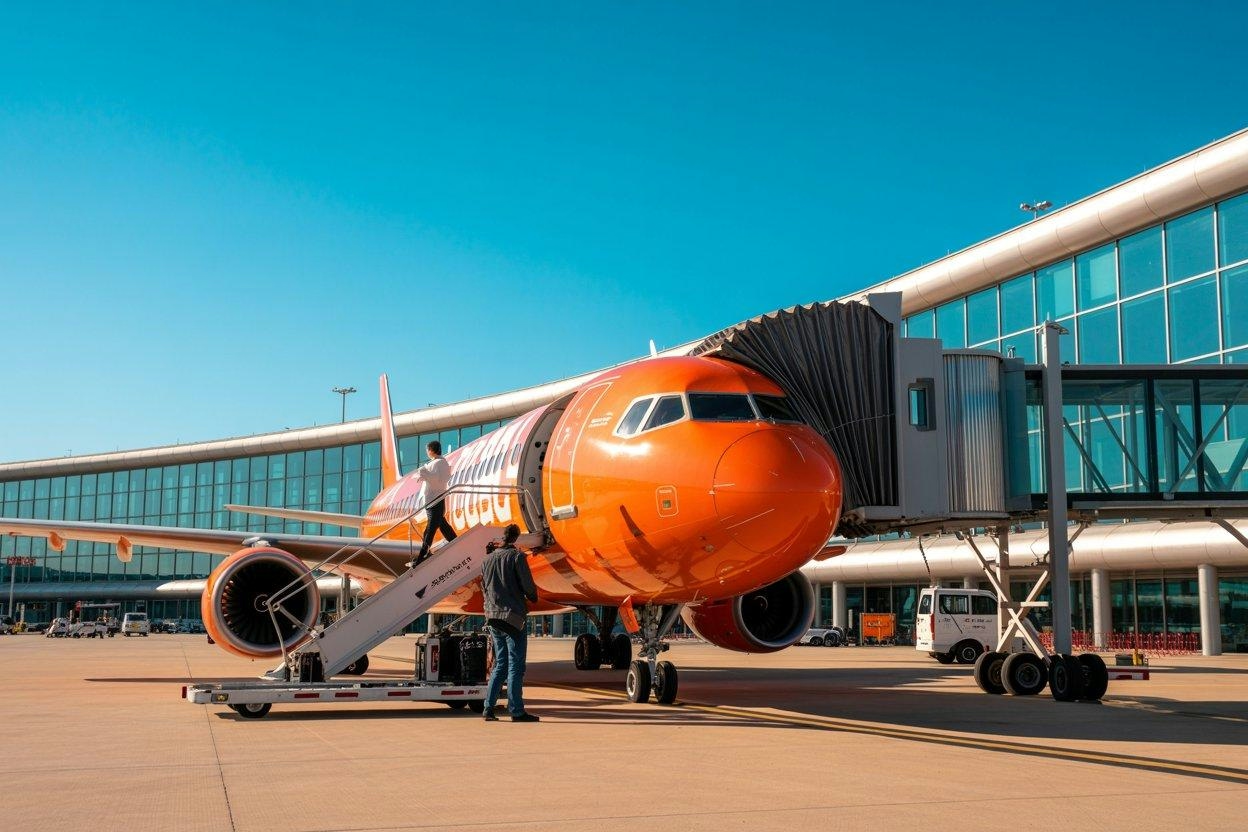
easyJet Adds Extra Seat Space on 237 Airbus A320neos as Newcastle Base Opens
March 23, 2026By ePlane AI
easyJet Adds Extra Seat Space on 237 Airbus A320neos as Newcastle Base Opens
0
0
easyJet
Airbus A320neo
Aircraft Cabin Interiors

easyJet Enhances Passenger Comfort and Expands UK Network with Newcastle Base Launch

easyJet has announced significant developments in both its fleet and network, underscoring the airline’s commitment to future growth and passenger experience. The British low-cost carrier has partnered with Mirus Aircraft Seating to equip nearly 240 incoming Airbus A320neo family aircraft with new lightweight seats designed to provide additional legroom. Concurrently, easyJet celebrated the opening of its new base at Newcastle International Airport, marking a strategic expansion in the northeast of England.

Fleet Upgrade: Introducing the Kestrel Seat

In collaboration with Norfolk-based Mirus Aircraft Seating, easyJet will install the ‘Kestrel’ slimline seats on 237 Airbus A320neo and A321neo aircraft scheduled for delivery from 2028. These seats offer two inches of extra legroom, enhancing passenger comfort without compromising capacity. Beyond comfort, the Kestrel seats are approximately 20% lighter than the current models, contributing to significant sustainability gains. The weight reduction is expected to lower fuel consumption, enabling easyJet to cut more than 40,000 tonnes of carbon dioxide emissions annually.

easyJet CEO Kenton Jarvis emphasized that the new seats will be introduced exclusively on new aircraft, with no plans to retrofit older planes currently fitted with Recaro seats. He noted that removing perfectly serviceable seats would be an unnecessary expense. Jarvis reaffirmed the airline’s ongoing commitment to maintaining a comfortable seat pitch and overall passenger experience across its fleet.

Network Expansion: Launch of Newcastle Base

The inauguration of easyJet’s Newcastle base represents the airline’s 11th UK hub and its third new base in three years, following recent openings in Birmingham and London Southend. This expansion is expected to support approximately 1,200 jobs, including 140 new positions for pilots and cabin crew. Previously, easyJet served Newcastle on a limited basis using aircraft and staff from other bases, but the establishment of a dedicated base will enable the airline to operate up to 86 weekly flights to 22 destinations—a growth of 85% compared to the previous summer.

Newcastle’s strategic location also positions it as a convenient airport for travelers from Southern Scotland, North Yorkshire, and Cumbria. To celebrate the launch, easyJet partnered with catering company Gregg’s to promote its new routes, reinforcing the airline’s commitment to regional connectivity and customer service.

Operational Highlights at Newcastle

easyJet’s Newcastle operations will include daily flights to key destinations such as Belfast and Bristol, alongside six weekly flights to Palma. This expansion reflects easyJet’s broader strategy to strengthen its presence across the UK and enhance accessibility for passengers in underserved regions.

More news
ACIA Aero Leasing Secures Financing Agreement with Volofin

ACIA Aero Leasing Secures Financing Agreement with Volofin

ACIA Aero Leasing Secures Financing Agreement with Volofin ACIA Aero Leasing, a specialist in regional aircraft leasing, has finalized a financing transaction with volofin Capital Management, a firm focused on finance and alternative asset management. The agreement involves the refinancing of two ATR 72-600 aircraft currently leased to Emerald Airlines. In addition to the refinancing, the deal includes an accordion facility intended to fund an additional aircraft. ACIA has already utilized a portion of this facility to facilitate the closing of a sale and leaseback arrangement involving two ATR 72-600s operated by EWA Air. Strategic Partnership and Future Prospects Bradley Gordon, Senior Vice President of Corporate Finance and Risk at ACIA, expressed enthusiasm about the new partnership with volofin. He highlighted the flexibility of the financing structure, which was tailored to meet ACIA’s specific needs. Gordon also emphasized the efficiency with which both transactions were completed, attributing this success to the professionalism and dedication of the volofin team. He noted that adding volofin to ACIA’s pool of lenders represents a significant step toward diversifying and strengthening the company’s financing base, and he anticipates a long and productive collaboration. Robert Jack, Co-CEO and Co-Founder of volofin, also commented on the partnership, praising ACIA’s strong position in the turboprop leasing market. He expressed optimism about supporting ACIA’s ongoing growth and exploring further opportunities for collaboration in the future.
Scoot Launches Daily Singapore Flights to Tokyo Haneda, Shaping Asia’s Aviation Market

Scoot Launches Daily Singapore Flights to Tokyo Haneda, Shaping Asia’s Aviation Market

Scoot Launches Daily Singapore-Haneda Flights, Redefining Asia’s Aviation Landscape Scoot has inaugurated a new daily service connecting Singapore Changi Airport with Tokyo Haneda Airport, a development that signals a significant transformation in the Asia-Pacific aviation sector. Commencing operations on March 1, 2026, the route is served by the Boeing 787-8 Dreamliner, a widebody aircraft seldom utilized extensively by low-cost carriers. This strategic deployment places Scoot at the heart of one of Asia’s most prestigious and heavily trafficked air corridors, enhancing Singapore’s status as a global transit hub while providing improved access to central Tokyo. Strategic Importance of Tokyo Haneda Unlike Tokyo Narita Airport, which Scoot already serves, Haneda is located much closer to downtown Tokyo, offering considerably shorter travel times for passengers. This proximity makes Haneda a preferred choice for both business and leisure travelers seeking convenience and efficiency. Traditionally, Narita has been associated with budget travel, whereas Haneda is regarded as a premium gateway. By entering Haneda, Scoot is effectively elevating its service proposition, targeting a wider and more diverse customer base. This move reflects evolving passenger expectations, with travelers increasingly prioritizing airports that offer faster access to city centers. Scoot’s decision to operate from Haneda positions the airline competitively against full-service carriers, challenging the conventional market segmentation between budget and premium services. The Significance of the Singapore–Tokyo Corridor The Singapore–Tokyo route ranks among the busiest in Asia, linking two major economic and tourism centers. Passenger demand on this corridor remains robust, driven by a mix of business travel, tourism, and transit traffic. Singapore serves as a critical gateway to Southeast Asia, while Tokyo connects to Japan’s extensive domestic network. The route is characterized by intense competition, with airlines vying on frequency and service quality. Scoot’s entry introduces a compelling low-cost alternative into a market traditionally dominated by premium carriers, thereby intensifying competition and offering travelers more choice. The Role of the Boeing 787-8 Dreamliner Central to Scoot’s strategy on this route is the use of the Boeing 787-8 Dreamliner. This aircraft is prized for its fuel efficiency and suitability for medium to long-haul flights, enabling the airline to operate with lower costs per seat compared to narrowbody aircraft. This cost advantage allows Scoot to offer competitive fares while maintaining profitability in a price-sensitive market. Additionally, the Dreamliner enhances the passenger experience through its wider cabin and improved comfort, which are critical factors on flights lasting six to seven hours. The deployment of a widebody aircraft thus provides Scoot with a distinctive edge, combining affordability with capacity and operational efficiency. Integration into Scoot’s Network Expansion The new Singapore–Haneda route aligns with Scoot’s broader expansion strategy across the Asia-Pacific region, which includes adding services to both established leisure destinations and emerging markets. By incorporating Haneda into its network, Scoot strengthens its connectivity and reinforces its position as a key player in the evolving low-cost carrier segment. This development underscores the airline’s commitment to meeting changing traveler demands and reshaping the competitive dynamics of the region’s aviation industry.
Gama Aviation Approved for Part 147 Training Needs Analysis on AW139

Gama Aviation Approved for Part 147 Training Needs Analysis on AW139

Gama Aviation Secures UK CAA Approval for AW139 Training Programmes Global aviation services provider Gama Aviation has expanded its engineering training offerings following the UK Civil Aviation Authority’s (CAA) approval of its Part 147 Training Needs Analysis (TNA) and course certifications for the Leonardo AW139 helicopter. This endorsement enables Gama Aviation to deliver comprehensive B1.3, B2, and Category C theory and practical training tailored specifically to the AW139 platform. Enhancing Training Capabilities for a Widely Used Helicopter The AW139 remains one of the most prevalent helicopters deployed across diverse mission profiles worldwide, necessitating rigorous and high-quality training to ensure operational readiness. Paul Kinch, Managing Director of Gama Aviation MRO, emphasized the significance of this approval, stating that it enhances the company’s capacity to provide customers with the technical expertise required, all in compliance with stringent regulatory and training standards. Gama Aviation’s Part 147 programmes combine classroom-based instruction with hands-on practical experience, delivered by seasoned instructors with extensive industry knowledge. Olusegun Johnson, Training Manager for Part 147 at Gama Aviation MRO, expressed enthusiasm about the new capability, highlighting the organisation’s commitment to offering compliant and high-quality training for engineers working on the AW139. He also acknowledged the dedicated efforts of the team involved in the development and submission of the application, attributing the successful approval to their meticulous attention to detail and hard work.
How Data and AI Are Shaping Virgin Atlantic’s Flight Operations

How Data and AI Are Shaping Virgin Atlantic’s Flight Operations

How Data and AI Are Shaping Virgin Atlantic’s Flight Operations Virgin Atlantic is advancing its digital transformation by harnessing data and artificial intelligence (AI) to enhance decision-making, improve customer experience, and boost profitability within the rapidly evolving aviation industry. Leading this strategic initiative is Richard Masters, Vice President of Data and AI, who directs the airline’s analytical data and AI strategy across all business functions, ranging from engineering and maintenance to commercial and customer operations. From Astrophysics to Aviation: A Data-Driven Approach Masters’ background in astrophysics profoundly influences his approach to data utilization. He explains, “As an astrophysicist, you’re always trying to extract a clear signal from noisy data. That principle guides how we use data at Virgin Atlantic: to reveal insights that support better decisions.” After completing his PhD, Masters gained experience in systems and cyber intelligence, followed by roles in compliance and behavioral analytics at Ernst & Young, before joining Virgin Atlantic in 2018. His leadership during the COVID-19 pandemic highlighted the critical need for agile, data-driven decision-making amid unprecedented challenges. The post-pandemic period marked a pivotal moment for the airline. While many sectors focused on recovery, others accelerated investments in AI technologies. The advent of generative AI, exemplified by tools such as ChatGPT, represented more than a technological advancement—it became a catalyst for transformation. Masters notes, “This wasn’t just another tool—it was a catalyst.” Virgin Atlantic’s leadership recognized AI’s potential to support the entire spectrum of analysis, insight generation, and decision-making, extending well beyond the automation of routine tasks. Building a Unified Data Platform and Addressing Challenges To capitalize on AI’s capabilities, Virgin Atlantic partnered with Databricks, a leading cloud-based data and AI platform provider. This collaboration is designed to centralize and structure the airline’s data, establishing a unified foundation for advanced analytics and AI applications. Masters emphasizes the importance of this groundwork: “We knew our data needed to be in the right shape. That meant continuing the work we’d started back in 2018 to build a robust, unified platform.” However, scaling AI integration introduces significant challenges, particularly regarding data quality and security. As operational reliance on data intensifies, maintaining rigorous data governance becomes essential. “AI is only as good as the data it’s built on. We have to be vigilant about data governance and security,” Masters stresses. These concerns resonate throughout the aviation industry, with some market analysts anticipating a cautious investor shift toward more traditional, less AI-dependent sectors as the broader impact of AI unfolds. Navigating a Competitive and Responsible AI Landscape Competitors within the aviation sector are also exploring agentic AI to enhance decision-making capabilities and establish themselves as trusted partners in data-driven operations. This competitive environment underscores the urgency for airlines like Virgin Atlantic to adopt AI not only effectively but also responsibly and strategically. For Masters, the objective remains clear: “Our focus is on optimizing decision support—using data and AI to empower our people to make the best possible choices, for our customers and our business.” As Virgin Atlantic continues its digital evolution, a data-first approach remains central to shaping the future of flight operations.
AI Data Centers’ Growing Energy Demand Strains Aircraft Engine Manufacturers

AI Data Centers’ Growing Energy Demand Strains Aircraft Engine Manufacturers

AI Data Centers’ Growing Energy Demand Strains Aircraft Engine Manufacturers Rising Energy Needs and the Shift to Aero-Derivative Turbines The rapid expansion of artificial intelligence is profoundly transforming the energy landscape, placing significant pressure on aircraft engine manufacturers. As technology giants race to construct increasingly large data centers, their escalating electricity demands have overwhelmed traditional power grids. This has compelled companies to explore alternative energy solutions, creating both challenges and opportunities within the aerospace sector. Throughout 2025, major tech firms encountered multi-year delays in securing grid interconnections, threatening to impede the deployment of new AI infrastructure. In response, hyperscalers have turned to on-site power generation, circumventing utility constraints and driving a surge in demand for aero-derivative gas turbines. These turbines, originally adapted from jet engines for ground-based electricity production, have become a preferred solution due to their rapid deployment capabilities and high reliability. Manufacturers such as GE Vernova, Rolls-Royce Power Systems, and Mitsubishi Power are now supplying turbines derived from flight engines—including models like the LM6000, RB211, Trent, FT8, and FT4000—to data center operators. This shift has fostered a burgeoning secondary market within the Aerospace & Defence industry, as these units meet the urgent power needs of AI data centers. Manufacturing Capacity and Industry Implications The growing demand for aero-derivative turbines is intensifying competition for manufacturing capacity within the aerospace sector. Both these ground-based turbines and commercial jet engines depend on the same specialized components—such as high-temperature alloys, complex castings, and precision forgings—produced in shared facilities. Although the total number of aero-derivative turbines remains relatively low compared to flight engines (with GE’s LM6000 having shipped just over 1,300 units globally), the high profit margins and urgent orders from technology companies are compelling manufacturers to carefully balance production priorities. In 2025, the U.S. Department of Energy projected that data center power consumption could account for between 6.7% and 12% of total U.S. electricity use by 2028. Annual consumption is expected to rise sharply from 176 terawatt-hours (TWh) in 2023 to as much as 580 TWh within five years. This dramatic increase is not only straining the electrical grid but also raising concerns about potential supply shortfalls. Local communities and regulators have begun scrutinizing new data center projects more closely, citing issues related to rising energy costs, noise pollution, water usage, and potential job displacement. For aircraft engine manufacturers, the stakes are considerable. Lucrative contracts with technology firms—offering EBITDA margins of 16 to 18 percent on products like GE Vernova’s turbines—are diverting resources from the already backlogged commercial aviation sector. In 2025, GE Aerospace delivered 2,386 engines, yet the competition for limited manufacturing capacity has emerged as a significant disruption for commercial aircraft original equipment manufacturers (OEMs). Backlogs at Boeing and Airbus have extended to multi-year delays as engine producers struggle to reconcile the competing demands of the technology and aerospace industries. As AI data centers continue to expand, the competition for manufacturing resources is expected to intensify further. Engine manufacturers and policymakers will need to navigate a complex environment shaped by technological ambition, supply chain constraints, and growing community concerns.
Condor Advances Plans for Operational Hub in Frankfurt

Condor Advances Plans for Operational Hub in Frankfurt

Condor Advances Plans for Operational Hub in Frankfurt Condor has officially relocated its corporate headquarters to Gateway Gardens, a strategic move that situates its administrative functions in close proximity to Frankfurt Airport and the airline’s primary operational hub. Occupying 15,000 square meters across ten floors in the Alpha Rotex building, the new headquarters aims to foster enhanced collaboration between administrative personnel and flight crews, thereby streamlining daily operations and improving overall efficiency. Strategic Significance of the New Headquarters The inauguration of the new facility was marked by a ribbon-cutting ceremony attended by prominent figures including Ines Fröhlich, State Secretary at the Hessian Ministry of Economics, Energy, Transport, Housing and Rural Affairs; Frankfurt Mayor Mike Josef; and Condor CEO Peter Gerber. Gerber underscored that the relocation is intended to strengthen internal cooperation and better align administrative and operational functions, supporting the airline’s strategic emphasis on integration and operational efficiency. Gateway Gardens, an international business district adjacent to Frankfurt Airport, offers Condor modern infrastructure, excellent transport connectivity, and direct access to its main hub. This location is particularly important for the airline, which serves millions of passengers annually, connecting leisure destinations worldwide with key European cities. Mayor Josef highlighted the economic importance of Condor’s move, describing the new headquarters as a symbol of Frankfurt’s economic vitality and international appeal. He also praised Gateway Gardens as a model for progressive urban development and global connectivity. Challenges Amid Regulatory and Competitive Pressures Condor’s expansion in Frankfurt occurs amid increasing regulatory scrutiny and intensifying competition within the aviation sector. Industry-wide concerns over airport charges have been brought to the fore by the International Air Transport Association’s (IATA) criticism of AENA’s fee structure, raising questions about the cost environment for airlines operating at major European airports. Regulatory developments in other regions, such as the Federal Aviation Administration’s recent decision to cap operations at Chicago O’Hare, have disrupted expansion plans for major carriers including American Airlines and United Airlines. This trend signals potential challenges that could influence Condor’s strategic planning. Furthermore, calls by US airlines to impose passenger caps at Dublin Airport highlight the broader regulatory hurdles facing carriers seeking to expand their operations. Competitors are also adapting to these evolving conditions. For instance, Brazil’s Azul continues to pursue growth despite structural barriers, exemplifying how airlines are recalibrating their strategies in response to regulatory and market constraints. A Milestone in Condor’s Transformation The relocation to Frankfurt represents a significant milestone in Condor’s ongoing transformation following the collapse of its former parent company, Thomas Cook, in 2019. After a period of restructuring and a temporary administrative base in Neu-Isenburg, the airline has achieved financial stabilization and repositioned itself within the competitive aviation market. Central to this repositioning are the ongoing modernization of its long-haul fleet and continuous enhancements to its product offering. With its new headquarters now operational, Condor is reaffirming its commitment to Frankfurt as a central aviation hub. The airline signals its readiness for sustained growth while remaining attentive to the evolving regulatory and competitive landscape that will shape the future of European air travel.
Russia Resumes Il-96 Program Amid Speculation Over 'Doomsday Aircraft' Role

Russia Resumes Il-96 Program Amid Speculation Over 'Doomsday Aircraft' Role

Russia Resumes Il-96 Program Amid Speculation Over ‘Doomsday Aircraft’ Role Russia has completed the construction of a modified Il-96 wide-body aircraft at its Voronezh facility, marking the revival of its only long-range wide-body jet after a prolonged production hiatus. This development, reported by Defense Mirror on March 23, coincides with Russian authorities’ efforts to expand the runway at the Voronezh site, following the resolution of previous permitting obstacles. These improvements suggest a potential increase in production capacity for the Il-96 series. Evolution and Current Role of the Il-96 Historically, the Il-96 has been sidelined in commercial aviation due to its four-engine design, which results in higher operating costs and the need for a three-person crew. Despite these drawbacks, the aircraft has maintained a specialized role within government and state operations. The Il-96-300 variant, in particular, is primarily operated by Russia’s Rossiya flight detachment, serving as a transport for Russian leadership on international missions. Testing of the updated Il-96-400M variant began in late 2023. This new model features a longer fuselage, enhanced PS-90A1 engines, seating capacity for up to 370 passengers, and a reduced crew requirement of two. While these upgrades improve certain operational aspects, the aircraft retains its four-engine configuration, which continues to limit efficiency compared to modern twin-engine jets. The program’s focus has shifted away from commercial competitiveness toward fulfilling specialized state missions that prioritize reliability and survivability. Speculation Over Strategic Command Capabilities Russia has a precedent for adapting similar airframes for airborne command roles, including the Il-80 and a modified Il-96-300PU equipped with advanced communications systems. The increased internal volume of the Il-96-400M could allow for the integration of additional communications or command equipment, although officials have not publicly specified the aircraft’s intended function. This ambiguity has fueled speculation that the newly completed Il-96 may serve as a new airborne command post, often referred to as a “doomsday aircraft.” Such a role would be analogous to the United States’ Boeing E-4B “Nightwatch,” designed to operate during nuclear or national emergencies. The revival of the Il-96 program and its potential strategic command role emerge amid heightened geopolitical tensions. International sanctions, ongoing technological competition, and intensified scrutiny from Western nations present significant challenges to the program’s advancement. The prospect of the Il-96-400M functioning as a strategic command platform may prompt NATO countries to accelerate their own developments in similar technologies, potentially escalating global security concerns. Market reactions remain uncertain, with investors likely cautious about the broader implications for international stability. Production Outlook and Operational Challenges The United Aircraft Corporation (UAC) has announced plans to hire up to 2,000 additional workers at the Voronezh plant, signaling a possible ramp-up in Il-96 production. Nevertheless, the Russian aviation sector continues to face operational difficulties. Recent internal safety documents reveal that at least eight Russian military aircraft and helicopters suffered damage over a three-week period due to aviation incidents and technical failures. As Russia advances the Il-96 program, the aircraft’s future role—whether as a government transport, airborne command post, or a combination of both—remains under close observation by analysts and international stakeholders.
Liebherr-Aerospace to Expand Lindenberg MRO Facility

Liebherr-Aerospace to Expand Lindenberg MRO Facility

Liebherr-Aerospace to Expand Lindenberg MRO Facility Liebherr-Aerospace has announced plans to significantly expand its maintenance, repair, and overhaul (MRO) facility in Lindenberg, Germany, in response to growing market demand. The expansion will include a 6,000-square-metre extension dedicated to customer service and assembly operations, alongside the construction of a new office building. Construction is scheduled to commence within the year. The project will integrate sustainability features such as heat recovery systems for heating and a green roof outfitted with photovoltaic panels, underscoring the company’s commitment to environmentally responsible development. Responding to Market Growth and Demand The expansion reflects the renewed momentum within the aerospace sector, which has seen a notable surge in commercial aircraft orders as of January 2026, signaling increased confidence in the industry’s recovery. Liebherr-Aerospace identifies the Airbus A350 fleet as a significant contributor to rising demand, given its role in supplying the nose landing gear and slat actuation systems for the aircraft. This growth has intensified the need for enhanced MRO capabilities to support the expanding fleet. Gerd Heinzelmann, Managing Director at Liebherr-Aerospace Lindenberg GmbH, emphasized the company’s proactive approach: “There is currently a lot of positive movement in our industry, and we respond for the benefit of our customers. We consider ourselves lucky that we have so much work to do – and we need the space to do it.” Competitive Landscape and Workforce Expansion Liebherr’s expansion plans come amid a highly competitive environment. GE Aerospace recently announced a €40 million investment in its European MRO and component repair facilities, scheduled for 2026, highlighting the intensifying rivalry among MRO providers. Furthermore, the global MRO market is undergoing a geographic shift, with engine MRO demand in Asia projected to represent 33% of the worldwide market between 2026 and 2035. This trend may influence regional priorities and resource allocation within the industry. To support its growth, Liebherr-Aerospace is actively recruiting, with approximately 270 vacancies across customer service, production, and assembly roles. Philipp Walter, Managing Director at Liebherr-Aerospace Lindenberg GmbH, remarked on the company’s longstanding heritage and future ambitions: “Lindenberg is the cradle of our aerospace and transportation technology product segment. We have been working for the aviation industry for just over 65 years, and we want to continue to strengthen our local footprint – to do this, we need more employees. We live in a very attractive region where we can work and develop, manufacture and support cutting-edge technology for aviation – whether for aircraft, helicopters or advanced air mobility.” Challenges Amid Expansion Despite the optimistic outlook, the aerospace sector continues to face challenges, including tariff uncertainties and ongoing supply chain pressures. These factors could affect the speed and efficiency of Liebherr’s expansion efforts. Nevertheless, the company’s investment in the Lindenberg facility demonstrates its dedication to meeting evolving customer requirements and maintaining a robust position within the dynamic global MRO market.
Salaries of Commercial Widebody Captains at Major U.S. Airlines

Salaries of Commercial Widebody Captains at Major U.S. Airlines

Salaries of Commercial Widebody Captains at Major U.S. Airlines In the United States, pilot compensation is predominantly influenced by seniority, with the most experienced aviators typically occupying the cockpit of widebody aircraft. The conventional career trajectory for commercial pilots is a progressive ascent: beginning with smaller regional aircraft, advancing to narrowbody jets, and ultimately achieving the prestigious role of widebody Captain. This position is widely regarded as the pinnacle of a commercial pilot’s career, although some pilots choose alternative paths, such as flying private jets for a less demanding lifestyle. While this progression is standard, exceptions have emerged, particularly as the industry grapples with pilot shortages that have accelerated promotion timelines. Career Progression and Pay Structure The journey of a commercial pilot generally starts with two to three years of rigorous training and initial flight experience. Following this, most pilots spend between two and five years operating regional aircraft before moving on to narrowbody jets for an additional five to twelve years. Some pilots transition directly from regional carriers to major airlines, while others gain experience at low-cost or ultra-low-cost carriers like Frontier, which are characterized by lower pay and higher turnover rates. These carriers often serve as stepping stones for pilots seeking to accumulate flight hours before advancing to major airlines. Regional carriers offer comparatively lower salaries, a structure that benefits both young pilots aiming to build experience and airlines managing flights with fewer passengers. The majority of commercial aircraft in the U.S. fleet are narrowbody or regional jets, with single-aisle aircraft now comprising approximately 80% of new deliveries. Boeing projects that by 2044, the global fleet will include 1,545 regional jets, 33,285 narrowbody aircraft, and 7,815 widebody aircraft. Within the U.S., only a select group of airlines—namely Delta, United, American, Hawaiian, and Alaska—operate widebody passenger jets. Seniority and Widebody Captain Salaries Widebody aircraft assignments are typically reserved for senior pilots, a practice driven not only by the complexity of the aircraft but also by the seniority-based pay system prevalent in the industry. To obtain an Airline Transport Pilot certificate in the U.S., a pilot must accumulate at least 1,500 flight hours. First Officers on widebody jets often possess between 4,000 and 8,000 flight hours and have accrued eight to fifteen years of aviation experience. Salaries for widebody Captains at major U.S. airlines reflect this extensive expertise. The median base salary for pilots stands at $226,000, significantly exceeding the national median income and underscoring the strong demand for highly skilled aviators. However, these substantial salaries can be tempered by the high cost of living in major airline hubs such as San Francisco and New York, which can place considerable financial strain on pilots despite their earnings. Industry Challenges and Competitive Responses The aviation industry continues to confront persistent pilot shortages and escalating operational costs, compelling airlines to reevaluate compensation packages to attract and retain top talent. In response, competitors may enhance pilot training programs, adjust recruitment strategies, or redistribute operational expenses to maintain a competitive advantage. Striking a balance between profitability and employee satisfaction remains a critical challenge, as airlines endeavor to offer attractive salaries while ensuring financial sustainability. While attaining the role of widebody Captain at a major U.S. airline represents the zenith of a pilot’s career and offers considerable financial rewards, it also entails unique challenges shaped by evolving industry dynamics, cost-of-living pressures, and shifting market demands.
Finnair Invests in Next-Generation Fleet

Finnair Invests in Next-Generation Fleet

Finnair Commits to Fleet Modernization with Embraer E195-E2 Acquisition Finnair has announced a significant fleet renewal initiative, entering into an agreement to acquire up to 46 Embraer E195-E2 aircraft. The contract comprises 18 firm orders, 16 options, and 12 purchase rights, representing one of the largest investments in the airline’s 102-year history. This acquisition is intended to gradually replace Finnair’s aging aircraft, aligning with the carrier’s strategic objectives of profitable growth and enhanced operational efficiency. The Embraer E195-E2 was chosen for its notable improvements in fuel efficiency, offering up to 35% better performance compared to the previous-generation E190s currently in Finnair’s fleet. The aircraft is also recognized for its reliability and passenger comfort, featuring the quietest cabin in its class and a seating layout without middle seats. These characteristics support Finnair’s environmental commitments and its goal to elevate the customer experience. Finnair’s CEO, Turkka Kuusisto, emphasized the importance of this investment, stating that the Embraer E2 will strengthen the airline’s European network and enable it to capitalize on market growth opportunities. He highlighted the aircraft’s role in enhancing competitiveness through improved reliability, versatility, and passenger comfort, while also contributing to a reduction in the airline’s CO₂ emissions. Deliveries of the 134-seat jets are expected to commence in the second half of 2027. Strategic and Market Challenges Amid Fleet Expansion The decision to expand the Embraer fleet comes at a time of considerable internal and external challenges for Finnair. The announcement follows a recent collective labor agreement with the airline’s pilots, raising questions about how the enlarged E190 fleet will be integrated within evolving labor relations. Furthermore, the shift from Airbus to Embraer for narrow-body aircraft renewal has attracted scrutiny from market analysts, who are assessing the potential impact on Finnair’s competitive positioning. The broader European aviation market is undergoing rapid transformation. Competitors such as Romania’s Tarom are preparing to receive Boeing 737 MAX aircraft, while UK-based Jet2 continues to expand its operations and maintain profitability. These developments are likely to influence regional market dynamics and intensify competition. Beyond fleet modernization, Finnair is exploring strategic opportunities to access Russian airspace, which could facilitate expansion of its Asia-Europe network. This initiative is particularly notable given the current geopolitical complexities and ongoing challenges in the North Atlantic aviation market. As Finnair advances this next phase of its development, the investment in next-generation aircraft underscores the airline’s commitment to sustainability, enhanced passenger comfort, and long-term competitiveness amid a shifting industry landscape and complex operational environment.
line










