image

AeroGenie — ваш интеллектуальный второй пилот.

Спрашивайте о чём угодно. Анализируйте всё. Действуйте мгновенно.

В тренде

Categories

FAA Advances Integration of Manned and Unmanned Aircraft
December 5, 2025By ePlane AI
FAA Advances Integration of Manned and Unmanned Aircraft
0
0
FAA
Unmanned Aircraft Integration
Airport Safety Programs

FAA Advances Integration of Manned and Unmanned Aircraft

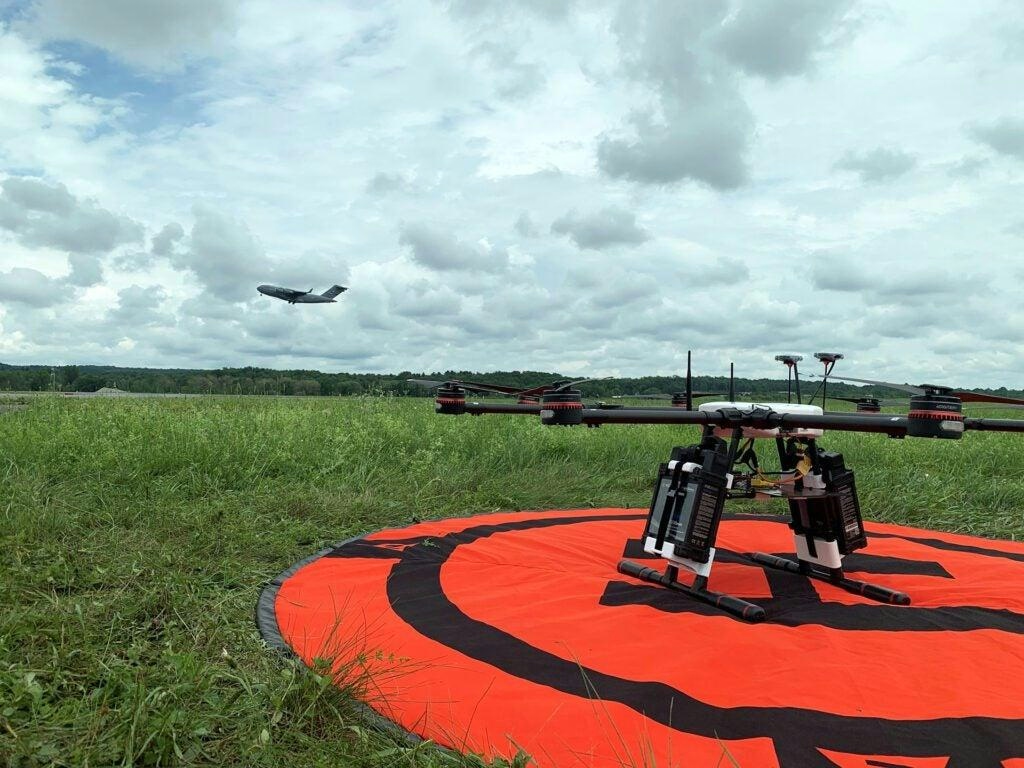
The Federal Aviation Administration (FAA) is making significant strides toward the integration of crewed and uncrewed aircraft within the National Airspace System (NAS), signaling a transformative phase in the evolution of aviation. In a recent development, uAvionix announced the addition of 55 new airports to the FAA’s airport safety programs by incorporating its Flightline technology into the agency’s Surface Awareness Initiative (SAI). This expansion enhances the FAA’s surveillance infrastructure, improving situational awareness and safety across airports nationwide.

Expanding Airport Safety Programs and Surveillance

The FAA currently manages three principal airport safety programs: Approach Runway Verification (ARV), Surface Awareness Initiative (SAI), and Runway Incursion Device (RID). These programs focus on enhancing safety during the critical phases of flight—takeoff and landing. The integration of uAvionix’s Flightline technology into the SAI program represents a vital element of the FAA’s broader strategy, which combines technological innovation, industry collaboration, and forward-looking planning for advanced air mobility.

The SAI program is designed to increase visibility and situational awareness for unmanned aerial vehicles (UAVs) by incorporating surveillance data into the broader air traffic management system. By extending this system to dozens of additional control towers, the FAA is expanding its capacity to monitor low-altitude drone operations more effectively. This development is particularly important as drone usage grows rapidly across commercial sectors such as package delivery, infrastructure inspection, emergency response, and recreational activities.

Addressing Technological and Regulatory Challenges

While expanding surveillance capabilities is a critical step, the FAA acknowledges that the safe integration of uncrewed aircraft requires a comprehensive approach involving advanced enabling technologies and updated regulatory frameworks. Through its Broad Agency Announcement (BAA) for UAV integration technologies, the FAA is actively soliciting proposals from industry stakeholders to address key challenges. These include the development of Uncrewed Traffic Management (UTM) systems tailored to drone operations, Detect-and-Avoid (DAA) technologies to prevent collisions between manned and unmanned aircraft, and reliable Command and Control (C2) communication links to ensure secure UAV operation.

Additionally, the FAA is focusing on electronic conspicuity solutions to improve the visibility of low-flying aircraft that lack Automatic Dependent Surveillance-Broadcast (ADS-B) capabilities, as well as research into noise and environmental impacts to support community acceptance and sustainability. By fostering collaboration with the private sector, the FAA aims to accelerate technological advancements, particularly in anticipation of the forthcoming implementation of Part 108 regulations, which will authorize Beyond Visual Line of Sight (BVLOS) drone operations.

Ongoing Initiatives and Industry Response

Despite these advancements, the integration of manned and unmanned aircraft continues to face significant challenges, including regulatory complexities, airspace management issues, and cybersecurity risks. The dynamic environment is driving increased investment in drone technologies and infrastructure, with industry players responding through accelerated innovation and strategic partnerships to enhance UAV capabilities and expand their market presence.

A notable example of the FAA’s commitment to this integration is its contract with AURA Network Systems, announced earlier this year. This initiative focuses on demonstrating low-latency voice and data communications for UAVs, underscoring the agency’s dedication to ensuring that manned and unmanned aircraft can coexist safely and efficiently in shared airspace.

As these efforts progress, the FAA’s multifaceted strategy is laying the groundwork for a future in which drones, air taxis, and traditional aircraft operate seamlessly together, fundamentally reshaping the landscape of American aviation.

More news
The Leading Widebody Aircraft in Service Today

The Leading Widebody Aircraft in Service Today

The Leading Widebody Aircraft in Service Today The development of widebody jetliners has fundamentally transformed global air travel, with a select group of aircraft continuing to set benchmarks in efficiency, capacity, and versatility. As airlines navigate evolving market demands and technological progress, these widebody jets remain essential components of fleets worldwide. The forthcoming Boeing 777X, delayed by seven years and now expected to enter service in 2027, promises to further revolutionize long-haul aviation. Meanwhile, the current landscape of leading widebody aircraft remains dynamic and influential. Airbus A340: A Pioneer of Ultra-Long-Haul Travel The Airbus A340 is among the last quadjet airliners still operating commercially. Conceived alongside the twin-engine A330 during a period when regulations mandated four engines for extended overwater flights, the A340 pioneered ultra-long-haul routes. Its exceptional range enabled record-setting commercial flights, while passengers appreciated its quiet, spacious cabin and smooth ride. The aircraft also introduced advanced fly-by-wire controls and a glass cockpit, innovations that have since become standard across Airbus models such as the A320 and A350. Although the A340’s prominence has waned in the post-pandemic environment, some carriers, including Lufthansa, have recently reactivated A340-600s to enhance premium transoceanic services. Boeing 767: Versatility and Reliability in One Frame The Boeing 767 has established itself as one of the most dependable and adaptable widebody aircraft ever produced. It serves not only in passenger roles but also as a widely used freighter and forms the backbone of the U.S. Air Force’s modern tanker fleet. In 1985, the 767 became the first commercial twinjet certified for extended-range operations (ETOPS) over water, marking a significant milestone in long-haul aviation. Developed alongside the 757, the 767 introduced a two-person glass cockpit, eliminating the need for a flight engineer and simplifying crew training. Its supercritical wing design and high-bypass engines emphasize fuel efficiency, while the 2-3-2 economy seating configuration remains favored for its passenger comfort. Airbus A330: The World’s Most Popular Widebody The Airbus A330 family has emerged as the most widely used widebody series globally, celebrated for its operational flexibility and passenger comfort. Airlines appreciate its efficiency across both medium- and long-haul routes, a fact reflected in strong order volumes. In November alone, Airbus secured 75 new aircraft orders, largely driven by commitments to the A350 widebody. Total deliveries for 2025 have reached 657 aircraft. Emirates, the world’s largest widebody operator, continues to expand its fleet, recently increasing its A350-900 order to 73 units and committing $41.4 billion to new widebody acquisitions at the Dubai Airshow 2025. This includes 65 Boeing 777-9s and eight additional A350-900s. Emirates’ current fleet comprises 166 Airbus A380s and 103 Boeing 777s, underscoring sustained demand for high-capacity, long-range jets. Despite facing investor scrutiny over a software recall affecting 6,000 A320 family aircraft and quality concerns related to metal panels on some models, Airbus’s widebody lineup remains a foundational element of global aviation. As the industry anticipates the introduction of the Boeing 777X, these established widebody aircraft continue to connect continents, setting enduring standards for performance, reliability, and passenger experience.
The Fastest Boeing Jet Currently in Service

The Fastest Boeing Jet Currently in Service

The Fastest Boeing Jet Currently in Service The Boeing 747-8 Intercontinental: A Legacy of Speed and Efficiency The Boeing 747-8 Intercontinental (747-8I) holds the distinction of being the fastest Boeing passenger jet currently in operational service, routinely cruising at speeds between Mach 0.85 and 0.86, equivalent to approximately 570 mph (915 km/h) at cruising altitude. Known as the “Queen of the Skies,” the 747-8I continues the legacy of the iconic 747 family by combining substantial size, extended range, and enhanced fuel efficiency. These attributes make it a preferred choice for airlines aiming to optimize the economics of long-haul routes. Introduced in 2011 and entering service with Lufthansa in 2012, the 747-8I was developed as a significant upgrade to the 747-400. Boeing extended the fuselage, redesigned the wing structure, and modernized the upper deck layout to improve passenger comfort and operational performance. A key innovation was the integration of the GEnx engine, derived from the 787 Dreamliner’s powerplant but specifically optimized for the 747-8. This engine not only enhanced fuel economy but also substantially reduced noise levels. The aircraft features dual chevrons and sound-absorbing liners that lower takeoff noise, while simplified flaps contribute to quieter landings. Boeing reports that the 747-8 is 15 decibels quieter than the International Civil Aviation Organization’s (ICAO) Stage 4/Chapter 4 noise limits. Aerodynamic refinements further distinguish the 747-8I from its predecessors. Unlike the 747-400’s winglets, the 747-8I employs a deeper, thicker wing with raked wingtips, which improves fuel efficiency and reduces drag at high speeds. The scalloped trailing edges on the engine nacelles, a design first introduced on the 787, smooth airflow and contribute to noise reduction. Each GEnx engine produces approximately 66,500 pounds of thrust, enabling the aircraft to carry heavier payloads while maintaining its high cruise speed. Emerging Competition and Industry Challenges While the 747-8I has long been recognized as Boeing’s fastest passenger jet, the Boeing 787 Dreamliner now matches its top speed, cruising at around Mach 0.85. The Dreamliner’s advanced composite airframe, superior fuel efficiency, and state-of-the-art avionics have made it a popular choice among airlines operating long-haul routes. This has reinforced Boeing’s reputation for producing high-speed, efficient widebody aircraft that meet evolving market demands. Despite these technological achievements, Boeing faces significant challenges. Reports from December 2025 indicate concerns regarding the company’s delivery targets and cash flow, which have contributed to market uncertainty. Boeing’s stock has experienced volatility amid delivery delays, safety concerns, and difficulties integrating new technologies. Meanwhile, competitors are capitalizing on these setbacks by advancing their own technological capabilities and strengthening their market positions, intensifying competition in the high-speed, long-haul aviation sector. Both the Boeing 747-8I and the 787 Dreamliner exemplify the company’s commitment to speed and innovation, each capable of cruising at Mach 0.85. As Boeing navigates operational and financial pressures, these aircraft remain central to its strategic efforts and the broader contest among global aerospace leaders.
Quintana Roo Secures $24.3 Million Deal for MRO and Cargo Services

Quintana Roo Secures $24.3 Million Deal for MRO and Cargo Services

Quintana Roo Secures $24.3 Million Deal for MRO and Cargo Services Quintana Roo has become the first Mexican state to attract foreign investment under the federal government’s Development Hubs for Well-Being initiative, following the signing of a memorandum of understanding with Zenith Aeronáutica. Valued at US$24.3 million, the agreement will finance the establishment of two aviation service units in Chetumal: the Zenith MRO maintenance facility and the Zenith Cargo terminal. Strategic Investment and Regional Development This deal represents the inaugural direct foreign investment within the “Plan México” framework, championed by President Claudia Sheinbaum. Governor Mara Lezama underscored the importance of the agreement, stating that it confirms the southern region’s significant potential and positions Chetumal as a strategic hub for the aeronautical industry. She emphasized the government’s commitment to fostering projects that generate employment, strengthen new productive sectors, and ensure inclusive development. The memorandum details collaboration on deep maintenance and aircraft repair services, alongside the creation of a cargo service center designed to support routes throughout the Caribbean and Central America. Canada-based Alberta Aviation Capital Corporation (AAC), an aircraft and engine leasing company, has pledged to deploy its fleet to the new Chetumal MRO facility and utilize the cargo terminal for its regional operations. AAC Vice President Luis Sergio De Urioste Limario and Zenith Aeronáutica CEO Eduardo Mauricio Pérez joined Governor Lezama at the signing ceremony. Governor Lezama highlighted AAC’s participation as a critical factor in reinforcing the platform’s operational viability and attracting further North American clients. She cited Chetumal’s strategic location, logistics connectivity, Free Zone status, and existing Strategic Fiscal Precinct as key advantages. The city’s international airport, its connection to Tulum airport, and the upcoming Maya Train station—expected to offer cargo services—further enhance the region’s capacity for multimodal operations. Challenges and Future Prospects Despite the promising outlook, the project faces potential challenges as it enters a competitive market. Industry analysts suggest that Quintana Roo’s initiative may provoke increased scrutiny from competitors and could alter market dynamics. Rival firms might intensify efforts to secure comparable contracts or lobby for regulatory changes that could impact the state’s operations. Moreover, the successful integration of operations and adherence to stringent regulatory standards will be essential for the long-term sustainability of the new facilities. Governor Lezama described the investment as the product of close coordination with the private sector, calling it a decisive step toward enhanced competitiveness and shared prosperity for Quintana Roo. She noted that the commitment by Zenith Aeronáutica and AAC reflects confidence in the governments of the Fourth Transformation, which promote balanced development. Zenith Aeronáutica’s planned operations are expected to create hundreds of direct and indirect jobs in southern Quintana Roo. The company also intends to incorporate renewable energy solutions into both the MRO workshop and the cargo terminal, aligning with federal and state goals for sustainable industrial growth.
This Week on America Builds: Advanced Air Mobility

This Week on America Builds: Advanced Air Mobility

This Week on America Builds: Advanced Air Mobility On December 3, the U.S. House Transportation & Infrastructure Subcommittee on Aviation convened to assess the current state and future prospects of the Advanced Air Mobility (AAM) industry. AAM refers to emerging air transport technologies, including electric vertical take-off and landing (eVTOL) aircraft and autonomous systems, which are anticipated to revolutionize the aviation sector. Bipartisan Support and Industry Potential The hearing brought together prominent industry figures such as Kyle Clark of BETA Technologies, Tyler Painter from Wisk Aero, Robert Rose representing Reliable Robotics, and Gregory Pecoraro of the National Association of State Aviation Officials. Lawmakers from both parties expressed strong support for AAM, emphasizing its potential to drive innovation, enhance environmental sustainability, and improve aviation safety. Subcommittee Chair Rep. Troy Nehls (R-TX) characterized AAM and eVTOL technologies as critical advancements in transportation. Meanwhile, Committee Ranking Member Rep. Rick Larsen (D-WA) highlighted the role of electric propulsion in reducing greenhouse gas emissions and addressing climate change challenges. Gregory Pecoraro described AAM as an opportunity to fundamentally “rethink transportation,” underscoring the transformative nature of the sector. Industry witnesses outlined several key advantages of AAM. Electric-powered aircraft promise significant environmental benefits by producing fewer emissions and operating with reduced noise levels, which is particularly important for communities near major airports. Rep. Laura Gillen (D-NY) noted the importance of quieter operations for neighborhoods surrounding airports such as JFK. Additionally, automation technologies, including zero-visibility landing capabilities, were emphasized for their potential to enhance safety by minimizing human error during critical flight phases like take-off and landing. Challenges and Regulatory Concerns Despite widespread enthusiasm, the hearing also revealed notable challenges confronting the AAM industry. Some Republican members expressed reservations about increasing federal funding for the sector, reflecting broader debates over government investment in emerging technologies. Industry representatives voiced frustration with the Federal Aviation Administration’s (FAA) slow certification process for electric aircraft, warning that regulatory delays could undermine the United States’ competitive position in the global market. A particular concern raised was the phenomenon of “certification tourism,” where companies seek aircraft approvals in jurisdictions with less rigorous standards, potentially compromising safety and regulatory consistency. Critics cautioned against premature commercial operations prior to full regulatory approval, arguing that such actions could damage public trust and impede long-term progress. Global Competition and Future Outlook The global competitive landscape for AAM is rapidly intensifying. Archer Aviation recently announced plans to establish an air taxi network in Miami, while Tokyo aims to introduce commercial urban air taxis by 2030. These developments highlight the urgency for U.S. regulators and industry stakeholders to accelerate efforts in certification, infrastructure, and operational standards to maintain leadership in this emerging field. The hearing underscored a rare moment of bipartisan agreement on the promise of advanced air mobility, while also drawing attention to the significant hurdles that remain. As policymakers and industry leaders continue to navigate issues of funding, certification, and safety, the trajectory of AAM will depend on striking a careful balance between fostering innovation and ensuring public confidence.
Textron Aviation Appoints Justin Salmans Senior Vice President of Supply Chain

Textron Aviation Appoints Justin Salmans Senior Vice President of Supply Chain

Textron Aviation Appoints Justin Salmans as Senior Vice President of Supply Chain Textron Aviation has announced the appointment of Justin Salmans as its new Senior Vice President of Supply Chain, a strategic decision aimed at strengthening the company’s position amid a rapidly changing aerospace environment. In his new role, Salmans will be responsible for overseeing production, aftermarket, and defense procurement across Textron Aviation, Textron Aviation Defense, and related entities. Extensive Experience in Aerospace and Supply Chain Management Bringing over three decades of experience in aerospace and supply chain leadership, Salmans has held significant roles at GE Aircraft Engines and Spirit AeroSystems, where he honed his expertise in manufacturing, business development, and supply chain operations. Since joining Cessna in 2011, he has played a pivotal role in its integration into Textron Aviation and contributed to initiatives that have enhanced the company’s operational capabilities. Salmans’ appointment arrives at a critical juncture for Textron Aviation and the wider aerospace industry, which continues to grapple with persistent supply chain disruptions, geopolitical uncertainties, and labor shortages. His leadership is expected to bolster the company’s supply chain resilience and drive strategic growth initiatives to meet evolving customer demands. Through targeted investments and operational adjustments, Salmans aims to help Textron Aviation sustain its competitive advantage in a challenging market. Prior to rejoining Textron Aviation, Salmans served as Chief Procurement Officer at Bass Pro Shops, where he successfully managed the complex integration of Cabela’s and Bass Pro Shops. This experience underscores his capacity to lead large-scale procurement operations and execute major organizational integrations—skills that will be critical as Textron Aviation navigates ongoing industry pressures. Credentials and Industry Impact Salmans holds certifications as a Six Sigma Black Belt and Lean Manufacturing leader, reflecting his dedication to process improvement and operational efficiency. He earned an MBA from Baker University and a bachelor’s degree in industrial engineering from Kansas State University. Industry analysts suggest that Salmans’ appointment may enhance investor confidence in Textron Aviation’s supply chain management capabilities. As the company fortifies its operations, competitors are likely to respond with similar strategic hires to strengthen their own supply chain resilience. This emphasis on robust supply chain leadership aligns with a broader industry trend, as aviation firms seek to mitigate risks and maintain market competitiveness amid ongoing disruptions. Textron Aviation’s decision to appoint Salmans signals a clear commitment to operational excellence and strategic growth. His extensive background and proven leadership are expected to guide the company’s supply chain through current challenges and position it for sustained success in the future.
Delivery Delays and Canceled SAF Projects Prompt Focus on Fuel Efficiency

Delivery Delays and Canceled SAF Projects Prompt Focus on Fuel Efficiency

Delivery Delays and Canceled SAF Projects Prompt Focus on Fuel Efficiency The aviation sector is intensifying its efforts to reduce fuel consumption and carbon emissions from existing fleets amid ongoing supply chain disruptions and setbacks in sustainable aviation fuel (SAF) development. Delays in new aircraft deliveries, coupled with the cancellation of several SAF projects by oil companies, have compelled airlines and manufacturers to prioritize operational efficiency and alternative emission reduction strategies. Industry Response to Operational Challenges German flag carrier Lufthansa recently reported saving approximately 54,000 metric tons (17.9 million gallons) of jet fuel over the past three years through the implementation of more than 90 fuel-saving initiatives. This achievement underscores a wider industry trend, as airlines seek immediate and practical solutions to curb emissions in the face of uncertainty surrounding fleet renewal timelines and SAF availability. The International Air Transport Association (IATA) has highlighted the financial and environmental costs associated with inefficient fuel use, noting that airlines lose hundreds of millions of dollars annually due to jet fuel wasted during aircraft idling on the ground before takeoff. Despite advances in fuel efficiency, IATA data indicates that overall aircraft carbon emissions continue to rise, emphasizing the urgency of effective mitigation measures. Challenges and Shifts in Sustainable Aviation Fuel The delays in aircraft deliveries and the cancellation of several SAF projects have reinforced the need for direct and actionable approaches to emissions reduction. Although SAF production is gradually increasing, the industry recognizes that scaling up to meet global demand remains a significant long-term challenge. In response, airlines are investing not only in fuel-saving technologies and operational improvements but also adapting to market pressures and competitive dynamics. European carriers, in particular, are intensifying efforts to eliminate greenwashing and focus on the authentic use of sustainable aviation fuel. This shift reflects heightened regulatory scrutiny and growing consumer demand for transparency in environmental claims, underscoring the importance of credible sustainability initiatives. Governments and industry stakeholders are also advancing domestic SAF production capabilities. For example, Australia’s NSW Renewable Fuel Strategy aims to develop a sustainable aviation fuel sector that enhances both environmental outcomes and national fuel security. Similarly, new investments are emerging globally, such as Aether Fuels’ recent agreement to build a gas-to-liquid SAF plant in Singapore, signaling growing momentum in SAF infrastructure development. As airlines contend with delivery delays and evolving SAF landscapes, the pursuit of enhanced fuel efficiency and genuine sustainability measures remains a central priority for the aviation industry.
Avro Vulcan XH558 Engine Runs Scheduled at Doncaster Sheffield Airport in 2026

Avro Vulcan XH558 Engine Runs Scheduled at Doncaster Sheffield Airport in 2026

Avro Vulcan XH558 Engine Runs to Resume at Doncaster Sheffield Airport in 2026 The Vulcan to the Sky Trust (VTST) has announced that the iconic Avro Vulcan XH558 will return to public view through a series of engine runs scheduled for 2026 at Doncaster Sheffield Airport. This development represents a significant moment for British aviation heritage, providing enthusiasts and the general public with a rare opportunity to witness the aircraft’s four Rolls-Royce Olympus engines in operation, albeit while stationary on the ground. Revival of a Historic Aviation Experience Engine runs, which involve starting and operating the Vulcan’s engines without flight, have long been a celebrated event among aviation fans. These demonstrations allow visitors to experience the distinctive sound and vibration of the Vulcan’s engines, evoking the aircraft’s operational legacy and highlighting the engineering excellence behind its design. The VTST plans to hold multiple public engine run events throughout 2026, with exact dates to be announced. All activities will take place at Doncaster Sheffield Airport, the aircraft’s home base, and are expected to generate vital funds to support the ongoing preservation of XH558. Christian Foster, programme director at SY Airport City representing FlyDoncaster, remarked on the significance of the initiative, describing it as a memorable milestone in the airport’s history. He expressed enthusiasm for the project and encouraged public support for the Vulcan to the Sky Trust, emphasizing the unique opportunity to experience this legendary aircraft firsthand. Marc Walters, Chief Executive of VTST, echoed this sentiment, highlighting the importance of the engine runs in reconnecting the public with XH558 and securing essential funding for its preservation. Walters also expressed gratitude to FlyDoncaster for their collaboration in making the events possible. Challenges and Future Prospects The resumption of engine runs follows a challenging period for VTST, which has faced considerable financial pressures. Maintaining the Vulcan’s unique engine technology is a complex and costly task, requiring specialized expertise and resources. Organizing large-scale public events also involves logistical challenges, including ensuring safety and managing increased visitor numbers. Despite these obstacles, the announcement has already generated renewed interest among aviation enthusiasts and is anticipated to provide a boost to local tourism. The Vulcan’s return to public attention coincides with a period of intense focus on technological developments within the aviation industry, as major manufacturers such as Airbus and Boeing navigate their own challenges. Airbus’s recent A320 software recall, for example, has drawn significant industry attention and may impact resource allocation for other projects, including heritage initiatives like the Vulcan engine runs. Looking ahead, VTST remains committed to its long-term vision of establishing The Vulcan Experience, a dedicated visitor centre and educational hub. In the interim, the return of engine runs is viewed as a critical step in maintaining public engagement and securing the support necessary to preserve XH558 for future generations. For further details on the Vulcan to the Sky Trust and upcoming events, visit www.vulcantothesky.org.
Embraer Unveils AI-Driven Smart Planning Solution

Embraer Unveils AI-Driven Smart Planning Solution

Embraer Launches AI-Powered Smart Planning Solution **Sao Jose dos Campos, Brazil** – Embraer has introduced Smart Planning, an artificial intelligence-driven platform designed to revolutionize inventory management and supply chain integration within its aircraft manufacturing operations. Developed in collaboration with Aquarela Analytics, this initiative marks a pivotal advancement in Embraer’s digital transformation strategy, aimed at enhancing data-driven decision-making and operational efficiency. Transforming Supply Chain and Inventory Management Smart Planning employs sophisticated predictive analytics to optimize inventory levels, streamline procurement processes, and increase supply chain responsiveness. The solution was developed over a ten-month period, during which more than two terabytes of operational data were analyzed. By combining Embraer’s Agile framework with Aquarela Analytics’ Data Culture Methodology, the project advanced from initial data extraction to the deployment of AI models and interactive dashboards that provide real-time insights. Dimas Tomelin, Embraer’s Vice President of Strategy, Digital and Innovation, underscored the significance of the new tool, describing it as the most advanced data instrument integrated into the company’s processes. He explained that Smart Planning offers an interactive control panel for materials used in aircraft production, enabling the planning team to better manage purchases and stock levels. This enhanced predictability helps mitigate risks associated with material shortages or surpluses through the application of artificial intelligence and forecasting models. Marcos Santos, CEO of Aquarela Analytics, highlighted the complexity and depth of the collaboration. He noted that the project demanded the full application of their expertise in data analysis, platform development, and AI algorithms to transform and integrate Embraer’s operational systems. Santos emphasized that the scope of the project expanded progressively as complexity increased and results were evaluated at each stage. Challenges and Industry Implications While Smart Planning is anticipated to yield substantial benefits—including cost reductions, improved product quality, and strengthened supplier relationships—it also faces significant challenges. Integrating the AI-driven system with Embraer’s existing infrastructure and ensuring compliance with the stringent standards of the aviation industry will be crucial to its successful implementation. The aerospace sector is closely monitoring how this innovation will influence production timelines and operational efficiency, especially as Embraer reaffirms its commitment to meeting 2025 production targets amid ongoing supply chain pressures. Industry analysts observe that Embraer’s adoption of AI may prompt competitors to accelerate their own investments in similar technologies. Comparable initiatives, such as BOAL Extrusion’s use of AI for operational planning, reflect a broader trend toward digital transformation in aerospace manufacturing. However, the financial implications of deploying such advanced systems continue to attract scrutiny from investors and market experts. As Embraer expands its digital capabilities, Smart Planning represents a foundational step toward intelligent manufacturing. The company aims to harness artificial intelligence not only to enhance production efficiency and business resilience but also to establish new benchmarks for innovation within the aerospace industry.
Vietjet Expands Fleet with Delivery of 22 Aircraft

Vietjet Expands Fleet with Delivery of 22 Aircraft

Vietjet Expands Fleet with Delivery of 22 Aircraft Amid Industry Challenges Vietnamese low-cost carrier Vietjet is poised to conclude 2025 with its largest fleet expansion to date, as it prepares to receive 22 new aircraft before the end of the year. The latest addition, an Airbus A321neo ACF registered as VN-A580, is expected to arrive this Christmas, marking a significant milestone for the airline amid ongoing global aircraft shortages and supply chain disruptions. Strategic Allocation and Network Growth The newly acquired aircraft will be strategically distributed across Vietjet’s operations to enhance network capacity and operational flexibility. Nine Boeing aircraft are designated for Vietjet Thailand, while seven next-generation Airbus jets will bolster the Vietnam-based fleet. Additionally, four wet lease aircraft will be deployed to manage peak travel periods, and two COMAC aircraft will be dedicated to servicing routes to Con Dao. This expansion coincides with the launch of ACMI operations by BBN Airlines Thailand, with Vietjet Thailand as its inaugural partner. The timing is particularly significant as it precedes the Lunar New Year 2026, a period traditionally marked by heightened travel demand. Vietjet aims to capitalize on this increased capacity to accommodate seasonal surges and support its growing international network. Industry Challenges and Competitive Landscape Vietjet’s ambitious fleet growth unfolds against a challenging backdrop for the global aviation industry. Airlines worldwide continue to face aircraft shortages and delivery delays, compounded by persistent supply chain issues. The recent grounding of certain Airbus A320-series aircraft due to fuselage panel quality concerns has further complicated supply reliability, potentially affecting delivery schedules for carriers globally. Despite these obstacles, Vietjet’s ability to secure 22 aircraft within a single month highlights its strong financial position and solid relationships with manufacturers and lessors. This expansion intensifies competition within the low-cost carrier segment, where rivals such as Wizz Air are recalibrating growth plans in response to engine groundings and deferred deliveries. Meanwhile, regional competitors like Air Astana are modernizing their fleets with Airbus A320neo-family aircraft, reflecting a broader industry trend toward newer, more fuel-efficient models. Modernization and Market Positioning The incoming aircraft primarily consist of modern, fuel-efficient models, reinforcing Vietjet’s status as one of Southeast Asia’s larger carriers. Since its inception just over a decade ago, the airline has rapidly expanded its fleet to challenge more established regional players. The additional capacity will support both domestic routes within Vietnam and international connections across the Asia-Pacific region, aligning with the ongoing recovery and rising travel demand following the pandemic. Vietjet’s fleet expansion underscores its strategic focus on strengthening its presence in the competitive regional aviation market while effectively navigating the operational and supply chain challenges confronting the industry.
Qantas Returns A380 to Service

Qantas Returns A380 to Service

Qantas Returns Final A380 to Service Amid Fleet Renewal and Industry Challenges Qantas has reintroduced its tenth and final Airbus A380 to service, marking the end of nearly six years of storage and completing the largest maintenance undertaking in the airline’s 105-year history. The aircraft, named in honour of Qantas co-founder Paul McGinness, has arrived in Sydney and will initially operate as an operational spare during the busy Christmas period. Beginning January 1, 2026, it will enhance international capacity by enabling daily A380 flights on the Sydney–Dallas route. Extensive Maintenance and Fleet Strategy The return of the A380 represents a significant achievement for Qantas, both from an engineering perspective and as part of its broader fleet renewal strategy. Maintenance and engineering teams from across the globe dedicated over 100,000 hours to the project, which encompassed a full cabin refurbishment, heavy maintenance checks, landing gear replacement, and assessment flights. The complexity of the work required the transportation of parts by land, sea, and air to ensure the aircraft met operational standards. Qantas International CEO Cam Wallace emphasised the strong customer preference for the A380, noting that the superjumbo fleet carried more than one million international passengers in the past year alone. The reintroduction of the final A380 will allow the airline to increase seat availability on high-demand long-haul routes, including Dallas, Singapore, and Johannesburg. Each A380 now features a reconfigured cabin layout with 14 First Class, 70 Business, 60 Premium Economy, and 341 Economy seats. All aircraft have undergone comprehensive upgrades, including refurbished First Class cabins, an enhanced upper-deck lounge, and expanded premium seating options. Navigating Industry Challenges and Future Plans Qantas’s investment in the A380 fleet comes amid a challenging operating environment marked by geopolitical uncertainty and fuel price volatility, factors that continue to affect international carriers worldwide. Despite these headwinds, the airline has proceeded with its fleet renewal programme, gradually returning its A380s to service following extensive engineering and cabin upgrades. The scale of the project underscores Qantas’s commitment to operational excellence and long-term growth. The airline’s efforts also reflect wider industry dynamics. Competitors such as American Airlines have demonstrated resilience through rapid operational responses during recent Airbus recalls, highlighting the importance of fleet flexibility and maintenance readiness. Meanwhile, Qantas is preparing for the next phase of its long-haul strategy with Project Sunrise, which aims to launch nonstop flights from Sydney to London and New York using specially modified Airbus A350-1000 aircraft. This initiative is poised to redefine ultra-long-haul travel and further modernise Qantas’s international network. As Qantas celebrates the return of its final A380, the airline continues to balance the challenges of the current aviation landscape with strategic investments in fleet renewal and future growth, reaffirming its dedication to enhancing capacity and passenger experience on key international routes.
Ask AeroGenie










