
Превращайте аналитические выводы ИИ в реальные действия

В тренде
Categories
FAA Faces Scrutiny Over Response to LEAP Engine Smoke Incidents
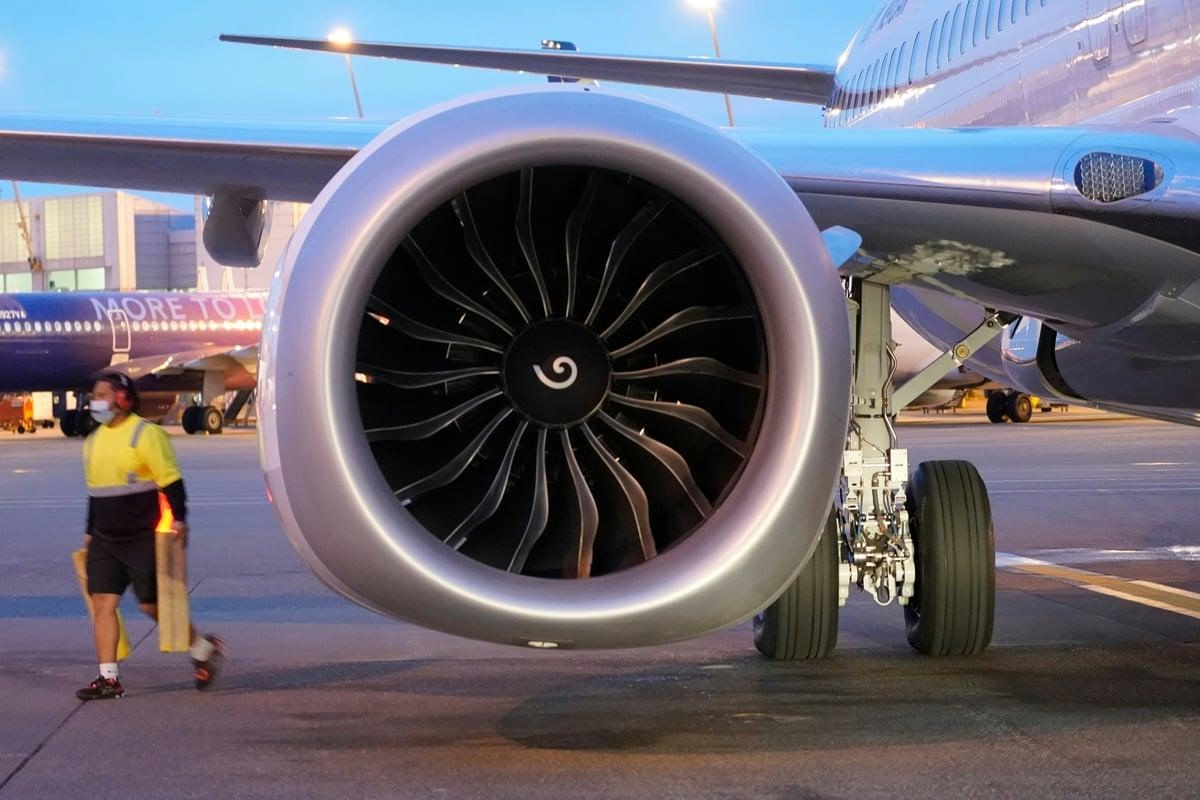
FAA Faces Scrutiny Over Response to LEAP Engine Smoke Incidents
The Federal Aviation Administration (FAA) is facing intensified scrutiny following a recent audit by the U.S. Department of Transportation Office of Inspector General (DOT OIG) concerning its management of smoke and fumes entering aircraft cabins after bird strikes involving CFM International LEAP-1B engines. The audit, initially announced in April 2025 and detailed in a public report released this month, raises significant questions about the FAA’s risk mitigation strategies and the timeliness of its corrective actions.
Background: Bird Strikes and Smoke Intrusion
The investigation focuses on two serious incidents in 2023 involving Boeing 737 MAX 8 aircraft powered by LEAP-1B engines. In both cases, bird strikes caused damage to engine fan blades, which triggered the Load Reduction Device (LRD)—a safety mechanism designed to protect the engine. However, activation of the LRD can release engine oil mist into the aircraft’s environmental control system, resulting in smoke or toxic fumes entering the cockpit or cabin. These events led to reduced cockpit visibility, increased workload for flight crews, and potential exposure risks for both passengers and pilots. Although both flights landed safely, the unusual occurrence of smoke intrusion during critical phases of flight has raised regulatory concerns.
FAA’s Response and Internal Disagreements
The DOT OIG audit found that while the FAA followed its established procedures, there were notable internal disagreements regarding the appropriate response. The Office of Accident Investigation and Prevention recommended immediate operational changes, including adjustments to takeoff procedures to mitigate risk. Conversely, the Aircraft Certification Service (AIR) favored a longer-term solution involving a software update to the engines. Ultimately, the FAA decided against implementing immediate operational changes, opting instead to pursue the software-based corrective action. This approach has drawn criticism due to the extended timeframe required to deploy updates across the global 737 MAX fleet and questions about the sufficiency of interim safety measures.
Key Concerns Highlighted by the Audit
The Inspector General’s report identified several unresolved issues. Not all safety risks associated with LRD activation and smoke intrusion have been fully addressed. The audit also questioned the FAA’s evaluation of critical factors such as the timeline for rolling out engine software updates, pilot awareness and training related to LRD-induced smoke risks, and emergency procedures for oxygen use during smoke events. Additionally, current Boeing 737 MAX simulators do not realistically replicate smoke or fumes resulting from LRD activation, potentially leaving pilots inadequately prepared for such scenarios. A concurrent investigation by the National Transportation Safety Board (NTSB) reinforced concerns about the rapid loss of cockpit visibility and the high workload imposed on crews during these incidents.
Industry and Regulatory Actions
In response to these findings, GE Aerospace and Boeing are collaborating on a software update intended to address the smoke intrusion issue, which the FAA plans to mandate. GE Aerospace has also increased LEAP engine deliveries and is developing durability kits for the LEAP-1B engine. The Inspector General’s report recommends that the FAA improve communication with operators, enhance pilot training, and address cockpit visibility challenges more effectively. Meanwhile, the FAA is concurrently investigating a recent engine failure on a Delta Air Lines Airbus A330 in Brazil, highlighting ongoing challenges in engine safety oversight. As the FAA moves forward with implementing software fixes and addressing audit recommendations, questions persist regarding the speed and effectiveness of its response to emerging engine safety risks.

Etihad Airways Suspends Airbus A380 Flights on Key Route

Aditya Birla Group Seeks Approval for Aircraft Leasing in GIFT City

Qatar Airways Highlights Innovation and Connectivity at Arabian Travel Market 2026

Hong Kong's Five-Year Plan Includes Andrew Fan's Aircraft Parts Processing Hub Proposal

ACIA Aero Leasing Delivers ATR72-600 to Air Nostrum

RTX Appoints Jill Albertelli as Head of Pratt & Whitney

TAT Technologies Joins Beyond Aero Hydrogen Aircraft Program

AURAK Study Highlights Barriers to Air Taxi Adoption in Emerging Economies

Xiamen Air Selects Altitude for 787 Maintenance at Heathrow

Etihad and Swissport Extend Global Partnership
