Изображение

Превращайте аналитические выводы ИИ в реальные действия

Присоединяйтесь к списку ожидания AeroGenie уже сегодня!

В тренде

Categories

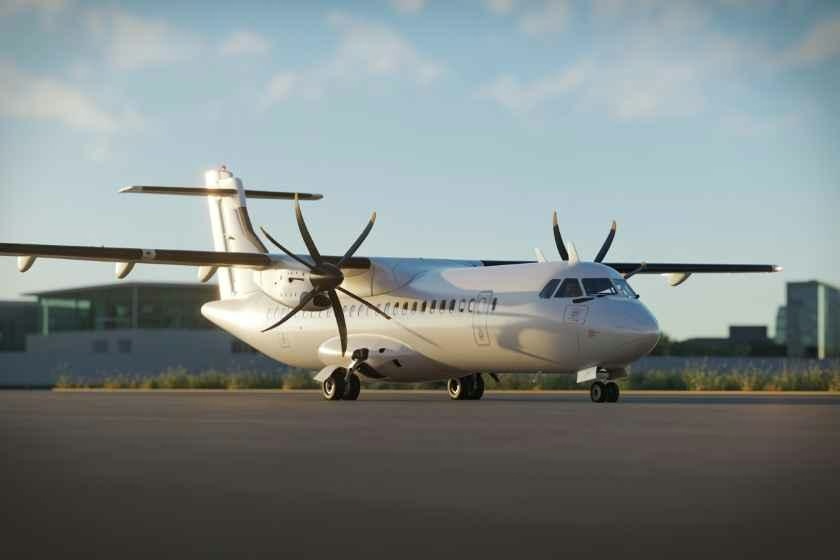
Loganair Adds ATR72-500 Aircraft Through Wet Lease to Expand UK Regional Service
April 25, 2026By ePlane AI
Loganair Adds ATR72-500 Aircraft Through Wet Lease to Expand UK Regional Service
0
0
Loganair
ATR72-500
Wet Lease

Loganair Expands UK Regional Network with Wet-Leased ATR72-500 Aircraft

Loganair, the United Kingdom’s largest regional airline, is enhancing its domestic service by introducing an ATR72-500 aircraft through a wet lease agreement. This strategic initiative is designed to increase capacity and improve connectivity on key regional routes, addressing the growing demand for accessible air travel across the UK.

The ATR72-500, a proven and efficient turboprop, will allow Loganair to accommodate more passengers while continuing to focus on underserved regional destinations. By opting for a wet lease—where the aircraft, crew, maintenance, and insurance are provided by the lessor—Loganair can rapidly expand its operations without the substantial capital expenditure associated with purchasing new aircraft. This approach offers the airline valuable operational flexibility amid shifting market dynamics and evolving passenger requirements.

Operational Flexibility Through Wet Leasing

Wet leasing provides airlines like Loganair with the ability to augment their fleets and enhance service offerings without committing to long-term investments. For Loganair, this translates into increased flight frequency and greater seating capacity on popular domestic routes, particularly those served by airports with limited infrastructure. The ATR72-500, which accommodates approximately 70 to 78 passengers, is well-suited for short-haul flights and can efficiently operate from smaller airports with shorter runways.

This arrangement not only bolsters Loganair’s operational efficiency but also positions the airline to respond swiftly to fluctuations in regional demand. The move comes amid close scrutiny of the regional aviation market, where competitors may adjust their fleet strategies or pursue similar wet lease agreements to maintain market share and competitive positioning.

Commitment to Sustainability and Industry Trends

The ATR72-500’s fuel-efficient design aligns with the aviation sector’s increasing focus on sustainability. As airlines face mounting pressure to reduce carbon emissions and explore greener technologies, including electric aircraft, Loganair’s selection of a fuel-efficient turboprop reflects a pragmatic balance between immediate operational needs and longer-term environmental objectives. This commitment to sustainability is expected to influence the airline’s future fleet decisions as the industry continues to evolve.

Strengthening Regional Connectivity

The introduction of the wet-leased ATR72-500 forms part of Loganair’s broader strategy to expand its regional network and provide passengers with enhanced travel options. The aircraft’s versatility and cost-effective operation make it particularly well-suited for connecting smaller cities and towns, areas often underserved by larger carriers. By increasing frequency and capacity on these routes, Loganair aims to make regional air travel more convenient and accessible.

As Loganair integrates the ATR72-500 into its fleet, industry observers will monitor the impact on regional connectivity, competitive dynamics, and the ongoing transition toward sustainable aviation. This latest development underscores Loganair’s dedication to serving the UK’s regional communities and adapting to the evolving landscape of domestic air travel.

More news
Hybrid Technology May Soon Be Used in Airplanes

Hybrid Technology May Soon Be Used in Airplanes

Hybrid Technology Set to Transform Aviation Hybrid vehicles have become a common presence on roads worldwide, and as the adoption of fully electric vehicles progresses more slowly than anticipated, hybrid technology is expected to remain integral to transportation for the foreseeable future. Now, the aviation sector is exploring similar innovations to enhance fuel efficiency and reduce greenhouse gas emissions in air travel. Milestone in Hybrid-Electric Aircraft Engines On Tuesday, GE Aerospace announced a significant breakthrough with the successful testing of a megawatt-class hybrid-electric aircraft engine. This achievement, realized in collaboration with NASA, represents a pivotal advancement toward incorporating hybrid systems into commercial aviation. The test is part of NASA’s Electrified Powertrain Flight Demonstration (EPFD) project, which seeks to develop next-generation commercial aircraft that improve fuel efficiency by 25 to 30 percent compared to current models. The initial phase of this initiative targets smaller commercial aircraft. GE’s hybrid system was integrated with its established CT7 turboprop engine and subjected to simulations replicating various flight stages, including taxiing, takeoff, climb, and cruise. Remarkably, the engine operated solely on electric power during part of the test, underscoring the potential for substantial emissions reductions in future aircraft designs. Challenges and Market Dynamics Despite this progress, the transition to hybrid-electric flight faces considerable challenges. Regulatory uncertainty remains a significant barrier, with a recent U.S. government report emphasizing the lack of clarity regarding the timeline for electric and hybrid-electric aircraft entering commercial service. Critical issues such as safety standards, certification procedures, and the development of necessary infrastructure must be resolved before widespread adoption can occur. Market responses to hybrid aviation technology are varied. Companies like Electra are investing in hybrid systems to address inefficiencies in short-haul regional travel, where conventional aircraft often underperform. However, some competitors and airport authorities remain cautious, pointing to unproven business models and lingering safety concerns. Financially, the sector is fraught with difficulties, as illustrated by the bankruptcy of Maeve Aerospace—a company supported by major airlines—highlighting the funding challenges confronting green aviation startups. The successful GE-NASA test, however, signals increasing momentum for hybrid technology in aviation. Should the technical, regulatory, and market obstacles be surmounted, hybrid-electric aircraft could become instrumental in advancing sustainable air travel in the decades ahead.
New AI Model Aims to Predict Wind Shear After 2022 Aviation Accidents

New AI Model Aims to Predict Wind Shear After 2022 Aviation Accidents

New AI Model Developed to Predict Wind Shear Following 2022 Aviation Accidents In response to a series of aviation accidents in 2022 linked to wind shear, researchers have introduced an advanced artificial intelligence model aimed at improving the prediction of this dangerous meteorological phenomenon. Wind shear, which involves sudden and severe changes in wind speed and direction over short distances, poses a significant threat to aircraft, particularly during critical phases such as takeoff and landing. The new AI technology seeks to enhance the accuracy and timeliness of wind shear forecasts, addressing a key safety challenge in the aviation industry. Enhancing Forecast Accuracy Through Advanced Data Analysis Wind shear has long been recognized as a major hazard, contributing to nearly 18 percent of aviation accidents in the past year. Traditional forecasting methods have often fallen short in providing early and precise warnings, leaving pilots vulnerable to unexpected atmospheric shifts. The newly developed AI model utilizes sophisticated data processing techniques to analyze complex meteorological patterns, enabling earlier detection of potentially dangerous wind shear conditions. By delivering more reliable alerts to flight crews, the system aims to reduce the incidence of accidents caused by sudden wind changes. This innovation reflects a broader trend toward integrating artificial intelligence into critical aviation operations. The model’s ability to process vast amounts of weather data and identify subtle indicators of wind shear represents a significant advancement over conventional forecasting tools. As a result, it holds promise for improving situational awareness and enhancing overall flight safety. Regulatory and Industry Implications Despite its potential benefits, the implementation of AI-driven wind shear prediction faces regulatory and operational hurdles. Aviation authorities, including the Federal Aviation Administration (FAA), are expected to conduct rigorous evaluations to ensure the safety, reliability, and compatibility of AI systems within existing aviation infrastructure. Achieving seamless integration with current technologies will be crucial for the widespread adoption of this innovation. The announcement of the AI model has also influenced market dynamics within the aviation technology sector. There is a growing interest among industry stakeholders in AI-based safety solutions, prompting increased investment in data-driven decision-making tools. Competitors are actively developing or upgrading their own AI capabilities to address wind shear and other flight hazards, intensifying efforts to enhance predictive accuracy and operational efficiency. The FAA’s engagement with AI integration underscores a broader industry movement toward leveraging artificial intelligence to improve safety standards and streamline operations. As airlines and regulators continue to explore these technologies, the successful deployment of AI models for wind shear prediction could represent a pivotal advancement in aviation risk management.
AI Model Predicts Wind Shear to Improve Aviation Safety

AI Model Predicts Wind Shear to Improve Aviation Safety

AI Model Predicts Wind Shear to Improve Aviation Safety Addressing a Persistent Aviation Hazard Wind shear, characterized by abrupt changes in wind speed and direction, continues to pose a significant threat to aviation safety. In 2022, it was implicated in nearly 18 percent of all aviation accidents, often catching pilots unprepared during critical phases such as takeoff and landing. Traditionally, pilots have relied on the F-factor, an index that measures current wind speed, direction, and aircraft velocity, to detect wind shear. However, this method is limited to identifying present conditions and lacks predictive capability, thereby restricting its effectiveness in accident prevention. Advancements in Predictive Technology A team of researchers led by Xiaowei Yue at Tsinghua University has developed a machine learning model capable of forecasting wind shear before it becomes hazardous. Utilizing a transformer-based deep learning architecture—known for its proficiency in processing sequential data—the model integrates artificial intelligence with fundamental physical principles to anticipate wind shear events with remarkable accuracy. The model was trained using NASA’s DASHlink Sample Flight Dataset, which encompasses 19 critical parameters related to aircraft mechanical systems, power units, control surfaces, and atmospheric conditions. By synthesizing this diverse array of data, the AI system learns the complex interactions that precede wind shear, capturing both internal aircraft dynamics and external environmental factors. In practical tests, the model provided pilots with a minimum of 15 seconds’ advance warning before encountering dangerous wind shear, affording crucial time to adjust flight controls or alter flight paths. The predictions demonstrated a deviation of less than 5 percent from actual wind shear events across all forecast horizons, underscoring the model’s reliability and precision. Implications and Challenges for Aviation Safety This predictive capability represents a paradigm shift in aviation safety, transitioning from reactive detection to proactive prevention. The technology holds promise for air traffic controllers and airline operators, who could leverage such tools to optimize flight routing and issue timely advisories, thereby reducing the incidence of wind shear-related accidents and enhancing overall airspace safety. Nonetheless, the integration of AI-driven wind shear prediction into operational settings faces several challenges. Regulatory approval remains a critical hurdle, as aviation authorities must rigorously evaluate the reliability and safety of AI systems before their deployment in cockpits and control towers. Furthermore, seamless integration with existing avionics and operational workflows is essential to maximize the technology’s effectiveness. Maintaining the accuracy and trustworthiness of AI predictions is paramount, particularly in light of concerns regarding the “black box” nature of some AI models. The use of open-weight AI models without sufficient safeguards raises additional safety and ethical considerations, which may influence regulatory frameworks and industry adoption. Market and Industry Impact The introduction of this innovation is expected to provoke significant market responses. Aviation companies may increase investments in AI technologies, while competitors might enhance their own predictive systems or collaborate with regulators to establish new safety standards. The successful fusion of machine learning with domain-specific physical knowledge, as demonstrated in this research, not only improves model interpretability but also sets a precedent for broader applications in aerospace engineering and environmental monitoring. By grounding AI predictions in established physical mechanisms, researchers are advancing the development of safer, more transparent, and more effective aviation technologies, with the potential to transform operational safety standards on a global scale.
APAC Travelers Increase Flight Spending and Use AI for Trip Planning, Report Finds

APAC Travelers Increase Flight Spending and Use AI for Trip Planning, Report Finds

APAC Travelers Increase Flight Spending and Use AI for Trip Planning, Report Finds Travel demand in the Asia-Pacific (APAC) region remains robust, yet traveler behavior is undergoing significant transformation as artificial intelligence (AI) becomes integral to trip planning. This evolution is detailed in Criteo’s Spring/Summer 2026 Travel Pulse Report, which analyzes data from hundreds of travel providers alongside a global survey of over 6,000 consumers. The findings reveal a marked shift toward more deliberate, technology-driven travel decisions across the APAC market. AI Adoption Transforms Travel Planning The report highlights a growing reliance on AI tools throughout the booking process among APAC travelers. Globally, AI is employed for activity recommendations (41%), destination discovery (40%), accommodation suggestions (40%), and comprehensive trip planning (30%). APAC leads the way in end-to-end AI-powered trip planning, with 72% of Criteo’s travel partners reporting at least one booking referral originating from ChatGPT. This underscores the expanding influence of generative AI platforms on travel choices. The surge in AI adoption is compelling travel companies to reassess their strategies. Integrating AI into existing systems presents challenges such as safeguarding data privacy, ensuring security, and keeping pace with rapid technological advancements. Consequently, competition is intensifying as companies race to implement AI-driven customer service, personalized recommendations, and operational efficiencies to maintain market share. These developments signal a shift toward more data-driven and tailored travel experiences, with the potential to reshape the industry landscape. Regional Travel Preferences and Increased Flight Spending The report also identifies a growing preference for regional travel within APAC. Travelers in the region are spending more on flights than any other global market, with average air booking values rising by 9% year-on-year. However, demand is increasingly concentrated on shorter international routes. Mid-haul travel has gained 1.2 percentage points, while long-haul travel has declined by 1.3 percentage points. This trend presents new opportunities for airlines, tourism boards, online travel agencies, and hospitality brands targeting intra-Asia corridors, while simultaneously intensifying competition among destinations seeking to attract regional travelers. Trust, Flexibility, and Informed Decision-Making Trust and flexibility continue to be critical factors influencing booking decisions. Good reviews were cited as the most important consideration by 66% of respondents, followed by free cancellation options (48%) and special offers (45%). Travelers are adopting a more considered approach, browsing an average of 25 hotel listings before making a booking. This behavior reflects a shift toward thorough research and comparison. Medhavi Singh, Country Head of Criteo India, commented, “Travel demand across APAC remains resilient, but the way consumers are planning and booking trips is changing significantly. Travelers today are spending more time exploring options, comparing providers, and increasingly turning to AI tools throughout their travel planning journey. For travel marketers, this is a pivotal moment to meet that intent early, personalize at scale, and build the trust that converts browsers into bookers.” As consumers navigate a fragmented discovery landscape across multiple channels and platforms, travel brands face mounting pressure to leverage real-time commerce intelligence, personalized engagement, and robust trust-building measures. The rapid rise of AI and increased flight spending mark a transformative period for the APAC travel sector, demanding continuous innovation and adaptation from industry players.
Airbus Reports Stable Orders Despite Airline Industry Challenges

Airbus Reports Stable Orders Despite Airline Industry Challenges

Airbus Maintains Stable Order Book Amid Aviation Sector Challenges Airbus Chief Executive Guillaume Faury affirmed on Tuesday that the aircraft manufacturer has not experienced significant cancellations or postponements of orders, despite the mounting difficulties facing the global aviation industry. Addressing an industry conference, Faury highlighted the resilience of airlines, noting that while they have “been through hell” in recent years, they remain committed to their existing aircraft agreements. This steadfastness reflects enduring confidence in the long-term demand for new jets. Industry Pressures and Operational Challenges Airlines worldwide continue to contend with elevated operating costs, largely driven by persistently high fuel prices. These price pressures stem from ongoing geopolitical tensions involving the United States, Israel, and Iran, which have disrupted jet fuel supplies and compelled carriers to adopt more costly flight routes. Despite these challenges, Airbus’s order book remains stable, with no widespread cancellations or deferrals reported. Airbus itself faces a complex operating environment. The company is considering the early launch of a larger A220 model, but subdued interest from leasing companies and internal deliberations have left the project uncertain. Additionally, supply-chain disruptions persist, particularly concerning engine deliveries from Pratt & Whitney. Faury acknowledged that while Airbus’s supply chain situation has improved, bottlenecks remain. These delays have already affected deliveries of long-haul passenger jets to Qantas, postponing the airline’s plans for nonstop flights to London and New York. Production Targets and Regulatory Concerns Looking forward, Airbus aims to increase production to 75 aircraft per month by 2027. Faury emphasized that achieving this target depends heavily on the timing and reliability of engine supplies. He also indicated that the company is preparing for what could be a record-breaking second half of the year. On regulatory issues, Faury expressed concern that the European regulatory environment poses challenges to global competitiveness. Despite these obstacles, Airbus has secured 815 gross aircraft orders so far this year, amounting to 762 net orders after cancellations. The company anticipates delivering approximately 870 aircraft in 2026, maintaining its focus on meeting robust long-term demand amid ongoing industry headwinds.
Mubea Aviation Secures Composite Contract for Airbus A350

Mubea Aviation Secures Composite Contract for Airbus A350

Mubea Aviation Secures Composite Contract for Airbus A350 Mubea Aviation has been awarded a significant contract by Airbus Atlantic for the serial production and supply of carbon fiber reinforced polymer (CFRP) composite structural components for the Airbus A350 program. This agreement underscores Mubea Aviation’s expertise in advanced composite technologies and solidifies its position as a key supplier within the Airbus supply chain. Project Launch and Industry Context The project was officially initiated at a kick-off meeting held at Mubea Aviation’s facility in Ergene, Türkiye, which brought together the full cross-functional team. The company emphasized that the event highlighted the collaboration and commitment essential to the program’s success. However, the contract is secured amid a highly competitive environment, with other suppliers such as Latecoere also competing to provide composite structures to Airbus. Industry analysts suggest that Mubea Aviation will face increased scrutiny regarding its ability to deliver components on schedule and within budget, particularly as competitors intensify their efforts to expand their contracts with Airbus. Challenges and Market Dynamics The broader aerospace market presents additional challenges. Airbus is currently grappling with ongoing delivery delays for both the A350 and A320neo programs, factors that could affect Mubea Aviation’s production timelines and project management. These delays have led to heightened attention on supplier performance and reliability across the Airbus network. Furthermore, market dynamics may evolve as Ethiopian Airlines reportedly engages in discussions with Airbus about potential new aircraft orders, a development that could influence demand forecasts and production planning for suppliers involved in the A350 program. Despite these challenges, Mubea Aviation’s latest contract highlights its expanding role in the aerospace sector and its dedication to providing lightweight, efficient, and reliable structural solutions for next-generation aircraft.
Canada’s First A330 MRTT Under Construction in Spain Ahead of 2027 Delivery

Canada’s First A330 MRTT Under Construction in Spain Ahead of 2027 Delivery

Canada’s First A330 MRTT Under Construction in Spain Ahead of 2027 Delivery Airbus Defence and Space has revealed images of the first Airbus A330 Multi Role Tanker Transport (MRTT) being built for the Royal Canadian Air Force (RCAF), marking a pivotal step in Canada’s efforts to modernize its air mobility capabilities. The aircraft, temporarily registered as EC-357, is currently undergoing advanced conversion at Airbus’s Getafe facility near Madrid, Spain. Although still in primer and unpainted, the aircraft is already fitted with its aerial refueling systems, including the centreline boom and two underwing hose-and-drogue pods. A Significant Fleet Modernization In 2023, Canada placed an order for four newly built A330 MRTTs and contracted Airbus to convert an additional five A330s to the same configuration. This new fleet is intended to replace the RCAF’s aging CC-150 Polaris aircraft, a military variant of the Airbus A310. The program, valued at approximately C$3 billion, is scheduled to begin deliveries in 2027. Once operational, the A330 MRTTs will support a broad range of missions, including aerial refueling, strategic transport, medical evacuation, and government transport. The aircraft will also be available for operations supporting both NORAD and NATO commitments, thereby enhancing Canada’s interoperability with allied forces. Global Context and Market Dynamics The A330 MRTT, based on the Airbus A330-200, is one of the world’s most widely used tanker aircraft, operated by more than a dozen air forces including those of Australia, France, the United Kingdom, South Korea, Singapore, and Spain. Canada selected the Airbus platform in 2021 following a competitive procurement process that also considered Boeing’s KC-46A Pegasus. The construction of Canada’s first A330 MRTT in Spain underscores the complexities of international defense procurement, particularly in integrating the new aircraft with existing Canadian military systems and managing the logistics of overseas production. Despite these challenges, demand for the A330 MRTT remains robust. Airbus has expanded its conversion capacity in Seville to seven aircraft per year to meet growing global demand, reflecting increased defense investment worldwide. While Boeing’s KC-46 continues to be a competitor in the tanker market, recent decisions by NATO allies, such as Italy’s acquisition of six A330 MRTTs, highlight the platform’s prevailing market preference. As the first Canadian A330 MRTT nears completion, the program remains on track to deliver enhanced capabilities and operational flexibility to the RCAF, positioning Canada alongside other leading air forces that have adopted the Airbus tanker.
Batam Poised to Become National Aviation MRO Hub, Says Ministry

Batam Poised to Become National Aviation MRO Hub, Says Ministry

Batam Poised to Become National Aviation MRO Hub, Says Ministry Strategic Vision for Indonesia’s Aviation Industry Batam, located in the Riau Islands, is being positioned as a central hub for Indonesia’s aircraft maintenance, repair, and overhaul (MRO) services, according to the Coordinating Ministry for Infrastructure and Regional Development. This initiative was unveiled during the Indonesia MRO Summit, where government officials detailed a comprehensive national strategy aimed at strengthening the country’s aviation sector and reducing operational costs for airlines. Rustam Efendi, Deputy Secretary for Connectivity Coordination at the ministry, emphasized the importance of developing multiple MRO hubs across the nation, specifically naming Batam, Jakarta, Surabaya, and Makassar as focal points. He highlighted the critical role of integrated connectivity—linking seaports, airports, and industrial zones—in establishing a sustainable and efficient MRO ecosystem. To support this vision, the ministry is coordinating cross-sectoral policies designed to enhance logistics and aviation services, including the advancement of the National Logistics Ecosystem (NLE), port digitalization, and improvements in airport operations. Addressing Cost and Regulatory Challenges The aviation sector in Indonesia faces significant financial pressures, with maintenance costs accounting for 16 to 20 percent of total airline expenses. Sokhib Al Rokhman, Director of Airworthiness and Aircraft Operations at the Ministry of Transportation, outlined government efforts to alleviate these burdens without compromising safety standards. Key measures include relaxing restrictions on aircraft component imports and implementing a zero percent import duty on certain parts. These steps aim to reduce operational costs and help maintain affordable airfares amid ongoing global economic challenges. Batam’s strategic location and existing infrastructure position it as a strong candidate to become a national MRO hub. Fary Djemy Francis, Deputy for Investment and Business at BP Batam, underscored the significance of Hang Nadim Airport as a cornerstone for MRO activities, particularly through Batam Aero Technic (BAT), which operates within a designated Special Economic Zone (SEZ). The project anticipates attracting investments totaling approximately Rp16 trillion (US$887.56 million), with 100 hectares of land earmarked for further aerospace development. BP Batam has committed to streamlining licensing processes and providing regulatory certainty to encourage both domestic and international investment. Competitive Landscape and Future Prospects Despite these promising developments, Batam faces considerable challenges in realizing its ambitions. Industry experts cite potential shortages of skilled labor and materials, elevated operational costs, and geopolitical uncertainties as factors that could undermine the island’s competitiveness. The regional MRO market remains fiercely contested, with established players such as Malaysia actively expanding their capabilities. Companies like ExecuJet are increasing their operational capacity and inaugurating new facilities in Kuala Lumpur, intensifying competition for market share. Nonetheless, Indonesian officials remain optimistic that Batam can serve as a model for economic growth within the aerospace sector. Success will depend on sustained investment, infrastructure development, and regulatory support advancing in concert to secure Batam’s position as a national aviation MRO hub.
Arcline to Acquire Continental Aerospace Technologies for $535 Million

Arcline to Acquire Continental Aerospace Technologies for $535 Million

Arcline to Acquire Continental Aerospace Technologies for $535 Million Arcline Investment Management has entered into a definitive agreement to acquire the holding company of Continental Aerospace Technologies in a transaction valued at approximately $535 million. The deal, which will result in Continental’s delisting from public markets, is supported by irrevocable commitments from the controlling shareholders, subsidiaries of the Aviation Industry Corporation of China. Continental Aerospace Technologies: A Century of Engineering Excellence Founded in 1905 and based in Mobile, Alabama, Continental Aerospace Technologies is a leading designer and manufacturer of piston aircraft engines serving the general aviation sector. The company produces engines compatible with both AvGas and Jet-A fuels and offers an extensive range of aftermarket products and services that support a significant global fleet. Over more than a century, Continental has established a reputation for engineering excellence, reliability, and robust customer support. Strategic Rationale and Industry Context Arcline, a private equity firm managing assets exceeding $30 billion, identified the acquisition as a strategic fit within its aerospace and defense systems investment portfolio. The firm highlighted Continental’s engineering capabilities, mission-critical product offerings, extensive installed base, and strong customer relationships as key factors motivating the transaction. Arcline intends to work closely with Continental’s management and workforce to foster continued investment and accelerate growth initiatives. The acquisition is expected to encounter challenges, including regulatory approvals, operational integration, and potential cultural differences between the organizations. Market responses may include an initial decline in Continental’s stock price, with the possibility of recovery should investors perceive the deal as strategically advantageous. Competitors in the aerospace sector may respond with their own strategic maneuvers, such as pursuing acquisitions or intensifying marketing efforts to protect market share. This transaction occurs amid a broader wave of consolidation within the aerospace industry. Recently, Parker Hannifin completed the acquisition of Circor’s aerospace business for $2.55 billion, underscoring heightened activity among industry players aiming to strengthen their market positions. Advisory Roles and Future Outlook J.P. Morgan Securities is serving as the exclusive financial advisor to Arcline, while Freshfields Bruckhaus Deringer is acting as legal counsel for the transaction. In a statement, Arcline emphasized Continental’s status as a respected platform with a long history of engineering leadership and trusted customer relationships. The firm noted that Continental’s technical expertise, large installed base, and reputation for reliability align closely with Arcline’s aerospace and defense systems strategy. Arcline expressed its commitment to partnering with Continental’s management and employees to support ongoing investment and to accelerate the company’s next phase of growth.
Aerospace Tech Week Announces Agenda for Inaugural London Event

Aerospace Tech Week Announces Agenda for Inaugural London Event

Aerospace Tech Week Announces Agenda for Inaugural London Event Aerospace Tech Week (ATW), a premier gathering in the aerospace technology sector, has revealed the agenda for its first UK edition, scheduled to take place on 11-12 November at ExCeL London. The conference is expected to attract over 1,500 industry professionals and feature more than 120 speakers, all convening to examine the technological and operational transformations poised to shape the aerospace landscape over the coming decade. Focus on Emerging Technologies and Industry Innovation The programme will highlight a range of cutting-edge developments, including AI-driven flight operations, digital maintenance, predictive analytics, airspace modernization, next-generation connectivity, open avionics architectures, cybersecurity, sustainable aviation fuels (SAF), and defence innovation. Through a series of keynotes, panel discussions, and workshops, participants will explore how data analytics can improve maintenance efficiency and fuel consumption, alongside strategies for modernizing airspace to accommodate drones, vertical take-off and landing (VTOL) aircraft, and other emerging technologies. Justine Brooks, Conference Producer for Aerospace Tech Week, underscored the event’s importance: “We are delighted to bring Aerospace Tech Week to London this year in partnership with the ADS Group. We’ll be kicking things off with our high-calibre opening keynotes, which will explore the 2030 roadmap for aerospace. Attendees will also get to experience the raw innovation at our Startup Pitch Competition, and help cultivate the next generation of industry leaders at our Talent Summit.” Distinguished Speakers and Industry Participation The event will feature prominent figures from leading aerospace organisations, including Gareth Hetheridge, CIO of Leonardo UK; Luis Huerta, Group Head of AI Automation at IAG; Giancarlo Buono, Board Member of the Civil Aviation Authority; Honor Powrie, Senior Director of Data & Analytics at GE; Steven Gillard, Europe Director at Boeing; Ajay Chakravarthy, Chief AI Officer at Thales; Sven Graeble, EVP and Head of Strategic Space Initiatives at Airbus Defence & Space; Wicus du Preez, VP of Data & AI at Oman Air; Theodora Lauth, Director of Aircraft Specification at Lufthansa; Mamatha Maheshwarappa, Head of R&D at the UK Space Agency; Greg Ombach, SVP and Head of Disruptive Technology at Airbus; Nick Earl, Chief of UK and VP at Safran; and Sophie Louise O’Sullivan, Director of Future Safety & Innovation at the Civil Aviation Authority. The conference aims to bring together stakeholders from diverse sectors including avionics, connectivity, maintenance, repair and overhaul (MRO) IT, advanced air mobility, flight operations IT, artificial intelligence, cybersecurity, supply chain, and manufacturing. Organisers acknowledge the challenges inherent in coordinating such a comprehensive event, particularly in managing complex logistics, ensuring cybersecurity to safeguard sensitive information, and maintaining a cohesive agenda across a broad spectrum of topics and expert speakers. Industry Impact and Market Response The launch of Aerospace Tech Week in London is anticipated to generate heightened interest among aerospace technology companies and startups. It may also prompt strategic adjustments from competing event organisers seeking to attract similar audiences. The event’s emphasis on artificial intelligence, digital MRO, and cybersecurity is expected to stimulate wider industry discourse on the future trajectory of aerospace technology and the opportunities for innovation within these critical domains. Aerospace Tech Week 2026 is free to attend, with tickets available through the official event website: https://www.terrapinn.com/exhibition/aerospace-tech-week.
line









