
Превращайте аналитические выводы ИИ в реальные действия

В тренде
Categories
Flying cars are closer than ever—but lawmakers could hold them back
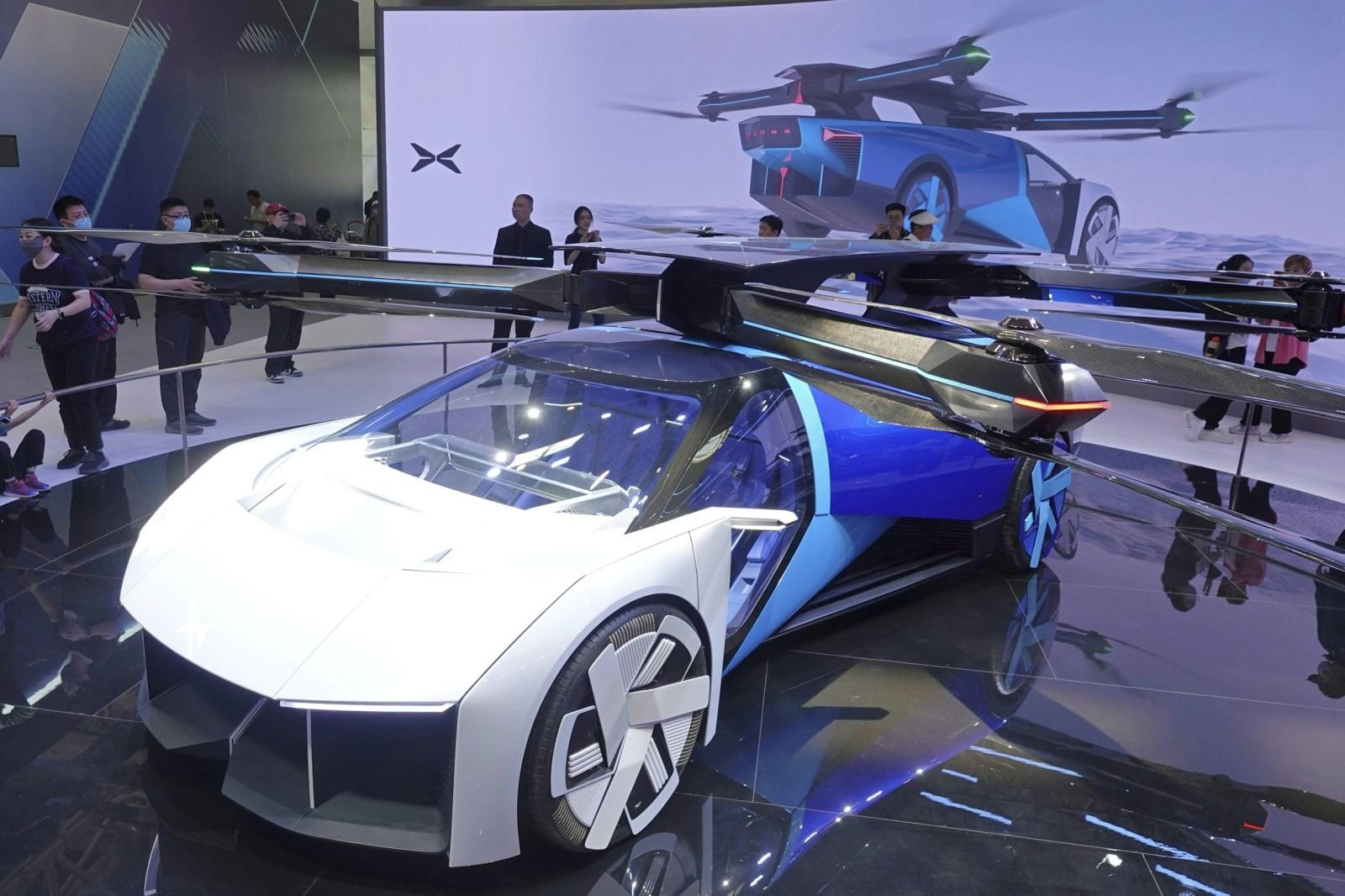
Flying Cars Are Closer Than Ever—But Lawmakers Could Hold Them Back
Flying cars have long been a fixture of popular imagination, from the futuristic visions of The Jetsons to the ambitious promises of Silicon Valley innovators. After decades of anticipation, the prospect of airborne personal transportation is finally approaching reality. The emerging field of advanced air mobility (AAM), which includes electric vertical takeoff and landing (eVTOL) aircraft, has made notable progress. Several companies are actively engaged in regulatory certification processes with the U.S. Federal Aviation Administration (FAA) and international aviation authorities. Industry leaders, alongside the U.S. government, are targeting 2028 for the commercial launch of air taxi services, with plans to highlight these innovations during the Los Angeles Summer Olympics.
Technological Advances and Industry Developments
Prominent firms such as Archer Aviation, Joby Aviation, and Beta Technologies are developing eVTOL aircraft capable of carrying four to five passengers over distances of less than 200 miles. These vehicles combine the vertical takeoff and landing capabilities of helicopters with horizontal flight enabled by tilting or dedicated propellers. Although battery technology currently limits their range, the shift to electric propulsion offers significant benefits, including reduced emissions, lower noise levels, and enhanced safety features. Unlike traditional helicopters, which rely on a single main rotor and thus present a potential single point of failure, eVTOLs employ multiple independent electric motors. This design provides redundancy and quieter operation. Beta Technologies, for instance, asserts that its Alia A250 eVTOL could reduce energy costs per flight hour by 90 percent compared to a similarly sized Bell 407 helicopter.
Regulatory and Infrastructural Challenges
Despite these technological strides, the path to widespread adoption remains fraught with challenges. The commercialization of AAM depends not only on continued innovation but also on the establishment of specialized infrastructure, particularly vertiports for takeoff and landing. Policy decisions at the state and local levels will be critical in shaping this infrastructure. However, well-intentioned lawmakers, concerned with safety, noise pollution, and zoning regulations, risk inadvertently impeding the industry’s growth before it can fully develop.
The regulatory landscape is further complicated by fragmented legal frameworks and geopolitical tensions, which have resulted in divergent technical standards across different regions. While the Trump administration supported pilot programs for flying cars, regulatory progress has been slow and contentious. Structural barriers also persist in emerging markets. For example, in Brazil, underdeveloped infrastructure and the need for systemic investment continue to hinder progress, as noted by Azul CEO John Rodgerson.
Public skepticism adds another layer of difficulty. The rollout of self-driving taxis has already encountered resistance, with many consumers expressing wariness toward new transportation technologies. Similar doubts could slow the acceptance of flying cars, particularly if early incidents or regulatory missteps undermine public trust.
For eVTOLs to transcend niche air taxi services and achieve broader urban air mobility, the industry must navigate these regulatory, infrastructural, and perceptual obstacles. While the technology is advancing rapidly, the future of flying cars may ultimately depend less on engineering breakthroughs and more on the willingness of lawmakers and the public to embrace this new mode of transportation.

Etihad Airways Suspends Airbus A380 Flights on Key Route

Aditya Birla Group Seeks Approval for Aircraft Leasing in GIFT City

Qatar Airways Highlights Innovation and Connectivity at Arabian Travel Market 2026

Hong Kong's Five-Year Plan Includes Andrew Fan's Aircraft Parts Processing Hub Proposal

ACIA Aero Leasing Delivers ATR72-600 to Air Nostrum

RTX Appoints Jill Albertelli as Head of Pratt & Whitney

TAT Technologies Joins Beyond Aero Hydrogen Aircraft Program

AURAK Study Highlights Barriers to Air Taxi Adoption in Emerging Economies

Xiamen Air Selects Altitude for 787 Maintenance at Heathrow

Etihad and Swissport Extend Global Partnership
