
Превращайте аналитические выводы ИИ в реальные действия

В тренде
Categories
Garmin Autopilot Successfully Lands Small Plane Without Pilot Intervention
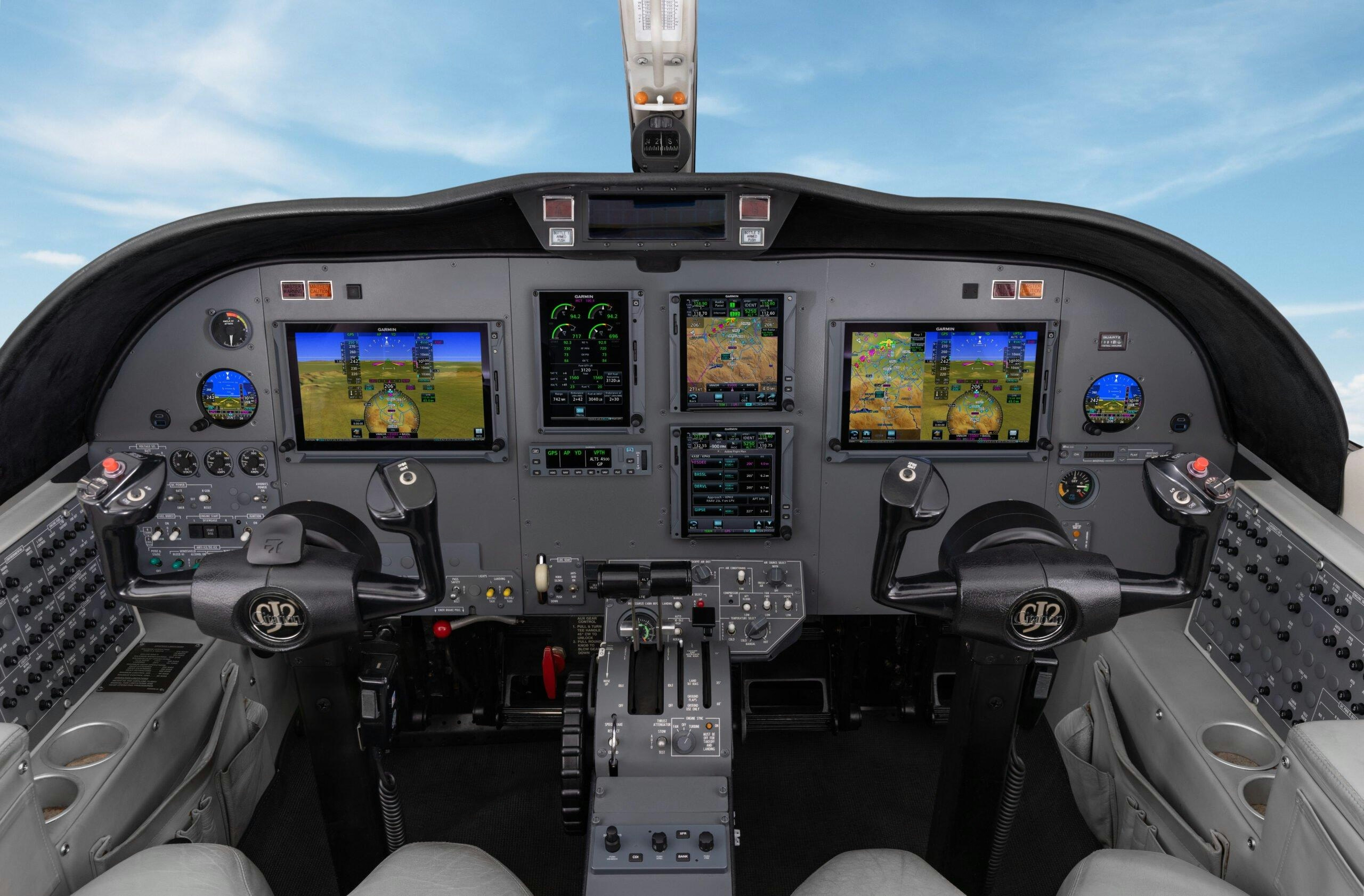
Garmin Autopilot Successfully Lands Small Plane Without Pilot Intervention
Emergency Autoland System Demonstrates Real-World Capability
In a landmark event for aviation automation, Garmin’s Emergency Autoland system successfully executed an autonomous landing of a Beechcraft Super King Air 200 at Rocky Mountain Metropolitan Airport near Denver on December 20, 2025. The Federal Aviation Administration (FAA) confirmed the incident, marking the first complete activation of Garmin’s Autoland technology during an actual in-flight emergency.
The twin-engine turboprop, operated by Buffalo River Aviation, was en route from Aspen/Pitkin County Airport when it experienced a sudden and uncommanded loss of cabin pressurization. According to Buffalo River Aviation CEO Chris Townsley, the flight crew promptly donned oxygen masks and deliberately engaged the Autoland system, allowing the aircraft to land without manual pilot input as intended by the system’s design.
System Functionality and Incident Details
Garmin’s Emergency Autoland is designed to assume full control of an aircraft and navigate it to a safe landing if the pilot becomes incapacitated or unable to operate the plane due to other emergencies. The system can be activated either manually by the crew or automatically when certain safety parameters, such as unsafe cabin altitude, are exceeded. In this case, the system was triggered automatically after the cabin altitude rose beyond safe limits.
Initial reports raised concerns about pilot incapacitation because the Autoland system broadcasts an automated message to air traffic control indicating “pilot incapacitation.” LiveATC audio captured a robotic announcement stating, “N479BR, pilot incapacitation. 2 miles south of KBJC. Emergency autolanding, 19 minutes from runway 30R at KBJC.” Air traffic controllers responded by clearing the aircraft for landing. However, Buffalo River Aviation clarified that both pilots remained conscious and fully in control throughout the event, emphasizing that the automated message is a standard protocol rather than an indication of actual incapacitation.
Significance for Aviation Safety and Automation
No passengers were aboard the aircraft, which landed safely at approximately 14:20 local time. The FAA is currently investigating the incident, while both the agency and Garmin have hailed the event as a major advancement in aviation safety and automation technology.
The Beechcraft Super King Air 200, widely used by charter operators and military organizations for its reliability and capability to operate from short runways, is certified for single-pilot operation but typically flies with two crew members for enhanced safety. The successful deployment of Garmin’s Autoland system in a genuine emergency highlights the increasing role of automation in improving flight safety and managing critical in-flight situations.
This milestone not only validates the effectiveness of advanced autopilot technology but also marks a significant step toward an era in aviation where automated systems can provide vital assistance during emergencies, potentially saving lives and preventing accidents.

Etihad Airways Suspends Airbus A380 Flights on Key Route

Aditya Birla Group Seeks Approval for Aircraft Leasing in GIFT City

Qatar Airways Highlights Innovation and Connectivity at Arabian Travel Market 2026

Hong Kong's Five-Year Plan Includes Andrew Fan's Aircraft Parts Processing Hub Proposal

ACIA Aero Leasing Delivers ATR72-600 to Air Nostrum

RTX Appoints Jill Albertelli as Head of Pratt & Whitney

TAT Technologies Joins Beyond Aero Hydrogen Aircraft Program

AURAK Study Highlights Barriers to Air Taxi Adoption in Emerging Economies

Xiamen Air Selects Altitude for 787 Maintenance at Heathrow

Etihad and Swissport Extend Global Partnership
