image

AeroGenie — ваш интеллектуальный второй пилот.

Спрашивайте о чём угодно. Анализируйте всё. Действуйте мгновенно.

В тренде

Categories

GE Tops Engine Orders at Dubai Airshow 2025
November 19, 2025By ePlane AI
GE Tops Engine Orders at Dubai Airshow 2025
0
0
GE Aerospace
Engine Orders
Dubai Airshow 2025

GE Leads Engine Orders at Dubai Airshow 2025

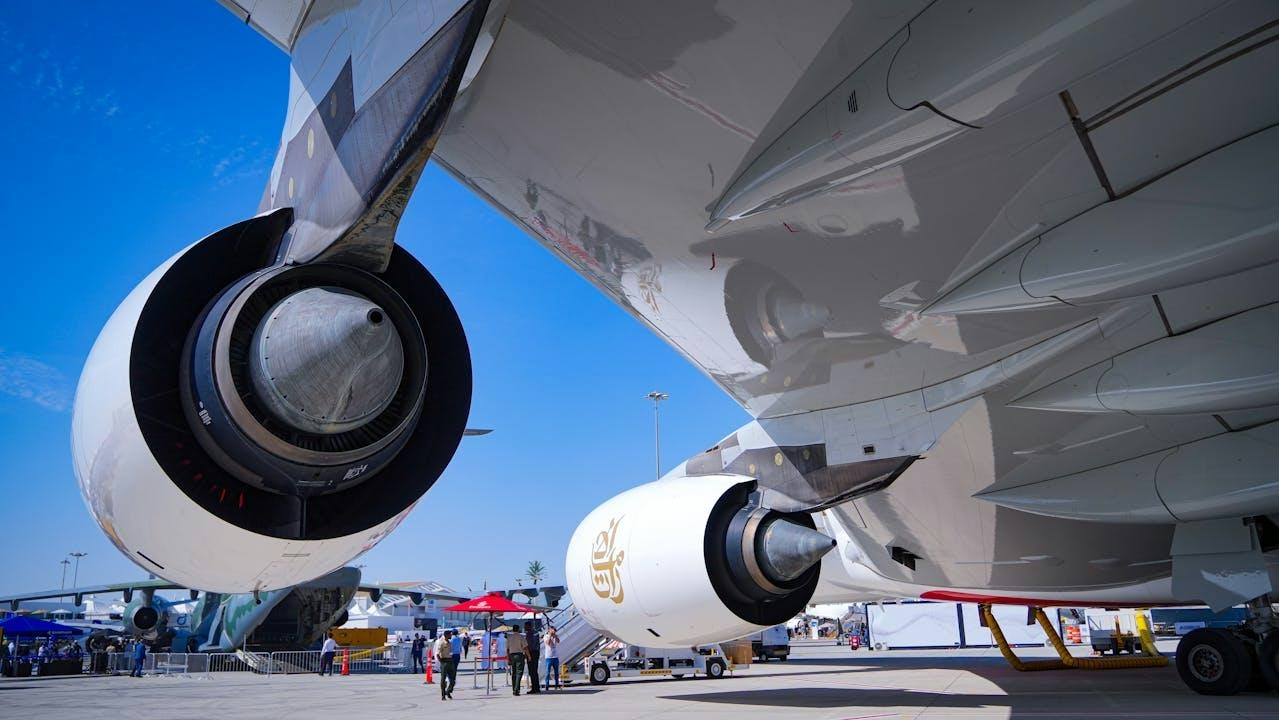
After just two days of the Dubai Airshow 2025, GE Aerospace has emerged as the dominant force in engine orders, securing a substantial share of new deals. The event, which has already surpassed expectations in both scale and activity, highlights a surge in demand for aircraft powered predominantly by GE engines, often on an exclusive basis. This strong performance underscores GE’s prominent position in the current aerospace market.

Competitive Landscape and Market Dynamics

While GE Aerospace enjoys a commanding lead, its competitors face a more challenging environment. Pratt & Whitney has notably missed out on key Airbus single-aisle orders where it had opportunities to compete, limiting its presence at the show. Rolls-Royce continues to benefit from robust demand for widebody aircraft engines, yet it remains overshadowed by GE’s overall dominance in engine sales. The intense order activity is placing pressure on delivery schedules across the industry, creating difficulties for lessors and operators who lack pre-existing allocations.

The surge in orders is, however, a positive development for the broader aerospace supply chain. Financial markets have responded favorably, with GE Aerospace’s stock reaching record highs amid the influx of engine orders and the company’s upward revision of financial guidance. This momentum positions supply chain firms to pursue capital expansion, signaling a strong recovery from the pandemic-induced downturn.

Challenges and Emerging Competition

Despite its success, GE Aerospace faces significant challenges as global air travel rebounds. Maintaining supply chain stability is critical to meeting demand, particularly for its flagship GE9X engines, which are integral to the expanding fleets of major carriers such as Emirates. Any disruptions or reliability issues could have serious operational and reputational consequences for the company.

Meanwhile, competitors are actively seeking to narrow the gap. Airbus and Boeing have announced new deals at the show, aiming to bolster their market positions. Embraer is also emphasizing a pivotal moment for its GTF engines. Additionally, the introduction of a new competitor jet from China at the Dubai Airshow signals a shifting global landscape, introducing fresh competition for GE and other established engine manufacturers.

This week at the Dubai Airshow may ultimately be regarded as a defining moment in the commercial aerospace sector’s post-pandemic recovery. The combination of strong market signals, intensifying competition, and supply chain challenges highlights the dynamic environment in which GE Aerospace and its rivals are operating as they navigate the next phase of industry growth.

More news
Alex Wilcox, Co-Founder and CEO of JSX, Redefines Regional Air Travel Through Customer-First Innovation

Alex Wilcox, Co-Founder and CEO of JSX, Redefines Regional Air Travel Through Customer-First Innovation

Alex Wilcox, Co-Founder and CEO of JSX, Redefines Regional Air Travel Through Customer-First Innovation Alex Wilcox, co-founder and CEO of JSX, is reshaping the landscape of regional air travel by prioritizing the customer experience in every aspect of aviation innovation. With a career spanning over 30 years, Wilcox has established himself as a visionary leader who challenges conventional airline models and integrates human-centered design throughout the travel journey. A Career Rooted in Innovation and Passenger Comfort Wilcox first gained prominence as a founding executive at JetBlue Airways, where he played a pivotal role in introducing groundbreaking features such as LiveTV and all-leather seating. These amenities set new benchmarks for passenger comfort within the low-fare airline sector. Throughout his career, Wilcox has maintained a consistent focus on simplifying air travel, striving to make it more efficient and enjoyable for passengers. In 2016, Wilcox identified a critical inefficiency in short-haul air travel, which inspired the creation of JetSuiteX—now rebranded as JSX. This semi-private air carrier was designed to address common frustrations such as lengthy security lines, congested terminals, and inflexible schedules. By operating from private terminals at major airports, JSX offers a streamlined and comfortable travel experience that has resonated strongly with customers. Under Wilcox’s leadership, JSX has transported hundreds of thousands of passengers and boasts an industry-leading Net Promoter Score consistently above 85. “Customers don’t want more complexity—they want less friction,” Wilcox has stated. “JSX was built around the idea that air travel should be intuitive, respectful of people’s time, and genuinely enjoyable.” Navigating Challenges Amid Expansion Despite its success, Wilcox and JSX face considerable challenges as the company expands. Regulatory obstacles and competition from established carriers such as Delta and United present significant hurdles. JSX’s competitive pricing, with fares around $149, appeals to cost-conscious travelers but may trigger aggressive responses from larger airlines, including potential price wars or strategic adjustments to defend market share. Industry analysts remain divided, with some applauding JSX’s innovative approach while others question its long-term sustainability. JetBlue CEO Joanna Geraghty has underscored the structural disadvantages smaller airlines encounter, suggesting that JSX will need to carefully navigate similar pressures as it grows. Before founding JSX, Wilcox served as President and COO of Kingfisher Airlines and began his career in customer service at Virgin Atlantic Airways. A graduate of the University of Vermont, he is also a Henry Crown Fellow of the Aspen Institute and a member of the Young Presidents’ Organization (YPO). His leadership philosophy emphasizes long-term value creation, operational discipline, and accountability to both customers and employees. As JSX expands into key markets such as Dallas, Wilcox’s customer-first approach offers a compelling model for the future of regional air travel—one that balances efficiency, comfort, and innovation while confronting the realities of a highly competitive industry. About JSX and Alex Wilcox JSX is a U.S.-based air carrier that delivers a premium, simplified regional travel experience. By operating from private terminals, JSX enables faster boarding, reduces wait times, and provides a more comfortable journey, consistently ranking among the highest in customer satisfaction within the aviation sector. Alex Wilcox is an American airline executive and entrepreneur with over three decades of experience. He is widely recognized for his dedication to enhancing the air travel experience through innovation and customer-centric leadership.
Garuda Indonesia MRO Unit Completes $332 Million Land Injection

Garuda Indonesia MRO Unit Completes $332 Million Land Injection

Garuda Indonesia MRO Unit Finalizes $332 Million Land Injection Amid Industry Shifts GMF AeroAsia, the maintenance, repair, and overhaul (MRO) subsidiary of Garuda Indonesia Group, has completed a significant capital injection involving land assets in collaboration with airport operator PT Angkasa Pura Indonesia, commercially known as InJourney Airports. On December 29, 2025, the two parties formalized the transfer of 972,123 square meters of land at Jakarta Soekarno-Hatta International Airport to GMF AeroAsia. Valued at IDR5.66 trillion (approximately USD 332.4 million), this transaction represents a substantial asset realignment for the MRO company. Strategic Asset Transfer and Financial Implications The land transfer follows shareholder approval of a rights issue in October 2025 and officially establishes InJourney Airports as a shareholder in GMF AeroAsia. According to the company, this asset injection is expected to restore GMF AeroAsia’s positive equity position and eliminate future rental obligations previously payable to InJourney Airports. This move is intended to strengthen the company’s financial foundation and provide greater operational stability. Industry Context and Competitive Challenges The timing of this investment coincides with intensifying competition within the regional MRO sector. Competitors such as ExecuJet and Bombardier are actively expanding their maintenance capabilities, particularly in advanced avionics and satellite connectivity services. This evolving competitive landscape may pose challenges for GMF AeroAsia as it seeks to leverage its expanded infrastructure to capture market share. Market responses to the land injection have been varied. Some investors regard the transaction as a strategic initiative to enhance GMF AeroAsia’s service offerings and long-term competitiveness. Conversely, others express concern over the financial pressures associated with such a large-scale investment. The move may also prompt rival firms to pursue similar infrastructure enhancements, potentially escalating price competition across the MRO industry. As GMF AeroAsia integrates the newly acquired assets and refines its business strategy, the company faces both opportunities for growth and the necessity to adapt to a rapidly changing market environment. The ultimate success of this capital injection will depend on GMF AeroAsia’s ability to effectively utilize its expanded facilities while navigating shifting industry dynamics and competitive pressures.
India’s Aviation Growth Strains Hangar Capacity

India’s Aviation Growth Strains Hangar Capacity

India’s Aviation Growth Strains Hangar Capacity Expanding Fleets Outpace Maintenance Infrastructure India’s aviation sector is experiencing unprecedented growth, with airlines rapidly expanding their fleets and airports accelerating terminal development. However, a critical component of the aviation ecosystem—hangars and maintenance facilities—is failing to keep pace. As air traffic intensifies, the infrastructure necessary to maintain aircraft safety and operational readiness is emerging as a significant bottleneck. A recent memorandum of understanding between Tata Projects Ltd (TPL) and Singapore-based Aircraft Support Industries (ASI) Global to design and construct aircraft maintenance facilities signals a strategic shift in addressing this challenge. Beginning in 2026, the focus will extend beyond fleet expansion and new routes to encompass the essential maintenance infrastructure required to sustain growth. India’s fleet expansion is outstripping the development of its maintenance backbone, resulting in a growing deficit of hangar space across both civil and defence aviation sectors. This shortfall exposes aircraft to environmental damage, delays critical maintenance, and compels airlines to outsource heavy maintenance overseas. Such dependence on foreign maintenance, repair, and overhaul (MRO) providers is costly and strategically unsustainable. With the induction of wide-body aircraft accelerating and defence fleets undergoing modernization, the hangar shortage is evolving from a logistical inconvenience into a strategic vulnerability. The Emerging Maintenance Challenge Historically, India’s limited commercial fleet size and constrained budgets allowed the sector to operate with minimal hangar infrastructure. Routine line maintenance was often conducted outdoors, while major overhauls were outsourced internationally. This approach is no longer viable given the sector’s rapid expansion. The market for maintenance-grade hangars is entering a critical growth phase, driven by increasing commercial and business aircraft numbers, expanding airport capacity, and the introduction of new defence platforms. Concurrently, tightening global safety standards and a heightened focus on asset protection and operational reliability are intensifying the demand for adequate hangar facilities. Rahul Sharma, executive vice president at Tata Projects’ Urban Spaces Strategic Business Unit, estimates that India will require at least three to four large MRO facilities within the next 15 years, representing an investment of approximately $6 billion. Without sufficient hangar capacity, aircraft remain vulnerable to environmental exposure, maintenance schedules are disrupted, and operators continue to rely on foreign service providers. Hangars are fundamental to any robust aviation ecosystem, safeguarding high-value assets, expediting maintenance processes, reducing costs, and ensuring fleet availability. Despite these pressing needs, even flagship greenfield airports such as Navi Mumbai and Noida International have commenced operations without dedicated aircraft hangars, prioritizing terminals and runways over maintenance infrastructure. This trend underscores a broader imbalance: passenger capacity is expanding faster than the infrastructure required to maintain the aircraft serving those passengers. As wide-body operations increase and heavy maintenance continues to be outsourced, carriers like Air India and IndiGo will require climate-controlled hangars to protect their assets and develop in-house maintenance capabilities. Operational Pressures and Strategic Implications The strain on hangar capacity is exacerbated by additional operational challenges. Major carriers, including IndiGo, have faced disruptions due to airspace restrictions linked to geopolitical tensions and military escalations, resulting in widespread flight cancellations and diminished traveler confidence. In response, competitors are exploring strategic adjustments to mitigate operational risks and capitalize on emerging market opportunities. Meanwhile, leadership changes at Malaysia Aviation Group reflect a continued commitment to growth despite these headwinds. As India’s aviation ambitions continue to ascend, the imperative for robust maintenance infrastructure becomes increasingly urgent. Without significant investment in hangar capacity and MRO facilities, the country risks undermining the very growth it aims to achieve in the global aviation arena.
American Airlines Marks 100 Years of Flight with Centennial Events in 2026

American Airlines Marks 100 Years of Flight with Centennial Events in 2026

American Airlines Marks 100 Years of Flight with Centennial Events in 2026 In 2026, American Airlines will commemorate a significant milestone: a century since its inaugural mail flight from Chicago to St. Louis in 1926. From its modest origins, the airline has grown into a global leader in aviation. To celebrate this historic achievement, American Airlines has planned a year-long series of events and initiatives that pay tribute to its rich legacy and future ambitions. Centennial Celebrations and Customer Experience American Airlines will introduce a range of special features throughout 2026 to engage travelers in the centennial festivities. A Boeing 737 will be unveiled sporting a distinctive centennial livery, adorned with silver infinity rings symbolizing the airline’s enduring commitment to innovation and progress. Complementing this, a new centennial logo will be integrated across the entire customer journey, appearing on booking platforms, airport signage, inflight entertainment systems, and merchandise, including collectible airplane models. More than 1,500 aircraft in the fleet will display the centennial decal, ensuring that the celebration is visible to passengers on nearly every flight. To enhance the onboard experience, the airline will offer exclusive centennial-themed amenities. These include specially designed amenity kits, unique pajamas available on long-haul flights, and curated inflight dining options featuring meals and beverages crafted to mark the occasion. These offerings are intended to create a festive atmosphere and provide memorable experiences for travelers throughout the centennial year. Industry Challenges Amid Celebration Despite the celebratory tone, American Airlines faces considerable challenges within a competitive and evolving industry landscape. Maintaining operational reliability and controlling costs remain critical priorities as the airline contends with intensified competition from Delta, United, and various low-cost carriers. Market analysts emphasize that American’s ability to sustain its premium revenue growth will be vital, particularly as rivals may adopt aggressive pricing strategies and modify frequent flyer programs to capture market share. United Airlines CEO Scott Kirby has alluded to potential shifts in market dynamics, highlighting the pressure on American Airlines to defend its position and competitive advantage during this pivotal year. Honoring a Century of Aviation In addition to the celebratory events, American Airlines has launched a dedicated website that chronicles its 100-year history and achievements. As the airline reflects on a century of aviation, the centennial celebrations serve not only to honor its past but also to embrace the future, reaffirming its commitment to innovation and excellence for both customers and employees.
Thai Airways selects Trax and Aerostrat to drive its digital MRO transformation

Thai Airways selects Trax and Aerostrat to drive its digital MRO transformation

Thai Airways Selects Trax and Aerostrat to Lead Digital MRO Transformation Thai Airways has announced a strategic partnership with Trax and Aerostrat to undertake a comprehensive digital transformation of its maintenance, repair, and overhaul (MRO) operations. The initiative, revealed by AAR CORP. (NYSE: AIR), a prominent global aviation services provider, aims to modernize the airline’s MRO processes through advanced digital solutions. Modernizing Maintenance Operations with Advanced Technology Under the agreement, Trax will implement its eMRO enterprise resource planning system, complemented by a suite of eMobility applications and a cloud hosting platform. These technologies are designed to provide Thai Airways with real-time data access, streamline operational workflows, and enhance decision-making capabilities across its global network. Aerostrat will contribute its Aerros software, an advanced maintenance planning tool that offers long-range forecasting and optimization to maximize fleet availability while controlling costs. In addition to these platforms, both Trax and Aerostrat will deploy proprietary artificial intelligence-powered solutions aimed at automating complex planning, workflow management, and defect resolution tasks. By digitizing traditionally paper-based processes, Thai Airways expects to improve turnaround times and reduce its environmental impact, aligning with broader industry trends toward sustainability and operational efficiency. Andrew Schmidt, Senior Vice President of AAR Digital Services and President of Trax, emphasized the significance of the collaboration, stating, “Over the last three years, AAR has continued to invest in Trax and expand the product offering to include Aerostrat’s advanced maintenance planning software. We are excited our suite of products will help Thai Airways increase productivity and reduce operational costs.” Echoing this sentiment, Cherdphan Chotikhun, Chief of Technical at Thai Airways, described the partnership as transformative: “The next generation of Trax and Aerostrat applications will not only elevate our operational performance but also enable us to establish a state-of-the-art MRO operation that meets global standards and sets new benchmarks for efficiency and quality.” Challenges and Industry Context Despite the promising outlook, the digital transformation presents several challenges. Integrating new technologies with existing legacy systems, ensuring robust cybersecurity measures, and managing a seamless transition for personnel and operations are critical hurdles that Thai Airways must navigate. Furthermore, the adoption of advanced digital solutions may provoke skepticism among traditional MRO providers, potentially intensifying competition as rivals accelerate their own digital initiatives to maintain market share. The broader aviation industry is concurrently grappling with pressures such as aging aircraft fleets, constrained supply chains, and a diminishing pool of skilled maintenance professionals. These factors complicate the deployment and scaling of innovative digital tools, underscoring the importance of effective change management and strategic planning for the success of Thai Airways’ transformation. About AAR CORP., Trax, and Aerostrat Headquartered near Chicago, AAR CORP. supports commercial and government aviation customers in over 20 countries through its diverse business segments, including Parts Supply, Repair & Engineering, Integrated Solutions, and Expeditionary Services. Trax, a wholly owned subsidiary of AAR, has been a pioneer in aviation maintenance software for more than 25 years. Aerostrat, also part of AAR, specializes in base maintenance planning and scheduling solutions tailored for air carriers. As Thailand’s national flag carrier, Thai Airways continues to pursue its strategic roadmap focused on enhancing operational efficiency and service quality through digital innovation, positioning itself at the forefront of the evolving aviation maintenance landscape.
December 2025 Commercial Aircraft Production and Airbus and Boeing Deliveries

December 2025 Commercial Aircraft Production and Airbus and Boeing Deliveries

December 2025 Commercial Aircraft Production Overview Commercial aircraft production in December 2025 demonstrated a strong year-end surge despite persistent supply chain challenges and increasing competition among leading manufacturers. Forecast International reported a total output of 157 commercial aircraft for the month, with narrowbody models maintaining their dominant position in both production and delivery volumes. Production Trends: Narrowbody and Widebody Aircraft Narrowbody aircraft comprised the majority of December’s production, totaling 123 units. This segment remains central to manufacturers’ strategies, driving delivery momentum as the year concluded. Widebody production, while showing signs of gradual recovery, reached only 18 aircraft. This segment continues to face significant constraints due to ongoing supply chain disruptions, quality control concerns, and industrial bottlenecks, particularly impacting programs such as the Airbus A350. Regional jets and turboprops each contributed eight aircraft, representing a modest share of overall production. Lead Times and Delivery Efficiency Manufacturers achieved further compression in lead times from production to delivery during December. Narrowbody aircraft averaged 24.0 days, while widebodies recorded a similar figure of 24.3 days, reflecting an emphasis on expedited handovers as the year drew to a close. Turboprops benefited from simpler assembly and fewer customization demands, posting the shortest average lead time at 14.5 days. Due to limited production volumes, regional jet lead time data remained insufficient for meaningful analysis. Airbus and Boeing Year-End Delivery Performance Forecast International estimates that Airbus and Boeing collectively delivered approximately 185 aircraft in December 2025. Airbus led the month with 121 deliveries, including 87 units from the A320neo family and 17 A220s. Widebody deliveries comprised around seven A330neos and ten A350s, indicating a robust year-end effort despite ongoing production challenges, especially with the A320 model. Airbus surpassed its 2025 annual delivery target of 790 aircraft, achieving a total of 793 despite earlier technical setbacks. Boeing delivered an estimated 64 aircraft in December, with the 737 MAX accounting for 44 units. Widebody deliveries included four 767s, two 777s, and 14 787 Dreamliners. The year-end figures from both manufacturers underscore the continued reliance on narrowbody aircraft, while widebody deliveries remain constrained by production pacing rather than market demand. Industry Competition and Global Dynamics The competitive environment remains intense as Airbus and Boeing contend with operational headwinds, including supply chain disruptions and quality control issues that have affected production rates and delivery schedules. Concurrently, Russia’s United Aircraft Corporation is seeking to expand its footprint by increasing Tu-214 production, targeting an annual output of 20 aircraft by 2027. This initiative aims to challenge Boeing 757 deliveries and highlights the evolving dynamics and heightened competition within the global commercial aircraft industry. Outlook December’s production and delivery data reflect the sector’s resilience and capacity to adapt amid ongoing challenges. Narrowbody aircraft continue to anchor original equipment manufacturers’ output and deliveries, while widebody recovery progresses unevenly. As supply chain and quality issues are addressed, the competitive landscape is expected to intensify, with both established players and emerging entrants striving to capture greater shares of the recovering market.
American Airlines Uses AI to Improve Family Travel Experience

American Airlines Uses AI to Improve Family Travel Experience

American Airlines Employs AI to Enhance Family Travel Experience The familiar anxiety of missing a connecting flight is a common concern for travelers, particularly families. Delays, long distances between gates, and the looming departure of a connecting plane can quickly turn an eagerly anticipated vacation into a source of frustration. American Airlines is addressing this challenge at major hubs such as Dallas-Fort Worth and Charlotte by implementing artificial intelligence designed to keep families together and ensure smoother travel connections. AI-Powered Solutions for Seamless Connections Central to this initiative is “Connect Assist,” an AI-driven tool that processes real-time flight information to improve connection reliability. The system monitors flight arrivals, calculates walking times between gates, and assesses whether a connecting flight can be held—typically for up to ten minutes—without causing broader schedule disruptions. This brief delay has the potential to save thousands of trips annually, transforming the often stressful rush through terminals into a more manageable experience. Passengers identified as at risk of missing their connections receive timely text notifications if their subsequent flight is being held, providing reassurance and alleviating anxiety. With millions affected by delays each year, according to the Bureau of Transportation Statistics, American Airlines’ AI initiative aims to mitigate these disruptions and enhance the overall travel experience. Economic Significance and Industry Implications Reliable flight connections play a crucial role in supporting the tourism economy. When travelers successfully reach their destinations, they contribute to local economies by dining, sightseeing, and engaging in cultural activities across cities such as Miami, Phoenix, and Philadelphia. Consistent and dependable service fosters trust in the travel industry, encouraging increased visitation to American cities and reinforcing the United States’ standing as a hospitable destination. The Connect Assist system is also operational at key airports including Chicago O’Hare and Los Angeles International, which serve as vital gateways for both domestic and international travelers. Efficient connections at these hubs facilitate easier access for visitors from abroad and reduce stress for families traveling to vacation destinations. Navigating Innovation, Reliability, and Regulation While AI solutions like Connect Assist offer significant advantages, they also introduce new challenges. Ensuring the reliability and security of these systems is essential, as is addressing passenger concerns regarding automated decision-making. While some travelers welcome the convenience of AI, others remain more comfortable with traditional, human-centered service. Competitors in the industry may respond by adopting similar technologies or by emphasizing personalized customer care to maintain differentiation. Regulatory oversight is intensifying as AI becomes more integrated into travel operations. Compliance with data protection regulations and transparency about the use of passenger information are critical to maintaining customer trust and confidence. Operational Efficiency and Financial Impact Missed connections impose substantial costs on airlines, often necessitating compensation through hotel accommodations, meal vouchers, and rebooking expenses. By leveraging AI to reduce these occurrences, American Airlines not only enhances the passenger experience but also lowers operational costs. These savings can be redirected toward further improvements in service quality. Future Outlook As American Airlines and its competitors continue to explore AI-driven innovations in travel, the emphasis remains on balancing technological advancement with customer trust and regulatory compliance. For families navigating busy airports, these developments promise a less stressful journey and a more enjoyable travel experience.
Outlook for GE Aerospace in 2026

Outlook for GE Aerospace in 2026

Outlook for GE Aerospace in 2026 Shares of GE Aerospace (GE) have surged nearly 90% over the past year, raising questions about the sustainability of the company’s valuation and the prospects as 2026 approaches. This impressive stock performance has been driven by strong demand for commercial jet engines and aftermarket services, prompting analysts to upgrade their ratings and set ambitious price targets. Nevertheless, the company faces several challenges that could influence its trajectory in the coming years. Challenges and Operational Risks GE Aerospace is likely to encounter headwinds related to supply chain constraints and production capacity limitations, which may restrict its ability to meet the growing demand. Additionally, concerns have emerged regarding the durability of the LEAP engine, especially under harsh operating conditions. These issues raise questions about long-term reliability and maintenance costs, potentially affecting customer satisfaction and profitability if not adequately addressed. Managing these operational risks will be essential for the company to sustain its performance. Market Position and Competitive Landscape Despite these challenges, GE Aerospace continues to hold a strong market position. Its scale, technological expertise, and well-established relationships with major airlines provide significant competitive advantages. While the aerospace industry remains highly competitive with active rivals, GE Aerospace’s commitment to innovation and its focus on mission-critical products have helped it maintain a leadership role. These factors underpin the company’s optimistic outlook as it navigates a complex and evolving market environment. Investment Considerations From an investment standpoint, GE Aerospace’s recent performance has attracted interest from investors seeking durable businesses with economic resilience and pricing power. Market participants are closely watching the company’s capital allocation strategies, margin trends, and unit economics to evaluate the sustainability of its growth and returns. The ability to overcome supply chain disruptions, resolve technical challenges related to engine durability, and leverage strong market demand will be pivotal in maintaining the company’s momentum moving forward. In conclusion, while GE Aerospace’s stock has delivered exceptional returns and the outlook remains broadly positive, investors should remain vigilant regarding operational risks and industry dynamics as 2026 approaches. The company’s future success will depend on its capacity to address production and supply chain challenges, improve engine reliability, and sustain its competitive edge in a rapidly changing aerospace sector.
FLY91 Leases Two ATR 72-600 Aircraft from DAE to Expand Regional Network

FLY91 Leases Two ATR 72-600 Aircraft from DAE to Expand Regional Network

FLY91 Leases Two ATR 72-600 Aircraft from DAE to Expand Regional Network FLY91 has entered into a lease agreement with Dubai Aerospace Enterprise (DAE) for two ATR 72-600 aircraft, marking a pivotal advancement in the airline’s regional growth strategy. Scheduled for delivery later this month from ATR’s Toulouse facility, these additions will increase FLY91’s fleet to six aircraft, immediately enhancing capacity, flight frequency, and geographic coverage across its expanding network. Strategic Fleet Expansion for Regional Connectivity The selection of the ATR 72-600 aligns closely with the operational demands of India’s regional aviation market. Known for its fuel efficiency, reliability, and capability to operate from short runways, the ATR 72-600 is particularly suited to serving tier-2 and tier-3 cities, as well as airports with limited infrastructure. As the only large Western-built civilian turboprop currently in production, this aircraft type addresses a critical gap in the market for utility aircraft capable of connecting remote or underserved regions. This factor not only influences FLY91’s fleet decisions but also reflects broader challenges faced by airlines worldwide seeking to enhance regional connectivity in diverse geographies. Operationally, the new aircraft will enable FLY91 to increase frequencies on existing routes and inaugurate new services to destinations including Hubballi, Vijayawada, Rajahmundry, Nanded, and Dabolim. These expansions will bolster the airline’s presence in key southern and western Indian markets and reinforce its hub at Goa’s Manohar International Airport. The airport currently serves routes to Solapur, Jalgaon, Agatti, and major urban centers such as Pune, Bengaluru, and Hyderabad. This densification of the network is anticipated to improve passenger mobility, stimulate tourism, and support economic development in underserved corridors. Financial and Operational Implications Leasing aircraft from an established lessor like DAE provides FLY91 with capital efficiency and financial flexibility. CEO and Managing Director Manoj Chacko has highlighted the importance of measured growth and fleet commonality, noting that the ATR 72-600’s operating economics facilitate predictable maintenance schedules and streamlined crew training. This approach has been central to FLY91’s strategy since its launch in March 2024, as the airline positions itself as a dedicated regional operator. Industry observers are monitoring FLY91’s expansion closely, as its growing network may prompt competitors to pursue similar fleet upgrades to maintain their foothold in regional markets. The airline’s ability to match aircraft capabilities to specific route profiles and airport constraints is expected to optimize load factors and reduce unit costs. However, this expansion also presents challenges in maintaining high aircraft utilization and profitability as the network scales. If executed with disciplined planning and effective load management, the expanded fleet will enable FLY91 to deepen market penetration, enhance schedule resilience, and better serve the mobility needs of smaller Indian cities. The lease of two ATR 72-600s from DAE thus represents a timely and strategic move, strengthening FLY91’s operational capabilities and advancing its mission to improve regional air connectivity across India’s secondary and emerging urban centers.
EmPower Introduces Aviation Training Emphasizing Sustainability and Innovation

EmPower Introduces Aviation Training Emphasizing Sustainability and Innovation

EmPower Introduces Aviation Training Emphasizing Sustainability and Innovation A new aviation training provider based in the United Kingdom, EmPower Flight, has officially launched with a mission to integrate sustainability and innovation into the education of pilots and cabin crew. Scheduled to commence courses in late February, EmPower aims to equip its graduates with the skills and knowledge necessary to meet the evolving demands of the aviation industry by embedding sustainable practices and forward-thinking operational strategies from the outset. Comprehensive Training Programmes with a Sustainable Focus EmPower Flight will offer the Airline Pilot Standard-Multi-Crew Cooperation (APS-MCC) programme, while its sister company, EmPower Crew, will provide Cabin Crew Attestation (CCA) training. Both programmes are led by a team of seasoned aviation professionals, including former airline training captains, ensuring a high standard of instruction grounded in industry experience. The APS-MCC course will be conducted using an Airbus A320 Neo simulator located at British Airways’ Flight Training facility at London Heathrow. This 14-day, 40-hour simulator programme incorporates airline Standard Operating Procedures, scenario-based training, and a strong emphasis on sustainable operations awareness. Additionally, Virtual Reality (VR) learning tools will be employed for pre-course preparation. Graduates will also receive ongoing support as they transition into their initial commercial roles. For aspiring cabin crew members, EmPower Crew’s seven-day immersive CCA programme combines industry-standard safety and service training with modules focused on emerging sustainability practices, employability skills, and career development support. Leadership and Industry Context Andrew Perkins, CEO of EmPower Flight, highlighted the company’s commitment to fostering a culture of integrity, excellence, and respect. He stated, “While many training providers focus solely on technical proficiency, our ambition is to introduce education on sustainable technologies and operational thinking from Day 1.” Rachel Gardner-Poole, Chief Sustainability and Growth Officer, underscored the importance of real-world relevance in the curriculum, noting that the courses are designed and delivered by instructors with extensive commercial airline experience. She emphasized the need for future aviation professionals to adopt innovative approaches in response to emerging technologies aimed at reducing the sector’s environmental impact. EmPower’s launch coincides with increasing pressure on the aviation industry to address environmental concerns. According to Aviation Week Network’s 2026 industry outlook, sustainability and innovation are becoming central to the future of aviation, creating a conducive environment for initiatives such as EmPower’s. However, the company faces a competitive market dominated by established training providers and will need to invest substantially in sustainable technology while aligning with evolving regulatory standards. Although the industry is likely to respond positively to the focus on sustainability, some skepticism may remain regarding the effectiveness and certification of new training methodologies. Competitors may also respond by adopting similar sustainable practices or enhancing their own programmes to maintain market position. EmPower’s approach reflects a broader shift within the aviation sector and positions the company to contribute to shaping the next generation of aviation professionals. Further information on available courses can be found on EmPower Flight’s official website.
Ask AeroGenie










