Изображение

AeroGenie — Ваш интеллектуальный второй пилот.

Спрашивайте что угодно. Анализируйте все. Действуйте незамедлительно.

В тренде

Categories

HAECO Launches Autonomous Drone Inspections at U.S. Aircraft Facilities
April 10, 2025By ePlane AI
HAECO Launches Autonomous Drone Inspections at U.S. Aircraft Facilities
0
0
HAECO
Drone Inspection
MRO

HAECO Introduces Autonomous Drone Inspections at U.S. Aircraft Facilities

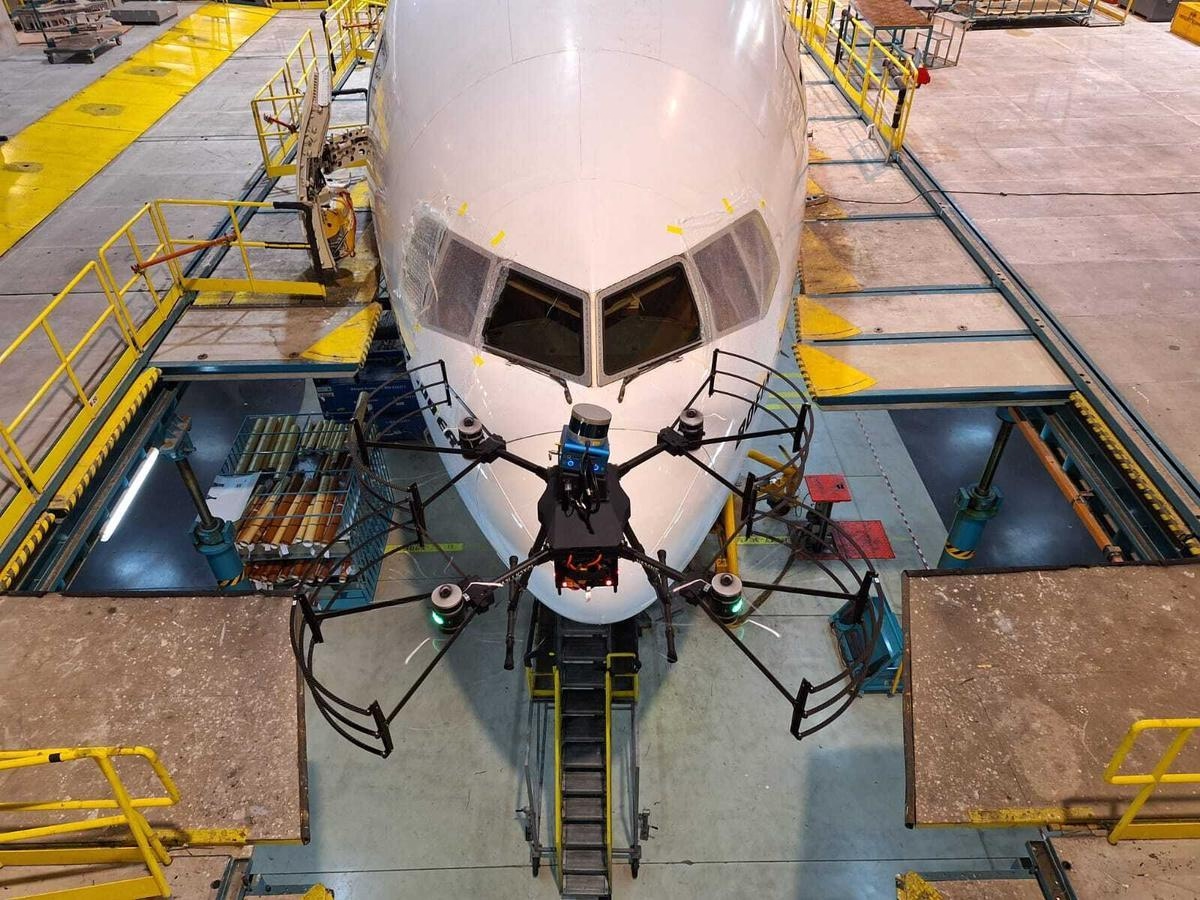
HAECO, a leading provider of aircraft engineering and maintenance, repair, and overhaul (MRO) services, has initiated trials of autonomous drone-assisted inspections at its facilities in the United States. This strategic move, developed in collaboration with drone technology specialist Donecle, seeks to enhance the efficiency and safety of aircraft maintenance operations. The autonomous drones are equipped to conduct detailed inspections, including the detection of structural defects, evaluation of paint quality, and identification of lightning strike damage.

Enhancing Safety and Efficiency Through Autonomous Technology

The use of autonomous drones allows for access to difficult-to-reach areas of aircraft, significantly reducing the need for technicians to perform inspections at elevated heights and thereby minimizing associated safety risks. HAECO emphasizes that this technology not only streamlines the inspection process but also elevates safety standards across its American operations. Summit Chan, group director of corporate development at HAECO, remarked that the trials represent a critical advancement in the company’s pursuit of smarter, safer, and more efficient maintenance solutions. He highlighted the initiative as part of HAECO’s broader commitment to integrating innovative technologies that improve operational efficiency and deliver enhanced value to customers.

Broader Technological Innovations and Industry Implications

Beyond drone-assisted inspections, HAECO is actively exploring additional advanced robotic solutions aimed at both inspection and logistics, with the goal of enabling more comprehensive data analytics and further operational improvements. The company is also investigating the application of augmented reality (AR) to provide real-time, on-site support for engineers and technicians. By overlaying digital information onto the physical environment, AR technology has the potential to significantly increase the accuracy and speed of repair and maintenance tasks.

HAECO’s adoption of autonomous drones arrives amid ongoing industry discussions regarding regulatory challenges and safety concerns related to the deployment of unmanned aerial systems in maintenance settings. This initiative may prompt competitors to accelerate their own integration of drone technology, potentially reshaping industry standards and practices. Market responses have already demonstrated heightened interest in drone applications for aircraft maintenance, as companies seek to leverage the benefits of improved efficiency and safety.

These advancements underscore HAECO’s dedication to pioneering innovation within aviation maintenance, striving to meet and surpass the highest benchmarks of safety and operational excellence.

More news
Contaminated Fuel Injector Causes Emergency Landing

Contaminated Fuel Injector Causes Emergency Landing

Contaminated Fuel Injector Forces Emergency Landing in Alabama A Cessna 172 was compelled to execute an emergency landing near Opelika, Alabama, following a partial loss of engine power attributed to a contaminated fuel injector, according to a recent report by the National Transportation Safety Board (NTSB). Incident Overview and Pilot Account The pilot, who sustained minor injuries, reported conducting a thorough preflight inspection without detecting any irregularities. Although the engine initially sounded “slightly rough” at startup, it stabilized within seconds. Subsequent engine run-up and magneto checks were normal, and all instrument readings remained within acceptable limits during the takeoff roll. Despite these indications, the pilot observed that the aircraft’s airspeed increased more slowly than usual, and the engine appeared unable to deliver full power. At rotation speed of 55 knots, the aircraft struggled to accelerate, maintaining only 60 to 65 knots during the initial climb. Engine revolutions per minute (RPM) were limited to between 1,700 and 1,750, despite the throttle and mixture controls being fully advanced. The pilot described the engine’s performance as “constant but sluggish,” noting no fluctuations in RPM throughout the flight. Recognizing the compromised power output, the pilot lowered the aircraft’s nose and aimed for a forced landing site near the airport. The aircraft subsequently collided with trees and came to rest inverted, sustaining substantial damage to both wings, the fuselage, and the engine mount. Investigation Findings Post-accident examination revealed that the engine’s crankshaft and valvetrain remained intact, with proper compression and suction observed across all cylinders. Both magnetos were securely mounted and timed at 28 degrees before top dead center, slightly advanced compared to the manufacturer’s recommended 25 degrees. The investigation concentrated on the fuel injector assembly, which, upon disassembly, exhibited contamination by a mixture of fuel and oil between the air diaphragm and regulator cover. Photographic evidence showed greenish-blue oily deposits within the fuel servo, consistent with issues outlined in a manufacturer’s service bulletin. The NTSB concluded that the probable cause of the incident was a partial loss of engine power resulting from contamination in the fuel injector assembly. Broader Implications Beyond immediate safety concerns, incidents involving contaminated fuel injectors carry significant financial and reputational consequences for operators. Emergency landings often incur direct costs including fuel loss, landing fees, ground handling charges, rebooking expenses, and passenger compensation. Such events also attract heightened regulatory scrutiny, potentially triggering investigations into maintenance and safety practices. Competitors may leverage these incidents to emphasize their own safety records, thereby amplifying reputational damage to the affected operator. The March 2024 accident highlights the critical importance of rigorous maintenance and inspection protocols, demonstrating how even minor contamination in essential engine components can jeopardize flight safety and operational reliability. **NTSB Identification:** 193982
Sahar Group Adopts Ramco Aviation Software to Support Growth

Sahar Group Adopts Ramco Aviation Software to Support Growth

Sahar Group Adopts Ramco Aviation Software to Support Growth Ramco Systems Limited, a prominent enterprise software provider based in India, has announced that Sahar Group will implement its aviation software platform to facilitate the company’s ongoing expansion. Ramco is known for its comprehensive Enterprise Resource Planning (ERP) solutions across various sectors, including aviation maintenance, repair and overhaul (MRO), logistics, human resources, and payroll. The company’s software leverages advanced technologies such as artificial intelligence, machine learning, robotic process automation (RPA), and blockchain to drive digital transformation for clients spanning industries from defense and airlines to energy, utilities, and third-party logistics. Modernizing Operations with Advanced Technology The adoption of Ramco’s aviation software represents a significant milestone for Sahar Group as it aims to modernize its operations and improve efficiency. Ramco’s cloud-based VirtualWorks platform supports the development of scalable, multi-tenant web solutions, while its DecisionWorks suite offers robust information and decision support systems tailored to the complex demands of the aviation sector. This integration is expected to enhance Sahar Group’s operational capabilities and support its growth trajectory. Challenges and Industry Dynamics Despite the potential benefits, the transition to Ramco’s cloud-based subscription model and the integration of AI-driven tools pose certain challenges for Sahar Group. Industry precedents highlight the risks associated with such shifts; for instance, Dassault Systèmes recently experienced a decline in market value following its own move toward cloud and AI solutions. These transitions often attract heightened scrutiny from investors and stakeholders concerned about the software provider’s ability to sustain near-term revenue growth and ensure seamless technology integration. The competitive landscape within aerospace and technology is also undergoing rapid transformation. As firms increasingly adopt AI-driven business models, the sector has seen a surge in large-scale mergers and acquisitions, particularly in the United States. This consolidation trend is intensifying competition among aerospace and AI solution providers, compelling companies like Ramco to continuously innovate and differentiate their offerings to maintain market relevance. For Sahar Group, the partnership with Ramco presents both an opportunity to leverage cutting-edge digital tools and a challenge in managing the complexities of technological transformation. As the aviation industry embraces cloud and AI technologies, the success of such initiatives will depend on effective implementation, adaptability, and the ability to deliver tangible business outcomes.
Deucalion Leases Three A330 Aircraft to Wamos Air

Deucalion Leases Three A330 Aircraft to Wamos Air

Deucalion Leases Three A330 Aircraft to Wamos Air Amid Shifting Widebody Market Deucalion Aviation has secured three Airbus A330 aircraft, currently leased to the Spanish carrier Wamos Air, marking a significant expansion of its managed widebody portfolio. Acting as arranger and servicer on behalf of institutional investors, Deucalion sourced these Rolls-Royce Trent-powered jets through its extensive global origination network. Although financial details remain confidential, the transaction underscores Deucalion’s strategic focus on mid- to end-of-life widebody aircraft, which offer resilient lease profiles and operational flexibility. Market Context and Industry Trends This deal emerges amid heightened scrutiny of widebody fleet strategies across the aviation sector. Industry leaders, including AerCap CEO Aengus Kelly, have recently drawn attention to reliability challenges and increased aircraft downtime, prompting airlines to seek additional capacity and diversify their fleets. This trend is evident in moves such as Brazilian carrier GOL’s exploration of new fleet types and Thai Airways’ recent lease agreement for ten Boeing 787-8 aircraft. These developments reflect a competitive environment where operators are broadening their aircraft mix to enhance operational resilience and mitigate risks associated with aging fleets. Deucalion’s Chief Commercial Officer, Nate Riggs, highlighted the importance of the Wamos Air transaction within this evolving landscape. He stated, “Our team focuses not only on identifying attractive relative value opportunities, but also on actively managing aircraft throughout their lifecycle — including lease transitions, extensions, and end-of-life strategies. The A330 remains a highly versatile variant, and this transaction reflects our continued conviction in this segment of the market.” Operational Expertise and Asset Versatility The versatility of the A330 platform is further emphasized by growing interest in specialized variants such as the Airbus A330 Multi-Role Tanker Transport (MRTT), which has attracted attention from both commercial and government operators. This rising demand for the A330 platform could influence asset values and leasing dynamics, as lessors and airlines consider the aircraft’s adaptability for both passenger and non-passenger roles. Karl Trowbridge, Chief Operating Officer of Deucalion Aviation, underscored the operational demands involved in managing mid- to end-of-life aircraft in today’s market. He explained, “Mid- to end-of-life aircraft require hands-on operational oversight, deep technical capability and market knowledge to preserve and enhance value. Our platform is built around active servicing — from detailed technical management and lease compliance to transition planning and remarketing. This transaction demonstrates how Deucalion integrates sourcing discipline with operational execution to deliver consistent outcomes for our capital partners.” As airlines and lessors navigate a market shaped by reliability concerns, fleet diversification, and evolving asset demand, Deucalion’s latest A330 transaction with Wamos Air highlights both the challenges and opportunities inherent in managing widebody aircraft portfolios through changing industry cycles.
Acron Aviation Opens Global Headquarters in St. Petersburg, Florida

Acron Aviation Opens Global Headquarters in St. Petersburg, Florida

Acron Aviation Establishes New Global Headquarters in St. Petersburg Acron Aviation has officially opened its new global headquarters in downtown St. Petersburg, Florida, marking a pivotal moment in the company’s trajectory of growth and resilience. The inauguration ceremony, held on March 2 at City Center, brought together employees, industry partners, and members of the local community to celebrate the launch of the advanced facility. A State-of-the-Art Facility Replacing Previous Site The new headquarters spans 242,115 square feet and is prominently located on the waterfront at City Center. This facility replaces Acron Aviation’s original St. Petersburg site, which was shuttered in October 2024 following extensive damage caused by Hurricane Milton. Despite the disruption, the company sustained its global operations and customer support from a temporary location before transitioning to the permanent headquarters. Alan Crawford, Chief Executive Officer of Acron Aviation, described the opening as a significant milestone. He emphasized the company’s commitment to St. Petersburg, stating, “This world-class head office is a clear representation of our ongoing commitment to investing in St. Petersburg. We remain focused on supporting both the local community and the region’s economic growth as we deepen our roots here and continue to develop the safety-critical intelligence that will define the future of flight.” The headquarters functions as the operational center for Acron Aviation’s 1,500 employees worldwide, with 80 staff members from executive leadership and customer support teams based on-site. The facility includes an Engineering Centre of Excellence, an Innovation Lounge, four research and development laboratories, expanded conference facilities, a customer training center, and modern collaboration spaces. These features are designed to foster innovation, engineering excellence, and enhanced customer engagement across the company’s aviation technology portfolio. Navigating Industry Challenges Amid Expansion The opening of the new headquarters coincides with a period of heightened complexity within the aviation industry. The International Air Transport Association has highlighted ongoing supply chain disruptions that continue to affect global airlines, presenting challenges that Acron Aviation must address as it scales operations in its new facility. Furthermore, the relocation is expected to attract increased scrutiny from competitors and stakeholders, who may question the strategic benefits of the St. Petersburg location and respond with intensified local competition or operational adjustments. Broader geopolitical tensions also persist as a factor influencing the aviation sector, potentially affecting Acron Aviation’s market positioning and operational stability. Industry leaders have noted that such external pressures can create indirect challenges for companies expanding their global presence. Despite these headwinds, the establishment of the new headquarters underscores Acron Aviation’s long-term dedication to St. Petersburg and its resolve to enhance global operational capabilities. The company intends to leverage the facility to drive innovation and growth while contributing to the economic vitality of the region.
Will Uber and Joby Aviation Stocks Rise After Recent Announcements?

Will Uber and Joby Aviation Stocks Rise After Recent Announcements?

Uber and Joby Aviation Forge Partnership to Launch Air Taxi Service in Dubai Uber Technologies (NYSE: UBER) has announced a strategic partnership with Joby Aviation (NYSE: JOBY) to introduce an Uber Air taxi service in Dubai later this year, marking Uber’s entry into the emerging air taxi market. This collaboration has generated considerable interest among investors, prompting speculation about potential stock gains for both companies. However, a detailed analysis suggests a more measured outlook given the complexities involved. Uber will not own the electric vertical takeoff and landing (eVTOL) aircraft but will act as the booking platform, leveraging its extensive experience in mobility, delivery, and freight services. In 2025, these core segments collectively generated $52 billion in revenue, reflecting an 18% increase year over year. Uber also reported a net income of $10 billion, slightly higher than the previous year, though this figure excludes earnings from outside investments. Despite the high-profile nature of the partnership, the immediate financial impact on Uber’s revenue is expected to be limited, as the air taxi initiative remains in its nascent stages. Regulatory and Market Challenges Temper Optimism The air taxi sector is subject to stringent regulatory oversight, and obtaining the necessary approvals for commercial operations poses a significant hurdle. These regulatory challenges could delay the widespread adoption of air taxi services. Furthermore, competition within the sector is intensifying, with multiple companies pursuing similar partnerships or developing proprietary services to capture market share. Following the announcement, Uber’s stock experienced a modest increase of approximately 2%, yet it remains below critical support levels, reflecting investor caution. Over the past year, Uber’s shares have shown limited movement, and its price-to-earnings (P/E) ratio has declined to 16, potentially enhancing its appeal as it explores new revenue avenues such as air taxis. Joby Aviation, responsible for manufacturing and operating the eVTOL aircraft, is at an earlier stage of commercial development. The company began generating revenue in 2025, reporting $53 million, a substantial increase from $136,000 in 2024. Nevertheless, Joby posted a net loss of $930 million last year, underscoring the significant challenges ahead on the path to profitability. With $1.4 billion in liquidity, Joby may need to secure additional funding through equity or debt issuance to sustain its operations. Joby’s stock has been notably volatile, rising 58% over the past year. However, the absence of earnings means the company lacks a P/E ratio, and its revenue base remains small relative to its losses. Like Uber, Joby faces considerable regulatory and competitive pressures as the air taxi market continues to evolve. While the Uber-Joby partnership represents a significant milestone toward the commercialization of air taxi services, both companies confront substantial regulatory, financial, and competitive obstacles. Investors should approach the prospects of immediate stock gains with caution, as the sector’s path to profitability and broad adoption remains uncertain.
Ramco Systems Secures Aviation Software Contract with Sahar Group for MRO Digital Transformation

Ramco Systems Secures Aviation Software Contract with Sahar Group for MRO Digital Transformation

Ramco Systems Secures Aviation Software Contract with Sahar Group for MRO Digital Transformation Ramco Systems has secured a significant contract with Sahar Group to implement advanced aviation software solutions aimed at transforming the Maintenance, Repair, and Overhaul (MRO) operations. Announced on March 4, 2026, this strategic partnership is designed to enhance operational efficiency and streamline processes for Sahar Group, a prominent aerospace services provider specializing in the UH-60 Black Hawk platform. Advancing Digital Transformation in MRO Operations Sahar Group is pursuing an ambitious expansion of its commercial activities, targeting new aviation segments such as Parts Manufacturer Approval, Supplemental Type Certificates, and helicopter sales and leasing. To manage the increasing operational complexity, the company is investing in a unified digital platform. Ramco’s next-generation Aviation Software will serve as the backbone of this transformation, integrating key functions including maintenance planning, component maintenance, supply chain management, MRO and parts sales, quality assurance, compliance, and financial operations. This integrated approach is expected to improve visibility and control across Sahar Group’s diverse business units, facilitating streamlined workflows, enhanced data accuracy, and accelerated decision-making processes. Leadership Insights on the Partnership Arnold Escobar, CEO of Sahar Group, emphasized the strategic importance of the collaboration, stating, “As part of our plan to scale and diversify our operations, we needed a platform that could support long-term growth without compromising operational discipline. Ramco Aviation Software stood out due to its established presence in the helicopter, defense, and component MRO spaces.” From Ramco Systems, Manoj Kumar Singh, Chief Customer Officer – Aviation, Aerospace & Defense, remarked, “Our selection by Sahar Group serves as further validation of Ramco's ability to support the complex needs of helicopter and defense MRO service providers. By combining deep aviation domain expertise with AI, we are helping organizations shift toward more predictive, data-driven maintenance services.” Market Position and Industry Challenges This contract reinforces Ramco Systems’ strong foothold in the specialized aviation software market, where its solutions are utilized by over 24,000 users managing more than 4,000 aircraft worldwide. Ramco’s clientele spans leading airlines, third-party MRO providers, major helicopter operators, defense organizations, and emerging urban air mobility companies. The partnership also strengthens Ramco’s presence within Miami’s established aviation MRO industrial base, showcasing the company’s capability to deliver customized solutions tailored to complex industry demands. Nonetheless, the digital transformation journey presents significant challenges. Integrating new technologies with legacy systems, ensuring compliance with rigorous aviation regulations, and facilitating workforce adaptation to digital tools remain critical hurdles. The rapid expansion of the MRO sector in the Middle East, coupled with a growing demand for skilled maintenance technicians, is intensifying competition and driving the need for innovation. Investor sentiment toward digital initiatives in MRO has been positive, with increased interest in companies pursuing such transformations. Competitors, including ST Engineering—which recently secured a $372 million MRO contract in Qatar—are likely to accelerate their digital offerings to maintain market competitiveness. As the aviation MRO sector continues to evolve, the Ramco-Sahar partnership exemplifies the industry’s shift toward integrated, data-driven solutions designed to meet the demands of a rapidly changing environment.
WLFC Finalizes Leaseback of Six Dash 8-400 Aircraft with Porter Airlines

WLFC Finalizes Leaseback of Six Dash 8-400 Aircraft with Porter Airlines

WLFC Finalizes Leaseback of Six Dash 8-400 Aircraft with Porter Airlines Willis Lease Finance Corporation (WLFC) has completed a significant transaction involving the purchase and leaseback of six De Havilland Dash 8-400 aircraft with Porter Airlines. This deal underscores the ongoing commitment of both companies to the regional turboprop market. The aircraft, operated from Porter’s Toronto base, will remain central to the airline’s regional network, continuing to provide essential connectivity across its routes. Strategic Importance of the Transaction Austin Willis, Chief Executive Officer of WLFC, highlighted the strategic value of the agreement, emphasizing the company’s confidence in the turboprop sector. He noted that the investment complements WLFC’s extensive turboprop engine portfolio and expressed optimism about expanding the partnership with Porter through future aircraft and engine opportunities. From Porter Airlines’ perspective, Executive Vice President and Chief Financial Officer Robert Palmer stressed the critical role the Dash 8-400 fleet has played in the airline’s operations for nearly two decades. He described the leaseback arrangement as a means to strengthen Porter’s growth trajectory by partnering with an experienced lessor. Context Within the Aviation Industry This leaseback transaction occurs amid broader challenges facing the aviation industry, particularly concerning aircraft reliability and supply constraints. AerCap CEO Aengus Kelly recently observed that airlines are increasingly turning to additional aircraft acquisitions to offset the impact of heightened downtime, highlighting the growing importance of flexible leasing solutions. Concurrently, other carriers are pursuing fleet renewal strategies to enhance operational efficiency. For instance, Croatia Airlines’ transition to Airbus A220 aircraft has introduced both opportunities and financial complexities, while Air Astana’s large order for Airbus A320neo family jets reflects sustained demand for modern, fuel-efficient fleets. WLFC’s Role in Supporting Regional Aviation The deal with Porter Airlines exemplifies WLFC’s capacity to provide strategic, value-driven leasing and financing solutions tailored to the evolving needs of airline partners worldwide. Turboprop aircraft continue to serve as a vital element of regional air connectivity, offering efficient and reliable service to communities across North America and beyond. By facilitating this leaseback, WLFC reinforces its commitment to supporting airlines through flexible arrangements that address current market dynamics. As the regional aviation sector navigates ongoing industry trends and operational pressures, partnerships such as that between WLFC and Porter Airlines are poised to play a crucial role in sustaining reliable service and fostering future growth.
Global Aviation Financier Expands Operations in Africa

Global Aviation Financier Expands Operations in Africa

Global Aviation Financier Expands Operations in Africa A leading European aircraft leasing and asset management group is significantly increasing its footprint across Africa in response to growing demand for aircraft financing and fleet support. AFG Aviation Ireland Limited, the Irish subsidiary of Aircraft Finance Germany, has announced plans to deepen its engagement with airlines, regulators, and government stakeholders following a surge in inquiries linked to recent transactions within the region. Strategic Expansion and Market Engagement AFG recently completed the placement of two CRJ1000 regional jets with Cally Air in Cross River State, Nigeria. This transaction has generated wider interest among operators seeking leasing, trading, and advisory services. In light of this momentum, senior executives Christian Hatje, managing director of business aviation and acting senior vice-president commercial, alongside Shiekuma Gemade, executive vice-president and chief operating officer, are set to undertake a multi-country tour across Africa. Their mission is to advance negotiations and develop financing structures that are tailored to the diverse regulatory frameworks and financial conditions faced by African airlines. The company views Africa as one of the most dynamic growth corridors in global aviation, propelled by expanding regional connectivity and an increasing emphasis on fleet modernization. Recent data highlights robust growth in both the continent’s tourism and aviation sectors, creating a conducive environment for aviation financiers despite the inherent risks involved. Comprehensive Services and Market Positioning AFG’s portfolio encompasses commercial aircraft acquisitions and placements, operating and finance leases, private jet transactions, fleet development strategy, and advisory mandates. The group positions itself as a long-term partner, combining expertise in aircraft trading with sophisticated structured finance capabilities. Christian Hatje emphasized that Africa represents one of the most compelling growth frontiers in global aviation, noting that direct engagement with local partners enables the company to craft more customized transaction structures. Shiekuma Gemade added that maintaining an in-market presence allows AFG to align its financial solutions closely with the operational realities of African airlines. Challenges and Market Dynamics Despite the promising outlook, AFG’s expansion faces significant challenges. The company must navigate complex regulatory environments, manage political and economic risks, and contend with established local financiers who may adjust their strategies in response to the new entrant. Market reactions are already apparent, with a noticeable increase in interest in business aviation financing as demand for private jets rises across the continent. In the broader Middle East and Africa region, approximately 18 percent of airline fleets are now operated under lease arrangements, reflecting a growing preference for flexible financing options over outright ownership. Globally, the commercial aircraft leasing market was valued at approximately $169.5 billion in 2023, with continued growth anticipated as airlines seek greater capital efficiency. Beyond traditional commercial operations, AFG’s activities include specialized transactions such as the sale of a Boeing 767 freighter to a humanitarian organization, underscoring its broader role in aircraft sales, leasing, and trading. As Africa’s aviation sector continues to expand, AFG aims to establish itself as a key partner for airlines and investors navigating the opportunities and challenges of this rapidly evolving market.
Project Bluebird Named Winner of C2I 2025

Project Bluebird Named Winner of C2I 2025

Project Bluebird Named Winner of C2I 2025 Project Bluebird, a groundbreaking collaboration between National Air Traffic Services (NATS), the Alan Turing Institute, and the University of Exeter, has been awarded the prestigious C2I 2025 prize. This initiative seeks to revolutionize the management of the United Kingdom’s increasingly congested and complex airspace, which faces mounting challenges as passenger numbers are expected to increase by 50% by 2050. The rise of new aircraft types, including drones and electric vertical take-off and landing vehicles (eVTOLs), further complicates the airspace environment. Transforming Air Traffic Management with AI In response to growing demands for sustainability and emissions reduction within the aviation sector, Project Bluebird distinguishes itself through its ambitious modernization of air traffic control systems. Funded with £13.7 million from the Engineering and Physical Sciences Research Council (EPSRC), the project unites over 90 experts to develop an AI-enabled air traffic management system. This effort aims to establish a new global standard for automation in safety-critical settings. Live trials are slated to commence in the UK in spring 2026, marking a pivotal moment in the evolution of airspace management. Central to Project Bluebird is a suite of innovative technologies, including the creation of novel AI controllers and the world’s first rigorous framework for assessing their performance relative to human operators. This dual emphasis on technical excellence and credible evaluation addresses two of the most significant obstacles to automation in aviation: ensuring high performance and building trust. Innovations and Technical Breakthroughs A foundational element of the project is a high-fidelity, probabilistic digital twin of live airspace. Unlike conventional simulators, this digital twin integrates real operational procedures with live or historical traffic data, while accounting for uncertainties such as weather conditions and variable aircraft arrival times. Its flexible and scalable architecture supports cloud-based or local deployment, accommodates multiple users, and replicates the layout of an actual operations room. This makes it an invaluable tool for research, training, and operational prototyping. Several technical advances underpin the Bluebird system. A physics-informed machine learning model of aircraft performance combines the interpretability of physics-based approaches with the adaptability of data-driven methods, achieving a 40% improvement in accuracy over current industry standards. The team has also developed pipelines leveraging large language models to automatically generate training scenarios, alongside graph neural networks designed to forecast controller task demand. AI agents have been created using diverse methodologies, including reinforcement learning, Monte Carlo tree search, constrained optimization, and graph-based techniques, all with a strong focus on trustworthiness and explainability. Challenges and Future Prospects Despite its accolades, Project Bluebird faces considerable challenges. Competition from other satellite communication providers, regulatory complexities, and the need for significant investment in technology and infrastructure could influence its progress. The project’s success has already attracted heightened investor interest and may prompt competitors to accelerate their satellite deployment strategies and enhance service offerings. Ultimately, Bluebird’s position in the market will depend not only on sustained technical innovation but also on its ability to forge strategic partnerships and demonstrate robust financial performance. As the UK’s airspace undergoes a profound transformation, Project Bluebird’s accomplishments represent a significant advance in shaping the future of air traffic management.
China Southern Sells 10 Boeing 787-8 Jets to Thai Airways in Historic Online Auction

China Southern Sells 10 Boeing 787-8 Jets to Thai Airways in Historic Online Auction

China Southern Sells 10 Boeing 787-8 Jets to Thai Airways in Landmark Online Auction In an unprecedented transaction within the aviation industry, China Southern Airlines has sold its entire fleet of ten Boeing 787-8 aircraft to Thai Airways through an online auction. Valued at approximately $532 million, this deal represents a significant development in the fleet strategies of both carriers and signals evolving trends in the global aviation market. Strategic Fleet Realignment and Auction Details The Boeing 787-8 jets, delivered to China Southern between 2013 and 2014, had been stationed at Ürümqi Diwopu International Airport. Originally designed for long-haul operations, these aircraft no longer align with China Southern’s strategic focus. The airline is shifting towards larger widebody jets to better serve high-demand routes and to streamline its extensive fleet of nearly 700 aircraft. The 787-8s, constituting one of the smallest subfleets within China Southern, lacked the enhanced maximum takeoff weight found in newer Dreamliner variants, limiting their operational flexibility. This prompted the airline to pursue a more efficient and modernized fleet composition. The auction, conducted in late February 2026, mandated a single buyer to acquire all ten aircraft in an all-or-nothing format. Bohai Leasing, via its subsidiary Avolon, secured the Master Sale and Purchase Agreement, which included two GE Aerospace GEnx-1B engines. The unconventional online auction attracted considerable attention across the industry, raising questions about China Southern’s financial health and strategic direction, as well as the broader implications for aircraft sales in a rapidly changing market environment. Thai Airways’ Expansion and Industry Implications Thai Airways, the successful bidder, intends to lease the acquired 787-8s to expand its widebody fleet and accelerate its recovery following the pandemic. The additional aircraft will enable the carrier to replace retired planes and support its ambitions for network growth. Nonetheless, the unique nature of the transaction and the age of the jets have prompted speculation regarding the long-term suitability of these aircraft within Thai Airways’ operational framework. This high-profile sale occurs amid a dynamic period for the global aviation sector. Competitors are closely monitoring China Southern’s fleet optimization strategy, with some expected to reevaluate their own approaches in response. Meanwhile, the market for Boeing 787s remains active. For instance, Vietnam’s Sun PhuQuoc Airways recently signed a major agreement for 40 Dreamliners, underscoring sustained demand for the model despite recent challenges, such as Air India’s grounding of a 787 due to safety concerns. The transaction between China Southern and Thai Airways underscores the increasing role of online platforms in facilitating major aircraft sales. It also reflects broader industry trends toward fleet modernization, strategic leasing, and operational efficiency. As airlines worldwide continue to adapt to shifting market conditions, landmark deals of this nature are poised to influence the future trajectory of commercial aviation.
line










