
Превращайте аналитические выводы ИИ в реальные действия

В тренде
Categories
How HAV Maintains the Airlander 10 Airship
How HAV Maintains the Airlander 10 Airship
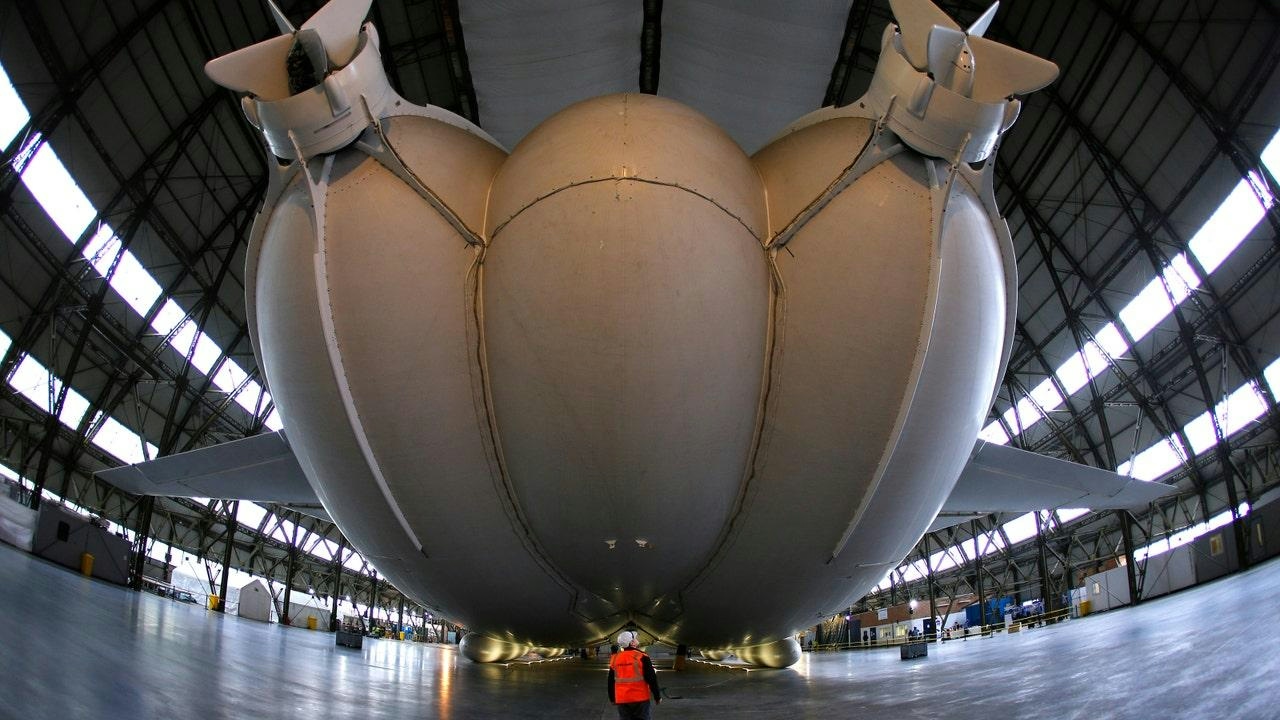
The Airlander 10, developed by Bedfordshire-based Hybrid Air Vehicles (HAV), represents a pioneering fusion of lighter-than-air technology and aerodynamic lift. Measuring 98 meters in length, it is the world’s largest aircraft by size and is designed to provide a lower-emission alternative for passenger transport, cargo delivery, and specialized missions. As HAV advances toward commercial deployment, it confronts the distinctive challenge of maintaining an aircraft that diverges significantly from conventional aviation models.
Rethinking Maintenance for a Unique Aircraft
Unlike traditional airliners that rely on hangars for inspections and repairs, the Airlander 10’s operational concept necessitates a fundamentally different maintenance approach. The airship is intended to remain outdoors for extended periods, tethered to a mooring mast that allows it to rotate with prevailing winds. Instead of using the mast as a temporary stop before moving the aircraft indoors, HAV is developing procedures to conduct much of the required maintenance while the airship remains moored. This approach shifts the focus from adapting the aircraft to existing aviation infrastructure to tailoring maintenance practices specifically for the Airlander 10’s unique design and operational environment.
The sheer size of the Airlander 10 presents significant access challenges. To overcome these, HAV has drawn inspiration from the wind energy sector, where technicians routinely perform rope-access work at height on large, exposed structures. By adopting similar rope access techniques and electric ascender systems, engineers can safely and efficiently navigate the airship’s exterior without relying on extensive scaffolding or large platforms. This innovative method allows for more flexible and practical maintenance operations.
Building Expertise and Operational Flexibility
Initially, HAV collaborated with specialists accredited by the Industrial Rope Access Trade Association (IRATA) to develop its maintenance capabilities. Through a train-the-trainer program, the company is now cultivating an in-house workforce equipped to support ongoing and future Airlander operations. This strategy not only enhances access and safety but also reduces dependence on specialized infrastructure, enabling maintenance activities to be conducted in diverse locations that may lack large hangar facilities. Such flexibility is crucial as the Airlander 10 is deployed across varied environments worldwide.
Navigating Industry and Regulatory Challenges
HAV’s maintenance innovations emerge amid a complex and evolving aerospace landscape. Regulatory uncertainties persist, with the European Travel Information and Authorization System (ETIAS) not becoming mandatory until April 2027, and ongoing debates surrounding Spain’s implementation of new European Entry/Exit System (EES) border controls. Concurrently, global market volatility—exacerbated by concerns over a potential AI investment bubble, rising oil prices linked to renewed Middle East tensions, and the anticipated initial public offering of SpaceX—may influence investor confidence and funding availability for projects like the Airlander 10. Additionally, robust U.S. employment figures and the prospect of Federal Reserve interest rate hikes add further layers of economic complexity that could impact aerospace innovation financing.
Prioritizing Safety and Efficiency
Safety remains central to HAV’s maintenance philosophy. The company is committed to developing repeatable and efficient procedures that uphold stringent operational standards. Experience gained from maintaining the Airlander prototype continues to inform ongoing improvements, including refining equipment, optimizing task sequencing, and enhancing the overall technician experience. Looking forward, HAV is exploring emerging technologies such as augmented reality to further support and streamline maintenance operations.
As the Airlander 10 moves closer to commercial service, HAV’s adaptive and innovative maintenance approach—shaped by both technical ingenuity and a dynamic industry context—may establish new benchmarks for the future of aviation.

Hong Kong's Five-Year Plan Includes Andrew Fan's Aircraft Parts Processing Hub Proposal

ACIA Aero Leasing Delivers ATR72-600 to Air Nostrum

RTX Appoints Jill Albertelli as Head of Pratt & Whitney

TAT Technologies Joins Beyond Aero Hydrogen Aircraft Program

AURAK Study Highlights Barriers to Air Taxi Adoption in Emerging Economies

Xiamen Air Selects Altitude for 787 Maintenance at Heathrow

Etihad and Swissport Extend Global Partnership

Sepehran Airlines B737 Returns to Mashhad After Tyre and Engine Issues

Etihad Deploys Widebody Fleet to Meet Strong Demand

Korean Air Finalizes $36.2 Billion Deal with Boeing
