
Превращайте аналитические выводы ИИ в реальные действия

В тренде
Categories
IATA Calls for Immediate Measures to Address Engine MRO Delays
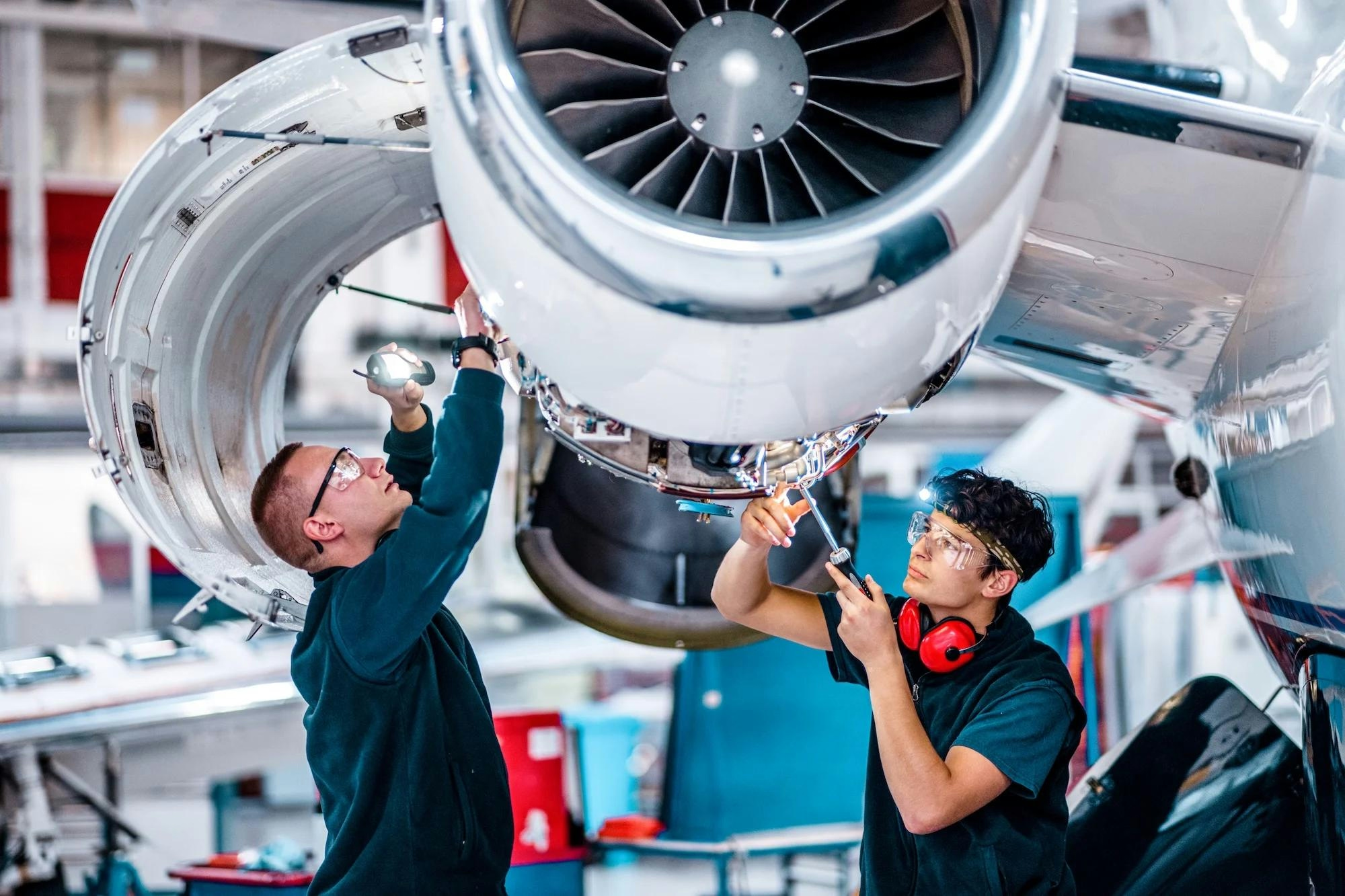
IATA Calls for Immediate Measures to Address Engine MRO Delays
Escalating Challenges in Engine Maintenance and Repair
The International Air Transport Association (IATA) has issued a stark warning regarding the growing delays in the maintenance, repair, and overhaul (MRO) of next-generation single-aisle aircraft engines. These delays are increasingly disrupting airline operations on a global scale. A recent IATA study, Single Aisle Aircraft Engines MRO: Strategic Levers to Address Supply Chain Challenges, identifies critical issues affecting the latest CFM LEAP and Pratt & Whitney Geared Turbofan (GTF) engines. Airlines are confronting a range of difficulties, including engine durability concerns, shortages of spare parts, limited availability of spare engines, and restricted access to aftermarket services. These factors have culminated in costly operational setbacks, such as reduced engine time on wing, heightened demand for engine shop visits, and more complex maintenance scheduling.
The situation has already reached a critical point. In March 2025, the number of grounded Pratt & Whitney GTF-powered aircraft peaked at 648, accounting for 28% of the global GTF fleet. These aircraft were sidelined while awaiting engine shop visits, spare engines, or necessary parts. In response, airlines have resorted to retaining older aircraft, extending leases, leasing additional planes, and adjusting capacity to sustain operations.
Industry Response and Calls for Reform
IATA’s Director General, Willie Walsh, has strongly criticized engine Original Equipment Manufacturers (OEMs), accusing them of “gouging” airlines and profiting from supply chain disruptions. Walsh highlighted extended turnaround times and a lack of competition in the aftermarket as key issues, urging OEMs to produce more reliable engines and promote fairer market practices. He emphasized that while manufacturers are investing in additional capacity, this alone will not resolve the problem. Airlines require improved access to spare parts, more approved repair options, equitable access to MRO capacity, and increased competition within the aftermarket.
These concerns are echoed by industry leaders such as United Airlines CEO Scott Kirby, who has identified engine shortages as a significant constraint for the next five years. In response to rising demand, companies like Collins Aerospace are expanding their presence in the Asia-Pacific region, while Turkish Technic anticipates a long-term shift in aftermarket demand toward engine and component maintenance.
Future Outlook and Strategic Recommendations
The challenge is expected to intensify as single-aisle aircraft fleets continue to grow. In 2024, deliveries of single-aisle aircraft engines reached 2,000 units, comprising 800 GTF and 1,200 LEAP engines. Between 2030 and 2040, annual deliveries are projected to stabilize at approximately 3,700 engines, significantly increasing maintenance requirements. Annual shop visits for LEAP engines are forecast to rise from 600–800 in 2025 to over 5,000 by 2040, while GTF engine shop visits are expected to double from 1,000 to more than 2,000.
To mitigate these pressures, IATA has renewed its call for liberalization of the engine maintenance market and outlined several key actions. These include accelerating the development and approval of repair solutions, expanding licensed production of critical components, and improving access to used serviceable materials. IATA also advocates for removing barriers that limit independent MRO participation and ensuring fair access to parts, repair information, and tools. The recently renewed IATA-CFM agreement serves as a model for supporting customer choice and fostering fair competition. Furthermore, IATA urges the inclusion of provisions in acquisition contracts to guarantee predictable spare parts pricing and protections for selected MRO providers, including independents. Finally, the association calls on all OEMs to adopt transparent and competitive aftermarket principles that uphold customer choice.
IATA cautions that without immediate and coordinated action across the value chain, ongoing engine MRO delays will continue to jeopardize airline reliability and growth as the industry recovers and expands.

Etihad and Swissport Extend Global Partnership
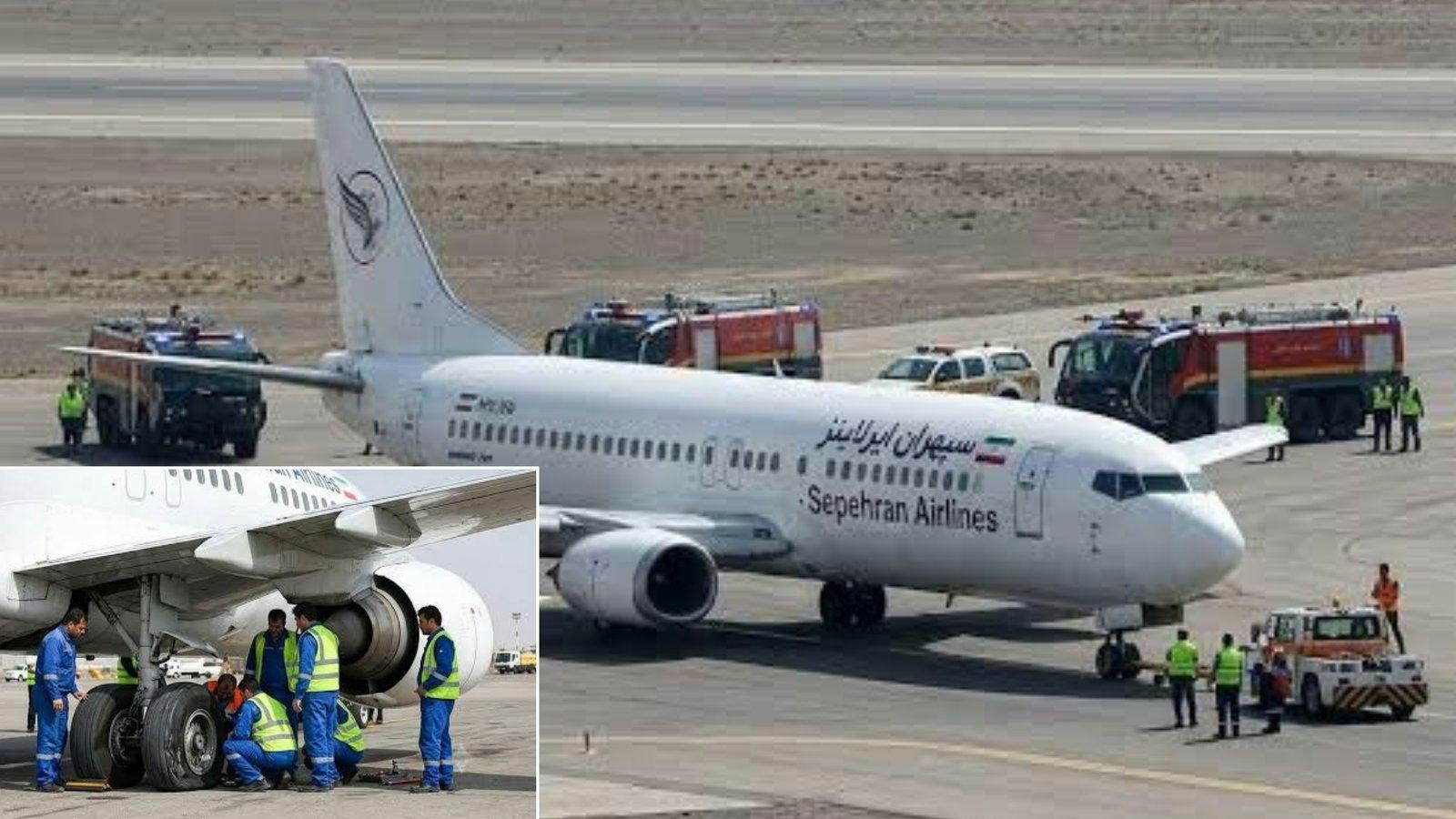
Sepehran Airlines B737 Returns to Mashhad After Tyre and Engine Issues

Etihad Deploys Widebody Fleet to Meet Strong Demand

Korean Air Finalizes $36.2 Billion Deal with Boeing

Australia’s RFDS Queensland Section Orders Six King Air 260Cs

Korean Air Finalizes Order for 103 Boeing Jets and Engines
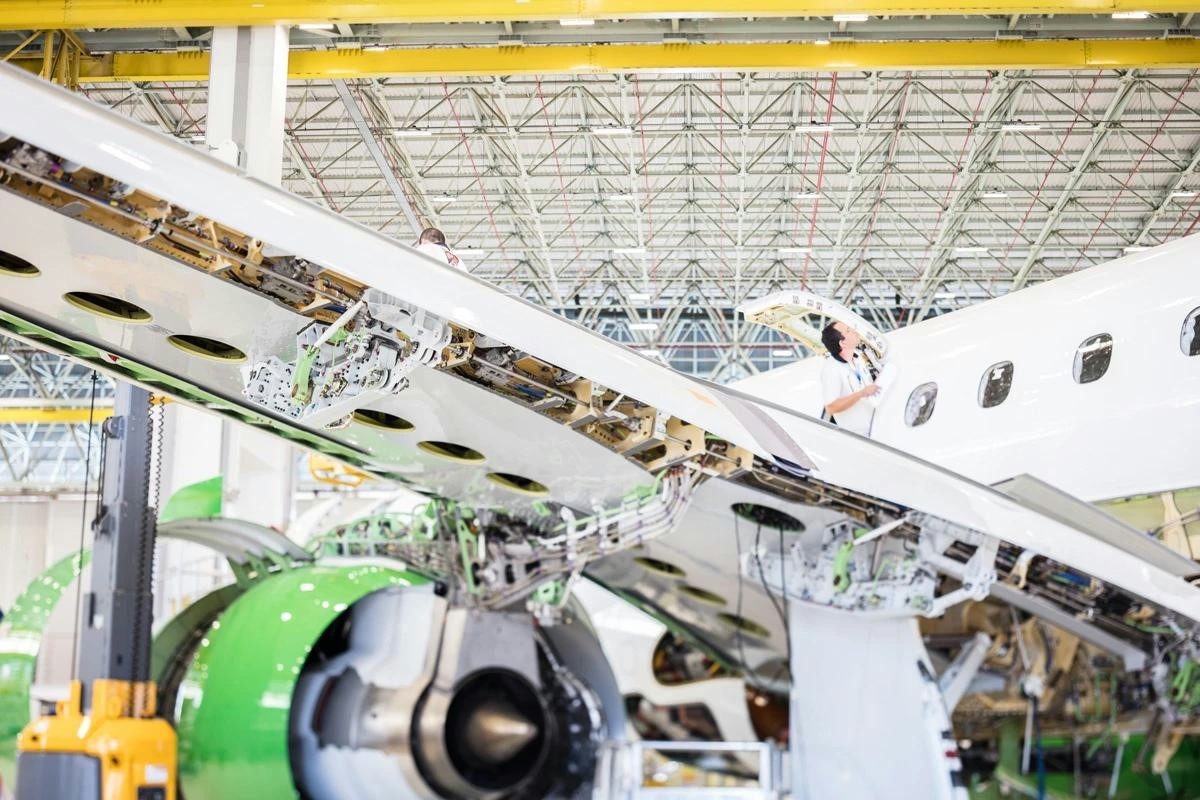
Embraer E195-E2 Features Distinctive Engine Placement Among Regional Jets

What Passengers Can Expect on Boeing’s New 777X Jet

How Ethiopian Airlines Became Africa’s Leading Carrier Amid Gulf Competition

Joby Aviation Extends Autonomous Flight Capabilities with Cross-Country Tour
