image

AeroGenie — ваш интеллектуальный второй пилот.

Спрашивайте о чём угодно. Анализируйте всё. Действуйте мгновенно.

В тренде

Categories

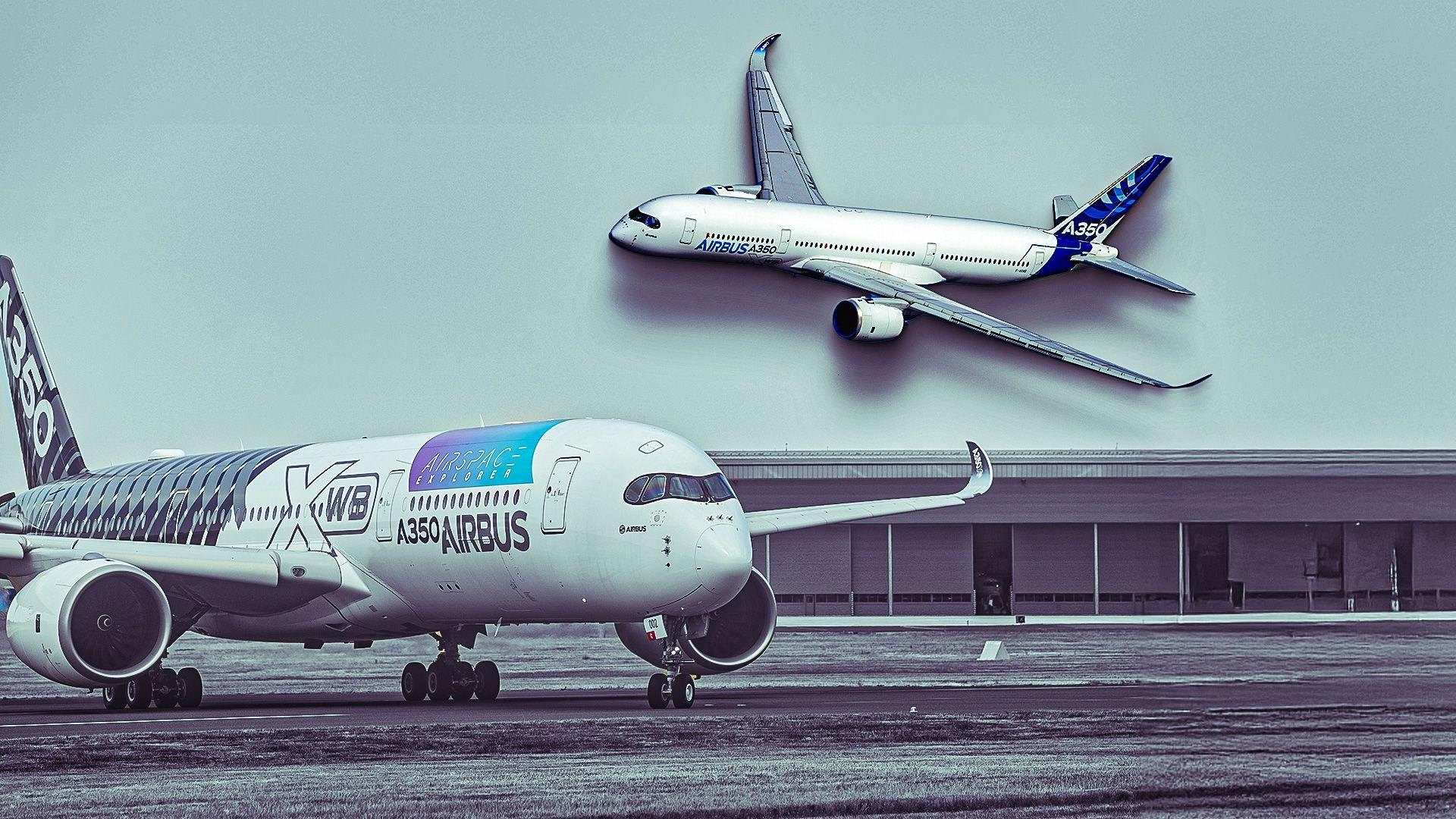
Inside the Airbus A350: The Original Extra Widebody Aircraft
June 23, 2025By ePlane AI
Inside the Airbus A350: The Original Extra Widebody Aircraft
0
0
Airbus A350
Widebody Aircraft
Rolls-Royce Trent XWB

Inside the Airbus A350: The Original Extra Widebody Aircraft

European aerospace leader Airbus initiated the development of the long-range, twin-engine A350 widebody aircraft in 2004, aiming to compete directly with Boeing’s 787 Dreamliner. Building upon design elements from the Airbus A330, the A350 introduced several technological advancements, including composite wings, fuel-efficient engines, and innovative winglets. The program reached a significant milestone when the first prototype successfully flew on June 14, 2013, coinciding with Airbus’s 12th anniversary.

From Initial Concept to the A350 XWB

The initial market response to the A350 was tepid, prompting Airbus in 2006 to shift from an updated design to a clean-sheet approach. This strategic pivot led to the creation of the A350 XWB—standing for “Extra Wide Body”—which featured Rolls-Royce Trent XWB high-bypass turbofan engines. The aircraft achieved certification from the European Aviation Safety Agency (EASA) in 2014, followed shortly by approval from the U.S. Federal Aviation Administration (FAA).

Market Presence and Notable Operations

Since entering service, the A350 has become a cornerstone for long-haul carriers, operating some of the world’s most demanding routes. Singapore Airlines employs the A350-900ULR variant for its record-breaking non-stop flights to New York, while Qantas is preparing to utilize the aircraft for its ambitious ‘Project Sunrise,’ which aims to connect Sydney directly to New York and London on ultra-long-haul flights.

Qatar Airways: A Key Operator

Qatar Airways, based in Doha, was the launch customer for the A350-900, introducing the aircraft into commercial service on January 15, 2015. The airline also became the first to operate the larger A350-1000 in February 2018. According to ch-aviation data, Qatar Airways currently operates 34 A350-900s configured in a two-class layout with 36 business and 247 economy seats, alongside 24 A350-1000s, with an additional 18 on order. The A350-1000 fleet features two seating configurations: one with 46 business and 281 economy seats, totaling 327, and a higher-density version accommodating 24 business and 371 economy seats, totaling 395. Qatar Airways’ widebody fleet also includes the A330-200, A330-300, and the A380-800.

Passenger comfort is a priority for Qatar Airways on its A350 fleet, which offers amenities such as LED mood lighting, advanced HEPA air filtration, draft-free air circulation, and the acclaimed Qsuite with lie-flat beds. The aircraft’s extra-wide cabin and spacious overhead bins further enhance the onboard experience.

Industry Challenges and Competitive Dynamics

Despite the A350’s commercial success and strong market reception, marked by substantial orders from airlines such as Starlux and Riyadh Air, Airbus continues to face production challenges. CEO Guillaume Faury has acknowledged increasing difficulties in meeting production targets, reflecting broader pressures within the global aerospace supply chain.

Competition in the widebody market remains intense. Boeing is advancing its 777-9 program, which Airbus aims to counter with a stretched variant of the A350. Meanwhile, airlines like ANA are diversifying their fleets with firm orders spanning Airbus, Boeing, and Embraer aircraft, highlighting the dynamic and competitive nature of the sector.

The Future of the A350

The Airbus A350 remains a defining aircraft in the evolution of long-haul air travel, balancing efficiency, passenger comfort, and technological innovation. As airlines continue to modernize their fleets and expand ultra-long-haul operations, the A350 stands at the forefront of this transformation, navigating the challenges and competition that characterize today’s aviation industry.

More news
BOC Aviation to Lease Two Airbus A350-1000s to Philippine Airlines

BOC Aviation to Lease Two Airbus A350-1000s to Philippine Airlines

BOC Aviation to Lease Two Airbus A350-1000s to Philippine Airlines BOC Aviation has finalized a purchase-and-leaseback agreement with Philippine Airlines (PAL) for two Airbus A350-1000 aircraft, marking the lessor’s inaugural delivery of this widebody model. The aircraft, equipped with Rolls-Royce Trent XWB engines, are slated for delivery beginning in December 2025. Strategic Partnership and Fleet Modernization Steven Townend, CEO and Managing Director of BOC Aviation, expressed enthusiasm about the new partnership, emphasizing that the delivery of the A350-1000 underscores the company’s dedication to providing the latest technology in aviation. For Philippine Airlines, the acquisition represents a significant milestone in its ongoing fleet modernization efforts. PAL President Richard Nuttall highlighted that the investment aligns with the airline’s objective to maintain one of the youngest and most fuel-efficient fleets in the region. He further noted that the collaboration with BOC Aviation is expected to enhance PAL’s global competitiveness and support its plans for network expansion. Operational and Market Implications The integration of the A350-1000s into PAL’s existing fleet will necessitate extensive crew training and operational adjustments. Moreover, the financial commitments associated with the new lease agreements will require careful management to ensure the airline’s long-term sustainability. Industry analysts observe that PAL’s move occurs amid intensifying competition in Southeast Asia, where regional carriers are actively pursuing fleet modernization and expansion. The introduction of these advanced aircraft is anticipated to strengthen PAL’s market position, while potentially prompting competitors to accelerate their own fleet upgrades, thereby intensifying the competitive landscape. Despite these challenges, PAL’s investment in next-generation aircraft reflects a wider industry trend toward enhanced efficiency and environmental performance, as airlines strive to meet evolving passenger expectations and increasingly stringent regulatory standards.
How Many Boeing 777X Prototypes Were Built?

How Many Boeing 777X Prototypes Were Built?

How Many Boeing 777X Prototypes Were Built? Boeing’s 777X program has relied on a dedicated fleet of prototypes to conduct its extensive and often delayed testing campaign. Throughout the majority of its flight testing, Boeing has operated four primary prototypes: WH001 (N779XW), WH002 (N779XX), WH003 (N779XY), and WH004 (N779XZ). In August 2025, a fifth aircraft, WH286 (N2007L), joined the test program. Unlike the earlier prototypes, WH286 is a production-standard Boeing 777-9, constructed to closely mirror the configuration that airlines will ultimately receive. This aircraft is notably devoid of the complex flight-test instrumentation present on the other prototypes, enabling Boeing to perform tests in a more realistic operational environment, including assessments of electromagnetic interference and lightning strike safety. Upon completion of certification, WH286 is expected to be delivered to Singapore Airlines. Beyond these five specialized test aircraft, Boeing has significantly expanded its 777X prototype fleet. As of August 12, 2025, the company has built a total of 26 prototypes. This larger fleet reflects both the scale of testing required and Boeing’s efforts to prepare for commercial deliveries. Emirates, one of the program’s largest customers, has placed a substantial order for 65 additional 777X aircraft. However, the program has faced challenges, including ongoing certification delays that have resulted in the removal of 33 orders from Boeing’s backlog. Despite these setbacks, Boeing remains optimistic, targeting the 777X’s entry into commercial service by 2027. The Role of Each 777X Prototype Each of the five main test aircraft has fulfilled a distinct role in the certification process. WH001 has focused on stability, flutter, avionics, brakes, aerodynamics, and control systems, with much of its testing conducted at low speeds. WH002 has been dedicated to ground-effect testing, autoland certification, and expanding the flight-control envelope. WH003 has primarily supported GE9X engine integration, as well as avionics and flight-load measurement. WH004 has concentrated on real-world operations, including cabin systems, environmental controls, noise, reliability, and ETOPS testing. The newest addition, WH286, as a near-production aircraft, facilitates operational testing without the constraints imposed by heavy instrumentation, although it has yet to be fully fitted with seats and sidewalls. Collectively, these prototypes have accumulated over 4,000 flight hours across more than 1,400 flights. The use of multiple airframes has allowed Boeing to maintain testing momentum even when technical issues arise. For instance, in August 2024, structural cracks in WH003’s thrust-link grounded the aircraft and eventually affected others. Nevertheless, the availability of several prototypes enabled Boeing to implement corrective measures without halting the entire test campaign. Looking Ahead As Boeing continues to expand its prototype fleet and address certification challenges, the company remains committed to bringing the 777X to market. With 26 prototypes built and major customers such as Emirates awaiting delivery, the 777X is positioned to become a significant player in the next generation of long-haul aviation, contingent on successful certification and entry into service, now targeted for 2027.
AerFin Announces Availability of A320neo Inventory

AerFin Announces Availability of A320neo Inventory

AerFin Expands Global A320neo Inventory Amid Market Challenges AerFin has significantly expanded its global inventory of A320neo components, now offering over 6,000 parts through its international warehouse network. This growth follows the recent teardown of five A320neo aircraft in France and the Philippines, each yielding between 1,200 and 1,400 quality-assured components. Key assets and high-demand parts have been strategically positioned in Newport and Gatwick, while a partnership with B&H Worldwide in Singapore ensures enhanced availability for the Asia-Pacific region. Additionally, AerFin plans to introduce fast-moving A320neo parts into its Miami warehouse, extending support to customers across the Americas. Strategic Distribution to Address Supply Chain Pressures AerFin’s coordinated distribution strategy aims to provide operators, lessors, and asset owners with rapid access to inventory regardless of their geographic location. Simon Goodson, AerFin’s CEO, emphasized the company’s commitment to assisting A320neo operators amid ongoing supply chain challenges. He stated, “A320neo operators are navigating sustained supply-chain pressures, and our role is to help them use the difficulty. By recovering material at scale and positioning it across our global network, we’re giving customers dependable access to the quality components they need to keep their fleets flying.” The aviation sector continues to face disruptions, including production delays at Airbus caused by fuselage panel inspections and software issues affecting the A320 family. These factors have contributed to fluctuating market demand and delivery slowdowns, impacting leasing rates and customer acquisition timelines. The competitive environment remains intense, with rival leasing and parts suppliers likely to respond through aggressive pricing or enhanced marketing efforts to secure market share. Supporting Operational Resilience with Comprehensive Inventory Despite these challenges, AerFin is focused on providing reliable solutions that help operators minimize downtime, control costs, and maintain operational resilience. The expanded inventory includes major structural assemblies, nacelles, auxiliary power units (APUs), landing gear, and a broad range of rotables and consumables, all supported by AerFin’s technical expertise and quality assurance. The collaboration with B&H Worldwide further strengthens AerFin’s presence in the Asia-Pacific region, improving distribution speed and service levels amid rising regional demand. AerFin’s A320neo inventory is available immediately, with new material arriving weekly. Operators can access individual components, tailored support, or strategic material packages designed to keep their fleets operational and resilient amid ongoing industry challenges.
Petrobras Delivers First Sustainable Aviation Fuel Produced in Brazil

Petrobras Delivers First Sustainable Aviation Fuel Produced in Brazil

Petrobras Delivers Brazil’s First Sustainable Aviation Fuel Petrobras has announced the delivery of Brazil’s inaugural batch of sustainable aviation fuel (SAF), a landmark development in the country’s pursuit of decarbonizing its aviation sector. Produced at the Duque de Caxias Refinery (Reduc) in Rio de Janeiro, the fuel is immediately available for use and can replace traditional kerosene without necessitating any modifications to aircraft or airport infrastructure. Production and Certification The state-owned energy company highlighted that this pioneering SAF complies with stringent international aviation standards and holds certification under ISCC-CORSIA, ensuring both sustainability and traceability. Petrobras President Magda Chambriard described the launch as a decisive step toward reducing aviation emissions and aligning Brazil with global environmental objectives. She emphasized the product’s competitiveness and its capacity to meet international market demands. The SAF is manufactured through co-processing at Petrobras’ refineries, blending renewable feedstocks such as technical corn oil and soybean oil with conventional kerosene. This hybrid composition produces a fuel chemically identical to traditional jet fuel in terms of operational safety, while enabling a reduction in net CO₂ emissions by up to 87%, according to company estimates. Market Context and Expansion Plans This achievement places Brazil among a select group of nations advancing commercial-scale production of sustainable fuels. Nevertheless, Petrobras faces growing competition from global entities like LanzaJet and Shell, which are investing in alternative carbon reduction technologies, including direct air capture. European airlines, responding to regulatory and public pressures, are increasingly shifting away from superficial environmental claims and committing to tangible emissions reductions through SAF adoption. Petrobras is actively expanding its SAF production capabilities, conducting tests at other refineries such as Revap, with plans to initiate commercial operations at Replan, Regap, and additional facilities by 2026. This expansion is designed to meet rising demand driven by new environmental regulations. The International Civil Aviation Organization (ICAO), through its CORSIA program, will mandate the use of SAF by Brazilian airlines on international flights starting in 2027, with domestic requirements expected to increase under the Future Fuel Act. Challenges Ahead Despite these advances, Petrobras’ capacity to scale renewable fuel production may be constrained by recent reductions in capital expenditure, a response to lower oil prices. This financial tightening could affect future investments in SAF and other renewable initiatives, particularly as competitors such as Shell and Boeing accelerate their carbon removal and sustainable fuel projects. The introduction of SAF by Petrobras underscores Brazil’s commitment to the global energy transition and reinforces its alignment with international sustainability standards. As the aviation industry faces intensifying pressure to reduce emissions, Petrobras’ entry into the SAF market represents both a strategic opportunity and a significant test of its ability to compete in a rapidly evolving sector.
Unique mixed-propulsion eVTOL completes transition flight testing

Unique mixed-propulsion eVTOL completes transition flight testing

Unique Mixed-Propulsion eVTOL Completes Transition Flight Testing China’s TCab Tech has reached a pivotal milestone with the successful completion of transition flight tests for its full-scale E20 eVTOL demonstrator. This achievement validates the aircraft’s capability to manage the most complex phase of its flight envelope—transitioning from vertical hover to forward cruise—a critical requirement for any electric vertical takeoff and landing (eVTOL) air taxi aspiring to commercial operation. Advancing a Novel Propulsion System Based in Shanghai, TCab Tech has been steadily progressing toward this objective since conducting transition tests with a sub-scale prototype in 2022. Earlier this year, the company completed its first crewed hover flight, with the CEO aboard. Since 2021, TCab has conducted approximately 1,000 flight tests across various E20 prototypes, refining a distinctive propulsion system that integrates multiple VTOL concepts. Unlike conventional lift-and-cruise designs, which employ separate fixed propellers for vertical and horizontal flight, or vectored thrust systems such as those on the Joby S4 that tilt rotors to transition between flight modes, the E20 combines both approaches. The aircraft is equipped with four tilting propellers and two coaxial stacks of fixed vertical lift propellers. The outer tilting propellers are mounted on the wing tips, incorporating elements of tilt-wing technology as well. Transition flights represent one of the most demanding phases for eVTOL aircraft, requiring precise coordination of multiple systems to shift from rotor-based lift to wing-borne flight. The E20’s design addresses these challenges through built-in redundancies, including four battery packs and six motors. The aircraft is configured to seat four passengers and a pilot, featuring amenities such as gull-wing doors, a dedicated luggage compartment, and 270-degree panoramic glass. It boasts a top speed of 200 mph (320 km/h) and a range of 125 miles (200 km). TCab asserts that its 800-volt fast-charging system can recharge the E20’s batteries from 20% to 85% in just 20 minutes, facilitating rapid turnaround between flights. Positioning Amidst Intensifying Global Competition TCab’s progress unfolds amid intensifying global competition in the urban air mobility sector. In the United Arab Emirates, Archer Aviation recently completed transition flight testing for its mixed-propulsion Midnight eVTOL, though it continues to face challenges including regulatory approval, safety validation, and integration with existing air traffic management systems. The broader market is witnessing increased investor interest, while established players such as Joby Aviation and other Chinese firms accelerate their development and certification efforts. Upon certification, TCab will enter a crowded Chinese market that includes competitors like eHang, which already operates a certified pilotless commuter aircraft and is expanding its network of urban landing sites. The competitive landscape is further shaped by ongoing regulatory processes, including the FAA’s Type Certification, and the industry’s gradual shift toward autonomous commercial air operations. As eVTOL manufacturers race to achieve certification and commercial deployment, milestones such as TCab’s successful transition flight testing represent crucial progress toward the realization of urban air mobility.
Are C-17 Globemaster Engines Derived from Boeing 757?

Are C-17 Globemaster Engines Derived from Boeing 757?

Are C-17 Globemaster Engines Derived from Boeing 757? Shared Lineage but Distinct Variants The assertion that the U.S. Air Force’s C-17 Globemaster III is powered by Boeing 757 engines is a common but oversimplified claim within the aviation community. The C-17, introduced in the 1990s as a strategic and tactical airlifter, is equipped with four Pratt & Whitney F117-PW-100 turbofan engines. These engines are not directly transplanted from the Boeing 757; rather, they share a common heritage. The F117 is a military adaptation of the Pratt & Whitney PW2000 family, specifically derived from the PW2040 model that powers certain Boeing 757 variants. While the engines share design foundations, the F117s are distinct variants engineered to meet the rigorous demands of military operations. This differentiation is critical. The F117 engines on the C-17 have been ruggedized to enhance reliability, maintainability, and performance in challenging environments, distinguishing them from their commercial counterparts. Claims suggesting that the C-17 uses the “same engine” as the 757 can be misleading, as they imply identical hardware and operational characteristics, which is not the case. The C-17’s Operational Role and Challenges Ahead The C-17 Globemaster III serves as a versatile workhorse capable of transporting outsized cargo, vehicles, and personnel. Its design incorporates an advanced high-lift wing, powerful thrust reversers, and robust systems that enable operations from short, unimproved airstrips. Typically crewed by a pilot, copilot, and loadmaster, the aircraft can be rapidly reconfigured for diverse missions, including airdrops and aeromedical evacuations, allowing it to deliver directly into austere environments and reduce dependence on intermediate hubs. Despite its capabilities, the future of large military airlifters such as the C-17 and the larger C-5 Galaxy faces significant challenges. Extending the operational life of these aircraft may incur costs as high as €200,000 per month per plane, raising concerns about long-term sustainability. These financial pressures coincide with rapid advancements in engine technology and evolving market dynamics, complicating decisions about fleet modernization and replacement. Broader Industry Context In the commercial aviation sector, Boeing continues to exert considerable industrial and political influence despite recent financial difficulties. However, competition is intensifying as airlines increasingly adopt newer models like the Airbus A321XLR to replace aging fleets, including the Boeing 757. This shift reflects a broader industry trend toward more efficient, next-generation aircraft. Meanwhile, manufacturers such as Embraer are making strides in resolving technical challenges with their geared turbofan (GTF) engines, marking a pivotal moment for their E2 twinjets and further intensifying the technological competition within the sector. In conclusion, while the C-17 Globemaster III’s engines share a lineage with those used on the Boeing 757, they are distinct variants tailored to different operational requirements. This distinction highlights the complexity of modern engine development and the evolving landscape of both military and commercial aviation.
Why the Airbus A350’s Cabin Is Quieter Than Other Aircraft

Why the Airbus A350’s Cabin Is Quieter Than Other Aircraft

Why the Airbus A350’s Cabin Is Quieter Than Other Aircraft Early jet-powered airliners were infamous for their loud, high-pitched engine noise—a hallmark of classic airport scenes in films. Today, such piercing sounds have largely been eliminated, with modern aircraft offering significantly quieter cabins. Among these, the Airbus A350 distinguishes itself as one of the quietest widebody jets currently in service. In the United States, Delta Air Lines is the sole operator of the A350, although United Airlines has placed orders. Globally, the aircraft is widely adopted, particularly by European and Asian carriers. A Clean-Sheet Design for Enhanced Comfort The Airbus A350 represents a clean-sheet widebody aircraft, designed entirely from the ground up with the latest technological advancements. This comprehensive approach allowed engineers to optimize every element of the aircraft, unlike incremental upgrades to older models constrained by legacy frameworks. Alongside Boeing’s 787 Dreamliner, the A350 is one of only two clean-sheet widebodies on the market today. Both aircraft incorporate extensive use of advanced materials; approximately 70% of the A350’s airframe consists of such materials, including 53% composites. This level of composite integration matches that of the Dreamliner and significantly surpasses the use found in updated models like the Boeing 777X or Airbus A330neo. Advanced Materials and Noise Reduction A principal factor contributing to the A350’s notably quiet cabin is its use of carbon-fibre reinforced plastics (CFRP). These composites are lighter than aluminum, stronger than iron, and highly resistant to corrosion. Beyond their structural advantages, CFRP panels excel at dampening and limiting the transmission of vibrations, thereby substantially reducing noise levels within the cabin. Passenger comfort is further enhanced by the A350’s ability to maintain a higher cabin pressure—equivalent to an altitude of 6,000 feet compared to the typical 8,000 feet—and increased humidity levels, both of which contribute to a more pleasant in-flight environment. Market Position and Competitive Challenges The A350’s quieter cabin environment has been well received by both airlines and passengers, fueling a surge in Airbus orders. This trend is particularly evident in the company’s robust order book for November 2025, driven largely by A350 commitments. However, Airbus faces emerging competition from manufacturers such as China’s Comac, which is developing large business jets featuring multiple VIP cabin configurations that could pose a challenge to Airbus’s market share. Despite the A350’s commercial success, Airbus has recently confronted setbacks. Quality concerns involving metal panels on certain A320 aircraft, coupled with a software recall affecting 6,000 jets in the A320 family, have unsettled investors and contributed to a decline in Airbus shares. Nonetheless, the company remains optimistic about the A350’s prospects, with ongoing interest in a potential stretched variant powered by the more powerful Rolls-Royce Trent XWB-97 engine. Looking Ahead As the aviation industry continues to evolve, the Airbus A350’s advanced design and quieter cabin establish a new benchmark for passenger comfort. While competitors innovate and market dynamics shift, Airbus’s dedication to technological progress and enhancing the passenger experience ensures the A350 remains at the forefront of modern air travel.
AI and AI Express Plan to Increase Capacity Amid IndiGo Flight Disruptions

AI and AI Express Plan to Increase Capacity Amid IndiGo Flight Disruptions

Air India Group Expands Capacity Amid IndiGo Flight Disruptions In response to widespread flight cancellations and delays affecting IndiGo, India’s largest airline, the Air India Group has announced plans to increase capacity on both Air India and Air India Express flights. This strategic move aims to assist passengers impacted by the disruptions, ensuring timely travel and baggage delivery despite ongoing operational challenges within the aviation sector. The government has concurrently implemented temporary airfare caps to prevent excessive price hikes during this period of instability, safeguarding consumer interests. These measures reflect a coordinated effort to mitigate the impact of IndiGo’s operational difficulties, which have caused significant disturbances across the country’s air travel network. Operational Challenges and Industry Implications For Air India Express, the surge in demand presents a complex challenge. The airline must swiftly adjust flight schedules and scale up operations, a process that could strain resources and test its capacity to maintain service standards. Industry analysts are closely monitoring AI Express’s ability to manage this increased operational load, with particular attention to its efficiency and capacity management strategies. Meanwhile, competing carriers are expected to intensify their efforts to attract passengers displaced by IndiGo’s disruptions. Airlines known for reliability may leverage this opportunity to expand their market share, launching targeted marketing campaigns to capitalize on the current turbulence. The difficulties faced by IndiGo have also highlighted systemic vulnerabilities within India’s aviation infrastructure. Constraints such as limited airport and airspace capacity, challenges in air traffic control reliability, and the sector’s adaptability to regulatory changes have all contributed to the ongoing disruptions. This situation underscores the urgent need for comprehensive improvements to enhance the resilience and stability of India’s aviation industry. As Air India Group and other airlines mobilize to accommodate affected travelers, the industry’s response in the coming days will be pivotal in restoring passenger confidence and minimizing inconvenience nationwide.
Kazakhstan and France Agree on Airbus Aircraft Deliveries

Kazakhstan and France Agree on Airbus Aircraft Deliveries

Kazakhstan and France Finalize Airbus Aircraft Delivery Agreement Amid Industry Challenges Kazakhstan and France have formalized a significant agreement for the delivery of Airbus A320neo aircraft, marking a notable advancement in their aviation partnership. The deal was confirmed during the Kazakhstan-France Business Council meeting and the 16th session of the Intergovernmental Commission on Trade and Economic Cooperation, both convened in Paris. The Kazakh Ministry of Transport announced the agreement, underscoring the strategic importance of this collaboration for Kazakhstan’s aviation sector. Details of the Airbus Delivery Agreement Kazakh Deputy Minister of Transport Talgat Lastayev took part in the discussions, which culminated in a memorandum for the delivery of an initial 25 Airbus A320neo aircraft, with an option to acquire an additional 25 units. The delivery schedule is currently planned through 2031, although both parties explored possibilities to accelerate this timeline. Talks also included the potential establishment of a joint aviation training center with Airbus, as well as discussions on aircraft leasing arrangements, reflecting a comprehensive approach to expanding Kazakhstan’s aviation capabilities. Industry Challenges and Competitive Landscape The agreement arrives amid significant challenges for Airbus. The European manufacturer recently lowered its 2025 delivery target by 4% to 790 aircraft, attributing the reduction to fuselage quality issues that have disrupted production lines. Furthermore, a substantial portion of Airbus’ A320-series fleet was grounded to implement a critical software update, complicating delivery schedules. Supply chain delays and ongoing quality concerns continue to test Airbus’ ability to fulfill its commitments, despite a surge in orders for its A350 widebody aircraft in November. In contrast, Boeing, Airbus’ primary competitor, has reported strong delivery figures, with 493 aircraft delivered so far in 2025. This marks a post-downturn high for Boeing and intensifies competition within the commercial aviation sector. Broader Cooperation and Future Prospects Beyond aircraft procurement, the Intergovernmental Commission meetings addressed wider cooperation initiatives. Discussions with TAV Airports focused on modernizing Kazakhstan’s airport infrastructure, while talks with Alstom aimed at expanding industrial collaboration. Efforts to enhance transport connectivity between Kazakhstan and France included proposals to resume the Paris-Astana air route and explore new flights between Shymkent and Nice. Despite the challenges confronting Airbus, Kazakhstan’s commitment to this agreement signals a determined effort to modernize its aviation industry and deepen economic ties with France. Both parties are expected to closely monitor industry developments as they work toward implementing the ambitious delivery schedule.
Europe’s Emerging Talent Drives Aviation Innovation

Europe’s Emerging Talent Drives Aviation Innovation

Europe’s Emerging Talent Drives Aviation Innovation A recent half-day hackathon held in Belgium showcased the ingenuity of students determined to influence the future of aviation. This event, part of the Future of Aviation Bootcamp, challenged participants to develop innovative solutions addressing the sector’s most urgent issues: digital transformation, decarbonisation, and the critical demand for highly skilled STEM professionals essential to maintaining Europe’s competitive edge on the global stage. Bridging Education and Industry The aviation sector is navigating a complex landscape marked by rapid technological advancements, stringent regulatory frameworks, and the pressing need to reduce carbon emissions. These factors, combined with regulatory challenges that can impede investment in emerging technologies such as artificial intelligence, pose significant obstacles. Meanwhile, the Asia-Pacific aviation market is accelerating rapidly, intensifying the pressure on European stakeholders to avoid falling behind due to regulatory constraints or insufficient capital allocation for innovation. The Future of Aviation Bootcamp serves as a vital conduit between education and industry by immersing students in real-world challenges. This approach cultivates a new generation of talent equipped to address the sector’s evolving demands. Liam Benham, President of EU, NATO and Government Affairs Europe at Boeing International, underscored the importance of fostering STEM skills: “By giving student innovators real-world challenges, while supporting them with mentors and practical opportunities, we help build the skills and creativity needed by our industry. We have a deep commitment to helping talented innovators from across Europe as they shape the future of flight.” Strategic Partnerships for Sustainable Growth The initiative builds upon a longstanding collaboration between JA Europe and Boeing Global Engagement, aimed at bridging the gap between academic learning and industry requirements. This partnership provides young people with practical experiences that not only address current industry needs but also enhance their employability and readiness for the workforce. Salvatore Nigro, CEO of JA Europe, emphasized the importance of empowering youth: “To secure the future of European aviation, we must empower young people to become the innovators and problem-solvers our economies need. Talent is everywhere, and initiatives like this help ensure it has the space and support to take flight.” Competitive Pressures and Market Dynamics Europe’s aviation industry faces intensified competition from the rapidly expanding Asia-Pacific market and strategic maneuvers by major airline groups such as Air France-KLM, IAG, and Lufthansa Group, particularly in their pursuit of assets like TAP Air Portugal. To sustain its leadership position, Europe must leverage its world-class scientific expertise and substantial financial resources. However, overcoming barriers to innovation and ensuring robust investment in artificial intelligence infrastructure remain critical challenges. Looking Ahead As a global aerospace leader, Boeing continues to prioritize innovation, sustainability, and workforce development through collaborations with partners like JA Europe. The latter, Europe’s largest youth-focused organisation, has empowered millions of students with hands-on learning experiences in entrepreneurship and work readiness. In an industry undergoing rapid transformation, initiatives that connect emerging talent with industry needs are indispensable. Maintaining Europe’s position at the forefront of aviation innovation will require not only fresh ideas and skills but also a regulatory and investment environment conducive to empowering the next generation of leaders.
Ask AeroGenie










