Изображение

AeroGenie — Ваш интеллектуальный второй пилот.

Спрашивайте что угодно. Анализируйте все. Действуйте незамедлительно.

В тренде

Categories

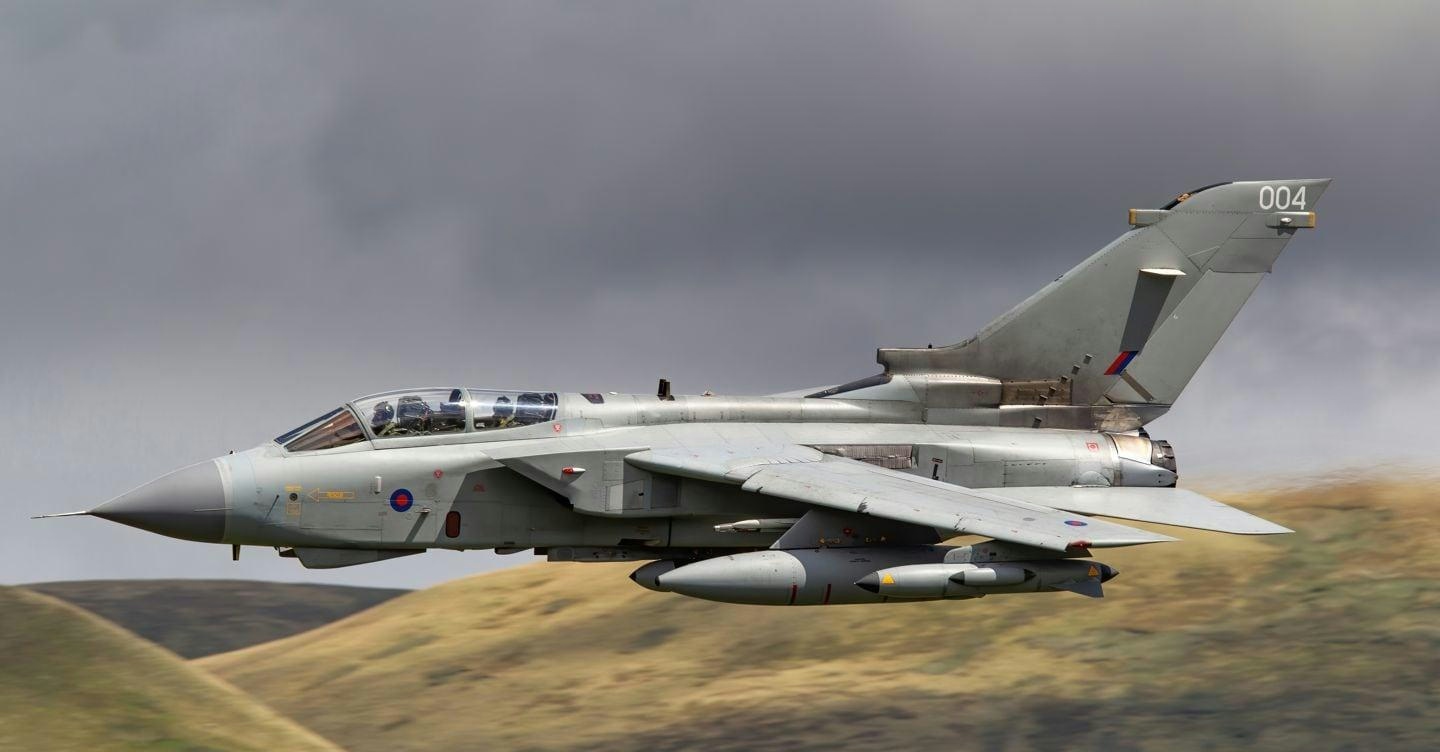
Italy Investigates Disappearance of €17 Million in Tornado and C-130 Aircraft Parts
February 24, 2026By ePlane AI
Italy Investigates Disappearance of €17 Million in Tornado and C-130 Aircraft Parts
0
0
Tornado Aircraft
C-130 Hercules
Aircraft Parts Theft

Italy Investigates Disappearance of €17 Million in Tornado and C-130 Aircraft Parts

Italian prosecutors have initiated a formal investigation into the disappearance of nearly 2,500 components for Tornado and AMX fighter-bombers, as well as C-130 tactical transport aircraft, from the Italian Air Force’s inventory. Valued at approximately €17 million, these parts reportedly went missing between 2021 and 2023 from a military depot in Brindisi, where GE Avio, a subsidiary of GE Aerospace, was contracted to perform aircraft maintenance.

Scope of the Investigation and Involved Parties

The inquiry, first disclosed by La Repubblica, is being conducted jointly by the Rome public prosecutor’s office and a military prosecutor. Approximately ten individuals are under investigation, including senior logistics officials within the Italian Air Force, several generals, and executives linked to GE Avio. The investigation focuses on reconstructing inventory movements and scrutinizing records related to the loading and unloading of parts, technical certifications, and chains of responsibility.

In a statement issued on February 23, 2026, the Aeronautica Militare expressed its “full and immediate availability” to cooperate with both civil and military judicial authorities. The Air Force confirmed it had supplied all pertinent documentation and information to support the inquiry and established an internal technical commission to clarify the circumstances surrounding the disappearance. The statement emphasized that any proven misconduct would be met with firm accountability.

Broader Implications and Ongoing Concerns

One avenue of investigation is exploring whether some of the missing components were diverted to South America, including Brazil, although authorities have not confirmed any specific destination and regard this as one of several possible scenarios. The incident has raised significant concerns about the reliability of Italy’s military supply chain, with potential repercussions for international partnerships and confidence in Italian defense logistics.

The loss has intensified scrutiny of inventory management and procurement processes within Italy and among its defense sector counterparts. Industry observers suggest that competitors may leverage the situation to underscore their own operational efficiencies and the critical importance of robust supply chain controls. This case emerges amid broader industry discussions on the challenges confronting military supply chains. Airbus CEO Guillaume Faury recently highlighted ongoing difficulties in the sector, stressing the need for enhanced transparency and resilience in managing complex inventories.

As the investigation proceeds, the Italian Air Force has reiterated its commitment to transparency and accountability, affirming that any individual responsibility identified by the authorities will be addressed decisively. No official conclusions have yet been reached regarding the fate of the missing parts or the full extent of any potential network involved.

More news
Six Lesser-Known Features of the Airbus A380 Cabin

Six Lesser-Known Features of the Airbus A380 Cabin

Six Lesser-Known Features of the Airbus A380 Cabin The Airbus A380 has long been celebrated for its luxurious bars, private suites, onboard showers, and expansive cabin space. However, the aircraft’s true innovation extends beyond these visible luxuries into more subtle design elements. Unlike most airliners, which are primarily defined by their passenger cabins, the A380’s interior architecture is distinguished by a meticulous division of space that balances passenger experience, crew workflow, operational control, and fatigue management. This multi-layered approach continues to captivate aviation experts and enthusiasts alike, even years after the end of the A380’s production. With its two full-length passenger decks and unparalleled floor area, the A380 remains unique among commercial jets. This extraordinary scale has enabled Airbus and airline designers to incorporate hidden thresholds, sealed-off workspaces, and cleverly segmented zones—features that typically go unnoticed by passengers but are vital to the aircraft’s smooth operation. Luxury and logistics are inextricably linked on the A380. The calm and effortless atmosphere enjoyed by passengers in premium seats is supported by a parallel, unseen world of operational complexity. As airlines and manufacturers adapt to evolving inflight entertainment and connectivity systems, uphold sustainability standards, and respond to changing passenger expectations regarding wellbeing and comfort, these lesser-known cabin features face new challenges. Airlines must carefully assess the costs and benefits of maintaining such innovations, while competitors seek to develop comparable solutions to remain competitive. The “Harry Potter” Cupboard: A Hidden Command Center Among the A380’s most intriguing secrets is a small compartment located beneath the forward staircase on certain aircraft, notably those operated by Emirates. Known among crew members as the “Harry Potter cupboard,” this space appears to passengers as unused storage but actually functions as a purser’s office. It serves as a private workstation where the senior cabin crew member manages paperwork, coordinates cabin operations, and in some cases, controls aspects of the inflight entertainment system. This concealed office is more than a charming curiosity; it exemplifies the complexity involved in managing a flying hotel with multiple cabins, large crews, and intricate service routines. In contrast to many modern aircraft, where dedicated crew workspaces have been sacrificed to increase seating capacity, the A380’s vast volume allows for operational niches that seem almost anachronistic in today’s density-driven aviation market. The cupboard beneath the stairs stands as a testament to the A380’s original vision—not merely as a passenger transport platform but as a sophisticated, layered workspace. As airlines continue to evaluate the relevance of such features amid shifting market demands and technological progress, the A380’s hidden design elements serve as a reminder of an era when cabin innovation prioritized both passenger comfort and crew efficiency. In an industry increasingly focused on maximizing space and minimizing costs, the superjumbo’s secret spaces remain a distinctive legacy of thoughtful aircraft design.
Supply Chain Disruptions Drive Up Prices of Agricultural Goods, Say Rural Retailers

Supply Chain Disruptions Drive Up Prices of Agricultural Goods, Say Rural Retailers

Supply Chain Disruptions Drive Up Prices of Agricultural Goods, Say Rural Retailers Rural retailers across New Zealand are raising alarms over escalating prices of essential agricultural goods, attributing the surge to ongoing supply chain disruptions exacerbated by conflict in the Middle East. Leading suppliers, including Farmlands and PGG Wrightson, report that farmers are already experiencing the financial strain as increased costs from manufacturers and suppliers are being transferred down the supply chain. Rising Costs and Supply Chain Challenges Farmlands, a prominent farmer-owned co-operative, has observed price increases across a broad spectrum of imported products such as palm kernel expeller (PKE), fertiliser, animal feeds, and plastic-based items. Scott Brown, Farmlands’ general manager of strategy, explained that the company has proactively increased orders and inventory levels to anticipate further price hikes, though supply availability remains stable for the time being. Brown highlighted that the price pressures stem not only from direct increases in fuel and fertiliser costs but also from secondary effects impacting products reliant on fuel for manufacturing and transportation, including plastics and resins. He warned that these inflationary pressures are likely to extend to other general goods as the cost increases permeate through various sectors. Manufacturers are compelled to pass on higher expenses related to shipping, production, and delivery. Brown emphasized Farmlands’ efforts to negotiate favorable terms with suppliers to mitigate the impact on farmers and growers, but acknowledged that these disruptions are expected to persist. He urged farmers to engage early with their representatives to plan and manage the anticipated price rises, noting that even a swift resolution of geopolitical tensions would not immediately alleviate the strain on global supply chains. Industry Response and Broader Implications PGG Wrightson, another key player in New Zealand’s agricultural retail sector, echoed these concerns. The company pointed to the recent surge in crude oil prices as a significant driver of increased global shipping and local distribution costs, which are being reflected in retail prices. They noted that the rise in crude oil prices also affects products and packaging derived from plastic. While efforts are underway to minimize price increases where possible, the company acknowledged the challenges in fully absorbing these costs. Although neither Farmlands nor PGG Wrightson is currently facing major supply delays, both are actively collaborating with suppliers to identify alternative sources, particularly as export restrictions on key commodities tighten in some countries. The situation is further complicated by rising production costs, especially for fertiliser, which are expected to cascade through the supply chain and ultimately contribute to higher food prices. Market dynamics may compel retailers to adjust pricing strategies, either by passing on increased costs to consumers or by reducing profit margins to maintain competitiveness. Prolonged disruptions, such as the closure of critical shipping routes, could exacerbate instability in global grain supplies and prompt additional regulatory interventions, thereby intensifying the uncertainty confronting New Zealand’s agricultural sector.
Top Airlines for Short-Haul Widebody Business Class in 2026

Top Airlines for Short-Haul Widebody Business Class in 2026

Top Airlines for Short-Haul Widebody Business Class in 2026 Short-haul air travel is experiencing a notable transformation, particularly across Asia and the Middle East, where widebody aircraft are increasingly deployed on routes lasting less than five hours. In these highly competitive markets, business class has evolved beyond its traditional role as a long-haul luxury, becoming a critical differentiator even on brief journeys. Airlines are now striving to offer fully flat beds, direct aisle access, and premium cabin finishes, thereby elevating passenger expectations for comfort and consistency. Innovations in Asia’s Regional Business Class As 2026 approaches, competition in the short-haul widebody segment is intensifying globally. In Asia, Cathay Pacific is preparing a significant overhaul of its regional widebody business class with the introduction of its new Aria Studio product. Historically, Cathay’s Airbus A330 fleet has featured a fragmented and outdated business class experience, with many aircraft still equipped with 2-2-2 recliner seats that fall short of current industry standards. This has placed Cathay at a disadvantage compared to competitors offering fully flat beds and direct aisle access. The forthcoming Aria Studio seat, designed in a reverse herringbone layout with a 1-2-1 configuration, will provide direct aisle access for every passenger, substantially enhancing both comfort and privacy. Cathay Pacific plans to retrofit 20 existing Airbus A330-300s and install the new cabins on 30 incoming Airbus A330-900s, ensuring widespread availability across its regional network. For premium travelers in Asia, where seamless connections between short and long-haul flights are common, this consistency in product quality is essential for overall satisfaction. Shifting Dynamics in North America Meanwhile, the competitive landscape in North America is evolving rapidly. American Airlines faces increasing challenges in maintaining its leadership in short-haul widebody business class, primarily due to a limited backlog of new widebody aircraft orders. This situation risks leaving American behind Delta Air Lines and United Airlines, both of which are making substantial investments in their premium offerings. Delta has strategically prioritized premium services, supported by strong financial performance that underscores its market leadership. United Airlines is also advancing, notably through the installation of SpaceX Starlink connectivity across its widebody fleet, promising enhanced in-flight connectivity for business travelers. Alaska Airlines is emerging as a notable contender as well, unveiling new business class suites featuring fully lie-flat seats and "restaurant-quality" menus on its long-haul flights. This initiative signals Alaska’s commitment to attracting premium travelers and further intensifies competition among U.S. carriers. Industry Trends and Passenger Expectations These developments reflect a broader industry trend in which airlines are investing heavily in premium services and technological advancements to attract and retain high-value customers. As carriers such as Cathay Pacific, Delta, United, and Alaska Airlines redefine the short-haul widebody experience, passengers can anticipate a new era of comfort, connectivity, and consistency—even on flights lasting only a few hours. By 2026, delivering a true long-haul experience on short-haul routes is poised to become the new industry standard.
Dovetail Electric Aviation Integrates Siemens Xcelerator Platform

Dovetail Electric Aviation Integrates Siemens Xcelerator Platform

Dovetail Electric Aviation Integrates Siemens Xcelerator Platform to Advance Zero-Emission Aircraft Siemens Digital Industries Software has announced that Dovetail Electric Aviation, a prominent player in sustainable aviation, has selected the Siemens Xcelerator portfolio to develop zero-emission battery and hydrogen-electric propulsion systems for commercial aircraft. Embracing circular economy principles, Dovetail aims to retrofit legacy airplanes—widely used by regional airlines, leisure operators, and cargo carriers—with cutting-edge propulsion technologies designed to reduce operating costs by up to 40% while significantly lowering aviation emissions. Pioneering Zero-Emission Retrofits Based in Australia with operational facilities in Spain, Dovetail is currently the only company worldwide converting Cessna 208 aircraft to zero-emission battery-electric models. The company is also advancing a hydrogen-electric retrofit for the Beechcraft King Air, the most successful aircraft in its category. Dovetail’s expanding portfolio of customers and investors includes Scandinavian Seaplanes, Regional Express (Australia), the Victorian Government, Air Nostrum (Spain), and Volotea (Spain), underscoring its growing influence in the sustainable aviation sector. To facilitate its ambitious projects, Dovetail will employ Siemens’ NX™ X software, a cloud-enabled computer-aided design (CAD) tool that enhances collaboration between its teams in Spain and Australia. The platform’s digital twin capabilities are expected to accelerate the progression from initial design concepts to functional prototypes, thereby reducing development time and minimizing costly rework. David Doral, CEO of Dovetail Electric Aviation, emphasized the strategic importance of this integration, stating, “Retrofitting capable aircraft with new-generation, zero-emission drivetrains is both a business and sustainability imperative. As we’ve grown, we recognized the need for software that enables global collaboration and digital twin development. Siemens’ software is central to our mission of delivering zero-emission air travel and helping operators cut costs.” Advancing Hydrogen-Electric Propulsion and Navigating Industry Challenges Beyond battery-electric propulsion, Dovetail is actively developing hydrogen-electric systems incorporating fuel cell and hydrogen storage technologies. The Siemens Xcelerator platform will play a critical role in managing complex design models and establishing a digital thread—a unified source of truth—throughout the development lifecycle. Dovetail’s adoption of Siemens’ advanced digital tools occurs amid a rapidly evolving and competitive electric aviation landscape. The sector is under increasing regulatory scrutiny, exemplified by recent investigations into trade practices at Joby Aviation by the US International Trade Commission. This move by Dovetail may elicit varied responses within the market, with competitors such as Archer Aviation likely perceiving the integration as a strategic initiative capable of disrupting existing dynamics. In turn, rivals may escalate their own technology partnerships or seek regulatory changes to preserve competitive equilibrium. Samantha Murray, Managing Director of Siemens Digital Industries Software for Australia and New Zealand, highlighted the significance of digital twin technology in this context: “Digital twins are vital when designing mission-critical products, from race cars to satellites and now alternative aircraft propulsion systems. We’re proud to support Dovetail as they use technology and innovation to address climate change and advance the circular economy in aviation.” As Dovetail advances its zero-emission retrofit programs, its collaboration with Siemens positions the company at the forefront of sustainable aviation innovation, even as it contends with the complex challenges and competitive pressures shaping the industry’s future.
Robots, Air Taxis, and Culture Featured at MITE

Robots, Air Taxis, and Culture Featured at MITE

Robots, Air Taxis, and Culture Take Center Stage at MITE For three days, the Venetian Macao’s Cotai Expo became a vibrant hub of innovation and cultural exchange during the 14th Macao International Travel (Industry) Expo (MITE), held from April 10 to 12. Organized by the Macao Government Tourism Office (MGTO), the event brought together over 700 exhibitors representing 59 countries and regions. Spanning 30,000 square meters, the expo showcased the latest developments in travel, technology, and cultural engagement under the theme “Global Convergence, Future Horizons.” Technological Innovation and Urban Mobility This year’s MITE placed a pronounced focus on technological advancement within the travel industry. The inaugural Tourism Technology Exhibition Hall attracted significant attention with interactive displays featuring robot dogs and humanoid machines that welcomed visitors, illustrating the increasing integration of intelligent services in tourism. The Low-Altitude Economy Pavilion highlighted the future of urban mobility by presenting a pilotless electric vertical takeoff and landing (eVTOL) aircraft. These air taxis, designed for city tours and urban transportation, underscore Macao’s commitment to technology-driven tourism and align with broader innovation trends in the Greater Bay Area. Despite the excitement surrounding these advancements, the widespread adoption of electric air taxis faces considerable challenges. The sector is marked by intense competition and ongoing legal disputes, such as trade secret conflicts between companies like Joby Aviation and Archer Aviation. Public skepticism regarding self-driving vehicles and regulatory uncertainties further complicate the path forward, even as federal support for air taxi pilot programs indicates growing institutional interest. Beyond tourism, the rapid expansion of agricultural robotics is transforming farming practices, demonstrating how robotics are reshaping multiple industries and emphasizing the need to balance technological potential with market realities. Health, Wellness, and Cultural Diversity Health and wellness tourism also featured prominently at MITE. The Islands Healthcare Complex – Macao Medical Center of Peking Union Medical College Hospital showcased advanced healthcare technologies, including smart skin and body composition analyzers, reflecting the increasing significance of health-focused travel experiences. Diversity and inclusivity were central themes, particularly at the revamped Silk Road – Halal Products Pavilion, which hosted networking sessions dedicated to Muslim-friendly tourism. This initiative highlights Macao’s ongoing efforts to accommodate a wider range of travelers and mirrors a broader industry trend toward cultural inclusiveness. Similarly, global brands are adopting culture-first strategies, exemplified by Sprite’s new identity platform that emphasizes freshness and cultural relevance. Cultural Exhibits and Industry Engagement Macao’s hotel industry made a notable impact, with integrated resorts and hotels showcasing their signature attractions. The Londoner Macao’s booth, staffed by employees dressed in King’s Guard regalia, featured a basketball hoop symbolizing the NBA’s flagship store. Meanwhile, Wynn Palace captivated visitors with immersive projections from “The Odyssey of Jingdezhen Porcelain,” celebrating the rich heritage of Chinese ceramics. Beyond the exhibition halls, attendees benefited from access to travel deals and participated in over 130 themed sessions, including destination presentations, industry forums, workshops, and live performances. The event underscored how the convergence of technology, culture, and collaboration is shaping the future of travel, while also presenting new challenges and opportunities for the industry.
Heading365 Expands Lufthansa Training Partnership with New A350 and A380 Simulators

Heading365 Expands Lufthansa Training Partnership with New A350 and A380 Simulators

Heading365 Expands Lufthansa Training Partnership with New A350 and A380 Simulators April 12, 2026 – Germany — Heading365, an Austria-based provider specializing in Flight Management System (FMS) training solutions, has announced an expansion of its partnership with Lufthansa Aviation Training (LAT) through the introduction of new A350 and A380 FMS Trainer PRO platforms. This development enhances LAT’s access to advanced pre-simulator FMS training specifically designed for widebody aircraft, underscoring both companies’ dedication to raising pilot training standards. Enhancing Pilot Training and Operational Efficiency The integration of these high-fidelity simulators aims to improve pilot preparedness and operational efficiency by enabling trainees to acquire essential experience prior to engaging with full-flight simulators. As Lufthansa continues to grow its widebody fleet, including increased orders for A350 and A380 aircraft, the demand for sophisticated and effective training solutions is expected to rise. This expansion presents significant opportunities for Heading365, while simultaneously intensifying competition within the aviation training sector. Challenges and Industry Implications Despite the promising prospects, Heading365 faces considerable challenges in ensuring that its new simulators meet Lufthansa’s stringent training requirements and integrate smoothly into existing training frameworks. Compliance with rigorous industry regulations and the expectations of aviation authorities and airline partners will be critical to the successful implementation of these systems. The market is anticipated to respond rapidly to this advancement. Competing training providers may accelerate upgrades to their simulator technologies or pursue new collaborations with manufacturers to maintain competitiveness. Furthermore, rival airlines are likely to enhance their own training capabilities, thereby elevating the overall standards of quality and innovation across the industry. Fluctuations in market conditions, alongside Lufthansa’s ongoing adjustments to capacity and flight schedules, may also impact the demand for new training resources. Heading365 will need to maintain agility to ensure its solutions remain aligned with the evolving operational requirements of its partners. This expanded collaboration highlights the strategic importance of partnerships in advancing pilot training and supporting the safe, efficient operation of next-generation aircraft. As the aviation sector continues to adapt to emerging technologies and challenges, initiatives such as this are set to play a crucial role in shaping the future of pilot education.
BOC Aviation Signs Lease Agreement with SKY Airline

BOC Aviation Signs Lease Agreement with SKY Airline

BOC Aviation Signs Lease Agreement with SKY Airline BOC Aviation has finalized a purchase and leaseback agreement with Chilean low-cost carrier SKY Airline for three Airbus A321XLR aircraft. This deal marks SKY Airline as a new customer for the global aircraft lessor. The aircraft, equipped with Pratt & Whitney GTF engines, are slated for delivery in 2026 and 2027 and will be placed on long-term operating leases. Strategic Partnership and Fleet Expansion Steven Townend, Chief Executive Officer and Managing Director of BOC Aviation, expressed satisfaction in welcoming SKY as a new client, highlighting the airline’s commitment to expanding its fleet with the latest generation of fuel-efficient aircraft. Townend emphasized the significance of the Airbus A321XLR, noting that these aircraft represent the first of this model scheduled for delivery into BOC Aviation’s portfolio. From SKY Airline’s perspective, CEO Daniel Belaunde underscored the importance of the partnership in supporting the airline’s growth trajectory. He pointed out that the addition of the Airbus A321XLR will enable SKY to broaden its network, offering more direct and affordable travel options while maintaining a focus on efficiency, sustainability, and delivering a high-quality customer experience. Company Profiles and Market Context Headquartered in Singapore and listed on the Hong Kong Stock Exchange (HKEx code: 2588), BOC Aviation manages a diverse portfolio of 815 aircraft and engines, either owned, managed, or on order. As of the end of 2025, its fleet was leased to 87 airlines across 46 countries and regions, supported by offices in Dublin, London, New York, and Tianjin. SKY Airline operates exclusively Airbus A320neo and A321neo aircraft, making it the only airline in South America with a 100% neo fleet. Since commencing operations in 2001, SKY has transported over 70 million passengers and currently serves seven countries across the Americas. The airline has achieved a reduction in emissions per seat of approximately 30% since 2018. In January 2026, SKY was recognized by OAG and Cirium as the most punctual airline in Latin America and was named among the world’s 25 safest low-cost airlines by Airline Ratings. Industry Implications and Leasing Sector Dynamics This agreement arrives amid a challenging environment for aircraft lessors, who must navigate financial and operational risks in a highly competitive market. Airlines are increasingly cautious about expanding their fleets, compelling lessors to balance growth ambitions with prudent risk management. The addition of SKY Airline, a reputable and expanding carrier, is expected to strengthen BOC Aviation’s portfolio and market position. Competitors such as AerCap may respond by adjusting their leasing strategies, potentially offering more competitive terms or innovative financing solutions as lessors compete for market share. This transaction highlights ongoing shifts within the aircraft leasing sector, where efficiency, sustainability, and adaptability remain central to the strategic priorities of both lessors and airlines.
Aviation Ministry Partners with Microsoft to Use AI in Improving Travel

Aviation Ministry Partners with Microsoft to Use AI in Improving Travel

Aviation Ministry Partners with Microsoft to Use AI in Improving Travel Advancing Egypt’s Digital Transformation in Aviation In a significant move aligned with Egypt’s broader digital transformation strategy, the Ministry of Civil Aviation is intensifying efforts to integrate cutting-edge digital technologies throughout its operations. Minister of Civil Aviation, Samah el-Hefny, highlighted the ministry’s dedication to harnessing technological innovation alongside workforce development as fundamental components for achieving sustainable growth within the sector. This strategic vision was articulated during a recent meeting at the ministry’s headquarters, where Minister el-Hefny welcomed a delegation from Microsoft led by Naim Yazbeck, President for the Middle East and Africa. The meeting also included Eng. Amr Negaty, Permanent Undersecretary of the Ministry. Discussions focused on expanding collaboration in information technology and digital transformation, with particular emphasis on the ongoing partnership between EgyptAir and Microsoft. Leveraging Artificial Intelligence to Enhance Travel Experience Central to this collaboration is the deployment of artificial intelligence (AI) technologies aimed at improving the travel experience. The initiative supports EgyptAir’s strategy to adopt advanced digital tools designed to boost operational efficiency and elevate service quality for passengers. By integrating AI-driven solutions, the ministry seeks to modernize its aviation services and align with global industry standards. However, this partnership unfolds within a rapidly evolving and highly competitive AI landscape. Microsoft, despite its substantial investments in AI—including its Copilot platform—faces scrutiny regarding the tangible returns on these investments. The company’s dependence on external AI models, such as those developed by Anthropic, has raised questions about its capacity to keep pace with leading industry players like Anthropic and Alphabet (Google). Market responses to Microsoft’s AI ventures have been mixed, with some analysts expressing doubt over whether the company can effectively narrow the gap with competitors who are simultaneously advancing their own sophisticated AI models to capture greater market share. Addressing Workforce Implications Amid Digital Transformation Beyond competitive dynamics, the broader implications of AI adoption in aviation present challenges related to workforce roles traditionally reliant on direct, in-person interactions. As digital transformation accelerates, the Ministry of Civil Aviation remains attentive to the necessity of equipping its workforce with new skills to fully leverage these technologies while managing potential shifts in employment patterns. Minister el-Hefny reaffirmed the ministry’s commitment to digital innovation as a catalyst for progress. By investing strategically in both technological capabilities and human capital, the ministry aims to ensure that Egypt’s aviation sector remains competitive and adaptable to the evolving demands of the global aviation industry.
Major Airlines Cut Flights Amid Strait of Hormuz Crisis and Rising Fuel Costs

Major Airlines Cut Flights Amid Strait of Hormuz Crisis and Rising Fuel Costs

Major Airlines Cut Flights Amid Strait of Hormuz Crisis and Rising Fuel Costs The global aviation industry is facing significant disruption as the ongoing crisis in the Strait of Hormuz severely impacts fuel supplies and drives jet fuel prices to unprecedented levels. Leading carriers such as United Airlines, Delta Air Lines, Air France, Ryanair, Cathay Pacific, Air India, and Scandinavian Airlines (SAS) have announced substantial flight reductions in response to escalating costs, supply shortages, and widespread operational challenges. Impact of the Strait of Hormuz Closure on Aviation Fuel Markets The Strait of Hormuz, a critical maritime passage responsible for nearly 20% of the world’s oil trade, has been effectively closed, triggering the most severe aviation fuel shock in decades. The abrupt suspension of tanker traffic from the Middle East has thrown global fuel markets into disarray, exposing the aviation sector’s vulnerability to geopolitical tensions. This disruption has led to a dramatic surge in jet fuel prices, placing immense financial pressure on airlines already grappling with post-pandemic recovery. Airlines Implement Flight Reductions and Cost Mitigation Strategies The repercussions have been immediate and profound. United Airlines has reduced approximately 5% of its scheduled flights, prioritizing the suspension of less profitable routes and certain international services. Delta Air Lines has signaled the possibility of further capacity cuts should fuel prices remain elevated. Scandinavian Airlines has already canceled around 1,000 flights in April alone, attributing the decision to soaring oil and jet fuel costs. According to the International Air Transport Association (IATA), the average global price of jet fuel has surged to $209 per barrel, more than doubling from $99 at the end of February. United Airlines CEO Scott Kirby has cautioned that sustained high fuel prices could impose an additional $11 billion in annual expenses on the airline industry. Aviation analysts warn that if the crisis persists, more carriers may be compelled to reduce flights and curtail services, intensifying the strain on global air travel. Acute Fuel Shortages in Europe and Asia Europe is confronting one of its most severe aviation fuel crises in recent memory. Airports across the continent have issued urgent alerts warning that jet fuel shortages could reach critical levels within weeks unless supply routes are restored. The region’s heavy dependence on Gulf refineries, with much of its fuel transiting the Strait of Hormuz, has left smaller airports particularly exposed due to limited storage capacity and few alternative supply options. In response, governments are enacting emergency measures, including fuel rationing and contingency planning, to prevent widespread flight cancellations during the peak travel season. Asia is experiencing a similarly acute challenge. Many countries in the region rely on the Strait of Hormuz for up to 85% of their crude oil imports. In an effort to secure domestic fuel supplies amid tightening availability, China has suspended jet fuel exports, further constraining global supply and exacerbating shortages at regional airports. Uncertain Prospects for the Aviation Industry The crisis remains deep and complex, with no immediate resolution in sight. Industry experts caution that the fallout could persist for months, potentially reshaping global travel patterns permanently. With jet fuel prices at historic highs and supply chains under unprecedented pressure, airlines are preparing for continued operational turbulence. Passengers worldwide are likely to face higher fares, reduced flight options, and ongoing uncertainty as the aviation sector navigates this challenging period.
MC-21 Aircraft for 270 Passengers to Feature New PD-24 Engine

MC-21 Aircraft for 270 Passengers to Feature New PD-24 Engine

MC-21 Aircraft for 270 Passengers to Feature New PD-24 Engine A new extended version of the MC-21-500 aircraft, designed to accommodate up to 270 passengers, is set to be equipped with the advanced PD-24 engine, delivering approximately 24 tons of thrust. This development was recently unveiled at the Russian Venture Forum in Kazan, underscoring Russia’s ambitions to enter the long-haul aviation market with a domestically produced airliner. Design and Technical Specifications The MC-21-500 is projected to achieve a flight range of up to 9,000 kilometers, positioning it as a contender in the international long-haul segment. The PD-24 engine remains under development and is part of a broader family of engines featuring thrust variants of 24, 26, 28, and 35 tons, all sharing a common gas generator. This unified engine architecture allows simultaneous progress on the PD-24 alongside the larger PD-35 program. Ilya Shatilin, founder of the aviation project Frequent Flyers, highlighted that the MC-21-500 will incorporate a composite airframe, which is expected to enhance both efficiency and overall performance. The MC-21 designation appears to reflect a strategic approach to unification within the aircraft family, akin to Boeing’s 757 and 767 models, which share numerous components, control systems, and cockpit designs. This approach aims to streamline pilot training and maintenance processes. Challenges and Market Outlook Despite these advancements, the MC-21 program faces significant challenges, particularly in securing certification. Demonstrating the PD-24 engine’s reliability under demanding operating conditions remains a critical hurdle, as evidenced by the rigorous certification tests recently conducted for the PD-8 engine by United Engine. Regulatory approval will be essential for the aircraft’s successful entry into both domestic and international markets. Market reception to the MC-21-500 and its new engine technology is expected to be cautious. Airlines may hesitate to adopt the aircraft due to the relative novelty of the PD-24 engine, favoring established technologies with proven reliability. Competitors are likely to respond by emphasizing the dependability and efficiency of their own engines or by accelerating the development of next-generation powerplants. Nonetheless, the MC-21-500’s competitive pricing and anticipated fuel efficiency could make it an appealing option for airlines aiming to modernize their fleets. Should the aircraft meet its performance and certification objectives, it may present a compelling alternative in the long-haul market, potentially altering the competitive dynamics within the sector. As development progresses, the MC-21-500 will remain under close scrutiny from industry observers, airlines, and competitors, representing a significant milestone in Russia’s efforts to expand its footprint in the global commercial aviation industry.
line










