
Превращайте аналитические выводы ИИ в реальные действия

В тренде
Categories
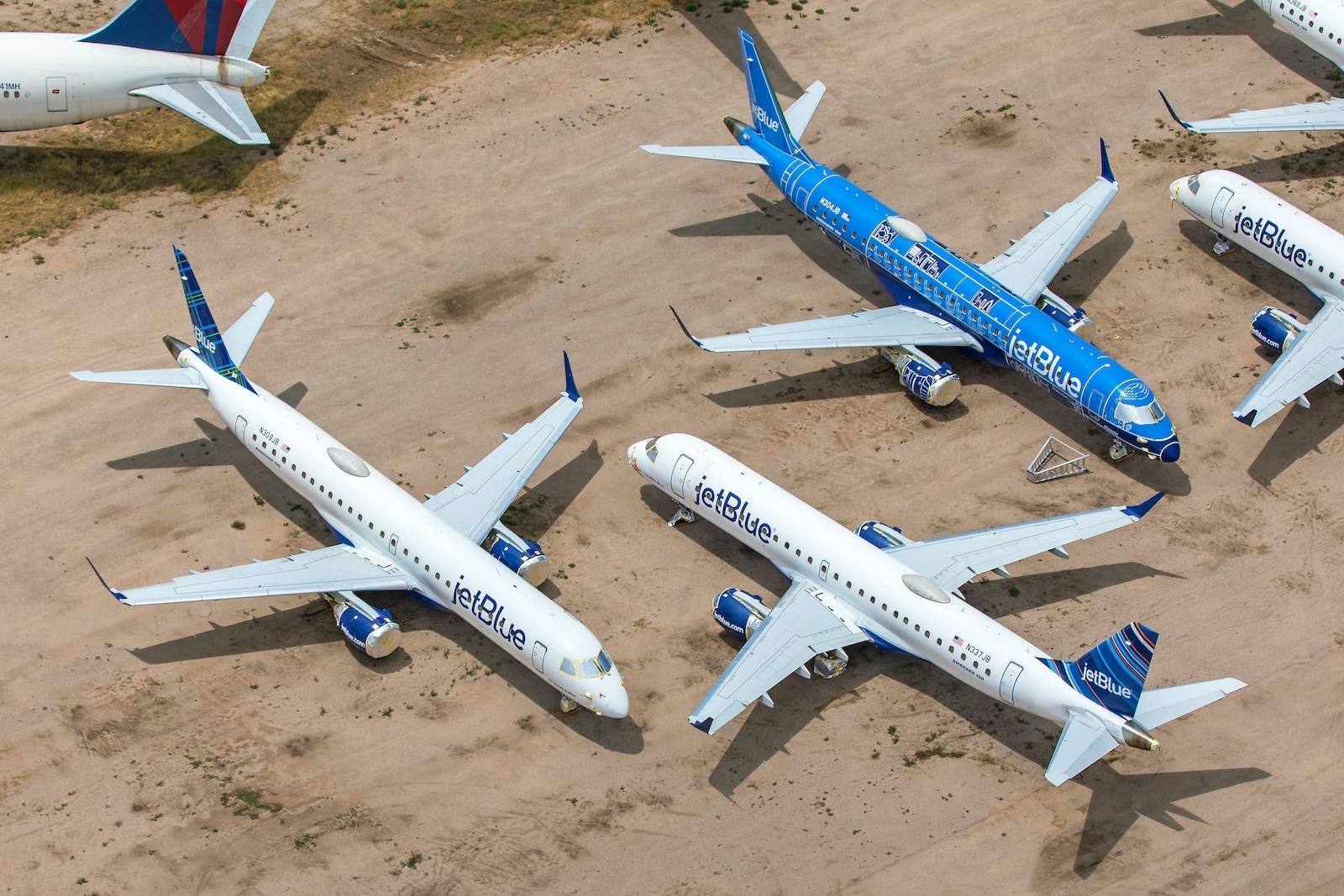
JetBlue Retires E190 Fleet, Completes Transition to Airbus A220-300
JetBlue Retires E190 Fleet, Completes Transition to Airbus A220-300
JetBlue has marked a significant milestone in its 25-year history by officially retiring its Embraer E190 fleet, concluding nearly two decades of service with a final revenue flight between New York JFK and Boston. The E190 played a crucial role in JetBlue’s early expansion and helped establish the airline’s reputation for customer-friendly service.
Commemorating the Final E190 Flight
The last flight, numbered 190, retraced the route of JetBlue’s inaugural E190 service launched in 2005. Passengers, crew, and invited guests took part in celebratory events at both airports. In a symbolic gesture, JetBlue’s Chief Operating Officer, Warren Christie—who also captained the airline’s first E190 flight—piloted the final journey, accompanied by several original crew members. Christie reflected on the aircraft’s importance, stating, “The E190 was instrumental in our early years and proved to deliver on critical connectivity in short-haul markets, allowing us to grow into new regions, especially in our New York and Boston focus cities. As one of the originating crewmembers to launch the E190 at JetBlue, it is an honor to pilot our final E190 revenue flight.”
JetBlue was the first airline worldwide to operate the E190, a 100-seat aircraft that enabled the carrier to expand its network and introduce millions of travelers to its signature onboard experience.
Fleet Modernization and Strategic Transition
The retirement of the E190 coincides with the delivery of JetBlue’s 50th Airbus A220-300, highlighting the airline’s ongoing fleet modernization efforts. To date, JetBlue has taken delivery of 52 of the 100 A220s it has on order, consolidating its fleet to two aircraft families: the Airbus A320 and A220. This transition to an all-Airbus fleet, led by the A220-300, is central to JetBlue’s strategy to improve efficiency, performance, and customer comfort.
The Airbus A220 offers enhanced fuel efficiency and advanced onboard amenities, aligning with JetBlue’s commitment to operational excellence and sustainability. However, the shift also presents operational challenges, including the need for comprehensive crew retraining and adaptation to updated systems. The retirement of the E190s has also stimulated activity in the leasing market, with lessor Azorra recently acquiring 13 of JetBlue’s retired E190s amid heightened competition for these aircraft.
Industry analysts suggest that JetBlue’s adoption of the more fuel-efficient A220s may influence competitor strategies, potentially fostering greater scheduling flexibility, more competitive pricing, and improved operational efficiencies across the sector.
As JetBlue embarks on this new chapter with a streamlined, all-Airbus fleet, the airline seeks to build on its legacy of innovation while managing the complexities of fleet transition and evolving industry dynamics.

Etihad Airways Suspends Airbus A380 Flights on Key Route

Aditya Birla Group Seeks Approval for Aircraft Leasing in GIFT City

Qatar Airways Highlights Innovation and Connectivity at Arabian Travel Market 2026

Hong Kong's Five-Year Plan Includes Andrew Fan's Aircraft Parts Processing Hub Proposal

ACIA Aero Leasing Delivers ATR72-600 to Air Nostrum

RTX Appoints Jill Albertelli as Head of Pratt & Whitney

TAT Technologies Joins Beyond Aero Hydrogen Aircraft Program

AURAK Study Highlights Barriers to Air Taxi Adoption in Emerging Economies

Xiamen Air Selects Altitude for 787 Maintenance at Heathrow

Etihad and Swissport Extend Global Partnership
