
Превращайте аналитические выводы ИИ в реальные действия

В тренде
Categories
Kenya Airways Considers Boeing 777 Freighters and E2 Jets
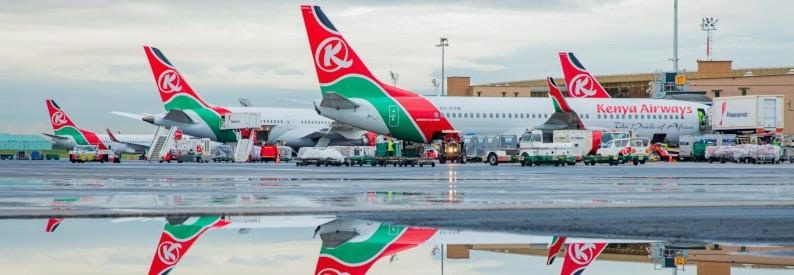
Kenya Airways Evaluates Boeing 777 Freighters and Embraer E2 Jets Amid Fleet Renewal
Kenya Airways (KQ), based at Nairobi’s Jomo Kenyatta International Airport, is actively considering the acquisition of two or more Boeing 777-200 Freighters to strengthen its cargo operations. Alongside this, the airline is exploring further additions to its Boeing 737 fleet and evaluating Embraer’s E2 jets as part of a broader strategy to modernize and optimize its aircraft lineup.
Cargo Expansion and Competitive Challenges
Acting Group Managing Director and CEO George Kamal revealed that Kenya Airways is engaged in discussions with both Boeing and Embraer, with the final number and specific variants of the 777 freighters contingent on market availability. The airline is likely to pursue pre-owned or leased aircraft to meet its objective of maintaining a daily cargo capacity between 180 and 200 tons. This initiative follows the airline’s recent decision to replace its Boeing 747-400(BCF) capacity agreement with Terra Avia by securing capacity on Boeing 767 and 777 freighters. However, Kenya Airways has dismissed the possibility of acquiring Boeing 767 freighters due to the high costs associated with introducing a new aircraft type, including expenses related to training, tooling, and maintenance.
Currently, Kenya Airways operates a narrowbody cargo fleet comprising two company-owned Boeing 737-300(SF) aircraft and two leased Boeing 737-800(SF) freighters. The consideration of new widebody freighters comes amid intensifying competition in the cargo sector, particularly from Middle Eastern carriers such as Emirates and the Saudia Group, both of which have recently placed significant orders for Boeing 777 freighters. This heightened competition is expected to influence market dynamics, potentially prompting rival airlines to adjust pricing strategies, enhance service offerings, or pursue strategic partnerships to protect their market share. Such developments could impact Kenya Airways’ plans for cargo expansion.
Introducing widebody freighters will require meticulous operational planning to ensure seamless integration with existing infrastructure and processes. The airline must carefully balance the advantages of increased cargo capacity against the complexities of fleet integration and the volatility of market demand.
Passenger Fleet Renewal and Operational Considerations
On the passenger side, Kenya Airways is assessing the Embraer E2 as a potential replacement for its current fleet of E190 aircraft. Of the eleven E190s in the fleet, four have been sold, two are undergoing maintenance, and five remain in active service, according to data from ch-aviation and ADS-B tracking. The E2 is being evaluated primarily to address payload and baggage restrictions on regional routes departing from Nairobi, which are affected by the airport’s challenging hot-and-high operating conditions. Kamal emphasized that while no final decision has been made, the E2 is under positive consideration, highlighting Kenya Airways’ unique position as the only African carrier operating an Embraer maintenance center.
Additional fleet developments include the planned return of a Boeing 777-300ER, currently leased to Turkish Airlines, to Kenya Airways’ network on July 17. This aircraft will be deployed on the Nairobi to London Heathrow route. Furthermore, two leased Boeing 737-800NGs are expected to join the fleet in 2026, with one arriving from Aerolíneas Argentinas in November of that year. Plans to lease six Boeing 737-8 aircraft have been deferred to 2027 due to ongoing parts and engine shortages, compounded by liquidity constraints.
At present, Kenya Airways’ fleet consists of nine Boeing 737-800s, nine Boeing 787-8s (three of which remain grounded due to engine supply chain delays), eleven E190s, and four Boeing 737 freighters, according to ADS-B data. As the airline navigates a complex environment shaped by evolving market conditions, competitive pressures, and operational challenges, its forthcoming decisions on fleet composition will be critical to sustaining growth and efficiency.

Etihad and Swissport Extend Global Partnership

Sepehran Airlines B737 Returns to Mashhad After Tyre and Engine Issues

Etihad Deploys Widebody Fleet to Meet Strong Demand

Korean Air Finalizes $36.2 Billion Deal with Boeing

Australia’s RFDS Queensland Section Orders Six King Air 260Cs

Korean Air Finalizes Order for 103 Boeing Jets and Engines

Embraer E195-E2 Features Distinctive Engine Placement Among Regional Jets

What Passengers Can Expect on Boeing’s New 777X Jet

How Ethiopian Airlines Became Africa’s Leading Carrier Amid Gulf Competition

Joby Aviation Extends Autonomous Flight Capabilities with Cross-Country Tour
