
Превращайте аналитические выводы ИИ в реальные действия

В тренде
Categories
Mexican ASA Enhances Aviation Fuel Supply
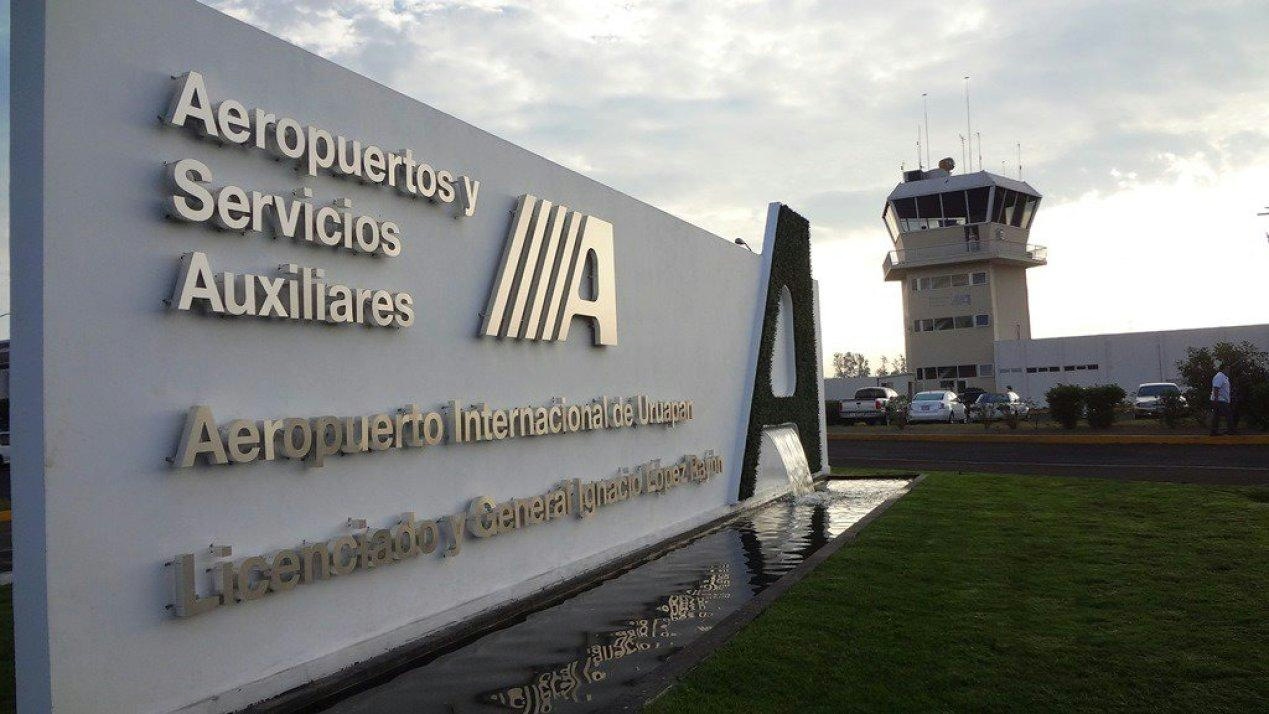
Mexican ASA Enhances Aviation Fuel Supply Amid Industry Challenges
Aeropuertos y Servicios Auxiliares (ASA) reported a 3% increase in aviation fuel supply in 2025, distributing a total of 5.162 billion liters across Mexico. This expansion underscores ASA’s pivotal role in supporting the country’s airport operations. Fuel was delivered through 52 stations nationwide, averaging 14 million liters daily throughout the year. The agency provided 811,000 aircraft refueling services, representing a 1.5% rise compared to 2024, according to an official statement.
Operational Performance and Distribution
ASA highlighted its ability to maintain historic levels of efficiency and service continuity despite peak demand periods. This performance was achieved amid sustained growth in air travel and ongoing efforts to optimize logistics. The ten principal airports—Mexico City, Cancún, Guadalajara, Tijuana, Monterrey, San José del Cabo, Puerto Vallarta, Toluca, Mérida, and Querétaro—accounted for approximately 85.6% of the total fuel volume supplied. Regional terminals also experienced significant growth, with some reporting annual volume increases of up to 120%, driven by expanded routes and increased air traffic.
The agency managed a fleet of 447 specialized vehicles, including tank trucks, dispensers, and auxiliary units, supported by a national storage capacity of 119 million liters distributed across 266 tanks for jet fuel and aviation gasoline. ASA’s Combustibles division continued to comply with both national and international jet fuel standards, ensuring quality through rigorous supervision of the supply chain from receipt to final delivery. The agency maintained ISO 9001 and ISO 14001 certifications for its Fuel Management System and operated a Fuel Telemetry System to monitor inventory in real time.
Challenges and Market Dynamics
Despite these operational gains, Mexico’s aviation fuel sector continues to face significant challenges. Supply chain disruptions, fluctuating jet fuel prices, and broader economic uncertainties persist, contributing to ongoing volatility. Potential new tariffs and variable fuel costs pose risks to operational efficiency and financial stability for both airlines and fuel suppliers. In response, airlines are adjusting fuel hedging strategies and reassessing operational expenditures, while competitors in the fuel supply market intensify efforts to secure contracts and diversify sources.
ASA maintained a majority market share in aviation fuel marketing within Mexico, with other suppliers holding the remainder. The agency also continued to provide storage services to third parties at five strategic stations, aiming to reinforce the logistics system amid a dynamic and competitive market environment.
“With these results at the close of 2025, Aeropuertos y Servicios Auxiliares reaffirmed its experience, technical capacity, and ongoing commitment to safety, quality, and reliability in the supply of aviation fuels,” the agency stated. As the aviation sector contends with ongoing market pressures, ASA’s operational resilience and focus on service continuity remain essential to supporting Mexico’s expanding air transport industry.

Etihad Airways Suspends Airbus A380 Flights on Key Route

Aditya Birla Group Seeks Approval for Aircraft Leasing in GIFT City

Qatar Airways Highlights Innovation and Connectivity at Arabian Travel Market 2026

Hong Kong's Five-Year Plan Includes Andrew Fan's Aircraft Parts Processing Hub Proposal

ACIA Aero Leasing Delivers ATR72-600 to Air Nostrum

RTX Appoints Jill Albertelli as Head of Pratt & Whitney

TAT Technologies Joins Beyond Aero Hydrogen Aircraft Program

AURAK Study Highlights Barriers to Air Taxi Adoption in Emerging Economies

Xiamen Air Selects Altitude for 787 Maintenance at Heathrow

Etihad and Swissport Extend Global Partnership
