
Превращайте аналитические выводы ИИ в реальные действия

В тренде
Categories
NASA Advances Flight Technology with Subscale Aircraft Tests
NASA Advances Flight Technology with Subscale Aircraft Tests
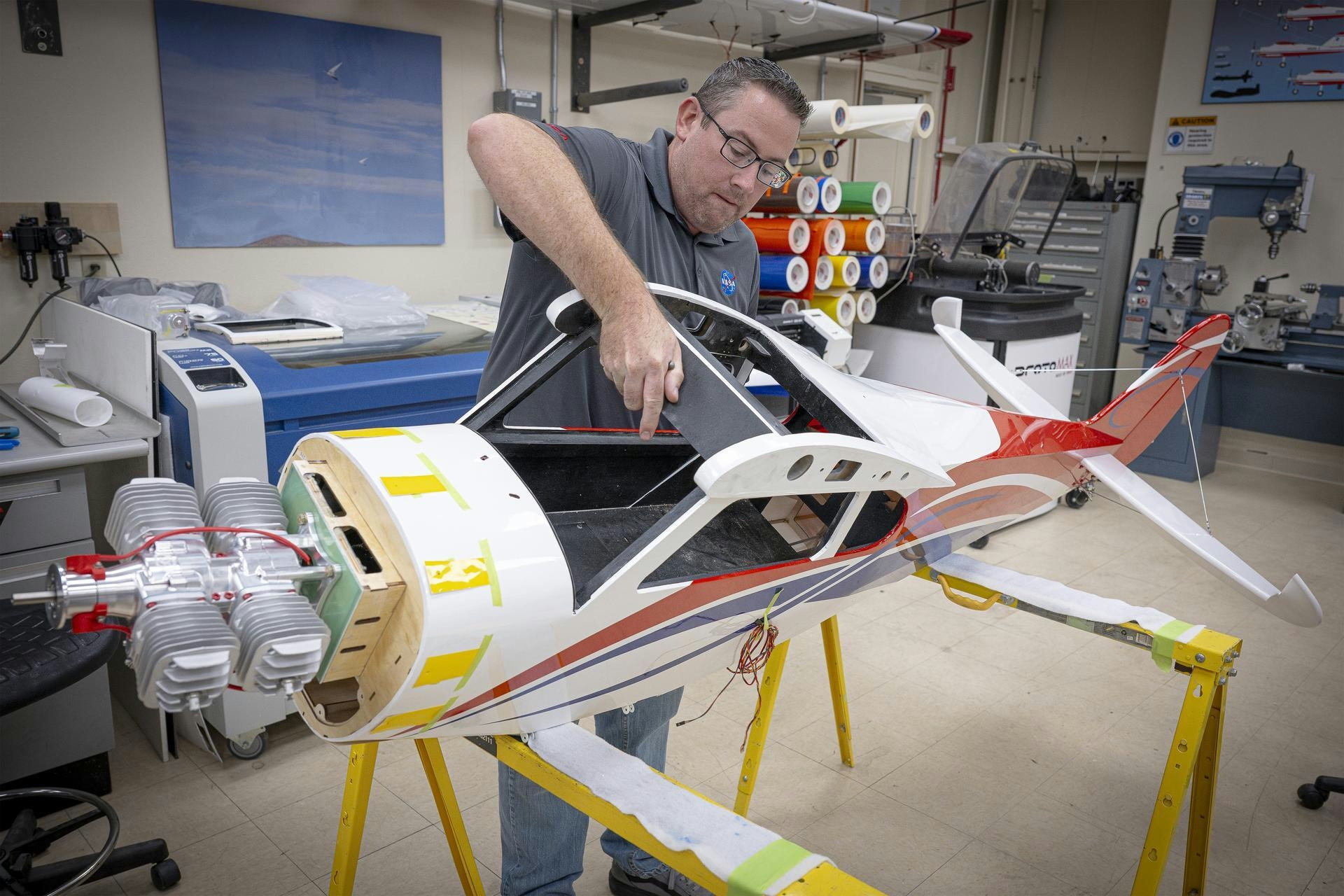
NASA is advancing aerospace innovation by employing subscale aircraft to test and refine emerging flight technologies. This approach enables the agency to accelerate development cycles and mitigate risks prior to full-scale implementation. At the Dale Reed Subscale Flight Research Laboratory, located within NASA’s Armstrong Flight Research Center in Edwards, California, engineers and pilots utilize small, remotely piloted and autonomous aircraft as cost-effective platforms to mature novel concepts and facilitate their transition into operational systems.
Innovative Testing and Diverse Platforms
Recent demonstrations have highlighted the flexibility and capability of these subscale platforms. On October 22, 2024, a model atmospheric probe, designed and constructed at Armstrong, was carried aloft by a quadrotor drone and released over Rogers Dry Lake. This test exemplified the center’s ability to rapidly prototype and evaluate new flight hardware. The laboratory’s fleet includes several specialized aircraft: the Alta-X quadrotor, the Dryden Remotely Operated Integrated Drone (DROID) with a 10-foot wingspan, and the Multi-Use Cub, a 14-foot fixed-wing aircraft featuring an expandable payload bay. For research into electric vertical takeoff and landing (eVTOL) technologies, the HQ-90 quadrotor provides additional testing capabilities.
The expertise of Armstrong’s flight research staff is a critical asset. Each pilot is certified to operate subscale aircraft, including unique or modified commercial models, across a variety of environments. This proficiency was recently demonstrated during NASA’s FireSense project in Alabama’s Geneva State Forest, where an Alta-X drone equipped with a NASA-developed sensor collected localized weather data. The information gathered on smoke movement and fire behavior aims to enhance wildfire response strategies and improve resource allocation for firefighting agencies.
Advancing Aerospace Research and Overcoming Challenges
Closer to home, the Enhancing Parachutes by Instrumenting the Canopy (EPIC) project involved air-launching a capsule equipped with a parachute and flexible sensor from the Alta-X platform. These tests are designed to address gaps in computational models of supersonic parachute dynamics, with the ultimate goal of improving the safety and reliability of future Mars landings.
While subscale testing offers significant advantages in terms of cost efficiency and rapid iteration, NASA continues to confront challenges related to scaling these technologies for integration into existing commercial and military aviation systems. Ensuring compatibility and effective scalability remains a critical hurdle as these concepts advance toward full-scale application.
The aerospace industry is closely monitoring NASA’s progress, with growing interest from commercial partners potentially fostering new collaborations and investments. Internationally, competitors such as China, which has recently expanded its J-20 stealth fighter fleet, may intensify their own advanced flight technology programs in response, seeking to maintain a competitive technological edge.
By combining technical expertise, innovative testing platforms, and strategic partnerships, NASA’s subscale flight research is playing a pivotal role in shaping the future of aerospace, offering promising solutions for both scientific exploration and practical challenges.

Etihad and Swissport Extend Global Partnership

Sepehran Airlines B737 Returns to Mashhad After Tyre and Engine Issues

Etihad Deploys Widebody Fleet to Meet Strong Demand

Korean Air Finalizes $36.2 Billion Deal with Boeing

Australia’s RFDS Queensland Section Orders Six King Air 260Cs

Korean Air Finalizes Order for 103 Boeing Jets and Engines

Embraer E195-E2 Features Distinctive Engine Placement Among Regional Jets

What Passengers Can Expect on Boeing’s New 777X Jet

How Ethiopian Airlines Became Africa’s Leading Carrier Amid Gulf Competition

Joby Aviation Extends Autonomous Flight Capabilities with Cross-Country Tour
