Изображение

AeroGenie — Ваш интеллектуальный второй пилот.

Спрашивайте что угодно. Анализируйте все. Действуйте незамедлительно.

В тренде

Categories

Northrop Grumman Tests Mid-Flight Autonomy Software Swap on Talon IQ
April 16, 2026By ePlane AI
Northrop Grumman Tests Mid-Flight Autonomy Software Swap on Talon IQ
0
0
Northrop Grumman
Talon IQ
Autonomy Software

Northrop Grumman Advances Autonomous Flight with Mid-Flight Software Swap on Talon IQ

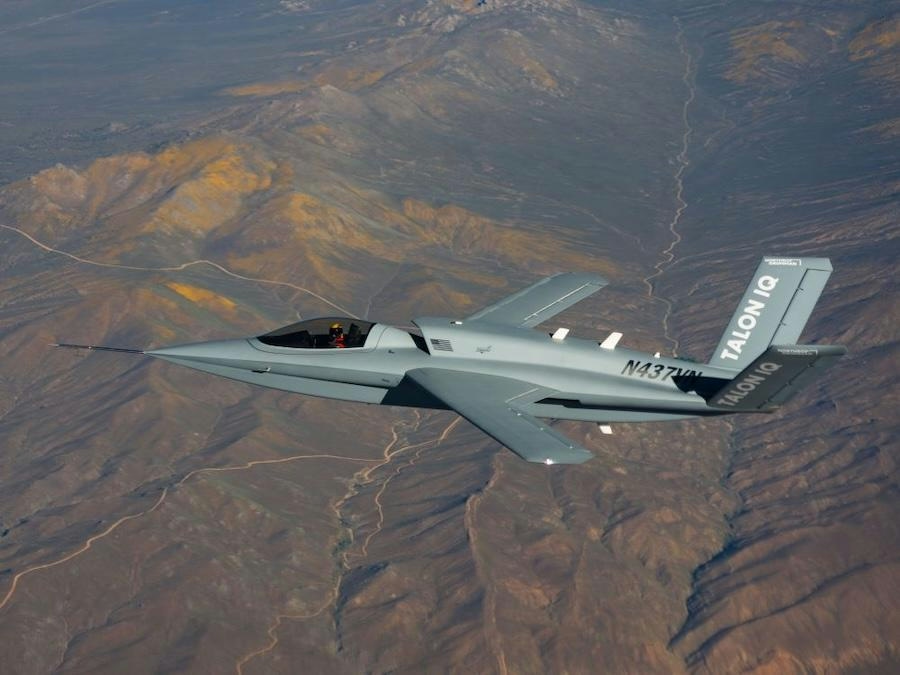
Northrop Grumman has marked a significant advancement in autonomous flight technology by successfully executing a mid-flight autonomy software swap on its Talon IQ testbed. Utilizing the company’s Prism Mission Autonomy software, the demonstration highlighted the capability to seamlessly transition between autonomy systems from multiple providers without interrupting flight operations.

Demonstration of Modular Autonomy Systems

The Talon IQ aircraft, derived from the Scaled Composites Model 437, initially operated under Northrop Grumman’s Prism software before dynamically switching mid-air to autonomy systems developed by Applied Intuition and Accelint. Beyond switching entire autonomy systems, the platform also demonstrated the ability to transition between individual autonomy “skills” without any degradation in operational performance. This capability underscores the open and modular architecture of the Talon IQ, designed to facilitate the integration of third-party autonomy solutions.

This modular framework aligns with the U.S. Air Force’s Autonomy Government Reference Architecture, which has recently been validated for use on competing Collaborative Combat Aircraft (CCA) platforms. The validation reflects a rapidly evolving and competitive market for autonomous systems, where interoperability and flexibility are increasingly critical.

Context Within the Autonomous Systems Market

Northrop Grumman’s demonstration arrives amid heightened scrutiny of the CCA market. Rival General Atomics recently faced setbacks following a drone wingman crash, resulting in a pause in flight tests and raising broader safety concerns within the industry. In contrast, Northrop Grumman continues to advance its autonomous and long-range strike capabilities, as evidenced by ongoing developments in the B-21 Raider program.

Craig Woolston, a senior executive at Northrop Grumman, emphasized the company’s commitment to accelerating software maturity and enhancing reliability. He noted that the Talon IQ ecosystem serves as a real-world, cost-effective testing platform, enabling companies to validate their autonomous technologies and drive the evolution of next-generation flight systems.

Strategic Importance of the Talon IQ Testbed

The Talon IQ testbed is a central element of Northrop Grumman’s Project Talon portfolio, which focuses on accelerating the development, integration, and testing of mission autonomy software. The system supports a broad spectrum of operations, including coordination between crewed and uncrewed platforms, as well as real-time routing and deconfliction with other aircraft in complex operational environments.

Beyond autonomous flight, Northrop Grumman’s broader strategy includes leveraging commercial launch providers such as SpaceX’s Falcon 9 for missions like the Cygnus cargo spacecraft launches to the International Space Station. This approach highlights the company’s engagement in an increasingly competitive landscape spanning both defense and space sectors.

Through the Talon IQ ecosystem, Northrop Grumman aims to enable rapid iteration and development of advanced autonomous capabilities, positioning itself at the forefront of future operational requirements in a dynamic and challenging market.

More news
Brazil Joins US and Europe in Introducing Narrowbody Lie-Flat Suites for Premium Air Travel

Brazil Joins US and Europe in Introducing Narrowbody Lie-Flat Suites for Premium Air Travel

Brazil Joins US and Europe in Introducing Narrowbody Lie-Flat Suites for Premium Air Travel Brazil is making a significant advance in premium air travel as LATAM Airlines prepares to introduce lie-flat business class suites on its narrowbody aircraft. This development places Brazil alongside the United States and Europe, where airlines have already begun enhancing the premium experience on single-aisle planes. Traditionally, lie-flat seats were confined to widebody jets operating long-haul routes, but LATAM’s initiative marks a notable shift in comfort standards for shorter and regional flights. LATAM’s Premium Cabin Transformation LATAM’s forthcoming narrowbody lie-flat suites are engineered to provide enhanced comfort, privacy, and direct aisle access—amenities previously exclusive to larger aircraft. Passengers on short and medium-haul routes will benefit from fully flat beds and suite-style seating designed to improve privacy and overall in-flight comfort. This upgrade effectively brings the luxury associated with widebody business class cabins to routes that have typically offered more basic reclining seats, thereby raising the bar for premium travel across South America. Industry Trends and Competitive Dynamics LATAM’s move reflects a broader global trend in the aviation industry. Airlines worldwide are outfitting narrowbody aircraft, such as the Airbus A321LR and A321XLR, with lie-flat suites to serve “long and thin” routes that connect smaller cities without compromising premium service. This evolution is gradually blurring the distinction between short-haul and long-haul travel, as business travelers increasingly demand elevated comfort on all flights. The introduction of these suites is expected to intensify competition within the South American market. Rival carriers may accelerate their own plans to install lie-flat seating or enhance other premium offerings to retain high-value customers. While this competition could lead to a wider availability of premium services, it may also result in higher business class fares as airlines seek to recoup the costs of these upgrades. Challenges and Innovation in Implementation The integration of lie-flat suites on narrowbody aircraft presents several challenges. The limited cabin width requires a careful balance between passenger comfort, seat density, and operational efficiency. To address these constraints, LATAM and other airlines are adopting innovative seating configurations, including staggered layouts, herringbone designs, and “throne” seats, which maximize space while maintaining a premium experience. These enhancements come with substantial production and retrofitting costs. Airlines must also manage potential resistance from passengers accustomed to traditional seating arrangements and navigate the logistical complexities involved in updating existing fleets. LATAM’s Broader Strategic Vision The introduction of narrowbody lie-flat suites forms part of LATAM’s broader strategy to elevate its premium product offering. The airline has already invested in fully enclosed suites and upgraded entertainment systems on its long-haul fleet. By extending these features to narrowbody aircraft, LATAM aims to strengthen its competitive position and appeal to business travelers seeking consistent comfort across all routes. Looking Ahead As LATAM pioneers this development in South America, the rollout of narrowbody lie-flat suites signals a new era for regional premium air travel. Despite the challenges involved, this initiative is poised to reshape passenger expectations and stimulate further innovation within the industry.
Ursa Major Reports Hadley Completed 10 Hypersonic Flights

Ursa Major Reports Hadley Completed 10 Hypersonic Flights

Ursa Major’s Hadley Engine Completes 10 Hypersonic Flights Ursa Major announced on April 16, 2026, that its Hadley liquid rocket engine has successfully completed ten consecutive flights, including multiple missions sustained at hypersonic speeds. This achievement, realized in collaboration with Stratolaunch, highlights significant progress in reusable hypersonic technology and underscores the intensifying competition within the sector. Advancements in Reusable Hypersonic Technology The flights were conducted using Stratolaunch’s Talon-A test vehicle, which has now surpassed Mach 5 on at least two occasions and been recovered after each mission. Several flights involved the reuse of the same Hadley engines, demonstrating notable advancements in engine durability and reusability. Achieving and sustaining hypersonic speeds—defined as velocities exceeding Mach 5—poses considerable engineering challenges due to extreme thermal and aerodynamic stresses. Reliable, reusable propulsion systems are therefore critical for defense applications that demand repeated testing and operational readiness. Stratolaunch’s Talon-A, powered by the Hadley engine, serves as a reusable hypersonic test platform designed to support U.S. defense customers by enabling real-world testing of payloads and emerging technologies. The vehicle is air-launched from Stratolaunch’s carrier aircraft and has completed multiple hypersonic flights with successful recoveries. This follows earlier milestones, including the Talon-A2’s second reusable hypersonic flight in March 2025, after its initial flight in December 2024. Strategic Context and Market Competition Ursa Major’s progress aligns with the Pentagon’s broader efforts to expand hypersonic testing capabilities, aiming to develop both offensive systems and countermeasures. The combination of reusable vehicles and reflown engines offers a cost-effective approach to repeated testing of propulsion systems, sensors, communications, and other payloads, thereby accelerating development cycles. Nevertheless, Ursa Major faces mounting competition in the hypersonic propulsion market. Rocket Lab, for instance, recently secured contracts for 20 hypersonic test flights under the MACH-TB program, signaling a competitive race among propulsion suppliers to secure defense contracts and advance technological capabilities. This heightened competition is expected to drive further innovation and influence the distribution of future national security contracts. Ursa Major characterizes the Hadley engine as a liquid oxygen-kerosene propulsion system manufactured using additive techniques, designed for both hypersonic and space launch applications. CEO Chris Spagnoletti emphasized that the recent flight achievements represent a transition from isolated demonstrations to operational test bed missions. “These flights aren’t demonstrations, they’re operational test bed missions,” Spagnoletti stated. “Ten successful flights is proof that hypersonic capability is here.” As the hypersonic sector continues to evolve, industry leaders are poised to intensify efforts to secure additional contracts and push technological boundaries, shaping the future landscape of defense and national security applications.
Delivery of Norwegian F-16s to Ukraine Delayed by Maintenance Dispute with Sabena Aerospace

Delivery of Norwegian F-16s to Ukraine Delayed by Maintenance Dispute with Sabena Aerospace

Delivery of Norwegian F-16s to Ukraine Delayed by Maintenance Dispute with Sabena Aerospace Maintenance Dispute and Logistical Challenges The planned delivery of Norwegian-donated F-16 fighter jets to Ukraine has encountered significant delays due to a maintenance dispute and logistical complications, raising concerns about Norway’s defense strategy and the stability of international defense supply chains. Norwegian authorities were reportedly warned as early as 2025 by Kongsberg Aviation Maintenance Services (KAMS) against sending the retired F-16s to Sabena Aerospace Engineering in Belgium. KAMS highlighted capacity constraints at the Belgian facility and recommended that both refurbishment and pilot training be conducted domestically in Norway. Despite these cautions, Norwegian officials proceeded with the plan to ship several aircraft—some missing up to 100 parts and transported without wings, engines, or tails—to Sabena’s workshop, where they remain awaiting servicing. The backlog at Sabena Aerospace has delayed the jets’ readiness for deployment to Ukraine, even as the demand for advanced air defense intensifies amid ongoing Russian attacks on Ukrainian infrastructure. In contrast, Danish authorities, confronted with similar constraints, chose to retain and service their F-16s domestically, thereby avoiding comparable delays. Political and Strategic Implications The handling of the program has drawn sharp political criticism within Norway. Lawmaker Peter Frølich condemned the approach as a “lack of leadership,” asserting that the aircraft could already be operational in Ukraine had the domestic maintenance option been pursued. The Norwegian Ministry of Defence confirmed that the jets have not yet been delivered but declined to specify whether KAMS’ proposal was seriously considered. Officials now maintain that Norway lacks both the capacity and spare parts to perform the necessary maintenance domestically, as resources are currently committed to a separate F-16 sale to Romania. This maintenance dispute not only hampers support for Ukraine but also exposes vulnerabilities in Norway’s own defense posture. The repercussions extend across the defense industry, potentially affecting other procurement and sales programs. For instance, delays and disputes of this nature could impact the Belgian order for the Cessna SkyCourier and Norway’s procurement of anti-tank mines. The situation reflects broader international challenges, exemplified by Switzerland’s recent contemplation of abandoning its purchase of the US Patriot air defense system due to delivery delays, underscoring the complexities and interdependencies inherent in global defense supply chains. International Context and Future Outlook In January 2026, the US Department of Defense contracted Sabena Aerospace Engineering to provide intermediate and depot-level maintenance for F-16s transferred to Ukraine, with work scheduled to continue through 2029. However, the current backlog raises serious questions about the capacity of international partners to meet urgent defense needs promptly. As the delay persists, this episode serves as a cautionary example for governments navigating the intricate logistics of military aid and procurement within an increasingly interconnected and complex defense market.
JetBlue Airways Faces Potential Bankruptcy by 2026

JetBlue Airways Faces Potential Bankruptcy by 2026

JetBlue Airways Faces Potential Bankruptcy by 2026 JetBlue Airways is confronting significant financial challenges that could lead to bankruptcy by 2026, according to its founder, David Neeleman. Speaking at a Breeze Airways pilot session, Neeleman highlighted soaring jet fuel prices and escalating debt as critical threats to the airline’s stability. Citing recent analysis from J.P. Morgan, he noted that if jet fuel prices reach $4.50 per gallon, JetBlue could incur losses of $1.3 billion this year, a scenario that might push the carrier toward insolvency. Financial Strain and Debt Concerns Neeleman detailed that such losses would likely increase JetBlue’s debt burden to around $9 billion, with annual interest expenses rising from $600 million to $800 million. He emphasized that only a significant reduction in fuel costs—down to approximately $2.50 per gallon—would allow the airline to remain marginally solvent. At the close of 2025, JetBlue reported operating revenues of $9.1 billion, liquidity of $2.5 billion, and a net loss of $602 million, with average fuel costs near $2.49 per gallon. In response to these mounting pressures, JetBlue is reportedly considering a sale to rival airlines, including United Airlines, Alaska Airlines, and Southwest Airlines, as part of a strategy to secure its long-term viability. This development follows a major setback in 2024 when a federal judge blocked JetBlue’s proposed merger with Spirit Airlines on antitrust grounds. The failed merger has intensified uncertainty about JetBlue’s future, particularly as low-cost carriers grapple with weak leisure travel demand and rising operational costs. Prospects for Acquisition and Industry Consolidation Industry observers suggest United Airlines may be the most plausible suitor, given its existing interline agreement with JetBlue. However, Neeleman expressed doubts about the willingness of major carriers to assume JetBlue’s substantial debt. He cited insider information indicating that United is wary of taking on this financial burden, while Southwest and Alaska Airlines have shown little interest in acquiring JetBlue. Any potential merger or acquisition would face rigorous antitrust scrutiny and regulatory challenges. The Biden administration has recently approved the acquisition of Sun Country Airlines by Allegiant Air, and United Airlines’ CEO has publicly entertained the possibility of merging with American Airlines, signaling a broader trend toward consolidation within the U.S. airline industry. JetBlue has not issued an immediate response to inquiries regarding its financial situation. As the airline navigates a turbulent market environment, its future remains uncertain, with bankruptcy or acquisition by a larger competitor among the possible outcomes.
US National Airlines Receives First Boeing 777-200F

US National Airlines Receives First Boeing 777-200F

US National Airlines Takes Delivery of First Boeing 777-200F Freighter National Airlines, based in Orlando Sanford, has officially received its first Boeing 777-200F freighter, marking a pivotal development for the US cargo carrier. The aircraft, registered as N791CA (msn 70547), was delivered at Boeing’s Everett facility and represents the initial unit of a four-aircraft order placed during the 2024 Farnborough International Airshow. The new freighter is anticipated to commence operations within the coming weeks. Enhancing Fleet Capabilities and Operational Reach The introduction of the 777-200F is expected to significantly bolster National Airlines’ operational capacity. The aircraft offers an extended range of 4,970 nautical miles (9,200 kilometres) and a maximum payload capability of 102 tonnes (224,900 pounds). This addition will complement the airline’s existing diverse fleet, which currently comprises 15 aircraft, including two Airbus A330-200s, one A330-300, six Boeing 747-400(BCF)s, one 747-400ERF, two 747-400FSCDs, one Boeing 757-200, and a Falcon 7X business jet. The second 777-200F in the order, registered as N792CA, has already been observed in full livery with engines installed and is expected to enter flight testing shortly. Operational and Regulatory Challenges Ahead While the arrival of the 777-200F signifies a strategic expansion for National Airlines, it also presents several operational challenges. Integrating the new aircraft into the existing fleet will necessitate adjustments in logistics, crew training, and maintenance procedures. Furthermore, regulatory compliance remains a critical area of focus. Aviation authorities are anticipated to conduct thorough evaluations of the aircraft’s adherence to safety protocols and accessibility standards, particularly in light of ongoing industry discussions aimed at improving wheelchair access and broader inclusivity in air transport. Implications for the Air Cargo Sector This fleet enhancement is likely to reverberate across the air cargo industry. Competitors may respond by accelerating their own fleet modernization efforts or by leveraging established cargo networks to sustain or expand their market positions. The introduction of the 777-200F could also influence investor sentiment, potentially increasing interest in the cargo aviation sector as airlines adapt to shifting market demands and evolving supply chain requirements. As National Airlines prepares to deploy its new freighter, industry observers will closely monitor how the carrier manages operational integration and regulatory scrutiny, as well as the broader market’s reaction to this significant development in US air cargo.
UK Joins Major European Nations in Facing Jet Fuel Shortage Ahead of Summer Travel

UK Joins Major European Nations in Facing Jet Fuel Shortage Ahead of Summer Travel

UK Joins Major European Nations in Facing Jet Fuel Shortage Ahead of Summer Travel Europe is confronting the prospect of a jet fuel shortage as the United Kingdom joins Germany, France, Italy, Spain, and the Netherlands in issuing warnings about potential supply disruptions ahead of the peak summer travel season. Aviation experts and energy officials have expressed growing concern over the escalating conflict in Iran and the resulting disturbances in critical oil shipping routes, particularly the Strait of Hormuz, which threaten to tighten global fuel supply chains. The International Energy Agency (IEA) has issued a cautionary statement indicating that Europe could begin to experience physical shortages of jet fuel as early as June if it manages to replace only half of its usual Middle Eastern imports. The continent is especially vulnerable, with nearly 75% of its net jet fuel imports originating from the Middle East. The ongoing conflict has already caused jet fuel prices in Europe to surge by more than 100% within a three-week period, prompting major airport hubs to prepare for emergency "dry-out" scenarios. Limited Reserves and Rising Concerns A critical issue is the warning that Europe may have only a few weeks’ worth of jet fuel reserves if supply conditions worsen. Although a widespread shortage has not yet been confirmed across all countries, declining stock levels and restricted imports have compelled airlines to develop contingency plans. Some carriers have begun rationing jet fuel and reducing flight schedules. Ryanair’s CEO has cautioned that flight cancellations could become inevitable if the blockade of the Strait of Hormuz continues. Structural Vulnerabilities in Europe’s Fuel Supply Europe’s heavy dependence on imported jet fuel, coupled with a decline in refinery capacity over the past two decades, has heightened its reliance on external markets. Disruptions in global oil transport routes have further destabilized supply chains, leaving the continent particularly susceptible to shocks. This structural vulnerability underscores the challenges Europe faces in maintaining stable aviation fuel supplies amid geopolitical tensions. The UK’s Response: Vigilance and Coordination The United Kingdom is actively monitoring jet fuel availability as part of its broader aviation safety and travel continuity efforts. While UK airlines and airports are not currently experiencing immediate shortages, industry groups warn that supply buffers could diminish rapidly if global disruptions persist. The Department for Transport is closely tracking aviation fuel resilience and coordinating with airlines and suppliers to ensure operational continuity during the critical summer travel period. Germany and France: Operational and Financial Pressures Germany, with its extensive airline network, is among the most exposed markets. Lufthansa has indicated the possibility of grounding aircraft and reducing flight capacity, while German authorities remain vigilant regarding the long-term financial pressures stemming from rising fuel costs. In France, Air France-KLM has already adjusted flight schedules in response to increased kerosene prices and market volatility. French aviation regulators are collaborating with European counterparts to assess risks related to fuel distribution as the summer season approaches. An Uncertain Summer for Europe’s Aviation Industry The looming threat of jet fuel shortages and escalating prices presents significant challenges for Europe’s aviation sector. Airlines are being forced to ration fuel, curtail flights, and prepare for potential cancellations. With profitability under pressure and capacity reductions likely if demand softens or prices remain elevated, the coming months may prove particularly turbulent for both travelers and airlines across the continent.
KLM Resumes Service of E195-E2 Jets Following Engine Shortages

KLM Resumes Service of E195-E2 Jets Following Engine Shortages

KLM Resumes Operations of E195-E2 Jets Amid Improving Engine Supply KLM Cityhopper has begun reactivating part of its Embraer E195-E2 fleet following a prolonged grounding caused by a global shortage of Pratt & Whitney geared turbofan (GTF) engines. Earlier this year, the Dutch regional carrier was compelled to park up to six of these jets at Twente Airport due to the scarcity of engines, a disruption that has affected airlines worldwide and particularly impacted the relatively new E195-E2 model. Aircraft Preservation and Reactivation Process One of the aircraft, registered PH-NXA, is currently undergoing preparation for a return to service after months in storage. Prior to being grounded, the jet was subjected to a meticulous preservation procedure. This involved removing engines, auxiliary power units, and batteries, followed by wrapping the airframe in protective film—a method KLM refers to as “cocooning”—to safeguard the aircraft from environmental damage during long-term storage. Reactivating the aircraft requires reinstalling critical components, performing comprehensive technical inspections, and implementing necessary upgrades, including the installation of onboard Wi-Fi. KLM anticipates that this process will take approximately two months before the aircraft can resume commercial operations. Fleet Context and Market Challenges KLM Cityhopper operates one of the largest E195-E2 fleets globally, with 25 leased aircraft. The airline introduced the type in February 2021, initially configuring the jets with 132 seats, later increasing capacity to 136 passengers. Alongside the E195-E2s, KLM’s regional fleet includes 22 first-generation E190s and 17 smaller E175s. However, persistent GTF engine issues led to nearly half of the E195-E2 fleet being grounded at various points in early 2023. The reintroduction of these jets coincides with rising fuel costs, prompting KLM to reduce its European capacity. This strategy aligns with similar measures taken by competitors such as Lufthansa, who are also adjusting operations to mitigate the impact of higher fuel prices. The broader aviation market remains cautious as ongoing supply chain constraints continue to limit the availability of aircraft and engine components. Industry analysts suggest that further capacity adjustments or shifts in fleet strategy may be necessary as airlines navigate the combined pressures of supply shortages and escalating operating expenses. Currently, two E195-E2 jets are in the process of reactivation, with the remaining parked aircraft expected to return to service later this year as engine availability improves. KLM’s ability to restore full capacity will depend on continued easing of supply constraints and how effectively the airline and its competitors adapt to the evolving economic and operational landscape.
Sheikh Hamdan Announces First Air Taxi Station Near Dubai Airport

Sheikh Hamdan Announces First Air Taxi Station Near Dubai Airport

Sheikh Hamdan Announces Dubai’s First Air Taxi Station Near International Airport Dubai’s Crown Prince, Sheikh Hamdan bin Mohammed bin Rashid Al Maktoum, has officially announced the completion of the city’s inaugural air taxi station, situated adjacent to Dubai International Airport. This pioneering facility, designed to accommodate electric vertical take-off and landing (eVTOL) vehicles, represents a landmark achievement in Dubai’s ambitious strategy to advance urban mobility. It is the first station of its kind globally, underscoring the city’s commitment to innovation in transportation. The station forms part of a wider network, with additional hubs planned for prominent locations including Downtown Dubai, Palm Jumeirah, and Dubai Marina. These are expected to become operational by the end of 2024. Sheikh Hamdan has mandated that the air taxi service be made available to the public within the year, with the initial station anticipated to handle up to 170,000 passengers annually. “This project is a key milestone in Dubai’s urban mobility journey, reducing travel time and bringing the city closer,” Sheikh Hamdan remarked. “With the completion of the first air taxi station, we reaffirm our commitment to shaping the future of mobility and building a global city that puts people first.” Advanced Infrastructure and Operational Framework The newly completed station spans 3,100 square metres across four storeys and includes a two-level car park, two dedicated take-off and landing pads, charging infrastructure for eVTOL vehicles, and climate-controlled passenger amenities. Constructed to meet the highest international safety standards, the facility is designed for seamless integration with Dubai’s existing public transport network, encompassing metro lines, bus routes, and shared mobility services. Skyports Infrastructure is responsible for the station’s design, development, and ongoing operations, while Joby Aviation manages aircraft manufacturing and passenger services. The Roads and Transport Authority (RTA) oversees the overall operational framework, ensuring the air taxi service is fully integrated within the city’s broader transport ecosystem. Enhancing Connectivity Amid Challenges The air taxi service aims to provide residents and visitors with a rapid and secure alternative for travel between key urban destinations. For instance, the journey from Dubai International Airport to Palm Jumeirah is projected to take approximately 10 minutes, a significant reduction from the current 45-minute car trip. The service is designed to support multimodal travel, connecting with electric scooters, bicycles, and other mobility options to enhance overall citywide connectivity. Despite the ambitious rollout, the initiative faces several challenges. Regulatory frameworks are still evolving as authorities work to ensure safety and compliance in the face of rapid technological advancements. The sector is also contending with growing competition from established autonomous vehicle companies such as WeRide and Uber, both of which have introduced driverless robotaxi services in Dubai. Market responses have been mixed, with some Gulf carriers expressing concerns over potential fluctuations in demand amid ongoing geopolitical tensions. Additionally, Joby Aviation, the developer behind Dubai’s air taxis, is currently embroiled in legal disputes with rival Archer Aviation concerning trade secrets and import practices. The US Trade Commission has also initiated an investigation into Joby for possible import violations, adding further regulatory scrutiny. Similar urban air mobility projects worldwide, including those planned in Florida, are encountering comparable regulatory and infrastructure challenges, highlighting the complexities involved in bringing air taxi services to market. As Dubai prepares to launch its air taxi service, the city continues to position itself at the forefront of smart mobility innovation. The successful integration of air taxis into the public transport network could establish a global precedent for urban mobility, even as the sector navigates regulatory, competitive, and market challenges.
Vietjet Expands Vietnam-China Flights with New Aircraft Lease

Vietjet Expands Vietnam-China Flights with New Aircraft Lease

Vietjet Expands Vietnam-China Flights with New COMAC Aircraft Lease Strategic Partnership and Fleet Expansion Vietnamese low-cost carrier Vietjet has taken a significant step to deepen its aviation ties with China by signing a finance lease agreement for 10 COMAC C909 narrow-body aircraft with SPDB Financial Leasing. The announcement coincided with the state visit of Vietnam’s newly elected President To Lam to China, highlighting the strengthening cooperation between the two nations. Although financial terms of the deal were not disclosed, the agreement represents a strategic move for Vietjet to deploy Chinese-made jets on routes connecting Vietnam and China, enhancing its regional connectivity and operational capacity. Currently, Vietjet operates a fleet of 135 aircraft, primarily Airbus models, with nearly 600 additional planes on order from Boeing and Airbus. The introduction of the COMAC C909s is expected to support the airline’s planned expansion of routes, including new services linking Hanoi and Ho Chi Minh City with major Chinese cities such as Hangzhou and Guilin. Challenges and Market Implications Despite the promising outlook, Vietjet faces several challenges in executing its expansion plans. Securing regulatory approval for new international routes remains a critical hurdle, while the airline must also compete with established carriers already operating in the competitive Vietnam-China market. Furthermore, the financial obligations associated with leasing new aircraft could exert additional pressure on Vietjet’s balance sheet. Market analysts anticipate that Vietjet’s expansion may intensify competition on key routes, potentially driving fare reductions. In response, rival airlines might accelerate their own fleet growth or introduce new services to maintain market share. Vietjet’s latest agreement underscores its commitment to expanding its footprint in the region and capitalizing on emerging opportunities within the rapidly growing Vietnam-China travel corridor.
Roundtable: Evolution of Business Jet Interiors from 2000 to 2050

Roundtable: Evolution of Business Jet Interiors from 2000 to 2050

Roundtable: Evolution of Business Jet Interiors from 2000 to 2050 As the Aircraft Interiors Expo (AIX) celebrates its 25th edition with the launch of the BizJet Interiors Zone, industry leaders have taken the opportunity to reflect on the significant transformation of business jet interiors over the past 25 years and to anticipate future developments. In a virtual roundtable hosted by AIX in collaboration with Business Jet Interiors International, experts from various sectors of the industry convened to explore the innovations, challenges, and emerging trends that are shaping the future of business aviation. Innovations and Sustainability in Business Jet Interiors The discussion, moderated by Izzy Kington, editor of Business Jet Interiors International, featured insights from Colin Carter, CEO of CineSend; Kevin Kucel, director of aircraft sales at Townsend Leather; Lauren Kenealy, marketing director at Tapis; and Eric Hoegen, director of group sales at AMAC Aerospace. Their conversation covered a broad spectrum of topics, including technological progress, material innovation, sustainability, and evolving customer expectations. A prominent theme was the increasing emphasis on sustainable materials and technologies amid growing industry pressure to reduce carbon emissions. The panel observed a clear market shift toward eco-friendly designs, exemplified by the emergence of hydrogen-electric business aircraft such as those developed by Beyond Aero. This trend is driving suppliers and manufacturers to innovate with new materials and production methods that harmonize luxury with environmental responsibility. The competitive landscape is also evolving, with companies like Dassault advancing the integration of luxury and cutting-edge technology, as demonstrated by the introduction of its largest business jet, the Falcon 10X. Panelists highlighted how improvements in connectivity, inflight entertainment (IFE), and cabin management systems (CMS) are transforming the passenger experience. Furthermore, artificial intelligence is anticipated to play an increasingly significant role in personalizing and optimizing onboard services. Challenges and Future Outlook Despite these advancements, the evolution of business jet interiors presents several challenges. The panel discussed the complexities involved in incorporating new technologies and materials into aircraft completion processes while adhering to rigorous safety and regulatory standards. Additionally, geopolitical uncertainties, such as the ongoing conflict in Iran, pose operational risks that may influence travel patterns and necessitate enhanced safety protocols. Looking toward 2050, the experts concurred that societal and technological changes will continue to drive the industry’s development. Future business jet customers are expected to demand not only enhanced comfort and connectivity but also a clear commitment to sustainability and innovation. The next Aircraft Interiors Expo is scheduled to take place at the Hamburg Messe, Germany, from 14 to 16 April 2026. It will be co-located with the World Travel Catering & Onboard Services Expo (WTCE) and will follow the Passenger Experience Conference (PEC). Further details are available on the event’s official website.
line










