
Превращайте аналитические выводы ИИ в реальные действия

В тренде
Categories
Investigation Reveals Cause of SWISS Flight Engine Failure in Delhi
Investigation Reveals Cause of SWISS Flight Engine Failure in Delhi
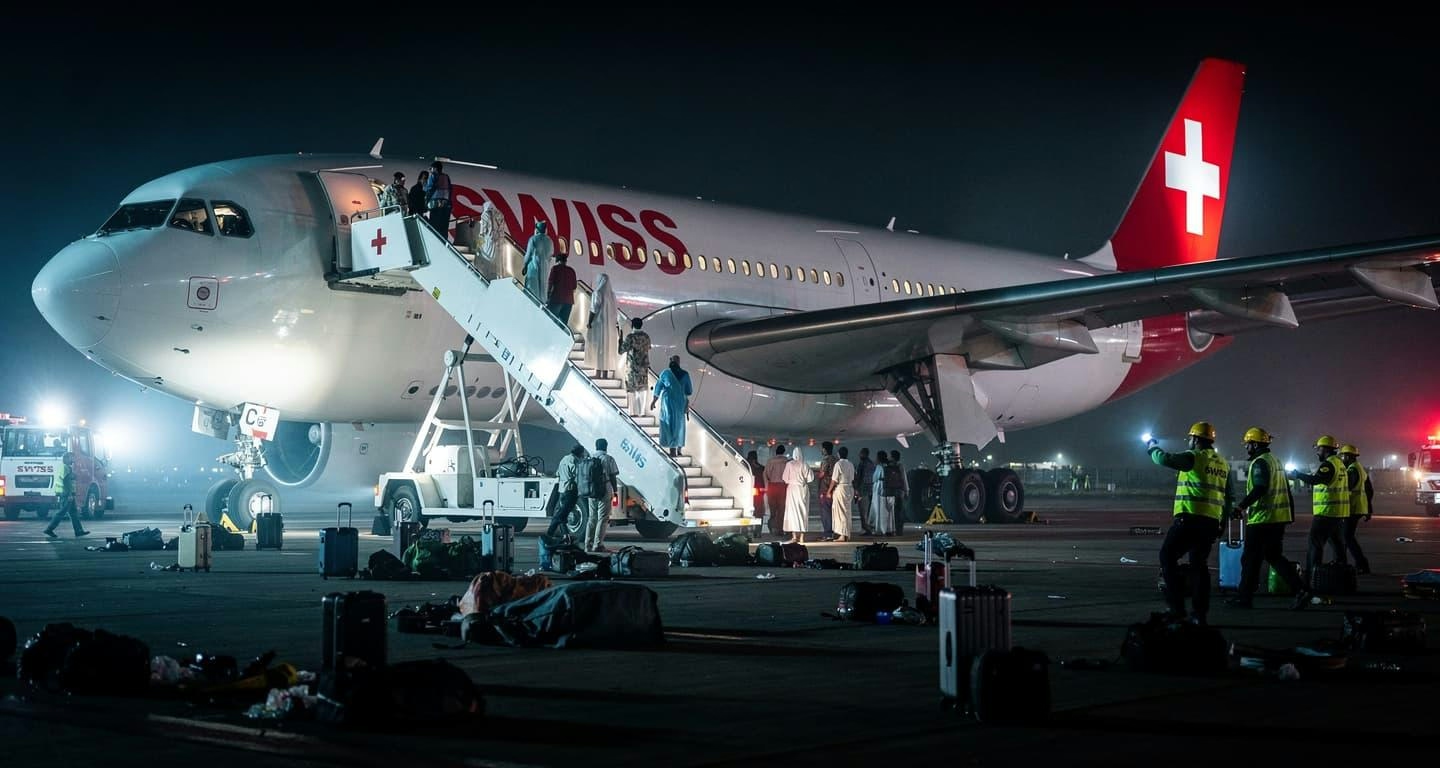
The Aircraft Accident Investigation Bureau (AAIB) has published its preliminary report on the engine failure that forced Swiss International Air Lines flight LX147 to abort take-off at Delhi’s Indira Gandhi International Airport on April 26. The incident, classified as a “serious incident,” involved an Airbus A330-343 carrying 232 passengers and 13 crew members, and resulted in injuries to six individuals.
Details of the Incident
The engine failure occurred at approximately 1:27 am during the take-off roll, when the aircraft was traveling at around 110 knots. The flight crew reported a “loud bang” accompanied by a large flame emanating from the left-hand engine (Engine No. 1). In response, the pilots immediately rejected the take-off and managed to bring the aircraft to a safe stop after it veered left on the runway. A full emergency response was activated at the airport, with all seven emergency gates opened to facilitate evacuation. Four passengers sustained injuries during the evacuation process.
Preliminary Findings and Technical Analysis
Initial inspections by the AAIB revealed the presence of small metal particles and debris in the exhaust section of the affected engine. Both the Solid State Flight Data Recorder and Cockpit Voice Recorder have been recovered for detailed examination. Investigators identified broken bolts and spacers within the high-pressure/intermediate-pressure bearing support located in the thrust reverser ducts. Additionally, high-pressure bleed valves were found to be partially obstructed by debris.
Borescope inspections uncovered damage to several critical engine components, including the High Pressure Turbine blades, Nozzle Guide Vanes, Intermediate and Low Pressure Turbine blades, as well as the High Pressure Compressor blades and stator vanes. The high-pressure and intermediate-pressure shafts were seized, which limited the extent of the inspection. Notably, no impact damage or blade distortion was observed in the Intermediate Pressure Compressor, although its shaft was also seized.
Ongoing Investigation and Broader Implications
The AAIB continues to analyze the engine components and flight recorder data to establish the root cause of the failure. The investigation is being supported by France’s Bureau of Enquiry and Analysis for Aviation Safety (BEA), which has appointed an accredited representative. Airbus and the European Union Aviation Safety Agency (EASA) are also actively involved in the inquiry.
Beyond the technical aspects, the incident has raised significant concerns for Swiss International Air Lines. The engine failure and emergency evacuation may affect the airline’s reputation and invite heightened scrutiny from regulatory bodies. Financial repercussions could arise from compensation claims and insurance liabilities, while market confidence may be influenced by potential fluctuations in the airline’s stock price. Competitors might leverage the situation by highlighting their own safety records or promoting alternative routes to attract passengers.
The AAIB has indicated that further safety recommendations may be forthcoming as the investigation advances.

Etihad Airways Suspends Airbus A380 Flights on Key Route

Aditya Birla Group Seeks Approval for Aircraft Leasing in GIFT City

Qatar Airways Highlights Innovation and Connectivity at Arabian Travel Market 2026

Hong Kong's Five-Year Plan Includes Andrew Fan's Aircraft Parts Processing Hub Proposal

ACIA Aero Leasing Delivers ATR72-600 to Air Nostrum

RTX Appoints Jill Albertelli as Head of Pratt & Whitney

TAT Technologies Joins Beyond Aero Hydrogen Aircraft Program

AURAK Study Highlights Barriers to Air Taxi Adoption in Emerging Economies

Xiamen Air Selects Altitude for 787 Maintenance at Heathrow

Etihad and Swissport Extend Global Partnership
