Изображение

AeroGenie — Ваш интеллектуальный второй пилот.

Спрашивайте что угодно. Анализируйте все. Действуйте незамедлительно.

В тренде

Categories

Rolls-Royce Secures $1.8 Billion Order from Air China
April 16, 2026By ePlane AI
Rolls-Royce Secures $1.8 Billion Order from Air China
0
0
Rolls-Royce
Air China
Trent XWB Engines

Rolls-Royce Secures $1.8 Billion Engine Order from Air China

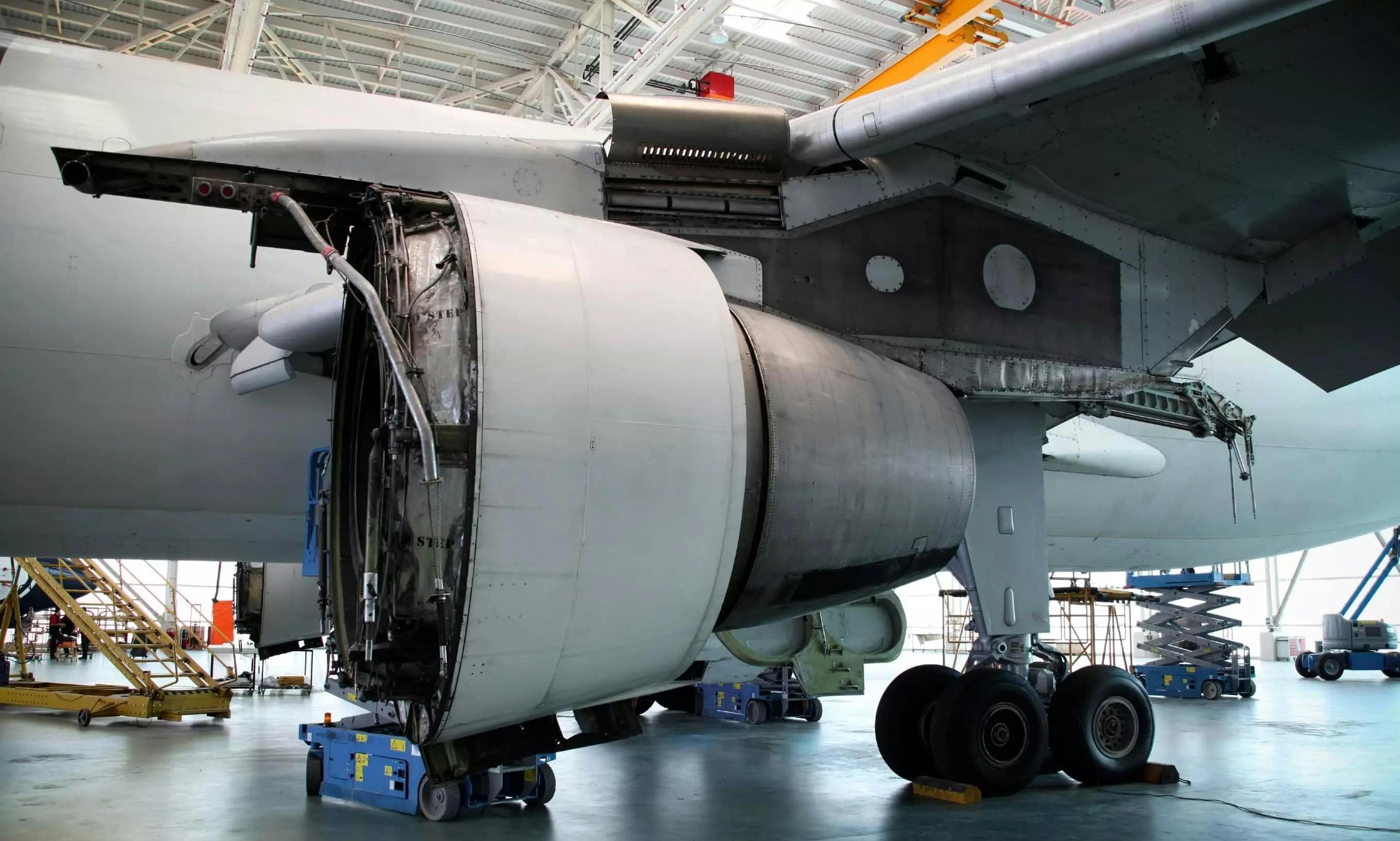
LONDON – Rolls-Royce has secured a $1.8 billion contract to supply engines for 20 new Airbus long-haul aircraft ordered by Air China, marking a significant achievement for the British engineering firm in the rapidly expanding Chinese aviation market. The agreement involves the provision of Trent XWB engines for 10 Airbus A350 XWB aircraft and Trent 700 engines for 10 A330 jets, reinforcing Rolls-Royce’s dominant position in China, where it currently commands a 56 percent market share for large civil aero engines.

Strengthening Presence in the Chinese Market

The deal highlights the growing demand for additional aircraft capacity in China, a market that Rolls-Royce describes as “fast growing” with substantial potential. The company’s success in securing this substantial order reflects its strong reputation and well-established relationships within the region. He Li, Air China’s senior vice president, expressed confidence in the partnership, noting the airline’s continued reliance on Rolls-Royce engines. “We look forward to bringing the Trent XWB into service with our airline to provide us with fuel-efficient power for the A350 XWB and adding to our Trent 700-powered fleet,” He Li said. “We have now selected this engine on four separate occasions. Our Trent-powered fleet now stands at 78 aircraft either in service or on order.”

The Trent XWB engine was specifically developed for the Airbus A350 XWB, while the Trent 700 is widely used on the A330. Both are twin-engine models renowned for their efficiency and reliability, qualities that remain critical as airlines seek to optimize fuel consumption and operational performance.

Challenges and Market Implications

This major contract arrives at a pivotal moment for Rolls-Royce, which recently faced scrutiny following a Trent 900 engine failure on a Qantas Airbus A380 that necessitated an emergency landing. The company now confronts the challenge of delivering high-quality engines on schedule to maintain its competitive advantage and reassure customers of its reliability.

Market analysts suggest that the Air China order could bolster investor confidence in Rolls-Royce’s capacity to secure large-scale contracts, potentially enhancing its stock performance. The deal also intensifies competition within the aero engine sector, as rivals such as General Electric and Pratt & Whitney are expected to increase efforts to win similar contracts, particularly in the lucrative Chinese market.

With global demand for air travel continuing to rise, especially across Asia, competition among engine manufacturers for major airline contracts is set to intensify. Timely delivery and product quality will remain decisive factors in securing and maintaining these critical partnerships.

More news
US Aviation Capital Group Names Rob Downes Chief OEM Officer

US Aviation Capital Group Names Rob Downes Chief OEM Officer

US Aviation Capital Group Appoints Rob Downes as Chief OEM Officer Aviation Capital Group (ACG), a prominent global aircraft leasing and asset management firm, has announced the appointment of Rob Downes as its inaugural Chief Original Equipment Manufacturer (OEM) Officer. This newly established executive position reflects ACG’s strategic intent to deepen its partnerships with OEMs and to advance its long-term aircraft leasing objectives. Strengthening OEM Partnerships and Strategic Focus Rob Downes brings extensive expertise in aircraft operations, strategic alliances, and supplier relations to his new role. He will be responsible for managing ACG’s interactions with leading aircraft and engine manufacturers, ensuring the company remains closely aligned with evolving industry trends. His leadership is expected to enhance ACG’s access to the latest fleets and technological innovations, thereby expanding the company’s aircraft offerings and improving service delivery to its diverse global clientele, which includes both airlines and cargo operators. The creation of the Chief OEM Officer role comes amid intensifying competition and shifting market dynamics within the aviation sector. Strong OEM relationships have become increasingly critical for leasing companies aiming to secure advantageous terms, tailor lease agreements, and obtain comprehensive maintenance support. Downes will collaborate closely with manufacturers to facilitate new aircraft deliveries and support ACG’s broader growth ambitions. Industry Context and Market Implications This strategic appointment occurs against a backdrop of broader industry developments. Competitors such as Archer Aviation have recently taken assertive measures to protect their market positions, exemplified by Archer’s complaint to the US International Trade Commission alleging import and tariff violations by rival Joby Aviation. Such disputes underscore the competitive pressures confronting aircraft lessors and manufacturers alike. Leadership changes like Downes’ appointment often elicit varied market responses; while some investors perceive them as positive initiatives to bolster market standing, others express caution regarding potential shifts in competitive dynamics. Rival firms may respond with their own strategic maneuvers or public affirmations of their strengths. ACG’s decision to establish a dedicated Chief OEM Officer role signals a clear focus on sustainable growth as the aviation industry continues its recovery from the pandemic. Rising demand for new aircraft, driven by the resurgence of global travel, fleet modernization efforts, and airlines’ commitments to sustainability, underscores the importance of robust OEM partnerships. By strengthening these relationships, ACG aims to secure access to cutting-edge aircraft and position itself advantageously within a rapidly evolving market. With Rob Downes leading its OEM engagement, Aviation Capital Group is well-positioned to reinforce its leadership in the aircraft leasing sector and to deliver enhanced value to customers worldwide.
European Aviation Authorities Certify RTX’s GTF Advantage Engine

European Aviation Authorities Certify RTX’s GTF Advantage Engine

European Aviation Authorities Certify RTX’s GTF Advantage Engine for Airbus A320neo Certification and Performance Enhancements The European Union Aviation Safety Agency (EASA) has officially certified RTX’s GTF Advantage engine for use on the Airbus A320neo family, marking a pivotal achievement for both the engine manufacturer and the European aviation industry. Developed by Pratt & Whitney, RTX’s engine manufacturing division, the GTF Advantage offers a notable increase in take-off thrust, delivering between 4% and 8% more power compared to its predecessor. This enhancement allows airlines to carry heavier payloads and extend the operational range of their narrowbody aircraft, addressing the growing demand for efficient aircraft capable of servicing longer routes without resorting to larger, less fuel-efficient widebody jets. In an era where airlines are under increasing pressure to reduce operational costs and lower emissions, the GTF Advantage’s improved fuel efficiency and performance position it as a critical technology for carriers aiming to expand their route networks while adhering to stricter environmental regulations. Regulatory Challenges and Industry Dynamics EASA’s certification of the GTF Advantage comes amid intensified regulatory scrutiny of emerging engine technologies. European authorities are tasked with balancing stringent environmental and safety standards against the rapid pace of innovation within the aviation sector. The rise of alternative propulsion systems, including electric and hybrid-electric models such as ZeroAvia’s ZA601, is reshaping expectations for sustainability and technological advancement. The certification process has also unfolded against a backdrop of ongoing tensions between Airbus and Pratt & Whitney, particularly concerning engine supply issues and production delays. Pratt & Whitney has been managing the repercussions of a manufacturing defect revealed in July 2023, which resulted in the grounding of over a thousand aircraft worldwide and prompted comprehensive quality inspections. Despite these challenges, RTX plans to adopt the GTF Advantage as its standard production engine, with intentions to phase out the earlier GTF model by 2028. Market Implications and Competitive Landscape The GTF Advantage engine is designed to be fully interchangeable with existing Pratt & Whitney GTF engines, providing airlines with operational flexibility during fleet upgrades. The certification is expected to generate positive market momentum, driven by the engine’s proven reliability and enhanced efficiency. This development is likely to prompt competitors to accelerate improvements in their own engine technologies to maintain competitiveness. The U.S. Federal Aviation Administration granted certification to the GTF Advantage in February 2025, reinforcing its regulatory acceptance. EASA has not provided immediate comments on the certification process. As the aviation industry continues to emphasize sustainability and operational efficiency, the approval of the GTF Advantage engine represents a significant advancement for RTX, Airbus, and the airlines seeking to modernize their narrowbody fleets.
Rosen IFE and CMS Installed on V/VIP Widebody Aircraft

Rosen IFE and CMS Installed on V/VIP Widebody Aircraft

Rosen IFE and CMS Installed on V/VIP Widebody Aircraft Rosen Aviation has announced its role in outfitting an undisclosed V/VIP widebody aircraft with a comprehensive suite of advanced in-flight entertainment (IFE) and cabin management system (CMS) solutions. Although the specific aircraft model remains confidential and no images have been released, Rosen confirmed the installation of multiple 4K OLED displays, including what it describes as “the world’s largest” home cinema-scale IFE screen. This bespoke display was developed entirely in-house and achieved certification while weighing 100 pounds less than the specified limit. Advanced Cabin Technology and Integration Challenges The aircraft is also equipped with Rosen’s Celestia CMS platform, launched in 2025, which provides extensive passenger and crew control alongside seamless integration of IFE and content distribution. Designed to address the evolving requirements of both V/VIP and commercial aviation, the Celestia system offers a unified interface that enhances the overall cabin experience by combining entertainment and management functions. Integrating such sophisticated IFE and CMS technologies into V/VIP widebody aircraft presents significant technical challenges. Maintaining high-speed, low-latency satellite connectivity is increasingly vital, particularly as operators demand greater satcom redundancy to ensure uninterrupted service. As the appetite for more complex onboard systems grows, Rosen and its competitors face the task of overcoming these hurdles to deliver reliable, high-performance solutions. Market Dynamics and Industry Implications The market for customized widebody VIP completions is becoming increasingly competitive, especially in sectors such as aircraft floor panels and cabin systems. Unlike narrowbody fleets, which often utilize commoditized solutions, the bespoke nature of widebody VIP projects is driving innovation and differentiation among suppliers. This trend carries broader implications for major airlines. For example, American Airlines, with a relatively modest backlog of new widebody aircraft orders, risks falling behind competitors like Delta and United in the ongoing “aircraft arms race” to provide the most advanced onboard experiences. Reflecting on Rosen’s progress, Lee Clark, Senior Vice President of Strategy at Rosen Aviation, remarked, “After many decades of essentially owning the business aviation IFE space, and witnessing our rapid ascension in V/VIP and even commercial aviation, moments like this make me take pause and appreciate just how far we’ve come. Even more exciting is the plethora of opportunity ahead that we have yet to achieve. With confidence, I can say we are actively seizing each moment through constant evolution and a unique, agile approach to doing business. Working with Rosen is every bit about our dedicated culture, fearless design ethos, and our principles of unyielding customer support as it is about our industry-leading technologies.” As Rosen continues to expand its presence in the V/VIP and commercial aviation sectors, its commitment to innovation, reliability, and customer support will be crucial in navigating the technological and competitive challenges shaping the future of aircraft interiors.
El Al Upgrades Dreamliner Orders to Larger 787-10 Model and Adds New Aircraft

El Al Upgrades Dreamliner Orders to Larger 787-10 Model and Adds New Aircraft

El Al Upgrades Dreamliner Orders to Larger 787-10 Model and Expands Fleet Amid Market Challenges El Al has announced a significant revision to its Boeing 787 order book, opting to upgrade its existing Dreamliner orders to the larger 787-10 variant while expanding its long-haul fleet. The Israeli flag carrier has converted three previously ordered 787-9 aircraft into 787-10s and exercised an option for a fourth 787-10, signaling a strategic shift toward higher-capacity jets on its core international routes. The agreement also includes options for up to six additional Dreamliners, potentially increasing El Al’s total 787 fleet to 34 aircraft by the early 2030s. Fleet Expansion and Capacity Enhancement Currently, El Al operates 17 Dreamliners, comprising four 787-8s and 13 787-9s, with two more leased aircraft expected to join the fleet shortly, bringing the near-term total to 19. The 787 family already serves as the backbone of El Al’s long-haul network, replacing older widebody aircraft and connecting key destinations across North America, Europe, and Asia. The introduction of the 787-10 reflects the airline’s focus on increasing seat capacity to accommodate anticipated growth in passenger traffic at Tel Aviv’s Ben Gurion Airport. In El Al’s configuration, the 787-9 seats 271 passengers across three classes, while the larger 787-10 can carry approximately 300 or more, depending on the layout. Although the 787-10 offers a substantial increase in seat supply, it features a slightly reduced range compared to the 787-9. El Al’s widebody fleet also includes six Boeing 777-200s, each configured with 313 seats. However, these older aircraft are expected to be phased out as the new Dreamliners enter service. The revised agreement with Boeing is valued at approximately $1.5 billion, subject to final configuration and pricing. Market Challenges and Strategic Considerations El Al’s fleet expansion occurs amid broader industry challenges. The decision to upgrade to the larger 787-10 and add new aircraft exposes the airline to potential production delays and increased costs associated with this variant. Market analysts have noted that the substantial investment—particularly the $1.5 billion deal for six additional Dreamliners—may invite scrutiny regarding El Al’s financial position and long-term strategic planning. Responses from competitors further illustrate the complexities of the widebody market. For instance, All Nippon Airways (ANA) recently shifted some of its 787-10 orders back to the smaller 787-9, reflecting a more cautious approach to the 787-10’s market suitability. These developments highlight the challenges El Al faces in balancing capacity growth with operational flexibility and financial discipline. Despite these hurdles, El Al emphasizes that the fleet renewal is critical to aligning its capacity with projected demand and modernizing its long-haul operations for the years ahead.
AirAsia Faces Multiple Engine Failures and Bird Strikes Amid Recent Emergencies

AirAsia Faces Multiple Engine Failures and Bird Strikes Amid Recent Emergencies

AirAsia Confronts Multiple Engine Failures and Bird Strikes Amid Aviation Safety Challenges AirAsia has recently experienced a series of significant emergencies involving engine failures and bird strikes, raising concerns about operational safety within an increasingly complex aviation environment. These incidents have drawn public attention, yet the airline’s prompt responses and rigorous crew training have been credited with effectively managing risks and safeguarding passengers. Notable Incidents and Operational Responses One of the most serious events occurred on June 25, 2017, when AirAsia X flight D7237, operating an Airbus A330, suffered an engine failure mid-flight over Australia. Passengers reported violent shaking and severe turbulence as the aircraft endured intense airframe vibrations. The flight crew executed a rapid descent and emergency landing in Perth, with their decisive actions playing a crucial role in preventing a catastrophe. This incident underscored the unpredictable nature of air travel and the importance of crew preparedness. Shortly thereafter, on July 3, 2017, another AirAsia A330 encountered a bird strike during takeoff from Gold Coast Airport. Multiple lapwing plovers were ingested into the engine, igniting a visible fire and necessitating an emergency diversion to Brisbane. This event highlighted the ongoing threat bird strikes pose to aviation safety and prompted a reassessment of wildlife management strategies around airports. Earlier in the same year, on March 5, AirAsia X flight 9M-XXS encountered severe turbulence over Vietnam, which caused the autopilot and autothrust systems to disconnect. The captain was compelled to manually control the aircraft through significant altitude fluctuations, creating distress among passengers. Despite the challenging conditions, the crew’s professionalism ensured a safe landing. More recently, AirAsia has faced additional operational challenges, including a smoke scare in 2023 and a pressurization failure in 2024. These incidents have further tested the airline’s crisis management capabilities and led to strengthened safety protocols, with particular emphasis on engine reliability and emergency preparedness. Industry Context and Broader Implications These operational difficulties arise amid a period of heightened uncertainty in the global aviation sector. Airlines worldwide, including AirAsia, are grappling with rising fuel costs and volatile market conditions. In response, AirAsia recently appointed a new non-executive chairman tasked with guiding the company through these challenges. Industry analysts observe that incidents such as engine failures and bird strikes often trigger increased regulatory scrutiny and necessitate operational adjustments. Competitors are similarly responding by implementing fare increases and modifying capacity to mitigate the impact of higher costs and potential disruptions. Recent engine-related emergencies involving other carriers, such as Delta Air Lines’ Airbus A330, illustrate that these risks are not unique to AirAsia but reflect broader vulnerabilities within the aviation industry. As airlines adapt to evolving challenges, AirAsia’s experiences exemplify both the fragility and resilience inherent in modern air travel. Despite these challenges, AirAsia’s ongoing commitment to safety and rapid incident response continues to provide reassurance to passengers and regulators alike, even as the airline and the wider industry navigate an era marked by unprecedented complexity.
VietJet Air to Dry Lease Ten C909 Aircraft from Chinese Lessor

VietJet Air to Dry Lease Ten C909 Aircraft from Chinese Lessor

VietJet Air to Dry Lease Ten C909 Aircraft from Chinese Lessor VietJet Air has announced a significant fleet expansion through a dry lease agreement to acquire up to ten C909 regional jets from SPDB Financial Leasing, a subsidiary of Shanghai Pudong Development Bank. The deal, disclosed in an airline press release dated April 16, 2026, represents a deepening partnership between the Vietnamese carrier and the Chinese lessor. The aircraft will be financed via operating leases, although the delivery schedule remains undisclosed. Expansion of Regional Operations and Fleet Diversification The C909, a relatively new Chinese-built regional jet, has limited presence outside China. Currently, only two non-Chinese airlines operate the type: TransNusa with five aircraft and Lao Airlines with two. Additionally, Air Cambodia has announced plans to acquire ten units. VietJet Air is already acquainted with the C909, having previously wet-leased two aircraft from Chengdu Airlines for domestic routes to Con Dao. This initial wet lease began in April 2025, concluded in October 2025, and resumed approximately one month later. VietJet plans to deploy the C909s primarily on routes connecting Vietnam and China, complementing its broader strategy to strengthen its foothold in the regional market. Alongside the leasing agreement, the airline has unveiled five new routes to China. In early April 2026, VietJet launched flights from Hanoi Noi Bai International Airport to Enshi and from Ho Chi Minh City to Guilin. Additional services to Hangzhou and Huangshan, including a new Ho Chi Minh City–Huangshan route, are also scheduled to commence. Challenges and Strategic Implications Despite the promising expansion, VietJet’s decision to lease a substantial number of C909s carries inherent risks. The aircraft’s limited operational history outside China raises concerns regarding reliability and maintenance support. Industry analysts and investors may approach the financial commitment with caution, given the uncertainties involved in integrating a relatively new aircraft type into the airline’s existing fleet. Competitors might respond by reinforcing their use of more established aircraft models or optimizing their current fleets to offer more competitive pricing, potentially intensifying market competition. This move also highlights VietJet’s strategic positioning within the Asian aviation sector. Successfully incorporating the C909 could enhance the airline’s capacity to adopt new technologies and diversify its fleet. However, this will require meticulous management to mitigate operational challenges and market uncertainties. According to ch-aviation fleet data, VietJet currently operates a diverse in-house fleet comprising seventeen A320-200s, thirty-six A321-200s, eleven A321-200Ns, thirty-two A321-200NX jets, and eight A330-300s. SPDB Financial Leasing’s portfolio includes A320-200Ns, A321-200NX, A330-300, and B737-800 aircraft, with outstanding commitments for fifteen C909s and thirty-five C919-100STD jets. As VietJet advances with its fleet expansion and new China routes, industry observers will closely monitor how the airline manages the operational and market challenges associated with introducing the C909 into its network.
ANTAVIA Wins Héroux-Devtek ARC Contract

ANTAVIA Wins Héroux-Devtek ARC Contract

ANTAVIA Awarded Héroux-Devtek ARC Contract for Embraer Landing Gear Support ANTAVIA, a division of AMETEK MRO and a global provider of maintenance, repair, and overhaul (MRO) services for commercial and business aviation, has secured an Authorised Repair Centre (ARC) contract from Héroux-Devtek. This agreement appoints ANTAVIA as the authorised provider for the repair and overhaul of Embraer Legacy and Embraer Praetor landing gear equipment throughout Europe. Expertise and Capabilities Laurent Bouissou, DVP Business Manager at ANTAVIA, emphasized the company’s extensive experience with Héroux-Devtek-designed landing gear, supported by strong engineering resources and comprehensive in-house capabilities. ANTAVIA’s expertise encompasses non-destructive testing, machining, surface treatment, and painting, enabling the company to meet the stringent turnaround times and quality standards demanded by business jet operators. Marc-Olivier Gagnon, Vice President of Engineering & Product Support at Héroux-Devtek, welcomed ANTAVIA into the company’s network of Authorised Repair Centres. He highlighted ANTAVIA’s technical proficiency, responsiveness, and established quality processes as key factors positioning the company to effectively support operators across the region. Strategic Implications and Market Context The contract not only expands ANTAVIA’s authorised landing gear repair capabilities but also strengthens its footprint in the business jet aviation market. Bouissou noted that the agreement reflects ongoing investments in tooling, engineering expertise, and infrastructure at ANTAVIA’s facilities in Paris and Campsas (Toulouse). This development occurs within a competitive aerospace market where rival firms may respond by enhancing their own service offerings or negotiating more advantageous terms with clients. Such competitive dynamics could impact market conditions, including potential fluctuations in stock prices for ANTAVIA and its competitors, contingent on investor confidence in the contract’s value and ANTAVIA’s execution capabilities. Competitors might also intensify marketing efforts, adjust pricing strategies, or accelerate technological innovation to maintain or increase their market share. The aviation industry continues to grapple with supply chain challenges and rising production costs, prompting original equipment manufacturers (OEMs) to concentrate on core manufacturing activities while outsourcing MRO functions to specialised partners. In this context, partnerships with trusted MRO providers like ANTAVIA are increasingly critical to avoiding production disruptions, meeting operator demand, and sustaining service quality. With this new ARC contract, ANTAVIA is positioned to play a pivotal role in supporting Embraer business jet operators across Europe amid the evolving competitive landscape of the aerospace MRO sector.
Why the Airbus A350 Is More Fuel Efficient

Why the Airbus A350 Is More Fuel Efficient

Why the Airbus A350 Is More Fuel Efficient The introduction of the Boeing 787 Dreamliner in 2011 marked a significant milestone in commercial aviation, showcasing a range of advanced technologies that initially caught Airbus by surprise. Boeing’s early lead allowed the 787 to become the best-selling widebody aircraft, but Airbus responded decisively with the launch of the A350 in 2015. Since then, the A350 has garnered widespread recognition for its innovative design and superior fuel efficiency. While both the Boeing 787 and Airbus A350 represent major advancements in fuel economy compared to earlier models, the A350 distinguishes itself by achieving these efficiencies in a larger airframe. The 787’s success has been driven in part by its smaller variants, but the A350 has emerged as a strong competitor, particularly against the 787-10 and the upcoming Boeing 777X. Engineering Innovations: The A350’s Structural Advantage The A350’s fuel efficiency is largely attributed to its extensive use of carbon fiber reinforced plastic (CFRP) in the fuselage, wings, and other key structural components. This advanced composite material enables Airbus to reduce the aircraft’s weight by between 15% and 30%, equating to as much as 20 tons less than traditional aluminum construction. The aircraft’s four-panel carbon fiber fuselage design allows engineers to vary panel thickness strategically, reinforcing high-stress areas while minimizing weight elsewhere. These panels are cured in large autoclaves, producing a structure that is lighter than aluminum yet stronger than steel. This reduction in weight offers several operational benefits. The lighter airframe allows the A350 to reach takeoff rotation speed more rapidly, thereby shortening the high-thrust phase of flight, which is the most fuel-intensive. It also climbs more efficiently to cruising altitude, where engines operate at optimal efficiency, and maintains a flatter flight profile that reduces aerodynamic drag, further conserving fuel. Advanced Powerplants: Rolls-Royce Trent XWB Engines Integral to the A350’s performance are its Rolls-Royce Trent XWB turbofan engines, which were specifically developed for this aircraft. Two variants power the A350-900 and A350-1000 models, both featuring a 118-inch fan diameter and a sophisticated three-shaft design. The XWB-97 engine, used on the larger A350-1000, incorporates a 5% larger core and operates at a 6% higher fan speed, optimizing thrust and efficiency for the bigger airframe. Rolls-Royce continues to refine these engines, enhancing fuel savings and reliability through ongoing improvements. Operational Impact and Airline Adoption The A350’s fuel efficiency has translated into tangible benefits for airlines. KLM, for example, has reported that the A350 consumes 25% less fuel than its Boeing 777-200ER fleet, a critical factor in its decision to renew its long-haul aircraft. Similarly, Qantas has conducted flight tests with the A350-1000, aiming to reduce flight times by up to four hours on long-haul routes by capitalizing on the aircraft’s extended range and fuel economy. In addition to its operational advantages, Airbus has invested in cabin innovations to enhance passenger comfort. The A350-1000’s advanced first-class design exemplifies the company’s commitment to combining efficiency with an improved travel experience. The Airbus A350’s integration of lightweight composite materials, cutting-edge engines, and innovative design features establishes it as a leader in fuel efficiency, offering airlines a compelling option to reduce both operational costs and environmental impact.
MIAT Mongolian Airlines Adopts RateGain’s AI Platform to Boost Pricing Agility

MIAT Mongolian Airlines Adopts RateGain’s AI Platform to Boost Pricing Agility

MIAT Mongolian Airlines Adopts RateGain’s AI Platform to Boost Pricing Agility MIAT Mongolian Airlines, the national carrier of Mongolia, has announced the adoption of RateGain Travel Technologies’ AirGain platform to enhance its pricing intelligence and rate shopping capabilities across Asia and Europe. This strategic move aims to improve the airline’s pricing agility and competitiveness in a highly price-sensitive market, supporting its ambitions for international expansion. Leveraging AI for Real-Time Market Intelligence By integrating AirGain’s AI-driven market intelligence, MIAT will gain access to high-frequency fare tracking and detailed route-level performance insights. The platform aggregates real-time competitive data from hundreds of airlines, online travel agencies, and meta-search engines into a unified interface. This comprehensive data environment is designed to facilitate faster, data-driven pricing decisions and promote fare consistency across multiple sales channels. While the adoption of advanced AI technology offers significant advantages, it also presents challenges. The integration of AirGain into MIAT’s existing systems may involve complex technical adjustments, and there may be resistance from staff accustomed to traditional pricing methodologies. Furthermore, the AI platform will require continuous updates and maintenance to remain effective amid the rapidly evolving dynamics of the airline industry. Industry Implications and Future Developments MIAT’s embrace of AI-powered pricing tools reflects a broader trend of technological innovation within the travel sector, as companies increasingly turn to artificial intelligence and infrastructure advancements to navigate economic pressures and competitive tariff environments. This initiative is expected to enhance MIAT’s market position by enabling more dynamic and responsive fare strategies, potentially attracting a larger customer base. Market analysts suggest that MIAT’s decision could prompt other airlines to adopt similar AI platforms to sustain their competitive edge. Alternatively, some competitors may choose to differentiate themselves through superior service quality or expanded route networks. The ongoing proliferation of AI technologies in travel and hospitality underscores the critical role of innovation in revenue management and customer acquisition. For RateGain, the partnership with MIAT strengthens its footprint in the airline industry and marks a significant step in the evolution of its AirGain platform toward becoming a comprehensive AI-powered decision assistant. The company is also preparing to launch Smart Search, a natural-language processing feature designed to further distinguish its offerings and solidify its leadership in airline revenue optimization technology. RateGain Travel Technologies Limited currently serves over 13,000 customers and 700 partners across more than 160 countries, providing AI-powered SaaS solutions that help travel businesses accelerate revenue growth through enhanced customer acquisition, retention, and wallet share expansion. As MIAT Mongolian Airlines integrates AirGain into its operations, it joins a growing cohort of carriers modernizing their revenue management practices with advanced analytics, signaling a continued industry-wide shift toward data-driven decision-making in aviation.
MIAT Mongolian Airlines Selects AirGain for Pricing Solutions

MIAT Mongolian Airlines Selects AirGain for Pricing Solutions

MIAT Mongolian Airlines Selects AirGain to Enhance Pricing Strategy MIAT Mongolian Airlines, the national flag carrier of Mongolia, has entered into a strategic partnership with RateGain Travel Technologies Limited to adopt the AirGain platform. This collaboration aims to bolster MIAT’s pricing intelligence capabilities and strengthen its competitive positioning amid a rapidly evolving aviation market. Partnership and Platform Capabilities Established in 1956, MIAT Mongolian Airlines operates routes connecting Mongolia with key destinations across Asia and Europe. Facing intensified competition and dynamic market conditions, the airline has turned to AirGain’s AI-driven pricing solution to enhance its fare monitoring, rate shopping, and competitive analysis functions. The platform delivers daily, automated route-level insights through its AI-powered Route Performance Digest, enabling MIAT to identify pricing gaps and shifts in performance promptly. AirGain’s extensive market coverage spans over 300 airlines, more than 170 online travel agencies, and upwards of 50 meta-search platforms, ensuring comprehensive data aggregation. The system boasts a 99.95% uptime, providing reliable and intuitive analytics that allow MIAT to track fare movements, detect early market changes, and respond swiftly to competitor strategies. Executive Insights on Competitive Intelligence Erdene-Ochir Bat-Unen, Senior Marketing Officer at MIAT Mongolian Airlines, highlighted the critical role of real-time competitive intelligence in effective pricing decisions. He noted that the insights provided by AirGain’s dashboard offer the revenue management team immediate clarity on fare positioning, demand fluctuations, and competitor activity, thereby enhancing decision-making processes. Vinay Varma, Senior Vice President and General Manager at AirGain, expressed enthusiasm about the partnership, emphasizing the importance of consolidated, clear insights in markets characterized by rapidly shifting demand patterns and multi-regional competition. Market Implications and Challenges MIAT’s adoption of AirGain occurs within a highly competitive aviation environment where pricing strategies are pivotal to market success. The integration of advanced pricing intelligence tools is expected to enable the airline to respond more effectively to changing demand and competitor actions. This move may also encourage rival carriers to upgrade their pricing technologies or implement similar solutions, potentially triggering broader shifts in regional pricing dynamics and customer perceptions. While the deployment of AI-driven platforms positions MIAT for sustained competitiveness, it may also entail short-term operational challenges. The integration process requires considerable investment and time before the full advantages of the technology can be realized. Future Developments and Strategic Positioning Looking forward, AirGain plans to launch Smart Search, an innovative natural-language interface that will allow revenue managers to pose pricing queries directly and receive immediate, contextual insights. This advancement aims to transcend traditional monitoring tools by providing airlines with an AI-powered decision assistant to enhance agility. This partnership further solidifies RateGain’s growing presence in airline technology, with the company now serving four of the world’s top five airlines and supporting operations in over 160 countries. MIAT Mongolian Airlines’ selection of AirGain underscores the platform’s versatility across diverse markets and operational requirements, reinforcing its status as a leading solution in the evolving airline industry.
line










