
Превращайте аналитические выводы ИИ в реальные действия

В тренде
Categories
Tel Aviv Plans First Vertiport to Support Air Taxi Services
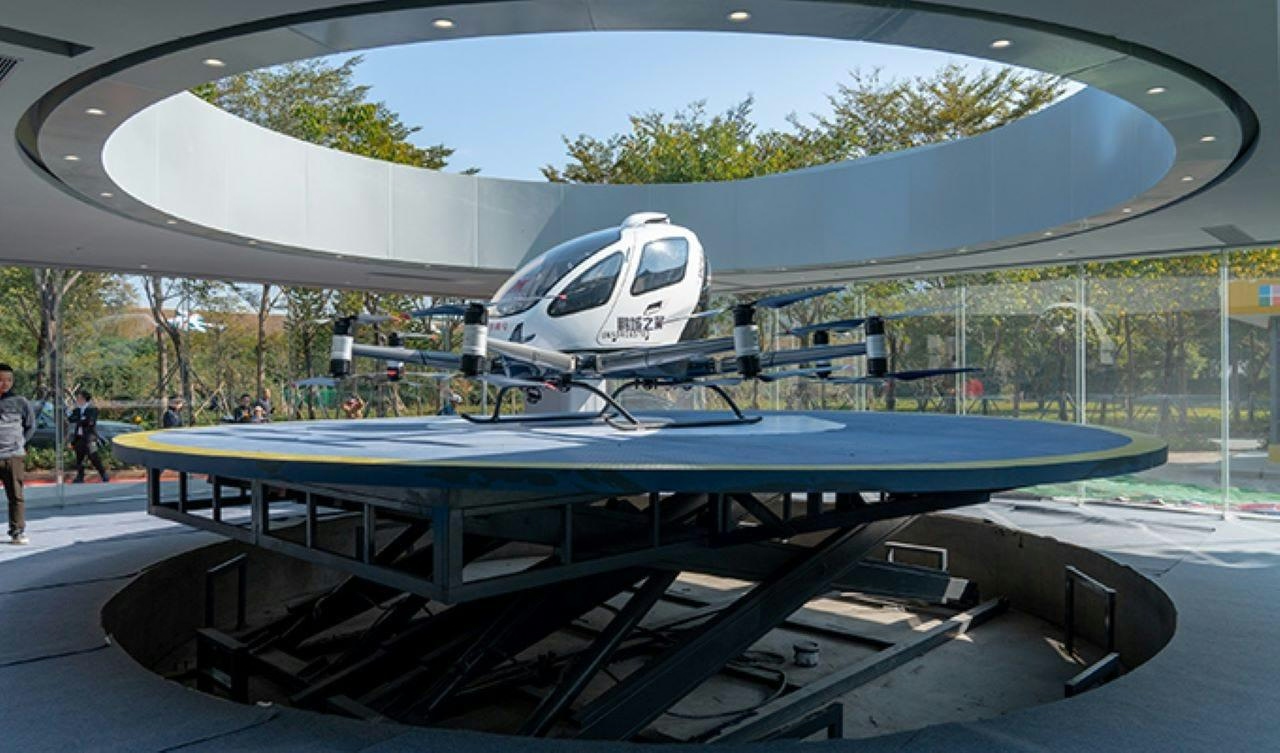
Tel Aviv to Establish Israel’s First Vertiport for Air Taxi Services
Tel Aviv is preparing to construct Israel’s inaugural vertiport dedicated to aerial taxis at Atidim Park, a prominent business and high-tech district. The ATIDIM Vertiport, anticipated to become operational within three years, will serve as a critical infrastructure hub for electric vertical takeoff and landing aircraft (eVTOLs). This development marks a significant advancement in urban air mobility for the region.
Initial Focus on Medical Aerial Logistics
In its initial phase, the vertiport will prioritize medical aerial logistics, functioning as a specialized center for the rapid transport of medical equipment, pharmaceuticals, and laboratory samples. A recent demonstration flight highlighted the project’s capabilities, featuring an autonomous drone that flew between temporary landing pads at Atidim Park and Medica Rafeal Hospital within the complex. The event, organized by Dronery—a company specializing in urban drone delivery—received approval from Israel’s Civil Aviation Authority and was attended by key municipal officials, including Tel Aviv-Jaffa city engineer Udi Carmeli and city architect Yoav David.
The initiative seeks to alleviate transportation challenges in Israel’s densely populated metropolitan area. Project leaders estimate that aerial transport could reduce travel times by 60 to 80 percent compared to private vehicles, potentially saving millions of hours monthly and generating substantial economic benefits.
Development and Regulatory Challenges
The project is led by Atidim Park Tel Aviv through ATI (Air Taxi Israel), an entity focused on the development, regulation, and future operation of advanced aerial mobility infrastructure. ATI operates within CityZone, an urban innovation laboratory and smart-city technology testing ground located at the park. The vertiport has been designated as a primary pilot site in a national initiative spearheaded by the Israel Innovation Authority.
Despite the promising outlook, several challenges remain. Regulatory approval for passenger-carrying eVTOL operations is a significant obstacle, alongside the necessity for comprehensive infrastructure development and rigorous safety protocols applicable to both medical and future passenger flights. Additionally, the efficient integration of aerial mobility with existing urban transportation systems will be essential for the project’s success.
Market Interest and Future Prospects
The project has garnered positive market reactions, with increasing interest from urban air mobility companies eager to engage in Israel’s emerging sector. International competitors such as Joby Aviation and Archer are concurrently expanding their vertiport networks, and Tel Aviv’s initiative may accelerate their development and regulatory efforts to secure a foothold in the region.
Looking forward, the ATIDIM Vertiport is expected to extend its services beyond medical logistics. Regulatory and planning processes are underway to certify the facility for commercial electric air taxi operations. Eyal Zahavi, CEO of ATI, emphasized the transformative potential of the technology, stating, “Quiet, electric aircraft with accessible operating costs represent a revolution. Commercial public service is expected within about three years, which makes now the right time to plan, build and regulate national and municipal infrastructure.”
If successful, this project could establish Tel Aviv as a pioneer in urban air mobility, setting a benchmark for other cities in Israel and internationally.

Etihad Airways Suspends Airbus A380 Flights on Key Route

Aditya Birla Group Seeks Approval for Aircraft Leasing in GIFT City

Qatar Airways Highlights Innovation and Connectivity at Arabian Travel Market 2026

Hong Kong's Five-Year Plan Includes Andrew Fan's Aircraft Parts Processing Hub Proposal

ACIA Aero Leasing Delivers ATR72-600 to Air Nostrum

RTX Appoints Jill Albertelli as Head of Pratt & Whitney

TAT Technologies Joins Beyond Aero Hydrogen Aircraft Program

AURAK Study Highlights Barriers to Air Taxi Adoption in Emerging Economies

Xiamen Air Selects Altitude for 787 Maintenance at Heathrow

Etihad and Swissport Extend Global Partnership
