
Превращайте аналитические выводы ИИ в реальные действия

В тренде
Categories
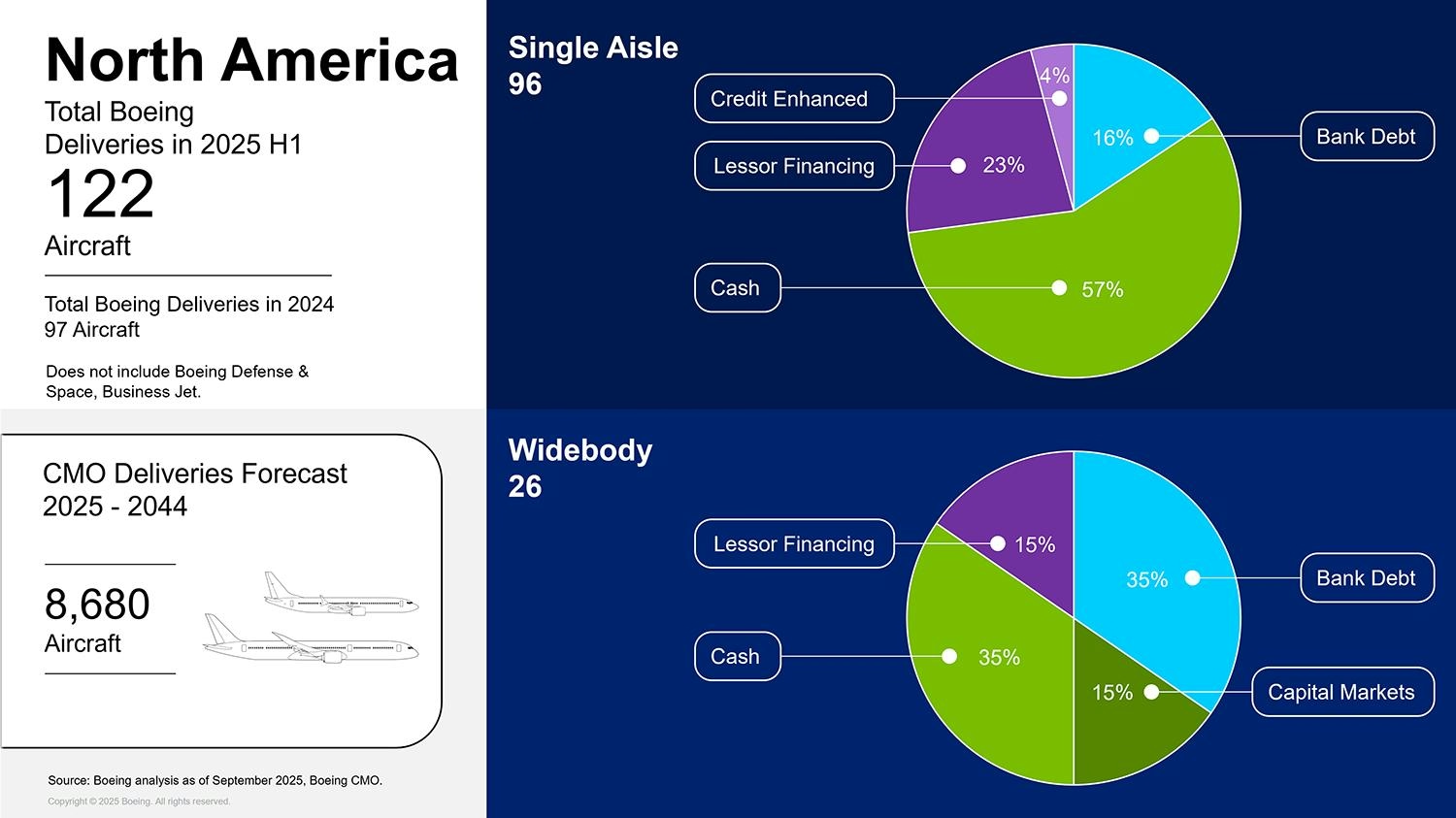
The Growth of Capital Markets in Aviation Financing
The Growth of Capital Markets in Aviation Financing
Aviation-linked debt listings on The International Stock Exchange (TISE) have experienced significant growth in recent years, reflecting strong investor demand and indicating a fundamental shift in how the global aviation industry secures capital. This trend is part of a broader transformation, with market-based financial instruments increasingly complementing traditional bank lending for aircraft acquisition, leasing platforms, and aviation infrastructure development.
Defining Aviation Finance
Aviation finance constitutes the international capital framework that supports the acquisition, operation, and long-term development of aircraft and related infrastructure. This financial system underpins a diverse range of stakeholders, including airlines, leasing companies, manufacturers, and service providers. It encompasses a variety of financing methods such as traditional bank loans, bonds, operating leases, export credit support, and capital market instruments like aircraft asset-backed securities (ABS).
Given that aircraft are high-value, technically complex, and subject to global regulatory oversight, their management requires robust legal, financial, and operational frameworks. These frameworks address cross-border risks, airline credit volatility, and residual value exposure, all of which are critical to the functioning of international air transport. They also influence fleet strategies and capital allocation decisions across the aviation industry.
Market Mechanics and Structural Shifts
The core mechanics of aviation finance involve the structuring, securing, and deployment of capital on a global scale. The system links aviation assets with funding through leasing arrangements and diverse financing channels. Transactions rely on carefully constructed legal entities, security packages, and jurisdictional frameworks that allocate risk among counterparties. Pricing is affected by factors such as airline creditworthiness, asset condition, maintenance schedules, as well as broader economic variables including interest rates, fuel prices, production output, travel demand, and geopolitical developments.
Over time, the sector has become increasingly market-driven. Bond issuance and securitization have emerged alongside traditional bank lending, expanding access to global liquidity. This evolution is closely connected to a defining characteristic of the industry: the central role of operating leasing in aircraft ownership.
The Leasing Transformation
Operating leasing has become the predominant model for commercial aircraft ownership. According to the International Air Transport Association, approximately 58% of the world’s commercial aircraft are leased rather than owned outright. This trend originated in Ireland during the late 1970s, when Guinness Peat Aviation pioneered large-scale operating leasing, enabling airlines to utilize aircraft without the capital burden of ownership. As aircraft have grown larger and more expensive, leasing has become an increasingly attractive and preferred structure throughout the sector.
A Complex Capital Ecosystem and Emerging Challenges
While leasing companies remain the most visible participants, aviation finance is supported by a broad and complex ecosystem. Banks, export credit agencies, private credit funds, institutional investors, and specialist aviation platforms provide capital through corporate bonds, syndicated loans, structured transactions, and an expanding array of public market products such as aircraft ABS. The sector encompasses the entire aviation value chain, from manufacturers requiring long-term funding to airlines employing a mix of debt, equity, leasing, and market-based financing.
However, the expansion of capital markets in aviation financing introduces new challenges. Regulatory fragmentation can create loopholes that facilitate illegal charters, undermining legitimate operators, as highlighted in recent industry reports. This situation has prompted calls for enhanced financial transparency, particularly within private aviation. In response, market participants are facing increased scrutiny and adapting their strategies accordingly. For example, airlines such as Brazil’s Azul are expanding their networks to navigate structural barriers. Meanwhile, demand for financing remains robust, exemplified by the U.S. Export-Import Bank’s support for innovative programs like Eve’s electric vertical takeoff and landing (eVTOL) aircraft, alongside continued activity in business jet financing by firms such as JetLoan Capital.
As the aviation sector continues to evolve, the interplay between traditional and market-based financing, regulatory oversight, and strategic adaptation will be pivotal in shaping its future capital landscape.

Etihad Airways Suspends Airbus A380 Flights on Key Route

Aditya Birla Group Seeks Approval for Aircraft Leasing in GIFT City

Qatar Airways Highlights Innovation and Connectivity at Arabian Travel Market 2026

Hong Kong's Five-Year Plan Includes Andrew Fan's Aircraft Parts Processing Hub Proposal

ACIA Aero Leasing Delivers ATR72-600 to Air Nostrum

RTX Appoints Jill Albertelli as Head of Pratt & Whitney

TAT Technologies Joins Beyond Aero Hydrogen Aircraft Program

AURAK Study Highlights Barriers to Air Taxi Adoption in Emerging Economies

Xiamen Air Selects Altitude for 787 Maintenance at Heathrow

Etihad and Swissport Extend Global Partnership
