
Превращайте аналитические выводы ИИ в реальные действия

В тренде
Categories
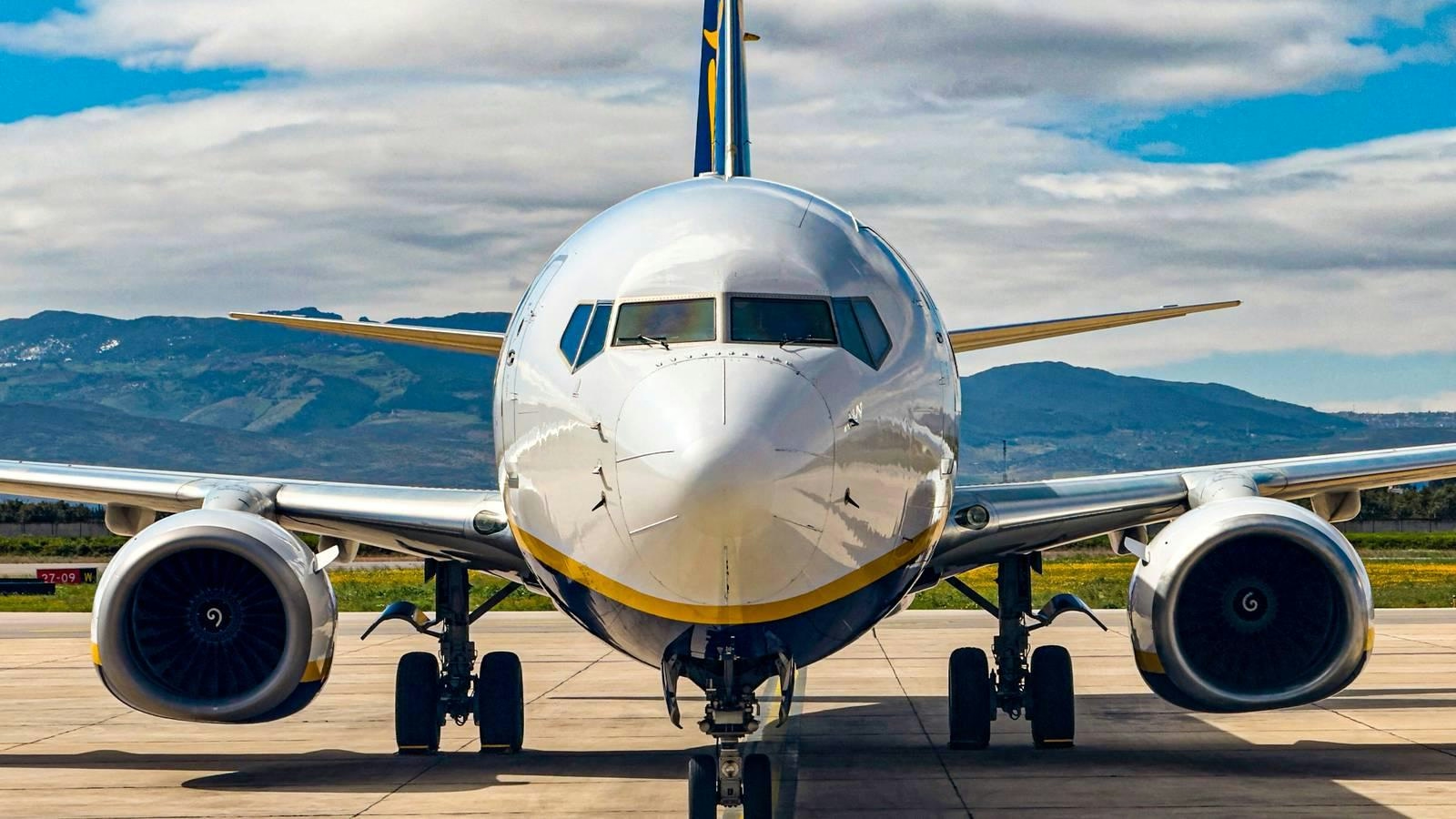
Top 5 U.S. Airlines by Narrowbody Fleet Size
Top 5 U.S. Airlines by Narrowbody Fleet Size
In 2026, single-aisle narrowbody aircraft continue to serve as the cornerstone of U.S. domestic aviation. Five major carriers dominate this segment, collectively operating the vast majority of these jets. American Airlines leads the field with a fleet approaching 900 narrowbody aircraft, comprising a mix of Boeing and Airbus models. Trailing closely are legacy carriers Delta Air Lines and United Airlines, each managing narrowbody fleets numbering well into the 800s. Southwest Airlines and Alaska Airlines complete the top five, maintaining substantial single-aisle operations that are critical to their networks.
Industry Challenges and Strategic Responses
Despite their dominant positions, these airlines face significant industry challenges. Rising labor costs, evolving credit card regulations, and ongoing supply chain disruptions are reshaping the competitive environment. Delta Air Lines, for instance, continues to emphasize premium service and benefits from strong cash flow, yet it is not immune to these pressures. United Airlines is in the midst of a major fleet renewal, incorporating new Boeing 737 MAX aircraft to enhance efficiency and competitiveness. However, supply chain delays and escalating costs threaten to complicate this process. In response, some carriers are adjusting their business models, shifting from traditional low-cost approaches toward premium offerings to sustain profitability amid these headwinds.
The Five Largest Narrowbody Fleets
Alaska Airlines – 337 Narrowbody Aircraft
Seattle-based Alaska Airlines operates the fifth largest narrowbody fleet in the United States, totaling 337 aircraft. The carrier’s mainline fleet consists exclusively of Boeing 737 variants, including 79 737-900ERs, 80 737 MAX 9s, 61 737-800s, along with smaller numbers of 737-700s and 737 MAX 8s. Following its merger with Virgin America, Alaska has streamlined its fleet by phasing out Airbus aircraft to simplify pilot training and maintenance operations. Its regional subsidiary, Horizon Air, operates 89 Embraer E175 jets, serving smaller West Coast markets and feeding traffic into Seattle. The relatively young E175 fleet offers enhanced passenger comfort compared to older regional jets.
Southwest Airlines – 800 Narrowbody Aircraft
Southwest Airlines operates the world’s largest Boeing 737 fleet, with approximately 800 narrowbody aircraft. Based in Dallas, the carrier’s fleet primarily comprises 310 737 MAX 8s, averaging 3.6 years in age, alongside 295 aging 737-700s, which average nearly 20 years, and 195 737-800s. Although the 737-700s are gradually being retired, they remain essential for servicing lower-demand routes. Southwest’s all-737 strategy has long supported its point-to-point network model, but the airline must navigate supply chain constraints that could affect future aircraft deliveries and fleet modernization efforts.
United Airlines
United Airlines operates one of the largest narrowbody fleets in the country, with numbers in the high 800s. The airline is actively engaged in upgrading its fleet by introducing new Boeing 737 MAX aircraft to improve operational efficiency and competitiveness. Nevertheless, persistent supply chain challenges pose risks of delivery delays and increased costs, injecting uncertainty into United’s ambitious fleet renewal plans.
Delta Air Lines
Delta’s narrowbody fleet also numbers in the 800s and includes both Boeing and Airbus aircraft. The airline’s focus on premium service and its robust cash flow have helped it maintain a strong market position despite industry-wide challenges such as rising labor costs and regulatory changes. Delta’s strategy increasingly emphasizes premium offerings as a means to differentiate itself in a highly competitive market.
American Airlines
American Airlines leads the U.S. narrowbody segment with nearly 900 aircraft, split between Boeing and Airbus models. This extensive fleet supports American’s broad domestic and short-haul international network. Like its competitors, American faces pressures from labor, regulatory, and supply chain factors as it strives to maintain its leadership position.
As the U.S. airline industry continues to evolve amid shifting market dynamics and operational challenges, the size and composition of these narrowbody fleets will remain central to each carrier’s strategic planning and competitive standing.

Etihad Airways Suspends Airbus A380 Flights on Key Route

Aditya Birla Group Seeks Approval for Aircraft Leasing in GIFT City

Qatar Airways Highlights Innovation and Connectivity at Arabian Travel Market 2026

Hong Kong's Five-Year Plan Includes Andrew Fan's Aircraft Parts Processing Hub Proposal

ACIA Aero Leasing Delivers ATR72-600 to Air Nostrum

RTX Appoints Jill Albertelli as Head of Pratt & Whitney

TAT Technologies Joins Beyond Aero Hydrogen Aircraft Program

AURAK Study Highlights Barriers to Air Taxi Adoption in Emerging Economies

Xiamen Air Selects Altitude for 787 Maintenance at Heathrow

Etihad and Swissport Extend Global Partnership
