Изображение

AeroGenie — Ваш интеллектуальный второй пилот.

Спрашивайте что угодно. Анализируйте все. Действуйте незамедлительно.

В тренде

Categories

TrueNoord Leases Two ATR 72-600 Aircraft to Indian Regional Airline FLY91
February 8, 2026By ePlane AI
TrueNoord Leases Two ATR 72-600 Aircraft to Indian Regional Airline FLY91
0
0
TrueNoord
ATR 72-600
FLY91

TrueNoord Strengthens Indian Market Presence with ATR 72-600 Leases to FLY91

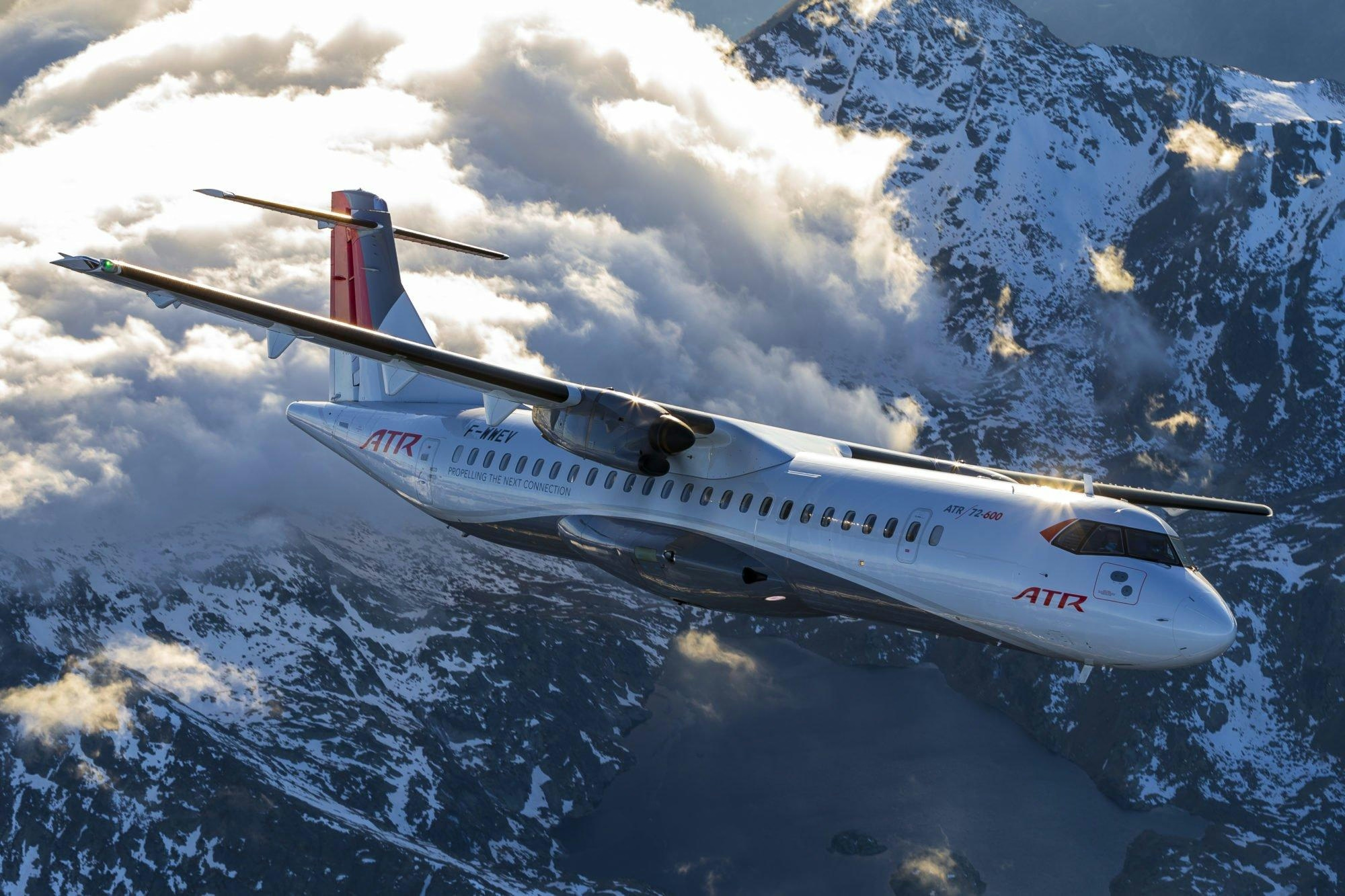
Specialist regional aircraft lessor TrueNoord has expanded its footprint in India by delivering two ATR 72-600 aircraft on long-term operating leases to Just Udo Aviation Private Limited, which operates under the brand FLY91. The first aircraft, bearing manufacturer serial number (MSN) 1233, was delivered in late December 2023 and is already in active service. The second aircraft, MSN 1236, joined the fleet in mid-January and is scheduled to commence operations shortly.

One of the turboprops will be stationed in Goa, the headquarters of FLY91, while the other is expected to operate from Hyderabad. This strategic deployment supports FLY91’s objective of connecting underserved Tier 2 and Tier 3 city pairs across India, aligning closely with the government’s UDAN initiative aimed at enhancing regional connectivity.

Strategic Partnership and Fleet Expansion

Manoj Chacko, Managing Director and CEO of FLY91, highlighted the significance of the collaboration with TrueNoord, stating that it provides the airline with the flexibility to scale its fleet in a disciplined manner that aligns with market demand and long-term regional growth plans. He emphasized the ATR 72-600’s reputation for reliable and efficient operations across FLY91’s network and expressed satisfaction in expanding the airline’s portfolio of leasing partners by welcoming TrueNoord as a key contributor to its growth trajectory.

The transaction involved a sale and leaseback arrangement for MSN 1233 with FLY91, while MSN 1236 was acquired from Danish Air Transport (DAT) and leased back to the Indian carrier in a back-to-back deal. Abhineet Awasthi, Commercial and Transaction Manager at TrueNoord, praised FLY91’s customer-focused and agile approach, noting their transparent and pragmatic leadership throughout the engagement and delivery process. He affirmed TrueNoord’s commitment to supporting FLY91’s expansion plans.

This delivery marks a significant milestone in FLY91’s ambition to grow its fleet to 30 aircraft by 2029. It also represents TrueNoord’s third customer in India, further consolidating the lessor’s presence in a rapidly growing regional aviation market.

Market Dynamics and Industry Challenges

Despite the positive momentum, the regional aircraft leasing sector continues to face challenges, including supply chain constraints that impact timely deliveries and fleet reliability. Recent industry developments, such as Airlink’s acquisition of Embraer E-190 aircraft for spare parts, underscore the complexities lessors like TrueNoord must navigate.

Market responses have reinforced the suitability of ATR turboprops for India’s domestic routes. ATR’s CEO recently highlighted the vast potential of the Indian aviation market, with the manufacturer recording 30 turboprop sales since January, reflecting robust demand across the Asia-Pacific region. This growth has prompted competitors to promote regional jets as alternatives, seeking to capture a share of the expanding market as ATR pursues further expansion.

Anne-Bart Tieleman, CEO of TrueNoord, remarked on the accelerating pace of India’s regional aviation sector, driven by strong demand in Tier 2 and Tier 3 markets and supportive government policies. He noted that airlines are increasingly seeking aircraft capable of rapid deployment, operation from smaller airports, and delivering low trip cost economics. TrueNoord positions itself as a provider of tailored solutions to meet these evolving market needs.

As the regional aviation landscape in India continues to evolve, the partnership between TrueNoord and FLY91 highlights both the opportunities and challenges inherent in meeting the country’s growing demand for efficient and reliable regional air services.

More news
Embraer Advances Supply Chain Development in India

Embraer Advances Supply Chain Development in India

Embraer Advances Supply Chain Development in India Embraer has recently completed a high-level executive visit to India, reaffirming its commitment to expanding and strengthening its supply chain within the country. This visit underscores the Brazilian aerospace company’s ongoing efforts to deepen industrial collaboration between Brazil and India, while exploring new business opportunities across both its defense and civil aviation sectors. Strengthening Industrial Cooperation and Local Partnerships Roberto Chaves, Executive Vice President of Global Procurement and Supply Chain at Embraer, emphasized the company’s dedication to working closely with India’s aerospace industry. He stated that Embraer is focused on advancing joint initiatives in defense and civil aviation, aiming to foster technological innovation, operational excellence, and long-term strategic partnerships. India is regarded as a pivotal partner in shaping the future of aerospace, and Embraer is committed to building sustainable cooperation that supports the domestic industrial base alongside its global initiatives. During the visit, Embraer’s supply chain team conducted thorough assessments of potential Indian suppliers, evaluating their capabilities in aerostructures assembly, machining, metal forming, composites, wiring systems, and hardware and software development. The company engaged with prominent local industry leaders such as Dynamatic Technologies, Motherson Group, and Mahindra Aerospace, as part of a broader strategy to implement an extensive local supply chain program. The recent inauguration of Embraer’s Indian office in New Delhi, coupled with the establishment of a dedicated local procurement team, further consolidates the company’s presence in the Asia Pacific region. India is viewed as a key strategic partner, with Embraer aiming to support both the domestic industrial base and its global supply chain initiatives. Operational Footprint and Market Challenges Embraer currently operates a fleet of more than 50 aircraft in India, serving customers across Commercial Aviation, Executive Aviation, and Defense & Security sectors. This includes five Embraer VIP jets operated by the Indian government and three EMB 145 AEW “Netra” aircraft in service with the Indian Air Force. However, the company’s supply chain expansion in India is unfolding amid ongoing global disruptions. Challenges such as tariffs, trade uncertainties, labor shortages, rising material costs, and fluctuations in freight markets pose risks to the pace and cost-effectiveness of Embraer’s initiatives. These factors have attracted increased scrutiny from investors and customers concerning the sustainability of the company’s new supply chain strategies. The competitive environment is also intensifying, with major aerospace players like Airbus Defence & Space and Lockheed Martin accelerating efforts to capture the growing market for modernizing military airlift capabilities in Southeast Asia. Embraer’s partnership with Adani Defense & Aerospace to manufacture regional aircraft in India faces potential regulatory and logistical hurdles, alongside competition from both local and international firms seeking to establish a foothold in India’s rapidly expanding aviation sector. Despite these challenges, Embraer remains focused on cultivating long-term, strategic partnerships in India, positioning itself as a key contributor to the country’s aerospace growth and technological advancement.
Leading Companies Solidify Their Presence in the Advanced Air Mobility Market

Leading Companies Solidify Their Presence in the Advanced Air Mobility Market

Leading Companies Solidify Their Presence in the Advanced Air Mobility Market The advanced air mobility (AAM) sector is undergoing rapid transformation, with the potential to revolutionize urban transportation in the near future. This evolution is driven by significant technological advancements and expanding regulatory frameworks, which together are poised to redefine the movement of people and goods within metropolitan areas. Market Growth and Strategic Shifts The AAM market is forecasted to reach a valuation of $29.68 billion by 2030, expanding at a compound annual growth rate (CAGR) of 20.7%. This robust growth is underpinned by accelerated regulatory developments in urban air mobility, widespread adoption of electric propulsion systems, progress in autonomous navigation technologies, and strategic airspace management within smart city initiatives. The commercialization of air taxi services, alongside increased investment in infrastructure, further propels market expansion. Despite these promising trends, leading companies face challenges, notably the slower-than-expected deployment of commercial passenger services. This has led some industry players to recalibrate their strategies, placing greater emphasis on defense applications and cargo transport as more immediate opportunities. For instance, Embraer has shifted focus toward sales of its E2 aircraft rather than developing new airliners, while AirX’s recent order of two Eve Air Mobility eVTOLs—with options for an additional 48—highlights the growing significance of the Asia-Pacific region in urban air transport. Industry Leaders and Strategic Developments The AAM landscape is shaped by a diverse group of major corporations, including The Boeing Company, Airbus SE, Honeywell International Inc., Bell Textron Inc., Bristow Group Inc., Joby Aviation, Archer Aviation Inc., Lilium GmbH, Volocopter GmbH, Aurora Flight Sciences Corporation, Eve Air Mobility Inc., Wisk Aero LLC, Vertical Aerospace Ltd, Elroy Air Inc., Opener Inc., Urban Aeronautics Ltd, EHang Holdings Limited, Workhorse Group Inc., Pipistrel Co, and The Helicopter Company. These entities are at the forefront of innovation, investing heavily in research and development and forging strategic partnerships to advance the sector. A significant milestone occurred in July 2023 when US-based Ampaire acquired Talyn Air, a specialist in eVTOL aircraft systems. This acquisition is intended to strengthen Ampaire’s position in aviation electrification and broaden its capabilities across defense, drone technology, and advanced air mobility solutions. Digital Air-Traffic Management and Regional Initiatives A critical area of focus within the industry is the deployment of urban air-traffic management (UATM) systems. These digital platforms are designed to coordinate the operations of drones and eVTOL aircraft in congested urban airspace, optimizing flight routes, preventing collisions, and ensuring safe and efficient air traffic flow. In India, JetSetGo launched Air Mobility India in May 2025, an innovative platform dedicated to the AAM ecosystem. Built on four foundational pillars, it functions as a comprehensive hub for news, analysis, and global content related to advanced air mobility. In the United States, the state of Ohio has submitted a proposal to the Federal Aviation Administration’s Electric Vertical Takeoff and Landing Integration Pilot Program. This initiative seeks to harness AAM technology for critical medical transport services, supported by more than $1.2 billion in aerospace investment and infrastructure. The program underscores the sector’s potential to address urgent societal needs through innovative transportation solutions. Outlook As the advanced air mobility industry continues to mature, companies are adapting their strategies to navigate a complex landscape of regulatory, technological, and commercial challenges. Sustained investment, cross-sector collaboration, and a balanced focus on both passenger and non-passenger applications position the sector to play a transformative role in the future of urban transportation worldwide.
MAB Engineering Services to Provide MRO Solutions for Regional Aviation

MAB Engineering Services to Provide MRO Solutions for Regional Aviation

MAB Engineering Services to Provide MRO Solutions for Regional Aviation Strategic Partnership with Boeing MAB Engineering Services, the engineering division of Malaysia Aviation Group (MAG), has entered into a five-year partnership with Boeing to enhance maintenance, repair, and overhaul (MRO) capabilities across the Asia-Pacific region. The agreement, signed at the Singapore Airshow 2026 held at the Changi Exhibition Centre, designates MAB Engineering Services as a regional partner for Boeing’s future MRO projects. This collaboration aims to deliver cost-effective, reliable, and high-quality support to airlines operating within the rapidly expanding aviation market in Asia-Pacific. Mohd Nadziruddin Mohd Basri, CEO of Aviation Services at MAG, highlighted the importance of the partnership, describing it as a reflection of confidence in the company’s expertise and standards. He further noted that the agreement advances Malaysia’s ambition to establish itself as a global hub for MRO solutions and aviation excellence. Expanding Regional Influence Amidst Competition Through this alliance, MAB Engineering Services will gain access to Boeing’s extensive global fleet network, reinforcing its position as a trusted MRO provider in the region. The company brings decades of experience in maintaining Boeing aircraft, ranging from the Boeing 727 Classic and 737 series to the latest models, supporting both Malaysia Airlines and other regional carriers. This longstanding technical proficiency underpins its reputation for safety, reliability, and operational excellence. Nevertheless, MAB Engineering Services faces significant challenges in sustaining its market momentum amid intensifying competition. Established players such as ST Engineering and Honeywell are actively expanding their presence through strategic partnerships and new MRO facilities, including recent collaborations focused on defense modernization. In this evolving landscape, MAB must also address workforce constraints and scale its operational capacity to meet growing demand. Outlook for Regional Aviation MRO Services Despite these challenges, the partnership with Boeing is expected to enhance operational reliability for airline customers and generate long-term value across the region. By combining Boeing’s global expertise with its own proven capabilities, MAB Engineering Services aims to deliver innovative and efficient MRO solutions. This collaboration is poised to strengthen Malaysia’s standing as a center of excellence within the global aviation industry.
India Plans Rooftop Vertiports for Electric Air Taxis

India Plans Rooftop Vertiports for Electric Air Taxis

India Plans Rooftop Vertiports for Electric Air Taxis India is poised to revolutionize urban transportation by introducing rooftop vertiports designed for electric air taxis. This initiative, detailed in a recent report by the Confederation of Indian Industry (CII), aims to alleviate urban congestion and modernize travel through advanced air mobility (AAM) solutions. By leveraging underutilized rooftop spaces on office buildings, residential towers, and hospitals, the project seeks to enable electric vertical take-off and landing (eVTOL) aircraft to bypass ground traffic, significantly reducing travel times in rapidly expanding cities. Rooftop Vertiports: Potential and Challenges The CII report, *Navigating the Future of Advanced Air Mobility in India*, outlines a pilot corridor connecting key locations within the National Capital Region (NCR), including Gurugram, Connaught Place, and the forthcoming Jewar International Airport. The concept of rooftop vertiports is regarded as both practical and sustainable. Property owners stand to benefit financially by hosting these landing hubs, while the deployment of zero-emission electric aircraft aligns with India’s commitment to achieving net-zero emissions by 2070. The report envisions electric air taxis as integral to a broader AAM ecosystem that could reduce urban pollution and enhance the efficiency of city travel. Nonetheless, significant challenges remain. The development and integration of vertiports into existing urban infrastructure require comprehensive regulatory approvals and robust safety frameworks. The CII underscores the necessity for dedicated regulations to govern the safe operation of air taxis within India’s airspace, highlighting the complexity of harmonizing new technologies with current urban and aviation systems. Industry Developments and International Collaboration Private sector interest in India’s electric air taxi market is intensifying. Aviation operator JetSetGo recently entered into an agreement with Vertical Aerospace to acquire 50 Valo eVTOL aircraft, reflecting growing market confidence. At the same time, global competitors such as Archer and Joby Aviation are actively vying for market share, with legal disputes already emerging, including Archer’s motion to dismiss a trade-secret lawsuit filed by Joby Aviation. India’s ambitions are further supported by a new U.S.-India trade agreement that includes provisions for cooperation in advanced technologies related to electric air taxis. This partnership is expected to accelerate the development of eVTOL technologies in India by facilitating access to aircraft components and specialized training programs. Future Prospects Despite setbacks in other international markets, such as delays in deploying air taxis for the Paris 2024 Olympics, the outlook for electric air taxis in India remains positive. The rooftop vertiport initiative promises to ease congestion, reduce emissions, and usher in a new era of urban mobility and luxury travel. Success will depend on close collaboration among government bodies, industry stakeholders, and international partners to navigate regulatory and technical challenges, ultimately realizing the vision of airborne urban transport.
Comparing the Size of the Boeing 777X and the 777

Comparing the Size of the Boeing 777X and the 777

Comparing the Size of the Boeing 777X and the 777 The Boeing 777-9, the flagship model of the forthcoming 777X family, is poised to become the largest passenger aircraft in commercial aviation upon its anticipated entry into service in 2027. This timeline follows multiple delays that have extended the program by six years and resulted in over $15 billion in charges. Conceived as a modernized successor to the 777-300ER, the 777-9 introduces significant advancements in size, efficiency, and technology. However, its development has faced challenges, including a recently disclosed durability issue with its GE9X engines. Boeing and GE Aerospace maintain that this problem will not impact the aircraft’s certification or delivery schedule. Size and Design Enhancements The most striking difference between the 777-9 and its predecessor, the 777-300ER, lies in its dimensions. The 777-9 measures 251 feet 8 inches (76.7 meters) in length, approximately nine feet longer than the 777-300ER’s 242 feet 5 inches (73.9 meters). This increase in length enables the 777-9 to accommodate up to 426 passengers in a typical two-class layout, compared to 392 on the 777-300ER. The wingspan of the 777-9 also marks a substantial increase, extending to 238 feet 10 inches (72.8 meters), significantly wider than the 212 feet 7 inches (64.8 meters) wingspan of the 777-300ER. The aircraft’s height has similarly grown, standing at 64 feet 7 inches (19.68 meters) versus 61 feet 5 inches (18.57 meters) for the earlier model. Powering the 777-9 are the GE9X engines, the largest commercial jet engines ever constructed, with a diameter of 134 inches (3.4 meters). These engines surpass the GE90-115B units used on the 777-300ER. While GE Aerospace describes the GE9X as the most powerful commercial aircraft engine ever built, this characterization is nuanced, as engine performance encompasses more than raw power output alone. Efficiency and Operational Range Boeing emphasizes the 777-9’s enhanced efficiency, citing a 20% reduction in fuel consumption and emissions, alongside a 40% smaller noise footprint compared to the 777-300ER. The aircraft’s fuel capacity has increased to 162,000 pounds (73.5 tonnes), up from 146,500 pounds (66.5 tonnes), enabled by redesigned wings and structural improvements. Despite these enhancements, the 777-9’s advertised range is 7,285 nautical miles, marginally less than the 777-300ER’s 7,370 nautical miles in a standard two-class configuration. To complement this, Boeing plans to introduce the 777-8 variant, which will offer an ultra-long-haul range of 8,745 nautical miles, targeting thinner, longer routes. Market Position and Industry Outlook Boeing asserts that the 777-9 delivers 10% lower operating costs than its principal competitor, the Airbus A350-1000, a claim that remains contested by Airbus. Despite the technical and certification challenges faced during development, Boeing’s renewed emphasis on safety and operational reliability has helped restore confidence among airline customers. Both the 777X and 737 MAX families have attracted renewed interest in the commercial aviation market. As Boeing advances through the final stages of certification, the 777-9 distinguishes itself not only by its size but also by its anticipated role in defining the future of long-haul air travel.
ALTEA Marks Delivery of New Falcon 6X Aircraft

ALTEA Marks Delivery of New Falcon 6X Aircraft

ALTEA Facilitates Delivery of Falcon 6X to Irish Defence Forces **London, January 30, 2026** — ALTEA, a specialist in aircraft procurement and completion, has announced the successful delivery of a new Falcon 6X aircraft to the Department of Defence Ireland. Delivered on schedule in December, the factory-new jet represents a significant upgrade for the Irish Air Corps, replacing the Learjet 45 after more than twenty years of service. A Strategic Upgrade for the Irish Air Corps The Falcon 6X is the first military-registered model of its kind and only the second delivered by Dassault Aviation to a European state. With a maximum range exceeding 5,500 nautical miles and advanced fuel efficiency, the aircraft is configured to carry up to 14 passengers. Its extended range enables direct flights from Baldonnel, Ireland, to destinations such as the U.S. West Coast, enhancing Ireland’s strategic reach. Lieutenant General Rossa Mulcahy, Chief of Staff of the Defence Forces, described the acquisition as a “major step forward in the State’s strategic reach,” highlighting the aircraft’s enhanced capabilities in airlift, medical evacuation, and government transport. He emphasized that the Falcon 6X’s range, performance, and advanced systems will allow the Defence Forces to support Irish citizens and personnel worldwide with greater speed, safety, and flexibility. Mulcahy also noted that the aircraft’s arrival aligns with Ireland’s broader ambitions to establish a full Air Force, reflecting a significant evolution in the nation’s air capabilities. Collaborative Procurement and Operational Readiness The procurement process followed a competitive tender under the Defence & Security Directive 81/2009/EC, seeking a mid-sized aircraft with strategic reach to fulfill diverse operational needs. ALTEA played a central role in defining the requirements, specifications, and evaluation criteria, as well as advising on contract terms. Jean Sémiramoth, ALTEA Partner, underscored the collaborative nature of the project, stating that the team worked closely with the Irish Air Corps and Department of Defence over nine months to deliver an aircraft tailored for missions including citizen evacuation, patient transfer, and supply transport abroad. He emphasized that stakeholder engagement was crucial in expediting and streamlining the process. Delivering the Falcon 6X also involved addressing challenges related to operational readiness rates and sustainment service improvements, benchmarks highlighted by industry leaders such as Lockheed Martin. ALTEA’s ability to meet these stringent requirements was instrumental in the project’s success. Market Impact and Future Prospects The delivery of the Falcon 6X has attracted notable market attention, with increased interest in Dassault Aviation’s advanced capabilities compared to the outgoing Bombardier Learjet 45. While Airbus continues to dominate single-aisle aircraft sales and Boeing strives to regain ground in the narrowbody segment, emerging competitors such as the Embraer-Adani alliance in India are intensifying competition in regional aircraft production. Robin Dunlop, ALTEA Partner responsible for interiors and completions, highlighted the Falcon 6X’s versatility, noting that the aircraft is designed to meet a wide range of operational requirements, ensuring the Irish Defence Forces are equipped for diverse missions. The Falcon 6X is expected to enter service with the Irish Air Corps in the coming weeks, ushering in a new era of strategic airlift and operational capability for Ireland.
Concerns Rise for Regional Airlines Following Recent Failures

Concerns Rise for Regional Airlines Following Recent Failures

Concerns Rise for Regional Airlines Following Recent Failures The year 2025 has emerged as a challenging period for regional airlines, marked by a series of high-profile bankruptcies that highlight the mounting pressures within the sector. Notably, Blue Islands and Eastern Airways, two prominent carriers based in the United Kingdom, ceased operations in the final quarter of the year. These closures reflect broader systemic difficulties confronting regional airlines across Europe and beyond. Mounting Pressures on Regional Operators Mark Dunnachie, a seasoned executive in regional aviation and current head of Commercial at ACIA Aero Leasing, characterizes these bankruptcies as critical warning signs for the industry. Speaking with Aerospace Global News, Dunnachie—who also serves on the board of the European Regions Airline Association (ERA)—identified several converging challenges that threaten the sustainability of regional carriers. Rising operational costs, particularly in maintenance and payroll, are intensifying due to an ongoing shortage of qualified pilots. Regulatory frameworks within the European Union impose stringent passenger protections that disproportionately affect smaller regional operators compared to their larger counterparts. While initiatives promoting Sustainable Aviation Fuels (SAF) represent important innovation, Dunnachie notes a disconnect between regulatory implementation and the practical realities faced by airlines. Furthermore, regional carriers often face criticism for their dependence on government subsidies. However, Dunnachie emphasizes that such financial support remains essential for preserving critical connectivity, especially on Public Service Obligation (PSO) routes. The recent failures of Blue Islands and Eastern Airways exemplify these pressures. Eastern Airways, which operated a fleet of 14 aircraft including several Embraer E-Jets, entered administration after losing a major ACMI contract with KLM that accounted for 70% of its flying activity. Blue Islands suspended operations after failing to secure necessary government assistance. Both collapses resulted in the loss of vital air links on key UK regional routes. Compounding these difficulties, Brexit has introduced additional operational constraints for UK-based regional airlines, limiting their ability to subcontract capacity from European Union carriers and pilots during critical periods. Dunnachie cautions that while these incidents do not yet constitute a definitive pattern, the industry must remain vigilant. “Many of the issues these airlines faced are shared by their competitors and peers,” he remarked, underscoring the broader vulnerability within the sector. Broader Industry Headwinds The challenges confronting regional airlines extend beyond Europe, reflecting global industry trends. Increased competition, geopolitical instability, and a softening in outbound travel demand have all contributed to a difficult operating environment. Korean Air recently highlighted the decline in travel demand, while major carriers such as American Airlines have pointed to additional risks including economic downturns, elevated debt levels, and intense competitive pressures. Industry analysts predict further consolidation among low-cost carriers as shrinking economic revenue places smaller operators under significant strain. Executives at Delta Airlines have forecast a wave of mergers and acquisitions driven by activist investors and the imperative for greater scale. Ultra-low-cost carriers, including Spirit Airlines, are particularly exposed, with some facing the prospect of liquidation or forced mergers amid declining demand from lower-income travelers. As regional airlines confront these multifaceted challenges, the recent failures of Blue Islands and Eastern Airways serve as a stark reminder of the fragility of smaller carriers and the pressing need for strategic adaptation in an evolving global aviation landscape.
Ethiopian Airlines Advances Digital Transformation in African Aviation

Ethiopian Airlines Advances Digital Transformation in African Aviation

Ethiopian Airlines Advances Digital Transformation in African Aviation Ethiopian Airlines is accelerating its digital transformation efforts, establishing itself as a leader in innovation within the African aviation sector. As part of a comprehensive strategy to modernize its operations and enhance efficiency, the airline has forged a strategic partnership with Nucore Technologies LLC. This collaboration is focused on overhauling Ethiopian Airlines’ agency distribution network and rapidly digitalizing its back-office processes, representing a pivotal advancement in the airline’s ongoing modernization initiatives. Integrating Digital Solutions Across Agency Networks The partnership will see Ethiopian Airlines integrate Nucore’s TRAACS / nuTraacs Software-as-a-Service (SaaS) platform with its Agency Portal and New Distribution Capability (NDC)-enabled B2B booking system. This integration aims to establish a seamless connection between the airline’s reservation infrastructure and the operational and financial systems used by travel agencies. By automating critical processes such as billing, accounting, invoicing, and tax compliance, Ethiopian Airlines anticipates a significant reduction in manual workloads and a decrease in errors. For travel agencies, these technological enhancements promise faster and more accurate transaction processing alongside streamlined management of commissions, refunds, and transaction reporting. This improved operational efficiency is expected to bolster agency profitability and ensure compliance with international standards, thereby providing agencies with a competitive advantage in a rapidly evolving marketplace. Improving Operational Efficiency for Travel Agents and Corporate Managers The deployment of TRAACS / nuTraacs will have a direct impact on the daily workflows of travel agents by automating administrative tasks that have traditionally required extensive manual input. Agencies will benefit from reduced administrative burdens and accelerated billing cycles, while travel agents will gain real-time financial visibility and enhanced oversight of key performance indicators such as commissions and refunds. Corporate travel managers, especially those operating within high-volume agencies, are also poised to experience improvements in managing business travel itineraries and payment processes. The seamless integration between Ethiopian Airlines’ systems and agency back-office operations is expected to deliver greater transparency, accuracy, and operational efficiency for all stakeholders involved. Industry Context and Infrastructure Ambitions This digital transformation initiative coincides with Ethiopian Airlines’ ambitious infrastructure projects, notably the $12.5 billion construction of Bishoftu International Airport, which is projected to become the largest airport in Africa. While this expansion is viewed by some investors as a strategic effort to enhance regional connectivity, it faces potential delays stemming from logistical and financial challenges. Market sentiment remains mixed, with concerns about the financial risks and burdens associated with such a large-scale undertaking. Concurrently, Ethiopian Airlines’ digital initiatives reflect a broader industry shift away from traditional Global Distribution Systems (GDS) toward hybrid distribution models that leverage direct channels, application programming interfaces (APIs), and NDC platforms. NDC, an International Air Transport Association (IATA) standard, enables airlines to offer more personalized and dynamic content to travel sellers. However, the rapid evolution of front-end booking technologies has left many agencies struggling to maintain efficiency on the back end. Ethiopian Airlines’ integration of TRAACS / nuTraacs addresses this disconnect by linking booking experiences directly with back-office operations. Competitive Dynamics and Future Prospects As Ethiopian Airlines advances its digital transformation, it may encounter resistance from traditional industry players who are slower to adopt emerging technologies. Successfully implementing these advanced digital solutions could provide the airline with a significant competitive edge. In response, competitors may pursue their own strategic partnerships or intensify competition within the African aviation market. By embracing digital innovation alongside large-scale infrastructure development, Ethiopian Airlines is not only modernizing its own operations but also setting new benchmarks for efficiency and connectivity across the continent.
Lufthansa, Air France, and Singapore Airlines Collaborate to Test CFM Open Fan Engines

Lufthansa, Air France, and Singapore Airlines Collaborate to Test CFM Open Fan Engines

Lufthansa, Air France, and Singapore Airlines Collaborate to Test CFM Open Fan Engines Lufthansa, Air France, and Singapore Airlines have announced a strategic partnership to test CFM International’s next-generation open fan engines, marking a significant advancement toward sustainable aviation. This collaboration is part of CFM’s Revolutionary Innovation for Sustainable Engines (RISE) program, which seeks to accelerate the adoption of cutting-edge propulsion technologies designed to transform the industry’s environmental footprint. Testing at Changi Airport and Technological Innovations Singapore’s Changi Airport has been selected as the world’s first testing ground for these innovative engines, highlighting the city-state’s prominent role in global aviation leadership. The open fan engine design merges features of turbofan and propeller-driven technologies, aiming to reduce fuel consumption and carbon emissions by up to 20% compared to current engine models. In addition to environmental benefits, the design promises a significant reduction in noise levels, which could positively impact not only airlines but also the wider tourism and hospitality sectors by making international travel more efficient, affordable, and environmentally sustainable. Challenges and Market Implications Despite the promising outlook, the path to widespread adoption of open fan engines faces several challenges. Regulatory approval processes and the integration of new engine technologies into existing airport operations present complex logistical and operational hurdles. Market reception remains uncertain, with some traditional engine manufacturers expressing skepticism. Furthermore, competitors are expected to intensify their own development of advanced engine technologies in response to this initiative. In parallel, CFM’s extension of its IATA aftermarket competition agreement through 2033 is set to influence the market dynamics. By fostering increased competition in the maintenance, repair, and overhaul (MRO) sector, this move could reshape how airlines and manufacturers approach the deployment and servicing of emerging engine technologies. Environmental Significance and Industry Impact The partnership between Lufthansa, Air France, and Singapore Airlines reflects a proactive approach to the growing environmental challenges facing the aviation sector, which currently accounts for approximately 2-3% of global carbon emissions. The successful testing and eventual deployment of open fan engines could represent a critical milestone in the industry’s efforts to decarbonize. As Singapore spearheads the testing phase, this initiative is expected to accelerate the development and global adoption of advanced aviation technologies. Should the collaboration prove successful, it may establish new benchmarks for efficiency and sustainability, fundamentally reshaping international air travel and the future trajectory of the aviation industry.
CII Supports Air Taxi Corridor in Delhi-NCR

CII Supports Air Taxi Corridor in Delhi-NCR

CII Endorses Air Taxi Corridor Initiative in Delhi-NCR The Confederation of Indian Industry (CII) has expressed strong support for the establishment of an air taxi corridor in the Delhi-National Capital Region (NCR), emphasizing its potential to revolutionize urban mobility and alleviate chronic traffic congestion. This endorsement follows the release of a comprehensive report titled *Navigating the Future of Advanced Air Mobility in India*, unveiled by Civil Aviation Minister Rammohan Naidu Kinjarapu. Transforming Urban Transport with eVTOL Technology The proposed pilot corridor aims to connect key locations including Gurugram, Connaught Place, and Jewar International Airport, significantly reducing travel times from several hours to mere minutes. Central to this vision is the deployment of electric vertical take-off and landing aircraft (eVTOLs), which the report identifies as a transformative technology for urban transportation. To facilitate rapid implementation, the report advocates utilizing building rooftops as landing and parking sites. This innovative approach could circumvent the substantial costs and delays typically associated with acquiring land for ground-based infrastructure, thereby enabling quicker deployment in densely populated metropolitan areas such as Delhi, Mumbai, and Bengaluru. Minister Kinjarapu described the initiative as a foundational step toward creating a "high-tech, multi-dimensional mobility ecosystem," underscoring the importance of innovation, sustainability, and enhanced urban connectivity. He characterized the report as a timely and practical blueprint for realizing a faster, cleaner, and more interconnected India. Regulatory and Infrastructure Challenges Despite the promising outlook, the report acknowledges significant regulatory and operational challenges. Current aviation regulations do not permit routine commercial flights from rooftops, necessitating the creation of a dedicated cell within the Directorate General of Civil Aviation (DGCA). This specialized unit would be responsible for developing safety protocols, certification processes, and operational standards tailored to advanced air mobility technologies. Amit Dutta, Chairman of the CII Task Force on Advanced Air Mobility, highlighted that the study advances the concept by rigorously analyzing a hypothetical Delhi-NCR corridor through structured modeling and regulatory scenario testing. He noted that the report addresses critical issues related to regulation, infrastructure, and airspace management that must be resolved to enable early-stage advanced air mobility pilots. The report recommends an incremental rollout, beginning with drone deployments focused on cargo and medical logistics over distances ranging from 50 to 100 kilometers. It also suggests designating regions such as GIFT City and Andhra Pradesh as regulatory test zones to foster early adoption and innovation within a controlled environment. Industry Implications and Future Prospects CII’s backing of the air taxi corridor comes amid intensifying global competition, with companies like Archer Aviation and Joby Aviation actively developing air taxi services and seeking regulatory clearances. The prospect of such a corridor in India has already attracted heightened investor interest in air mobility startups, signaling a potential paradigm shift in urban transportation. To sustain growth in this emerging sector, the CII calls for coordinated investment from both public and private stakeholders. It urges financial institutions and government agencies to establish dedicated funding mechanisms to support infrastructure development and regulatory compliance. While the vision remains ambitious, the report stresses the necessity of building extensive infrastructure and a robust regulatory framework to transition from pilot projects to large-scale commercial operations. As India’s aviation industry looks toward a future shaped by advanced air mobility, the coming years will be critical in overcoming regulatory hurdles, meeting infrastructure demands, and navigating increasing competition—all while striving to deliver on the promise of faster, cleaner, and more connected urban environments.
line










