
Превращайте аналитические выводы ИИ в реальные действия

В тренде
Categories
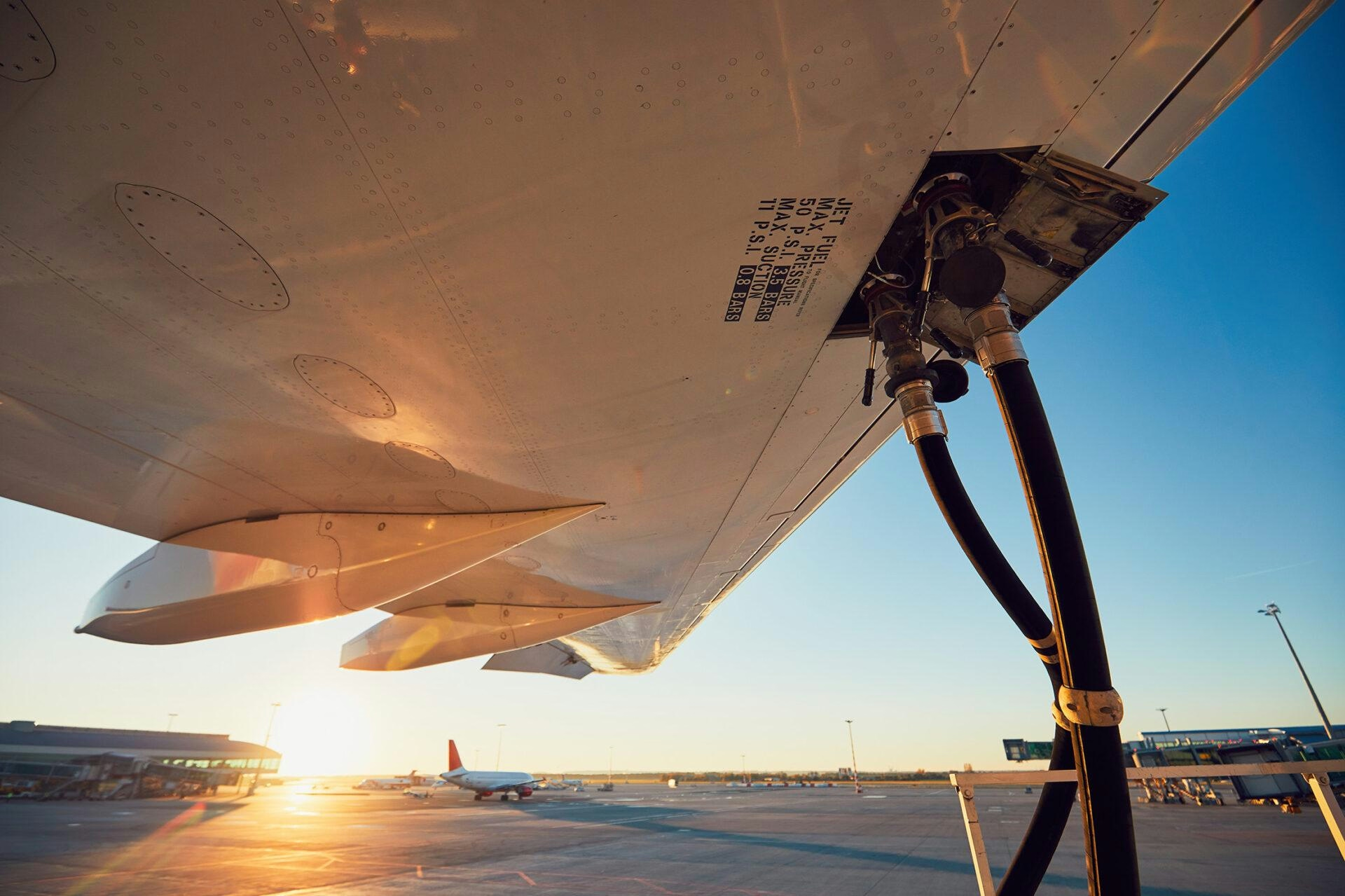
Urban Waste Fuels Advances in Sustainable Aviation
Urban Waste Fuels Advances in Sustainable Aviation
In a notable advancement for sustainable aviation, researchers have developed methods to convert municipal solid waste into jet fuel, potentially reducing the aviation industry’s carbon emissions by up to 90%. A collaborative study by Harvard University and Tsinghua University outlines how this innovation could revolutionize urban waste management and reshape the future of air travel.
Transforming Waste into Sustainable Aviation Fuel
The research demonstrates that non-recyclable municipal waste—including plastics, textiles, and food scraps—can be transformed into sustainable aviation fuel (SAF) through advanced thermochemical processes such as hydrothermal liquefaction and gasification. These techniques involve heating waste under high pressure to produce bio-crude oil, which is subsequently refined into jet fuel. Pilot projects have already validated the feasibility of this approach, with models suggesting that urban waste in the United States alone could supply a substantial portion of aviation fuel demand.
A study published in Nature Sustainability identifies municipal solid waste as a cost-effective feedstock, potentially enabling SAF production at prices competitive with conventional fossil-based kerosene. Beyond reducing carbon emissions, diverting waste from landfills also mitigates methane emissions, a greenhouse gas with significant global warming potential.
Economic and Market Considerations
Despite its promise, the widespread adoption of waste-derived SAF faces several challenges. Substantial upfront investments are necessary to establish the infrastructure required for the collection, sorting, and processing of urban waste into aviation fuel. Regulatory frameworks must also evolve to accommodate new fuel standards and certification processes. Nonetheless, market responses have been encouraging. North America is at the forefront of expanding the aviation gasoline market, propelled by increasing SAF adoption. Major energy corporations such as Shell and BP are investing heavily in SAF production, while startups like Creed Fuels and IDunnH2 are exploring innovative approaches, including the conversion of captured carbon dioxide into electro-synthetic SAF.
Globally, the European Union has recorded modest progress, with SAF constituting approximately 0.6% of aviation fuel supplied in 2024. Given projections that air travel will double by 2040, advancements in SAF are critical to meeting stringent regulatory and environmental targets. Industry leaders such as LanzaJet have already achieved commercial-scale production of jet fuel derived from ethanol, reflecting growing confidence in alternative fuel technologies.
Challenges and Global Innovations
Scaling SAF production from urban waste presents logistical and technical challenges. Efficient collection and sorting of waste streams remain complex, and not all waste types yield fuel of sufficient quality. Additionally, there are concerns that incentivizing waste-to-fuel conversion could unintentionally encourage increased waste generation. Nevertheless, international initiatives are making significant progress. In Malaysia, innovators have successfully converted kitchen waste into jet fuel, while researchers at the University of Illinois are developing processes to transform food scraps into high-energy fuel.
As the aviation sector confronts mounting regulatory pressure to decarbonize, integrating waste management with energy production emerges as a promising strategy. Although questions regarding scalability and economic viability remain, the conversion of urban waste into jet fuel represents a pivotal development toward a more sustainable future for both urban environments and the aviation industry.

Etihad Airways Suspends Airbus A380 Flights on Key Route

Aditya Birla Group Seeks Approval for Aircraft Leasing in GIFT City

Qatar Airways Highlights Innovation and Connectivity at Arabian Travel Market 2026

Hong Kong's Five-Year Plan Includes Andrew Fan's Aircraft Parts Processing Hub Proposal

ACIA Aero Leasing Delivers ATR72-600 to Air Nostrum

RTX Appoints Jill Albertelli as Head of Pratt & Whitney

TAT Technologies Joins Beyond Aero Hydrogen Aircraft Program

AURAK Study Highlights Barriers to Air Taxi Adoption in Emerging Economies

Xiamen Air Selects Altitude for 787 Maintenance at Heathrow

Etihad and Swissport Extend Global Partnership
