
Превращайте аналитические выводы ИИ в реальные действия

В тренде
Categories
Virgin Australia Considers Ordering Widebody Aircraft
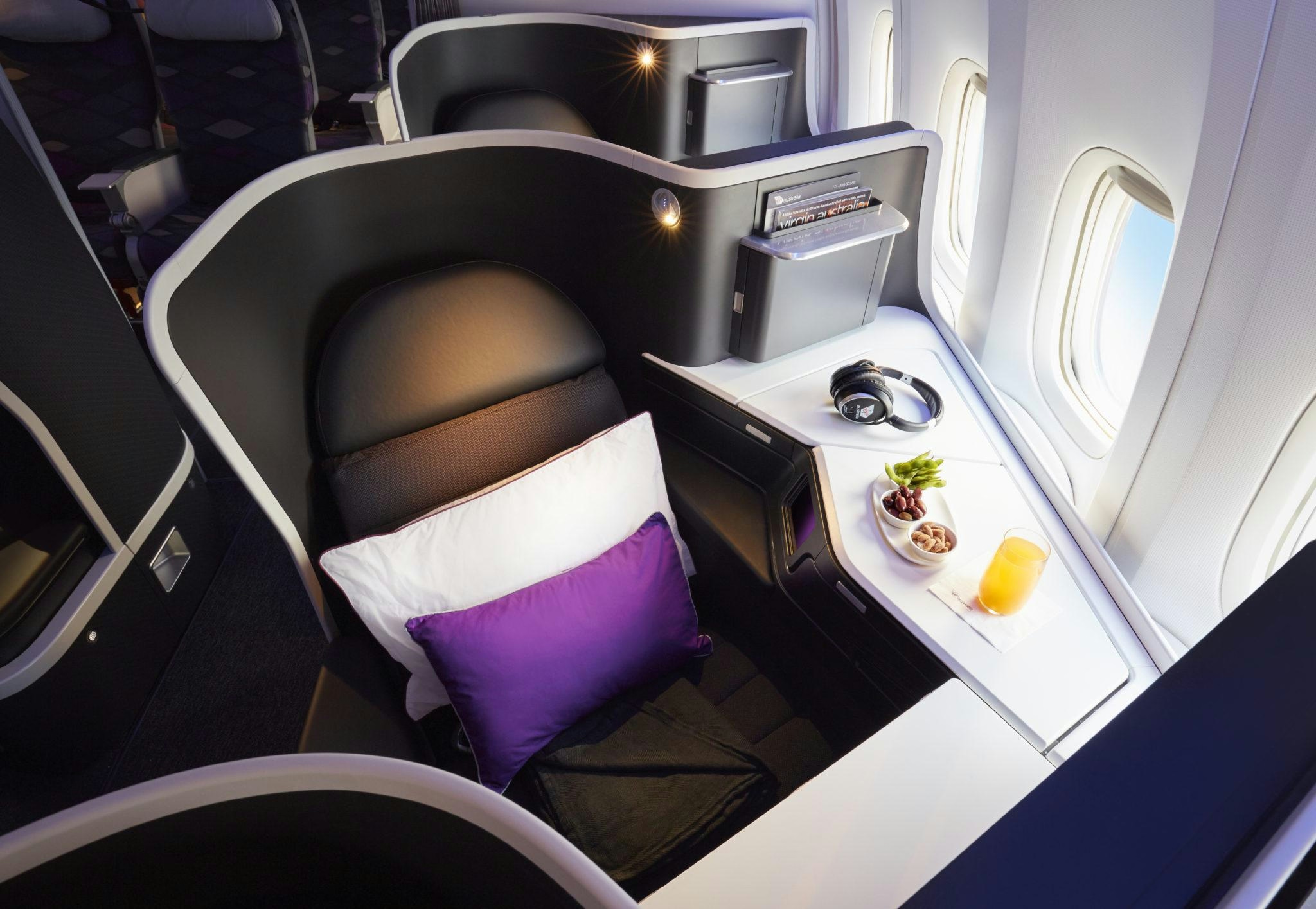
Virgin Australia Weighs Return to Widebody Aircraft Amid Strategic Expansion
Virgin Australia is contemplating the reintroduction of widebody aircraft to its fleet, though any definitive decision remains several years away, according to Chief Executive Officer Dave Emerson. The Brisbane-based carrier is carefully evaluating the long-term business case for widebody, long-haul operations, reflecting a measured approach to growth amid shifting market conditions and operational complexities.
Current Operations and Partnership with Qatar Airways
At present, Virgin Australia operates long-haul international routes through a partnership with Qatar Airways, which holds a 25% stake in the airline. Under this arrangement, Qatar Airways wet-leases Boeing 777-300ER aircraft to operate direct flights from Brisbane, Perth, and Sydney to Doha’s Hamad International Airport, with Melbourne scheduled to join the network in December. This collaboration has allowed Virgin to gauge the viability of long-haul services without committing to the substantial capital investment required for its own widebody fleet.
Historically, Virgin Australia operated Airbus A330 and Boeing 777 aircraft on long-haul routes to destinations including Abu Dhabi, Phuket, Hong Kong, Johannesburg, and Los Angeles. However, the onset of the COVID-19 pandemic compelled the airline to scale back its international operations, leaving it with a predominantly narrow-body, short-haul fleet.
The current five-year agreement with Qatar Airways provides Virgin with the opportunity to assess demand and operational performance on these long-haul routes. The airline is also exploring the possibility of transitioning from wet-leases—which encompass aircraft, crew, maintenance, and insurance—to dry-leases, which would grant Virgin greater operational control but also increase its responsibilities. Any decision to acquire its own widebody aircraft would necessitate a compelling investment rationale, given the significant capital costs, integration challenges, and potential regulatory considerations involved.
Market Context and Fleet Renewal
Market responses to Virgin Australia’s potential widebody acquisition have been mixed. Investors remain attentive to the airline’s financial sustainability, particularly as competitors such as AirAsia reportedly approach major Airbus orders. Rival carriers may respond by expanding their fleets or enhancing service offerings to protect market share, thereby intensifying competitive pressures within the region.
Domestically, Virgin Australia is preparing to meet robust local demand by taking delivery of 16 additional aircraft between July 2025 and June 2026. This fleet expansion includes 12 Boeing 737 MAX 8s and four Embraer 190s, the latter intended to replace aging Fokker 100s in the regional segment.
Virgin’s recent initial public offering, which saw Bain Capital reduce its stake to 40%, has established a new ownership structure designed to support the airline’s growth and fleet renewal strategy. CEO Emerson has underscored the airline’s healthy balance sheet, noting that it generates sufficient income to fund its expansion plans.
As Virgin Australia deliberates its next steps, the airline remains committed to prudent growth, leveraging strategic partnerships and comprehensive market analysis to guide its future fleet decisions. The performance and outcomes of its current long-haul operations with Qatar Airways will be pivotal in determining whether widebody aircraft will once again become a permanent component of its fleet.

Etihad Airways Suspends Airbus A380 Flights on Key Route

Aditya Birla Group Seeks Approval for Aircraft Leasing in GIFT City

Qatar Airways Highlights Innovation and Connectivity at Arabian Travel Market 2026

Hong Kong's Five-Year Plan Includes Andrew Fan's Aircraft Parts Processing Hub Proposal

ACIA Aero Leasing Delivers ATR72-600 to Air Nostrum

RTX Appoints Jill Albertelli as Head of Pratt & Whitney

TAT Technologies Joins Beyond Aero Hydrogen Aircraft Program

AURAK Study Highlights Barriers to Air Taxi Adoption in Emerging Economies

Xiamen Air Selects Altitude for 787 Maintenance at Heathrow

Etihad and Swissport Extend Global Partnership
