
Превращайте аналитические выводы ИИ в реальные действия

В тренде
Categories
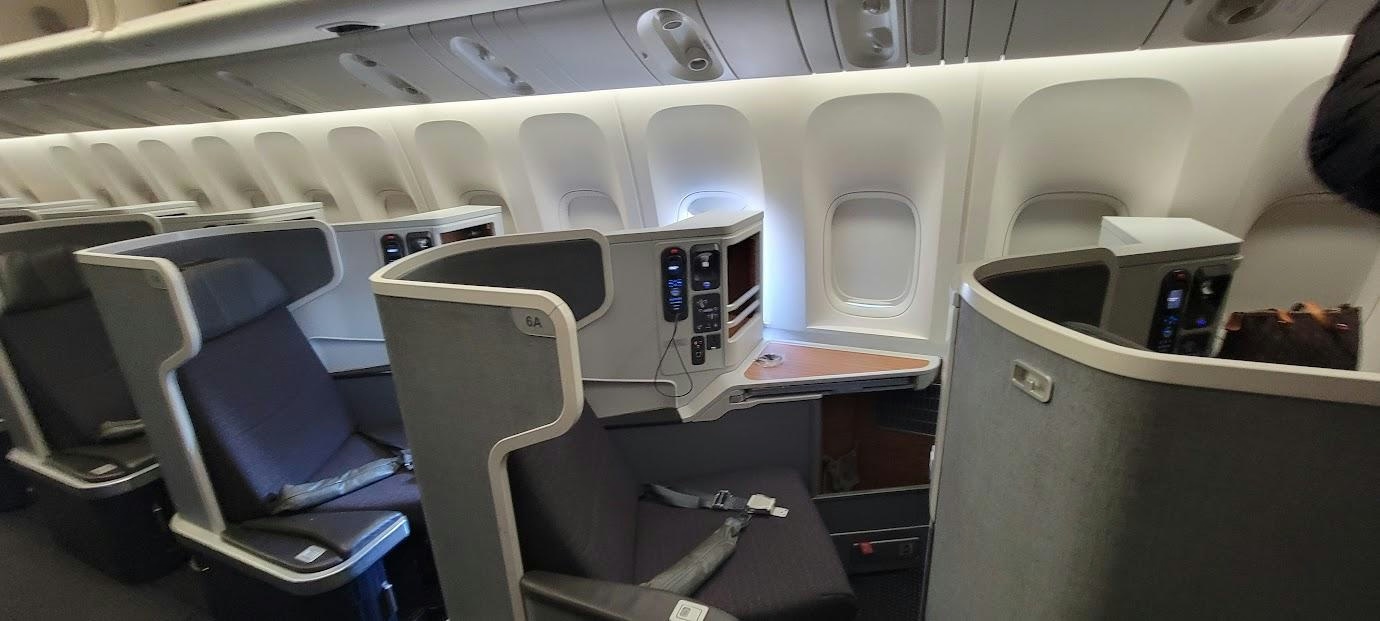
Why Airlines Continue Refurbishing Boeing 777-300ER Cabins Instead of Replacing Them
Why Airlines Continue Refurbishing Boeing 777-300ER Cabins Instead of Replacing Them
Airlines worldwide are increasingly choosing to refurbish the cabins of their Boeing 777-300ER aircraft rather than replacing the jets entirely. This strategy provides a cost-effective means to extend the operational life of a well-established widebody aircraft while simultaneously enhancing passenger comfort and maintaining operational efficiency. Amid growing industry commitments to achieve net-zero carbon emissions by 2050, refurbishing existing fleets has emerged as a practical approach that balances economic viability, environmental responsibility, and competitive pressures.
Production Challenges and Fleet Management
The cessation of Boeing 777-300ER production in December 2024, after more than two decades, is a significant factor influencing this trend. Boeing’s decision to end production was driven by manufacturing challenges, evolving market demands, and the anticipated introduction of the next-generation 777X. However, the 777X program has encountered substantial certification delays and engineering difficulties, postponing its initial deliveries until at least 2027. This delay has left over 15 major airlines, including Emirates, Qatar Airways, and Cathay Pacific, in a holding pattern as they await replacements for their aging 777-300ER fleets.
Alternative aircraft such as the Boeing 787-9 and 787-10 present operational compromises. The 787-9 accommodates fewer passengers—between 280 and 296 compared to the 777-300ER’s 350 to 400—while the 787-10 offers reduced range and cargo capacity. These limitations pose challenges to existing fleet strategies and operational requirements for many carriers. Consequently, refurbishing the 777-300ER cabins remains the most pragmatic and financially sound option for maintaining capacity and service standards.
Industry Adoption and Market Dynamics
The refurbishment of 777-300ER cabins has become a widespread practice across the aviation industry. Data from Cirium’s Ground Events indicates that 98 aircraft have undergone cabin upgrades since 2020, with many airlines leveraging the reduced flight schedules during the COVID-19 pandemic to modernize interiors. El Al’s plan to refurbish all six of its 777 aircraft by early 2027 exemplifies the ongoing relevance of this model.
Market trends are also influencing refurbishment strategies. Airlines are responding to increased demand for premium seating options, with carriers such as United Airlines focusing on expanding first-class and premium economy cabins to attract high-yield customers. Similarly, Delta Air Lines intends to increase premium seating on its international routes by 2026 to align with evolving passenger expectations. These shifts necessitate cabin upgrades that enhance the overall travel experience and support revenue growth.
Operational and Environmental Implications
Operationally, the 777-300ER continues to be a vital asset. As of April 2025, Cirium data shows that the aircraft accounted for 14% of all widebody flights globally, with 757 units still in active service. Refurbishing these aircraft enables airlines to sustain capacity and operational flexibility amid ongoing airspace restrictions and other external challenges.
From an environmental standpoint, upgrading existing aircraft supports sustainability objectives by minimizing the need for new aircraft production and maximizing the lifecycle of current assets. This approach aligns with broader industry efforts to reduce emissions while maintaining high standards of service and competitiveness.
With the 777X’s delayed entry into service and limited suitable alternatives, refurbishing the Boeing 777-300ER cabins offers airlines a balanced solution that delivers financial, operational, and environmental benefits. As demand for premium travel grows and fleet planning becomes increasingly complex, strategic investments in cabin upgrades ensure the 777-300ER remains a cornerstone of global aviation.

Etihad Airways Suspends Airbus A380 Flights on Key Route

Aditya Birla Group Seeks Approval for Aircraft Leasing in GIFT City

Qatar Airways Highlights Innovation and Connectivity at Arabian Travel Market 2026

Hong Kong's Five-Year Plan Includes Andrew Fan's Aircraft Parts Processing Hub Proposal

ACIA Aero Leasing Delivers ATR72-600 to Air Nostrum

RTX Appoints Jill Albertelli as Head of Pratt & Whitney

TAT Technologies Joins Beyond Aero Hydrogen Aircraft Program

AURAK Study Highlights Barriers to Air Taxi Adoption in Emerging Economies

Xiamen Air Selects Altitude for 787 Maintenance at Heathrow

Etihad and Swissport Extend Global Partnership
