
Превращайте аналитические выводы ИИ в реальные действия

В тренде
Categories
Why the Boeing 777X Folds Its Wings to Access Gates in Sydney
Why the Boeing 777X Folds Its Wings to Access Gates in Sydney
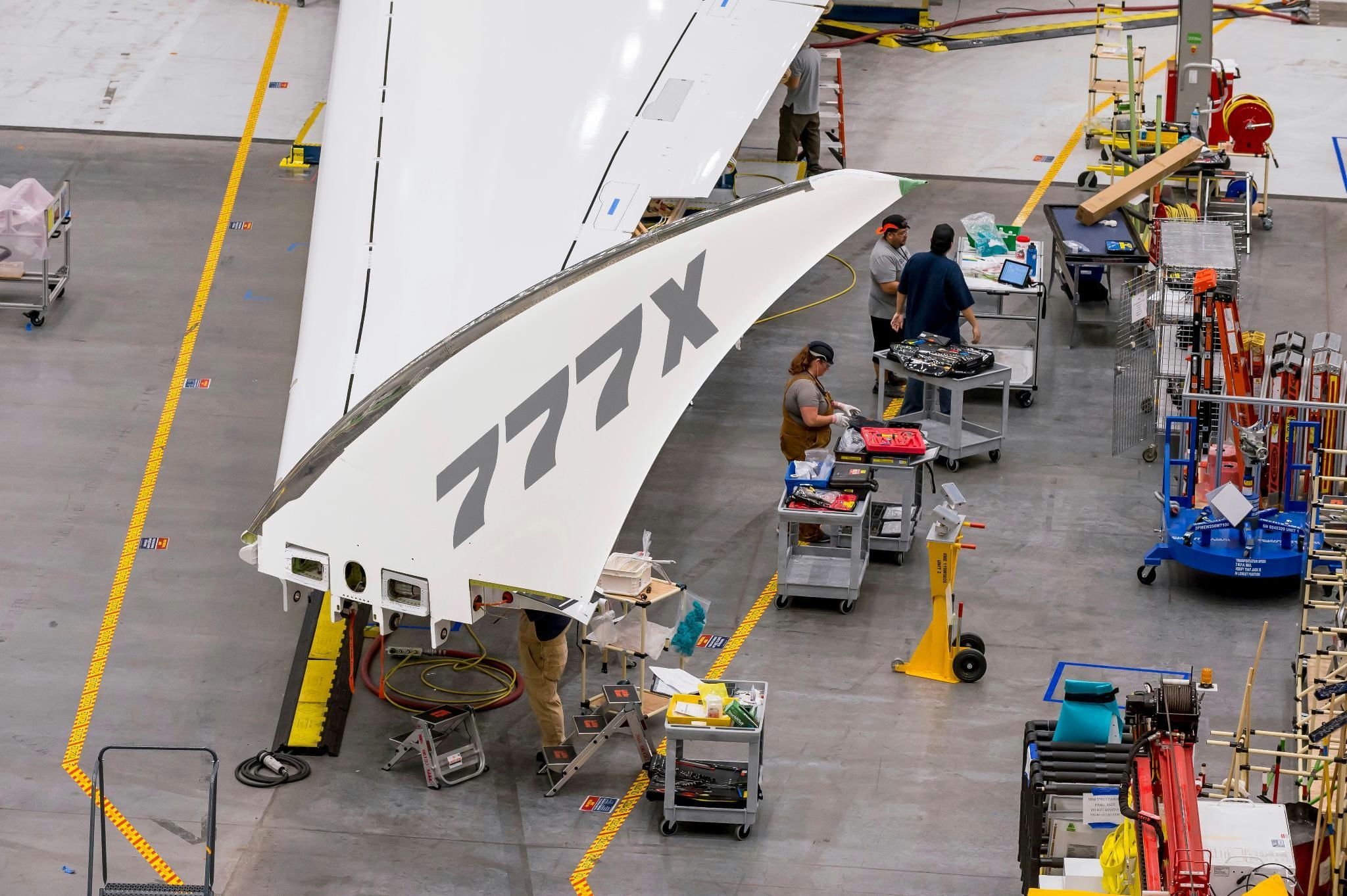
The Boeing 777X represents a significant advancement in commercial aviation, distinguished by its innovative wing design aimed at enhancing fuel efficiency. To achieve this, Boeing equipped the aircraft with an exceptionally large carbon-fiber wing, whose span exceeds the standard dimensions accommodated by most international airports. Rather than reduce the wing size and compromise performance, Boeing introduced a pioneering folding wingtip mechanism. This feature enables the 777X to access airports with constrained gate layouts, such as Sydney Kingsford Smith Airport, without sacrificing its aerodynamic advantages.
Addressing Airport Infrastructure Constraints
Airports like Sydney are carefully engineered environments where taxiways and gates are designed with precise spatial limitations. Many facilities lack the capacity to handle aircraft with wingspans that extend beyond conventional parameters. The 777X’s folding wingtip system, developed in collaboration with Liebherr, allows the outer 11 feet 6 inches (3.51 meters) of each wingtip to pivot upward while the aircraft is on the ground. This reduces the wingspan from 235 feet 5 inches (71.75 meters), which classifies the aircraft in the International Civil Aviation Organization’s (ICAO) largest Code F category, to 212 feet 9 inches (64.85 meters), fitting within the more common Code E classification.
This reduction is critical because remaining in the Code F category would impose significant operational and financial burdens on airlines. Most international gates are designed for smaller aircraft, and accommodating a Code F aircraft would necessitate costly and disruptive infrastructure upgrades, including pavement widening and jetway repositioning. For airports like Sydney, which already experience high slot utilization and limited gate flexibility, such modifications are particularly challenging.
By enabling the 777X to effectively “shrink” its wingspan on the ground, Boeing avoids these expensive alterations, enhancing the aircraft’s appeal to airlines seeking increased capacity and range without the logistical complications. This folding wing design also draws on lessons from the Airbus A380, which encountered operational difficulties due to its size and the requirement for specialized airport infrastructure.
Regulatory and Market Considerations
Incorporating a movable wing component into routine operations demanded not only engineering innovation but also regulatory adaptation. International aviation safety standards had to be revised to accommodate the folding wingtips and their impact on taxiway separation requirements. Traditionally, wide safety margins are mandated between Code F aircraft wingtips and other objects or aircraft. Boeing collaborated with regulators to ensure the 777X could operate within existing Code E parameters, thereby avoiding the need for bespoke clearances that could disrupt airport operations.
Market responses to the 777X’s folding wing innovation have been varied. Emirates, a key customer, remains optimistic about the aircraft despite ongoing delays. Meanwhile, competitors have concentrated on their own technological developments without directly addressing Boeing’s folding wing design.
As the 777X approaches entry into service, its ability to adapt to existing airport infrastructure stands as a pragmatic solution to the spatial challenges faced by busy airports like Sydney. This adaptability may prove as consequential as the aircraft’s advancements in fuel efficiency and operational range.

Etihad and Swissport Extend Global Partnership

Sepehran Airlines B737 Returns to Mashhad After Tyre and Engine Issues

Etihad Deploys Widebody Fleet to Meet Strong Demand

Korean Air Finalizes $36.2 Billion Deal with Boeing

Australia’s RFDS Queensland Section Orders Six King Air 260Cs

Korean Air Finalizes Order for 103 Boeing Jets and Engines
Embraer E195-E2 Features Distinctive Engine Placement Among Regional Jets
What Passengers Can Expect on Boeing’s New 777X Jet

How Ethiopian Airlines Became Africa’s Leading Carrier Amid Gulf Competition

Joby Aviation Extends Autonomous Flight Capabilities with Cross-Country Tour
