
KI-Erkenntnisse in konkrete Maßnahmen überführen

Trends
Categories
Air India Digitizes Its Widebody Fleet
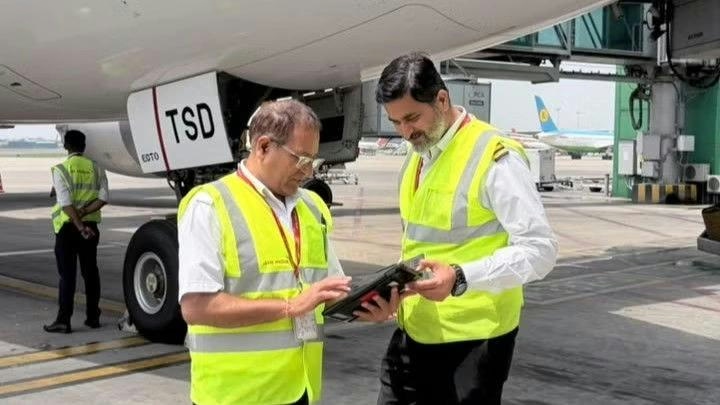
Air India Advances Digital Transformation with Electronic Logbooks for Widebody Fleet
Air India has secured approval from the Directorate General of Civil Aviation (DGCA) to implement Electronic Technical Logbooks (ETL) as the primary maintenance documentation for its Boeing 787 fleet. The DGCA has also authorized the simultaneous introduction of this system across the airline’s Boeing 777 aircraft. This move marks a significant shift towards paperless maintenance records, aimed at improving operational efficiency, maintenance oversight, and regulatory compliance.
Enhancing Maintenance Operations through Digitalization
The introduction of Electronic Technical Logbooks replaces traditional paper-based records with a secure digital platform, allowing maintenance engineers and operational teams to access and update aircraft information in real time. This transition is expected to streamline coordination among teams, accelerate defect reporting and resolution, and facilitate more efficient aircraft maintenance and dispatch processes.
Beyond operational improvements, the digital platform enhances data accuracy, traceability, and adherence to regulatory standards. Engineering teams will gain access to operational data and analytics, enabling predictive maintenance and more strategic planning. Furthermore, the adoption of a paperless system aligns with Air India’s broader sustainability objectives by reducing paper consumption.
Challenges and Industry Context
Despite positioning Air India at the forefront of technological modernization within Indian aviation, the transition to ETLs presents several challenges. Integrating advanced digital systems with existing legacy infrastructure demands meticulous planning and execution. Ensuring robust cybersecurity measures is essential to safeguard sensitive operational data, while the financial investment required for upgrading and maintaining digital infrastructure poses significant cost considerations.
Industry analysts have expressed some skepticism regarding the airline’s ability to justify these investments amid intense competition and cost pressures in the aviation sector. Nevertheless, the broader industry trend favors digitalization, with leading European carriers such as Lufthansa and Air France-KLM also investing heavily in advanced technologies to sustain their competitive advantage.
Collaboration and Future Prospects
Jeremy Yew Jin Kit, Senior Vice President of Engineering & Maintenance at Air India, highlighted that the successful deployment of Electronic Technical Logbooks reflects close collaboration among engineering, flight operations, digital technology teams, aircraft manufacturers, and regulatory authorities. He emphasized that replacing paper-based processes with real-time digital information will enhance operational efficiency, maintenance oversight, regulatory compliance, and engineering decision-making.
As Air India continues to roll out ETLs across its Boeing 787 fleet and expands implementation to the Boeing 777, the airline is modernizing its engineering and maintenance operations. This initiative supports safer, more efficient, and data-driven airline operations, positioning Air India to meet evolving industry standards and customer expectations in an increasingly digital aviation environment.

Etihad and Swissport Extend Global Partnership

Sepehran Airlines B737 Returns to Mashhad After Tyre and Engine Issues

Etihad Deploys Widebody Fleet to Meet Strong Demand

Korean Air Finalizes $36.2 Billion Deal with Boeing

Australia’s RFDS Queensland Section Orders Six King Air 260Cs

Korean Air Finalizes Order for 103 Boeing Jets and Engines

Embraer E195-E2 Features Distinctive Engine Placement Among Regional Jets

What Passengers Can Expect on Boeing’s New 777X Jet

How Ethiopian Airlines Became Africa’s Leading Carrier Amid Gulf Competition

Joby Aviation Extends Autonomous Flight Capabilities with Cross-Country Tour
