
KI-Erkenntnisse in konkrete Maßnahmen überführen

Trends
Categories
Archer Aviation (ACHR) Is Up 13.8% After Launching ACES Charging Network And Zee AI Platform
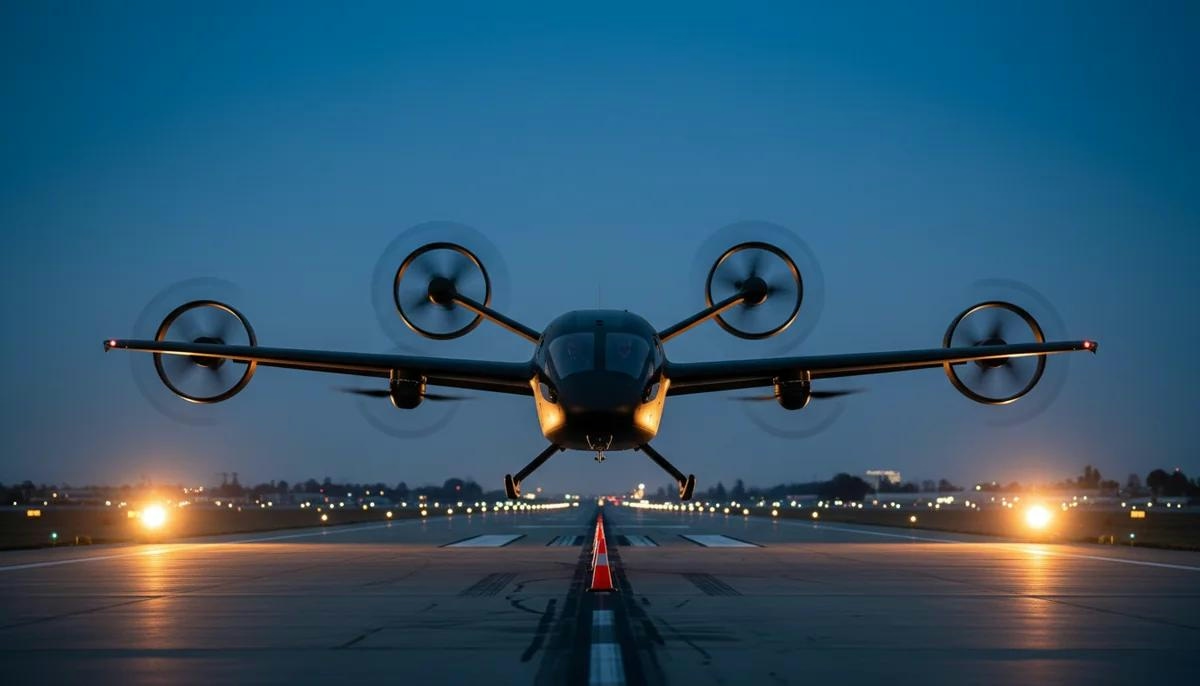
Archer Aviation Advances with ACES Charging Network and Zee AI Platform
In mid-July 2026, Archer Aviation, in collaboration with BETA Technologies and Macquarie Capital, announced the formation of the America’s Consortium for Electric Skyways (ACES). This initiative aims to establish a standardized CCS-based charging network across as many as 250 air taxi sites throughout the United States. Concurrently, Archer unveiled Zee, an aviation-specific artificial intelligence foundation model designed to enhance flight safety and operational efficiency. By integrating physical electric vertical takeoff and landing (eVTOL) charging infrastructure with an AI-driven aviation intelligence platform, Archer is strategically positioning itself at the intersection of hardware and software innovation within the emerging air mobility and airspace management sectors.
Strategic Implications of ACES and Zee
The ACES consortium’s shared charging network represents a significant step toward creating a cohesive infrastructure for electric air taxis, potentially facilitating broader adoption and operational scalability. Meanwhile, the Zee AI platform complements this physical infrastructure by offering advanced analytics and decision-making tools tailored to aviation needs. Together, these developments could redefine Archer’s investment narrative by aligning its software ambitions alongside its core air taxi operations.
Despite the promise of these initiatives, the immediate challenges facing Archer remain largely unchanged. The company’s near-term prospects continue to hinge on achieving certification and initiating early commercial operations of its Midnight eVTOL aircraft. Financially, Archer must navigate ongoing losses and cash burn, with the ACES and Zee projects supporting operational progress but not alleviating the pressing certification and funding pressures.
If regulators and industry partners embrace the combined approach of a shared charging network and an aviation-specific AI platform, Archer’s software offerings could generate earlier revenue streams. This would provide a valuable complement to the core air taxi business, which is still progressing toward certification and meaningful service launch.
Investment Outlook and Market Perspectives
Archer Aviation’s current financial projections anticipate revenues of $716 million and earnings of $62.9 million by 2029. Achieving these targets would require an extraordinary annual revenue growth rate of approximately 622%, alongside a substantial earnings turnaround from a loss of $742.5 million today to a positive $62.9 million. This outlook implies a potential upside of around 108% relative to the company’s current stock price.
More optimistic analysts forecast even higher revenue and earnings figures, with some projecting revenues of $868.1 million and earnings of $73.8 million by 2029. These bullish estimates contrast with more cautious views that emphasize certification risks and ongoing cash burn. The introduction of ACES and Zee could influence investor expectations, potentially shifting sentiment toward the more optimistic end of this spectrum.
Investors are encouraged to critically assess these narratives and consider the inherent risks and opportunities. While the developments around ACES and Zee add depth to Archer’s operational story, they do not fundamentally alter the company’s immediate challenges. As with any emerging technology investment, independent analysis and a clear understanding of the underlying fundamentals remain essential.

Etihad and Swissport Extend Global Partnership

Sepehran Airlines B737 Returns to Mashhad After Tyre and Engine Issues

Etihad Deploys Widebody Fleet to Meet Strong Demand

Korean Air Finalizes $36.2 Billion Deal with Boeing

Australia’s RFDS Queensland Section Orders Six King Air 260Cs

Korean Air Finalizes Order for 103 Boeing Jets and Engines
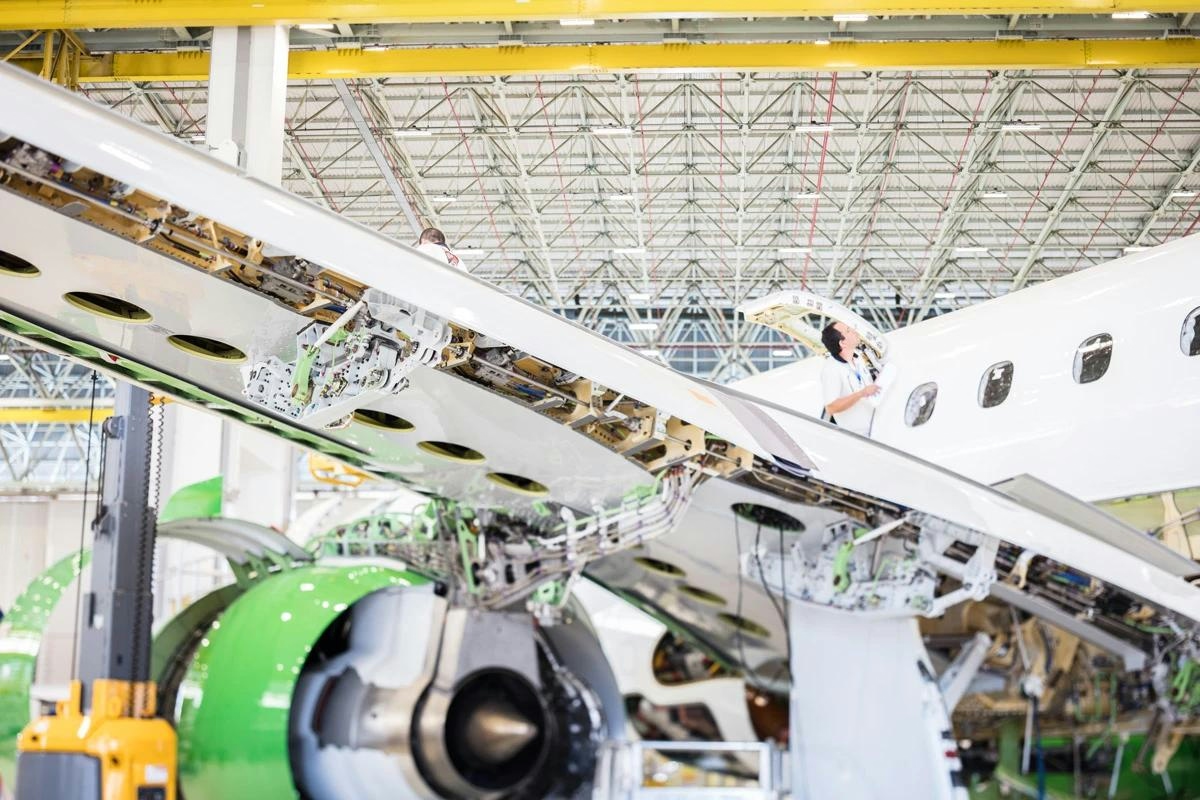
Embraer E195-E2 Features Distinctive Engine Placement Among Regional Jets
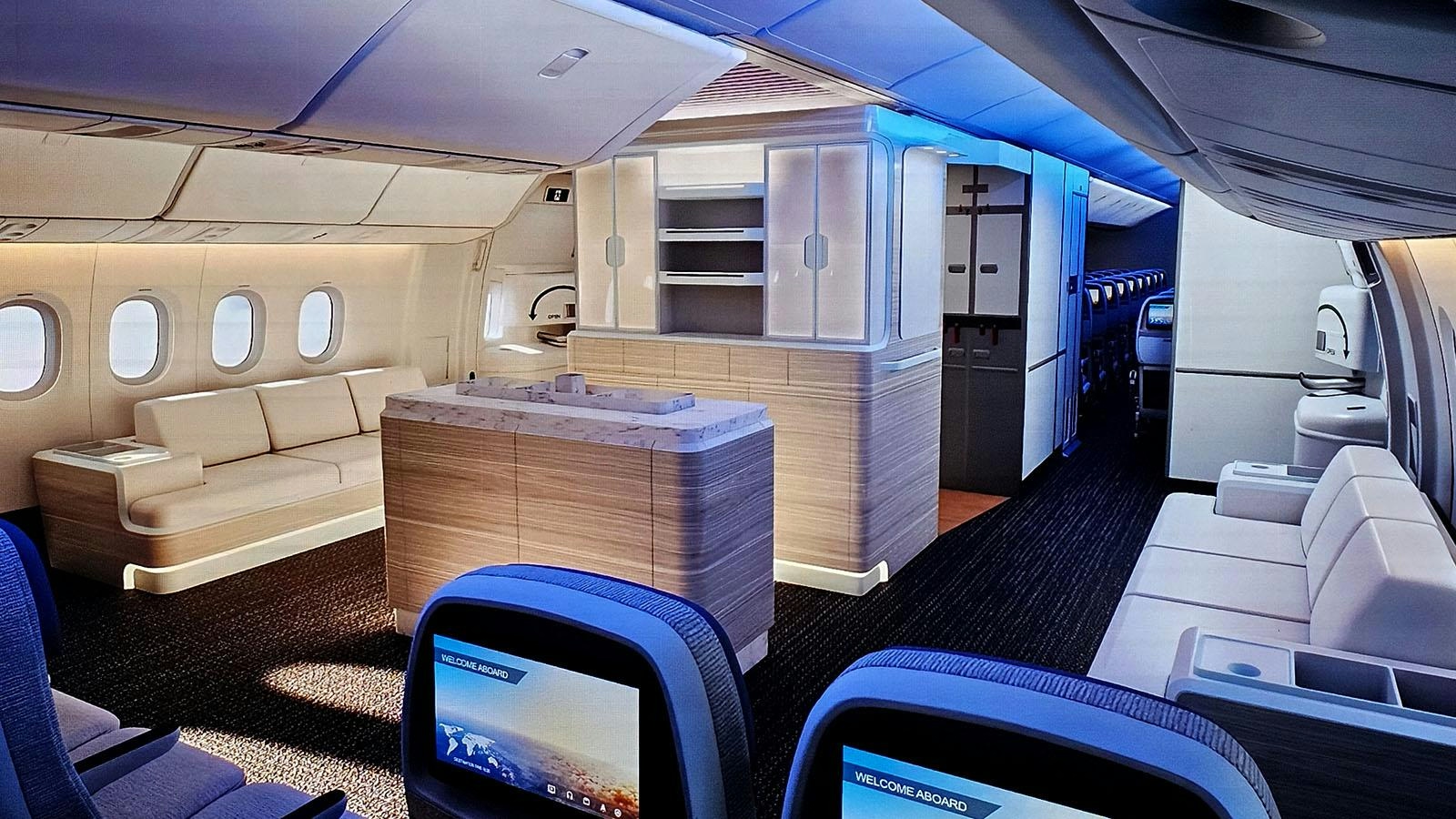
What Passengers Can Expect on Boeing’s New 777X Jet

How Ethiopian Airlines Became Africa’s Leading Carrier Amid Gulf Competition

Joby Aviation Extends Autonomous Flight Capabilities with Cross-Country Tour
