
KI-Erkenntnisse in konkrete Maßnahmen überführen

Trends
Categories
Boeing Records 121 Orders in June, Speeds Up Deliveries
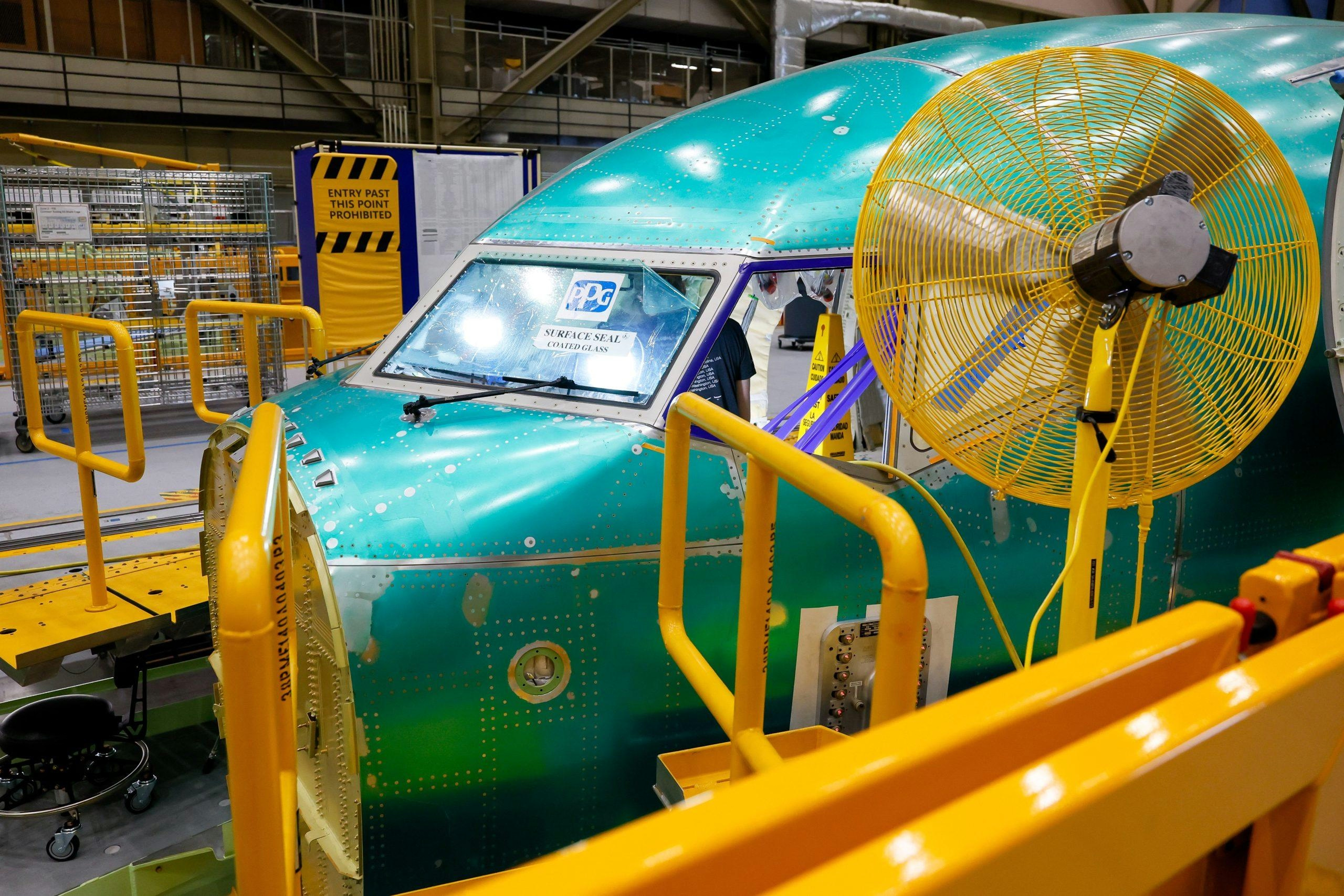
Boeing Records 121 Orders in June, Accelerates Deliveries Amid Industry Challenges
Boeing has intensified production of its 737 Max aircraft to meet strong market demand, recently inaugurating a new assembly facility in Everett. In June, the company achieved its highest monthly delivery volume in several years, reflecting a notable acceleration in output.
Order Book Expansion and Backlog Growth
On 14 July, Boeing announced it secured 121 aircraft orders in June, with 108 attributed to the 737 Max, predominantly from undisclosed customers. Among the confirmed buyers, Aviation Capital Group placed an order for six 737 Max jets, while Boeing Defense, Space & Security procured four 737NGs, which are frequently adapted into military variants such as the P-8 Poseidon surveillance aircraft. Additionally, Boeing received nine orders for its 777 family, including five 777-8 Freighters still in development, from China Southern Cargo. Both China Southern Cargo and China Airlines also ordered two first-generation 777 Freighters each.
These new commitments have increased Boeing’s backlog to 6,202 aircraft, up from 6,178 at the end of May. However, the company experienced cancellations totaling eight 737 Max orders during the month—six from WestJet, and one each from Air Europa and an undisclosed customer. Furthermore, Boeing reclassified 25 orders into its ASC-606 accounting category, which monitors orders at risk of not closing. After these adjustments, Boeing reported 88 net new aircraft orders for June.
Delivery Performance and Industry Context
In terms of deliveries, Boeing handed over 64 aircraft in June, marking its highest monthly total this year. This included 43 737s, five 767 Freighters, three 777 Freighters, and 13 787s. Year-to-date, the company has recorded net orders for 386 aircraft and delivered 314.
Despite these positive developments, Boeing continues to confront significant challenges. Rising production costs and ongoing supply chain disruptions exert pressure as the company scales up manufacturing. Competition from Airbus remains formidable; in June, Airbus delivered 89 commercial jets, surpassing Boeing’s 64 and maintaining its lead in the global commercial aircraft market.
Market response to Boeing’s production acceleration has been largely favorable, with investors showing confidence in the company’s strategic direction. Nevertheless, technical difficulties persist in other segments of Boeing’s operations. The Starliner program, designed for commercial crew missions, continues to face certification delays due to unresolved technical issues.
Boeing’s recent surge in orders and deliveries highlights robust demand for its aircraft, even as the company navigates industry headwinds and competitive pressures in its effort to sustain growth.

Etihad and Swissport Extend Global Partnership

Sepehran Airlines B737 Returns to Mashhad After Tyre and Engine Issues

Etihad Deploys Widebody Fleet to Meet Strong Demand

Korean Air Finalizes $36.2 Billion Deal with Boeing

Australia’s RFDS Queensland Section Orders Six King Air 260Cs

Korean Air Finalizes Order for 103 Boeing Jets and Engines
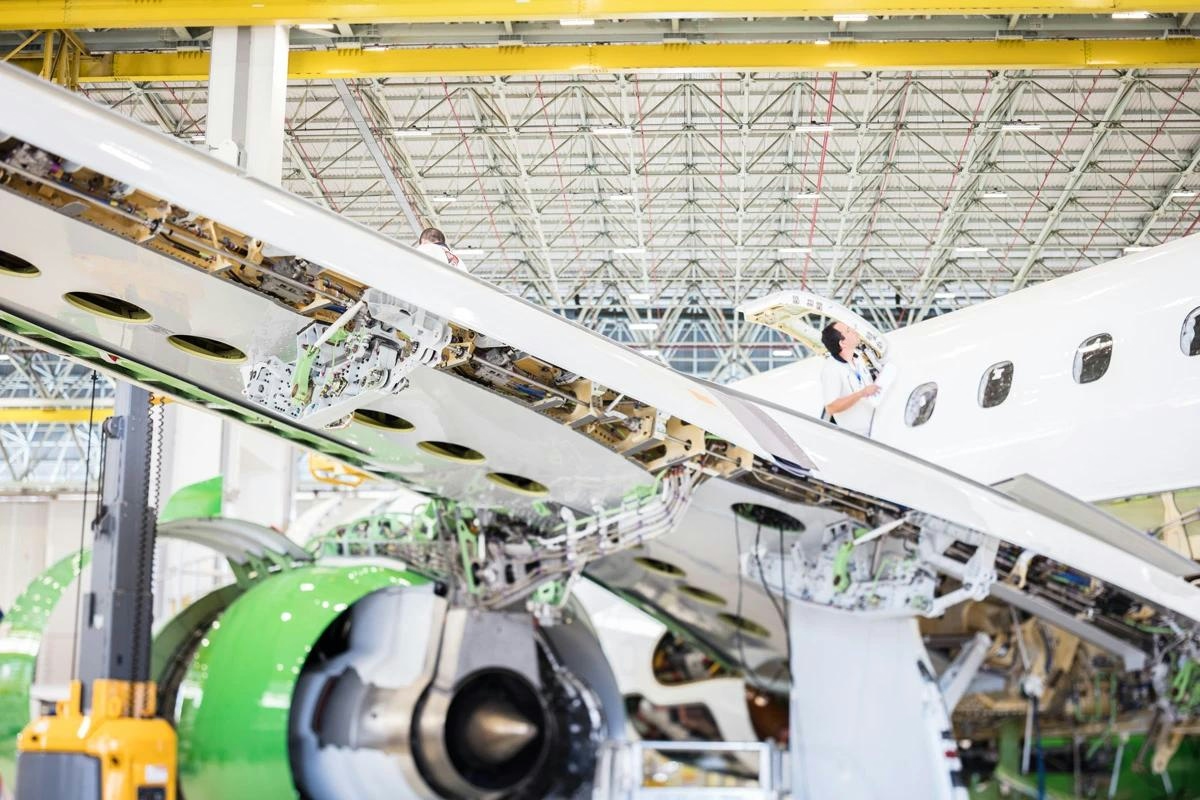
Embraer E195-E2 Features Distinctive Engine Placement Among Regional Jets
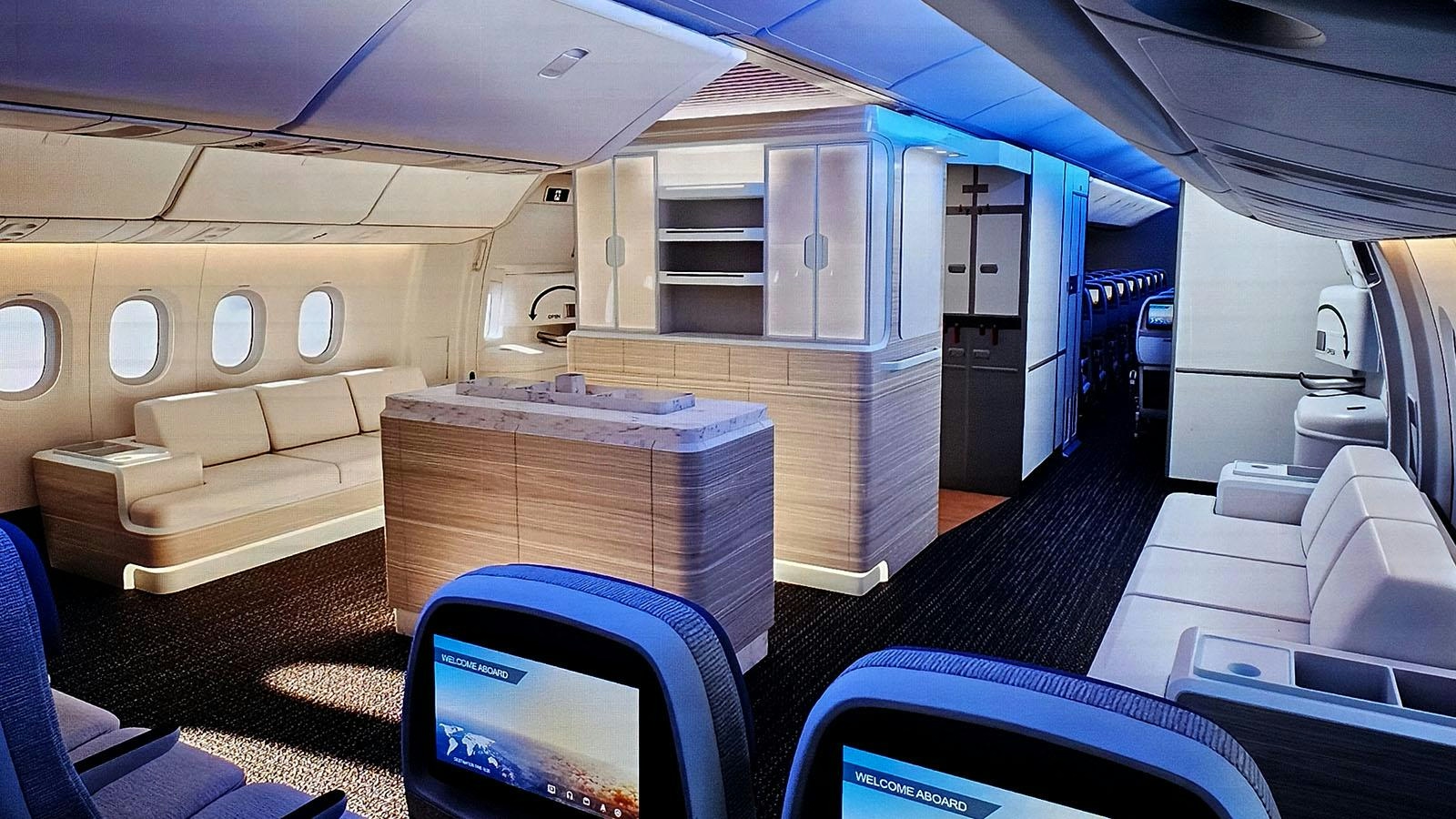
What Passengers Can Expect on Boeing’s New 777X Jet

How Ethiopian Airlines Became Africa’s Leading Carrier Amid Gulf Competition

Joby Aviation Extends Autonomous Flight Capabilities with Cross-Country Tour
