
KI-Erkenntnisse in konkrete Maßnahmen überführen

Trends
Categories
Korean Air Introduces AI Pilot Technology at South Korea Expo
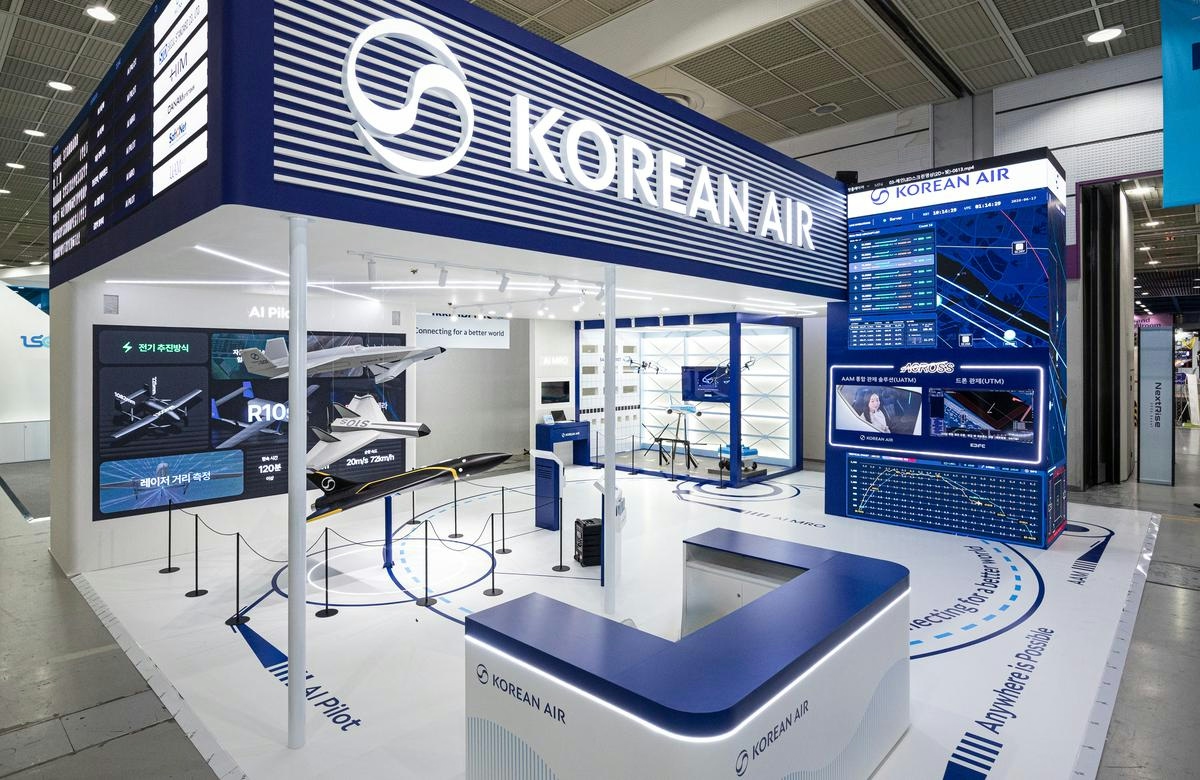
Korean Air Unveils AI Pilot Technology at South Korea Expo
Korean Air introduced its latest artificial intelligence (AI) pilot system at the 2026 Korea Drone & Urban Air Mobility (UAM) Expo, South Korea’s premier event for drone and urban air mobility technologies. The expo, held this week at Songdo Convensia in Incheon, is jointly organized by the Ministry of Land, Infrastructure and Transport and the Incheon metropolitan government. It serves as a platform to showcase cutting-edge advancements in drones and air taxi services and will continue through Friday.
Advancements in Autonomous Flight and Traffic Management
At the forefront of Korean Air’s exhibition was the AI Pilot, an advanced autonomous system designed to operate future combat and urban air mobility aircraft without human intervention. Complementing this technology, the airline also presented ACROSS, an integrated traffic management platform for advanced air mobility vehicles. ACROSS enables real-time monitoring of multiple aircraft and optimizes flight routes to enhance operational efficiency. This platform has successfully completed two demonstration phases under the Korean Urban Air Mobility Grand Challenge, a government initiative aimed at validating technologies and procedures for commercial air taxi operations.
Korean Air’s display extended beyond AI pilot systems to include a variety of next-generation technologies. These featured uncrewed aircraft platforms, digital aircraft maintenance systems, and integrated air taxi operating solutions. Notably, the airline showcased a low-observable collaborative combat aircraft capable of formation flying, as well as a flight-test aircraft developed in partnership with U.S. defense technology firm Anduril Industries. The two companies formalized their collaboration in 2025, agreeing to jointly develop uncrewed aircraft systems and explore production opportunities within South Korea.
Innovations in Digital Maintenance and Industry Challenges
The airline also highlighted its digital maintenance system, which employs robotics and AI to streamline aircraft inspections. Utilizing inspection drones and ground rovers, the system captures detailed images of aircraft surfaces, with AI algorithms capable of detecting defects as small as one millimeter. Korean Air reports that this technology has reduced exterior inspection times from approximately ten hours to just one, and the company is preparing for its commercial deployment.
Despite these technological strides, Korean Air faces significant challenges in advancing AI-driven aviation. Regulatory scrutiny remains a major obstacle, as authorities rigorously evaluate the safety and reliability of autonomous flight systems. Public acceptance also poses a concern, with some skepticism surrounding AI-operated aircraft. Furthermore, integrating these new technologies with existing aviation infrastructure presents complex technical and operational difficulties.
Market responses to Korean Air’s AI initiatives have been mixed. South Korean stock markets have experienced volatility amid concerns over the sustainability of AI-driven growth, reflecting broader uncertainties within the sector. Nevertheless, Korean Air’s assertive promotion of AI technologies is expected to prompt competitors to accelerate their own AI development efforts in order to remain competitive.
A company representative emphasized the airline’s commitment to innovation, stating, “We will widely promote Korean Air’s advanced strategic aviation technologies in the global market. We will continue to lead the digital transformation of South Korea’s aerospace industry through sustained technological innovation.”
Now in its sixth year, the Korea Drone & UAM Expo continues to feature exhibitions, conferences, flight demonstrations, and programs designed to support South Korean companies in expanding their presence in international markets.

Etihad and Swissport Extend Global Partnership

Sepehran Airlines B737 Returns to Mashhad After Tyre and Engine Issues

Etihad Deploys Widebody Fleet to Meet Strong Demand

Korean Air Finalizes $36.2 Billion Deal with Boeing

Australia’s RFDS Queensland Section Orders Six King Air 260Cs

Korean Air Finalizes Order for 103 Boeing Jets and Engines

Embraer E195-E2 Features Distinctive Engine Placement Among Regional Jets

What Passengers Can Expect on Boeing’s New 777X Jet

How Ethiopian Airlines Became Africa’s Leading Carrier Amid Gulf Competition

Joby Aviation Extends Autonomous Flight Capabilities with Cross-Country Tour
