Bild

KI-Erkenntnisse in konkrete Maßnahmen überführen

Trage dich noch heute in die AeroGenie-Warteliste ein!

Trends

Categories

Textron Cites Workforce Challenges in Jet Delivery Delays
July 28, 2026By ePlane AI
Textron Cites Workforce Challenges in Jet Delivery Delays
0
0
Textron Aviation
Jet Delivery Delays
Workforce Challenges

Textron Attributes Jet Delivery Delays to Workforce Challenges

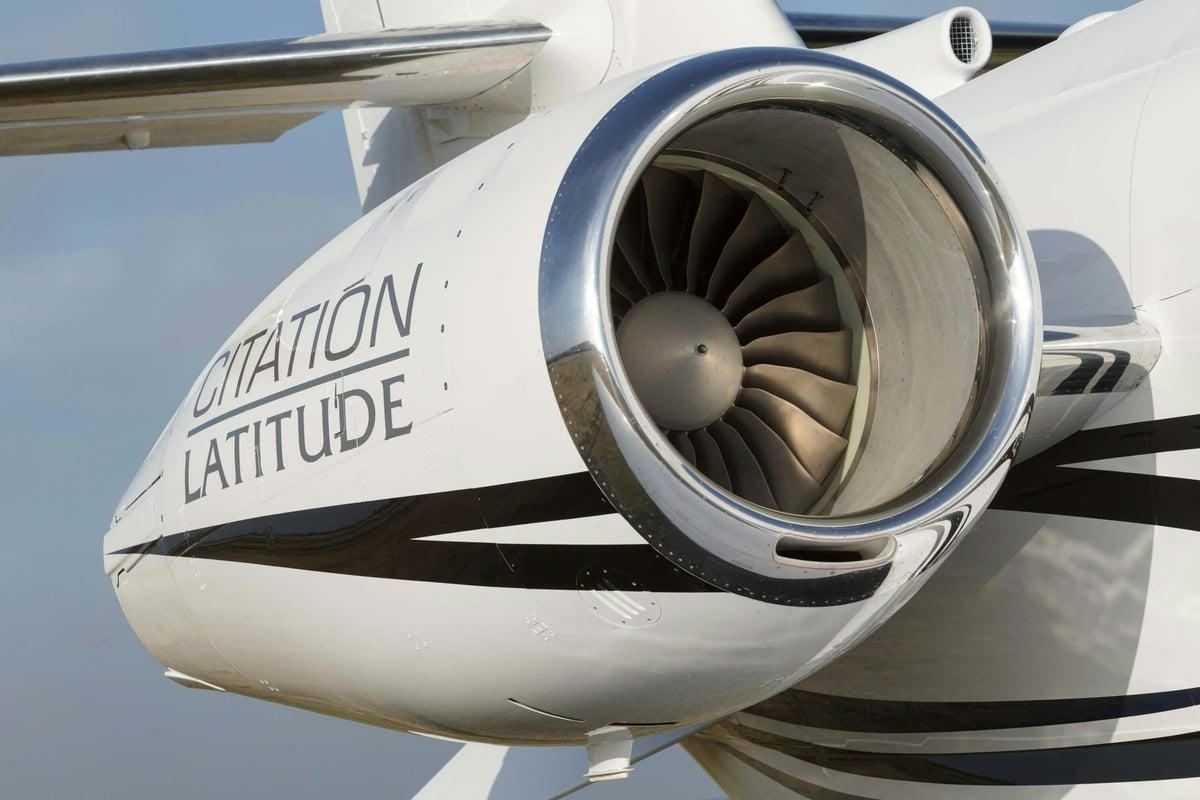
Textron Aviation has acknowledged that workforce experience issues have contributed to delays in its jet deliveries, according to statements made on Tuesday. The aircraft manufacturer reported delivering 40 jets in the second quarter, a decrease from 49 jets delivered during the same period last year. However, deliveries of commercial turboprop aircraft increased from 34 to 44 units over the same timeframe.

Workforce Experience and Efficiency Concerns

During the company’s earnings call, CEO Lisa Atherton emphasized that workforce efficiency remains a significant challenge for Textron Aviation. She noted that approximately half of the company’s employees now have less than five years of experience, a marked increase from under 30 percent in 2019. Although employee attrition has stabilized, the relatively inexperienced workforce is still in the process of acquiring the skills necessary for optimal productivity. Atherton explained that production employees typically require five to seven years to reach full efficiency, and the company expects to see meaningful improvements in productivity beginning next year as recent hires gain experience.

In response to these challenges, Textron has invested in a Career and Learning Center designed to better screen and prepare new hires before they enter the production floor. The company has also enhanced engineering support and supervisor training programs to accelerate learning curves and address production issues more swiftly. Despite these efforts, ongoing supplier difficulties—such as delayed deliveries of engines, spars, and hydraulic components—continue to complicate operations. These supply chain disruptions often compel employees, particularly those less experienced, to perform tasks outside the normal production sequence, further affecting efficiency.

Market Implications and Financial Outlook

The workforce and supply chain challenges facing Textron have implications beyond the company itself. Delays in aircraft deliveries could reverberate across the business aviation market, potentially creating opportunities for competitors such as Boeing and Embraer to increase their market share. Industry analysts suggest that these setbacks may lead to heightened scrutiny of Textron’s production capabilities and could influence customer confidence. Nevertheless, demand for business aviation remains stable despite broader geopolitical uncertainties, which may affect how airlines and business jet operators respond to the delays.

Textron Aviation reported quarterly revenue of $1.54 billion and a segment profit of $165 million, with a backlog valued at $8.03 billion. Chief Financial Officer David Rosenberg projected that ongoing productivity improvements could eventually yield approximately $150 million in additional profit. The company anticipates broader improvements in aircraft deliveries by mid to late 2027, as workforce experience deepens and operational enhancements take effect.

More news
American Airlines Plans Widebody Aircraft Order to Boost Profits

American Airlines Plans Widebody Aircraft Order to Boost Profits

American Airlines Plans Widebody Aircraft Order to Boost Profits Strategic Focus on Narrowing Profitability Gap American Airlines is advancing a strategic initiative aimed at closing the profitability gap with its main competitors, Delta Air Lines and United Airlines. Rather than pursuing expansion in scale, the airline is concentrating on enhancing its premium offerings, including upgraded cabins and improved services. CEO Robert Isom highlighted in a recent interview that the company’s primary goal is to bridge the margin disparity by focusing on quality rather than quantity. Although no definitive timeline has been announced, Isom affirmed that the long-term plan centers on making up the margin shortfall. The financial results from 2025 underscore the challenge American faces. While United reported a GAAP net income of $3.4 billion and Delta $5 billion, American’s net income stood at a modest $111 million. To address this, the airline intends to improve operational reliability, invest in premium cabins and airport lounges, expand its loyalty program, and attract a higher volume of premium travelers. American is also targeting stronger performance in key competitive hubs such as Los Angeles International, Chicago O’Hare, Washington Dulles, and New York JFK, leveraging its extensive North American network to bolster market presence. Chief Financial Officer Devon May emphasized that success will be measured by the airline’s ability to close both revenue and unit revenue gaps with its rivals, while maintaining a focus on operational efficiency. Upcoming Widebody Aircraft Order and Fleet Renewal A central element of American Airlines’ strategy is a significant widebody aircraft order expected to be placed within the year. Both Airbus and Boeing are competing for the contract, with Isom noting that Airbus “could play a big role” despite American’s current widebody fleet being exclusively Boeing. Deliveries are projected to begin in the early to mid-2030s. The airline has already issued requests for proposals to both manufacturers as it evaluates its next generation of widebody aircraft. According to ch-aviation data, American’s Boeing 777-200ERs, which average over 25 years in service, are the oldest aircraft in its 1,032-plane fleet and are slated for retirement as new widebodies enter service. This renewal is critical to maintaining competitiveness and improving operational efficiency. However, the airline faces several challenges in executing this order. Ongoing supply chain disruptions, rising production costs, and intensified competition from United and Delta—both of which may accelerate their own widebody acquisitions or enhance premium services—pose significant hurdles. Industry analysts suggest that these developments could increase investor interest in American’s profitability and strategic direction. Rejection of Merger Speculation Addressing recent speculation about potential industry consolidation, Isom firmly dismissed the possibility of a merger with United Airlines. This followed public comments earlier in the year by United CEO Scott Kirby. Isom explained that consultations with advisers and policymakers made it clear that such a merger would encounter insurmountable regulatory obstacles under current U.S. antitrust laws. “We don’t spend a lot of time pursuing impossibilities,” he stated, reaffirming American’s commitment to pursuing realistic opportunities to enhance its business. As American Airlines moves forward with its widebody fleet renewal and premium service enhancements, the company aims to strengthen its competitive position against its largest U.S. rivals, despite the operational and market challenges that lie ahead.
How Airports Can Use AI to Improve Decision-Making

How Airports Can Use AI to Improve Decision-Making

How Airports Can Use AI to Improve Decision-Making Fares Djenandji, chief growth officer at Ipsotek (an Eviden Business), explores how the next phase of artificial intelligence (AI) is poised to revolutionize airport operations by delivering contextual operational intelligence. Over the past decade, airports have made substantial investments in advanced camera networks, video management systems, and sophisticated analytics. Virtually every area within terminals, airside operations, and security zones is now under constant surveillance. Despite this extensive data collection and visibility, many airport operations teams continue to grapple with challenges such as delayed responses, fragmented workflows, alert fatigue, and missed opportunities to prevent disruptions before they escalate. From Detection to Understanding The fundamental issue lies not in the quantity of data but in the lack of meaningful understanding. Traditional Vision AI technologies excel at detecting events—identifying queues forming, vehicles entering restricted zones, or passengers lingering excessively. While these detections provide valuable information, they primarily answer the question, "What is happening?" For airport operations, however, the more pressing questions are, "What does this mean operationally?" and "What should happen next?" Emerging AI capabilities are beginning to address this gap. Innovations such as Natural Language Detection (NLD), Vision Language Models (VLMs), and generative AI are advancing beyond mere event detection. These technologies interpret scenes within their operational context, explain their significance, and link them to real-world airport processes. For instance, a queue at security is no longer just a queue; it becomes an indicator of potential flight delays, a signal of staffing pressures, and an early warning for congestion further downstream. The Limits of More Data In response to increasing operational complexity, many airports have deployed additional AI models, generating more alerts and data streams. However, this approach often results in information overload. Without contextual understanding, scaling detection capabilities merely increases the volume of alerts that operations teams must manually assess, leading to overwhelmed control rooms and slower decision-making. The critical transformation, therefore, is not solely about enhancing detection accuracy but about embedding intelligence that can interpret, prioritize, and synthesize information. While Vision AI remains a foundational technology, it must evolve to provide actionable insights rather than simply more data. Connecting Siloed Systems Airports function within a complex ecosystem comprising video platforms, Airport Operational Databases (AODB), flight schedules, passenger flow analytics, and gate management tools. Although each system contains valuable data, they often operate in isolation, hindering operational agility. True contextual AI arises when these disparate data sources are integrated. By fusing video insights with flight timings, passenger volumes, and operational milestones, airports can develop a richer, interconnected understanding of their operations. Vision Language Models are particularly effective in this integration, combining visual recognition with language-based reasoning to deliver deeper, more actionable insights. Challenges and Industry Response Despite AI’s transformative potential, significant challenges remain. Governance frameworks must evolve rapidly to keep pace with AI adoption, a concern underscored in Forrester’s *State of Agentic AI in 2026* report. Market reactions to AI-driven improvements in air traffic management are mixed. For example, the Federal Aviation Administration (FAA) has pledged substantial reductions in flight delays by 2028 through AI deployment, yet analysts remain skeptical about the feasibility of this timeline. Meanwhile, some airlines and airports are aggressively adopting AI to streamline operations and enhance decision-making, while others lag behind due to governance and integration obstacles. As AI technologies continue to advance, airports must shift their focus from merely accumulating data to achieving genuine operational intelligence—where context, understanding, and timely action combine to improve outcomes for both passengers and operators.
A380 Flight to China Delayed by 10 Hours

A380 Flight to China Delayed by 10 Hours

A380 Flight to China Delayed by 10 Hours Arrival of the A380 at Hangzhou and Unexpected Diversion The recent arrival of the Emirates Airbus A380 at Hangzhou Xiaoshan International Airport marked a significant milestone for Chinese airports seeking to enhance their global standing. The widebody jet, a rare sight for local aviation enthusiasts accustomed to smaller aircraft, was originally scheduled to land at Shanghai Pudong International Airport after a seven-hour flight from Dubai. However, severe thunderstorms rendered descent into Shanghai unsafe, forcing Emirates Flight EK302, carrying 373 passengers, to divert to Hangzhou instead. Upon arrival, the aircraft remained on the tarmac for an extended period, resulting in passengers spending a total of 17 hours on board, including a 10-hour delay in Hangzhou—longer than the flight itself. The diversion and prolonged wait transformed what should have been a celebratory event into a logistical challenge for both the airline and the airport. Operational Challenges and Passenger Experience Initially, the Emirates crew anticipated a brief delay and did not request that Hangzhou airport initiate immigration procedures for disembarking passengers. As the delay extended, the crew exceeded their permitted duty hours, preventing passengers from leaving the aircraft until local authorities intervened. Reports from Shanghai media, citing passenger accounts, described the situation as a logistical nightmare that caused significant operational losses and damaged the airport’s reputation. Despite the frustration, many passengers acknowledged Emirates’ prioritization of safety throughout the ordeal. This response suggests that the airline’s loyal customer base may view the incident with understanding, even as competitors may seize the opportunity to emphasize their own reliability and customer service in contrast to Emirates’ operational difficulties. Broader Implications for Aviation The incident highlights ongoing challenges within the aviation industry, particularly the disruptive impact of severe weather and the complexities involved in managing international arrivals at secondary airports. Such disruptions can have cascading effects on flight schedules and operational planning, prompting airlines to reevaluate their contingency strategies and communication protocols. Beyond immediate operational concerns, the delay also reflects broader issues confronting global aviation, including sustainability initiatives and the influence of geopolitical factors on route planning and airport operations. As airlines and airports strive to expand international connectivity, incidents like the Hangzhou A380 delay underscore the delicate balance required to maintain operational resilience amid an increasingly complex global environment. While Hangzhou’s brief moment in the aviation spotlight was overshadowed by unforeseen complications, the episode serves as a reminder of the realities of modern air travel and the ongoing efforts by industry stakeholders to adapt to evolving challenges.
Ryanair Expands Partnership with AWS on AI Initiatives

Ryanair Expands Partnership with AWS on AI Initiatives

Ryanair Expands Partnership with AWS to Drive AI-Powered Growth Ryanair has announced a five-year extension of its partnership with Amazon Web Services (AWS), aiming to harness advanced cloud computing and agentic artificial intelligence technologies to support its next phase of growth. The renewed agreement will see Ryanair employing a broad range of AWS services, including Amazon Bedrock, to enhance its website functionality, improve flight scheduling, and streamline workflows for pilots and cabin crews. The collaboration also involves the development of more sophisticated AI tools designed to optimize operational efficiency across the airline. Leveraging AI to Enhance Operational Efficiency As Europe’s largest low-cost carrier, Ryanair’s business model depends heavily on maximizing aircraft utilization while minimizing operating costs. The integration of AI-driven scheduling, accelerated digital services, and increased automation of internal processes is expected to significantly boost operational efficiency. These advancements are intended to reinforce Ryanair’s competitive position in a highly contested market by enabling faster decision-making and more effective resource management. Industry Context and Strategic Implications Ryanair’s expanded partnership with AWS occurs amid intensifying competition within the AI infrastructure sector. Major hyperscalers such as Alphabet and Amazon are making substantial investments in AI and cloud technologies, with industry-wide capital expenditures projected to reach $700 billion by 2026. This surge in spending has raised investor concerns about potential negative short-term cash flows, as evidenced by recent market reactions to increased capital expenditure guidance from Alphabet and the subsequent decline in Amazon’s stock price. The critical challenge for both Ryanair and AWS will be to ensure that these significant investments yield measurable operational improvements and sustainable long-term returns. The agreement also positions AWS as a key player in the aviation industry, as Amazon seeks to broaden the adoption of its Bedrock platform and agentic AI solutions across new sectors. Ryanair’s move may prompt competitors to accelerate their own investments in AI and cloud technologies to maintain efficiency gains and enhance customer experience. As the airline industry increasingly embraces digital transformation, Ryanair’s deepened collaboration with AWS highlights both the opportunities and complexities involved in adopting cutting-edge AI solutions within a rapidly evolving technological landscape.
New Aircraft Deals Announced in Asia Pacific Amid Ongoing Order Negotiations

New Aircraft Deals Announced in Asia Pacific Amid Ongoing Order Negotiations

New Aircraft Deals Announced in Asia Pacific Amid Ongoing Order Negotiations The 2026 Farnborough Airshow witnessed the unveiling of several significant aircraft orders from Asia Pacific carriers, even as numerous major deals remain under negotiation. Airlines in the region are actively addressing their long-term widebody replacement needs, with Philippine Airlines (PAL) emerging as the most prominent buyer at the event. Vietnam Airlines and two smaller Japanese carriers also announced new leases or orders, underscoring the region’s sustained demand for modern aircraft. Key Orders and Market Dynamics Philippine Airlines signed a memorandum of understanding to acquire 15 Boeing 787-10s, with options for an additional five aircraft. This marks PAL’s first commitment to the 787 family, with deliveries scheduled between 2031 and 2034. In addition, the airline placed an order for nine Airbus A350-1000s, increasing its backlog for the type to 16, with deliveries expected from 2034 to 2036. These acquisitions exceed PAL’s current widebody fleet, signaling ambitions for both replacement and growth. Vietnam Airlines is accelerating the introduction of Boeing 737-8 aircraft through new leasing agreements, reflecting the region’s robust demand for specific narrowbody models. Meanwhile, IndiGo’s record order for over 1,000 CFM Leap engines highlights intensifying competition among manufacturers and lessors in the Asia Pacific market. SMBC Aviation Capital also placed an order for 100 Boeing 737 Max aircraft, including the largest Max 10 variant, illustrating a market trend toward upgauging and influencing competitor strategies across the region. Notably absent from Farnborough were major narrowbody orders from Asian low-cost carriers, despite recent deals by AirAsia and VietJet Air over the past year. This suggests a temporary pause in new narrowbody commitments at the show, even as leasing and purchase activity continues elsewhere. Future Prospects and Market Challenges Several other major carriers are positioning themselves for future fleet renewal. Singapore Airlines is reportedly in the early stages of considering substantial widebody orders. Cathay Pacific faces the need for additional widebodies to complete the long-term replacement of its 777 and A330 fleets. Similarly, Qantas and Malaysia Airlines are both exploring further long-haul aircraft acquisitions to support their growth and modernization plans. However, the regional aircraft market is not without challenges. The Trump administration’s executive order threatens to disrupt trade agreements involving commercial aircraft, jet engines, and components, injecting uncertainty into the market. This development has caused fluctuations in the stock prices of aircraft manufacturers and engine suppliers, prompting competitors to reassess their order negotiations and fleet modernization strategies. As Asia Pacific carriers strive to secure delivery slots amid strong demand and evolving geopolitical dynamics, the coming months are expected to bring further announcements and strategic adjustments. Airlines and lessors will continue to navigate competitive pressures alongside emerging uncertainties in the global aviation landscape.
United Aviate Academy Adds Fifth Piper Seminole to Multi-Engine Fleet

United Aviate Academy Adds Fifth Piper Seminole to Multi-Engine Fleet

United Aviate Academy Expands Multi-Engine Fleet with Fifth Piper Seminole United Aviate Academy, the wholly owned flight school of United Airlines, has taken delivery of its fifth Piper PA-44-180 Seminole, enhancing its multi-engine training capabilities. The aircraft handover occurred during the EAA AirVenture Oshkosh 2026 event, marking a significant milestone in the academy’s ongoing fleet expansion. Additional deliveries of Piper Seminoles are expected later this year, underscoring the academy’s commitment to strengthening its training resources. Strengthening Multi-Engine Training at Phoenix Goodyear The new twin-engine Piper Seminole will support the multi-engine phase of United Aviate Academy’s professional pilot training program based at Phoenix Goodyear Airport in Arizona. Since joining the Piper Flight School Alliance in 2025, the academy has steadily increased its Seminole fleet. Initially, the academy agreed to purchase up to three aircraft with options for further acquisitions. Piper Aircraft’s comprehensive fleet support program played a pivotal role in the academy’s decision to select the Seminole as its primary multi-engine trainer. Since its inception in 2022, United Aviate Academy has graduated over 400 pilots, logged more than 230,000 flight hours, and completed upwards of 170,000 flight lessons, according to Piper. The academy’s current training fleet comprises Cirrus SR20, Diamond DA42, and five Piper Seminole aircraft. This diverse fleet facilitates ab-initio training for aspiring pilots who aim to progress through United Airlines’ Aviate program and potentially secure employment with the airline upon meeting requisite standards. Challenges Amid Fleet Expansion and Market Competition The expansion of the multi-engine fleet presents operational challenges, including the need to scale pilot training resources, maintain aircraft readiness, and manage the increased costs associated with fleet growth. As United Aviate Academy expands its capacity, it faces intensified competition from other flight training providers. Industry data indicates that competitors such as SkyWest and Luxaviation are also enlarging their fleets, which may heighten market competition and prompt rival academies to enhance their training programs or pursue similar fleet investments. Despite these challenges, United Aviate Academy continues to demonstrate strong performance metrics. As of July 2025, the academy had graduated more than 300 pilots with an overall Federal Aviation Administration (FAA) checkride pass rate of approximately 90 percent. Industry Perspectives Ron Gunnarson, Vice President of Sales, Marketing, Customer Support, and Quality at Piper Aircraft, remarked, “Over the past year, it has been a pleasure to support United Aviate Academy as they enter their factory-new Seminoles into service.” Michael Hales, CEO of United Aviate Academy, added, “The addition of these new Piper Seminoles represents another important investment in the future of our students and the quality of training we provide at United Aviate Academy.” About United Aviate Academy and Piper Aircraft United Aviate Academy operates from a 340,000-square-foot facility at Phoenix Goodyear Airport in Arizona. The academy offers comprehensive pilot training with a fleet that includes Cirrus SR20, Diamond DA42, and five Piper Seminole aircraft. Piper Aircraft, headquartered at Vero Beach Regional Airport in Florida, manufactures a range of general aviation trainers, including the Pilot 100i, Archer TX, Archer DX, Seminole, and Seminole DX models.
Artificial Intelligence Shapes the Future of Trainer Aircraft

Artificial Intelligence Shapes the Future of Trainer Aircraft

Artificial Intelligence Shapes the Future of Trainer Aircraft The trainer aircraft market is experiencing a significant transformation as artificial intelligence (AI) reshapes the methods by which military and civil aviation organizations prepare the next generation of pilots. Historically, trainer aircraft have served as a critical link between theoretical instruction and operational flying, evolving from simple flight trainers to sophisticated platforms that replicate the complexities of modern combat aircraft. Today, AI is accelerating this progression, enabling pilot training to become more intelligent, personalized, and operationally relevant. Addressing Modern Challenges in Pilot Training Contemporary air forces confront numerous challenges, including pilot shortages, escalating operational costs, and the imperative to ready aviators for advanced aircraft equipped with cutting-edge avionics, sensor fusion, and network-centric warfare capabilities. AI offers solutions across all phases of pilot development. From adaptive classroom instruction and simulator-based training to autonomous flight assistance and predictive performance evaluation, AI serves to augment rather than replace human instructors. By processing extensive flight data, AI systems can identify individual trainee strengths and weaknesses, tailor customized learning pathways, and provide objective assessments of performance. Machine learning algorithms continuously refine training curricula based on historical data, instructor input, and evolving mission demands, fostering a dynamic and individualized learning environment. Between 2025 and 2032, AI is anticipated to revolutionize the trainer aircraft sector through innovations such as intelligent flight control systems, immersive simulation technologies, predictive maintenance, smart cockpit assistance, and autonomous mission planning. These advancements promise not only to enhance the quality of training but also to better equip pilots for increasingly automated and data-driven combat operations. Challenges and Industry Response The integration of AI into trainer aircraft, however, presents significant challenges. The development and implementation of AI systems entail substantial costs, alongside the necessity for rigorous testing and validation to ensure safety and reliability. Furthermore, resistance from traditional defense contractors to rapid technological adoption may impede the pace of innovation. Despite these obstacles, the market is witnessing heightened competition as defense firms compete for contracts involving AI-enhanced military systems. This competitive environment has spurred accelerated research and development efforts and fostered new partnerships with technology companies specializing in AI. The global defense AI market is expanding swiftly, with leading entities such as Palantir Technologies, Anduril Industries, Lockheed Martin, and Northrop Grumman at the forefront of innovation. Their initiatives are driving deeper integration of AI into military applications, including trainer aircraft, thereby reshaping the competitive landscape. Preparing Pilots for the Future of Aviation Trainer aircraft have historically mirrored the technological demands of their time. Today’s pilots must master integrated sensors, networked communications, electronic warfare, and multi-domain operations. AI represents the next pivotal advancement in this continuum. Rather than merely instructing pilots on how to fly, AI-enabled trainers are designed to teach them how to think critically, adapt swiftly, and make informed decisions in complex and rapidly evolving environments. As global defense modernization efforts continue, the incorporation of AI into trainer aircraft will be central to preparing pilots for the future of aviation.
GMR Aero Technic Signs License Agreement with Honeywell for LEAP Engine Maintenance

GMR Aero Technic Signs License Agreement with Honeywell for LEAP Engine Maintenance

GMR Aero Technic Enters License Agreement with Honeywell for LEAP Engine Maintenance Hyderabad, India – GMR Aero Technic, a prominent Indian airframe Maintenance, Repair, and Overhaul (MRO) provider, has formalized a license agreement with Honeywell Aerospace to undertake maintenance, repair, and overhaul of line replaceable units (LRUs) for LEAP engines. This collaboration represents a strategic advancement in enhancing GMR Aero Technic’s MRO capabilities and expanding its role within India’s burgeoning aviation industry. Scope and Significance of the Partnership Under the terms of the agreement, GMR Aero Technic will provide comprehensive repair, overhaul, and depot-level maintenance services for seven Honeywell aerospace LRUs installed on LEAP engines, which power the Airbus A320neo and Boeing 737 MAX aircraft. The scope encompasses full disassembly, detailed inspection, repair, reassembly, and functional testing of critical engine control systems. Ashok Gopinath, President and Accountable Manager at GMR Aero Technic, emphasized the importance of the collaboration, stating that the partnership strengthens their component MRO portfolio. By integrating Honeywell’s advanced technology with GMR Aero Technic’s sophisticated repair infrastructure, the company aims to deliver high-quality, efficient, and reliable repair solutions to LEAP engine operators across India and the wider region. Cooper Cullen, President for Europe, Middle East, Africa, and India at Honeywell Aerospace, highlighted India’s rapid aviation growth and the strategic priority of providing high-quality LEAP engine LRU support to regional airline customers. He underscored GMR Aero Technic’s role as a vital partner in expanding Honeywell’s operations and enhancing MRO capabilities within the Indian market. Strategic Implications and Market Context This collaboration leverages Honeywell’s global expertise in aircraft systems and cutting-edge technologies alongside GMR Aero Technic’s certified facilities, advanced infrastructure, and skilled workforce. By enabling in-region repairs, the initiative is expected to significantly reduce turnaround times, improve service quality, and offer more cost-effective solutions for airlines operating in India and neighboring markets. The agreement arrives amid intensifying competition in the LEAP engine MRO sector. Established providers such as StandardAero, HAECO, and SR Technics have secured substantial contracts for LEAP engine services, creating a competitive environment that may challenge GMR Aero Technic to differentiate its offerings. Industry analysts suggest that competitors may respond by enhancing their service portfolios or expanding regional footprints to maintain or increase market share. Despite these challenges, the partnership aligns with GMR Aero Technic’s long-term strategy to broaden its MRO capabilities and support the Government of India’s “Make in India” initiative. By fostering indigenous repair expertise and reducing dependence on overseas MRO services, the collaboration is viewed as a significant step toward strengthening India’s aviation infrastructure and positioning the country as a regional hub for advanced aircraft maintenance.
ACC Aviation Implements Technical Asset Monitoring Program for International Financier

ACC Aviation Implements Technical Asset Monitoring Program for International Financier

ACC Aviation Implements Technical Asset Monitoring Program for International Financier ACC Aviation has successfully completed a comprehensive aircraft asset monitoring assignment for a leading international aviation finance institution, providing continuous technical oversight for a portfolio of next-generation commercial aircraft. This engagement involved detailed monitoring of aircraft condition, maintenance activities, operational status, and emerging technical risks throughout the financing period, thereby supporting the financier’s credit and risk management strategies. A Lifecycle Approach to Asset Monitoring Distinct from traditional pre-purchase due diligence, ACC Aviation’s program is designed to preserve collateral value over the entire financing lifecycle. The assignment encompassed physical inspections, thorough reviews of technical records, maintenance oversight, operator engagement, and the delivery of regular asset monitoring reports. By offering independent supervision of maintenance events and operational developments, the program aims to instill greater confidence among financiers regarding the long-term value and condition of their assets. Tristan Brouard, associate director at ACC Aviation, highlighted the increasing significance of independent technical oversight in aviation finance. He stated, “Our role is to provide clients with objective, commercially focused advice that enables them to understand the technical condition of their assets, identify emerging risks early, and protect long-term collateral value. This assignment reflects the confidence that aviation financiers continue to place in ACC Aviation’s technical and asset management capabilities.” Navigating Market Challenges with Enhanced Oversight The introduction of ACC Aviation’s Technical Asset Monitoring Program coincides with a period of considerable market challenges. Global aircraft supply remains constrained due to manufacturer backlogs and delivery delays, limiting near-term availability and driving lease rates upward. These supply-side pressures have created a complex environment for lessors and financiers, with market responses to new technical oversight initiatives expected to vary. While the ACMI (Aircraft, Crew, Maintenance, and Insurance) sector is forecasted to experience a downturn in the second quarter of 2026, demand for widebody aircraft continues to be strong. In response to these evolving conditions, ACC Aviation’s emphasis on technical services and predictive maintenance positions the firm to effectively address market dynamics. The company reports growing demand for independent technical monitoring as lenders, lessors, and institutional investors seek enhanced visibility and stronger collateral management throughout the asset lifecycle. By integrating advanced technical oversight with a proactive risk management approach, ACC Aviation aims to assist clients in navigating ongoing industry challenges and safeguarding the value of their financed assets.
DC Aviation Al-Futtaim Obtains San Marino Maintenance Approval

DC Aviation Al-Futtaim Obtains San Marino Maintenance Approval

DC Aviation Al-Futtaim Secures San Marino Maintenance Approval DC Aviation Al-Futtaim (DCAF) has obtained a standalone CAR-145 maintenance approval from the San Marino Civil Aviation Authority (SMCAA), authorizing the company to conduct both line and base maintenance on San Marino (T7) registered private and commercial aircraft. This certification enables DCAF to service these aircraft at its Al Maktoum International Airport facility in Dubai. The approval process was completed in under three months, underscoring the company’s dedication to expanding its technical capabilities within the region. Expanded Maintenance Capabilities and Fleet Coverage The new certification encompasses base maintenance for a broad range of aircraft, including the Bombardier Global Express series, Global 7500/8000, Challenger 604/605/650, Gulfstream G650, Embraer Legacy 600/650, and the Airbus A320 family. Additionally, line maintenance services now cover Boeing Business Jets (737 BBJ 600-900ER) and Dassault Falcon models 900EX, 900EX EASy, 7X, and 8X. This approval is available not only to DCAF-managed fleets but also to third-party operators, thereby enhancing the company’s aircraft-on-ground (AOG) support capabilities for T7-registered aircraft throughout the region. Holger Ostheimer, managing director of DCAF, emphasized the significance of this development, stating, “Securing the standalone SMCAA CAR-145 approval is a major step forward in our regional growth strategy. Being able to offer fully independent line and base maintenance support right here in Dubai is a significant advantage.” Market Implications and Future Prospects While the approval strengthens DCAF’s foothold in the Middle Eastern aviation maintenance market, it also presents new challenges. The company must navigate complex regulatory compliance requirements and face competition from established maintenance providers who may respond by enhancing their own services or forming strategic alliances. Market dynamics could shift as operators reassess their maintenance options in response to DCAF’s expanded capabilities, potentially leading to increased scrutiny and changes in market share. Looking ahead, DCAF plans to broaden its scope of approvals to include additional aircraft types, aligning with evolving market demands. The San Marino certification complements the company’s existing maintenance portfolio at its Dubai South facility, where it recently added a fully managed Airbus ACJ318 Elite+ to its charter fleet. As DCAF advances, its capacity to adapt to regulatory requirements and competitive pressures will be crucial in sustaining and growing its presence within the region’s dynamic aviation sector.
line









