Imagen

AeroGenie — Tu copiloto inteligente.

Pregunta cualquier cosa. Analiza todo. Actúa al instante.

Tendencias

Categories

Akasa Air Adds Two Boeing 737 MAX Jets, Expanding Fleet to 37
March 30, 2026By ePlane AI
Akasa Air Adds Two Boeing 737 MAX Jets, Expanding Fleet to 37
0
0
Akasa Air
Boeing 737 MAX
Fleet Expansion

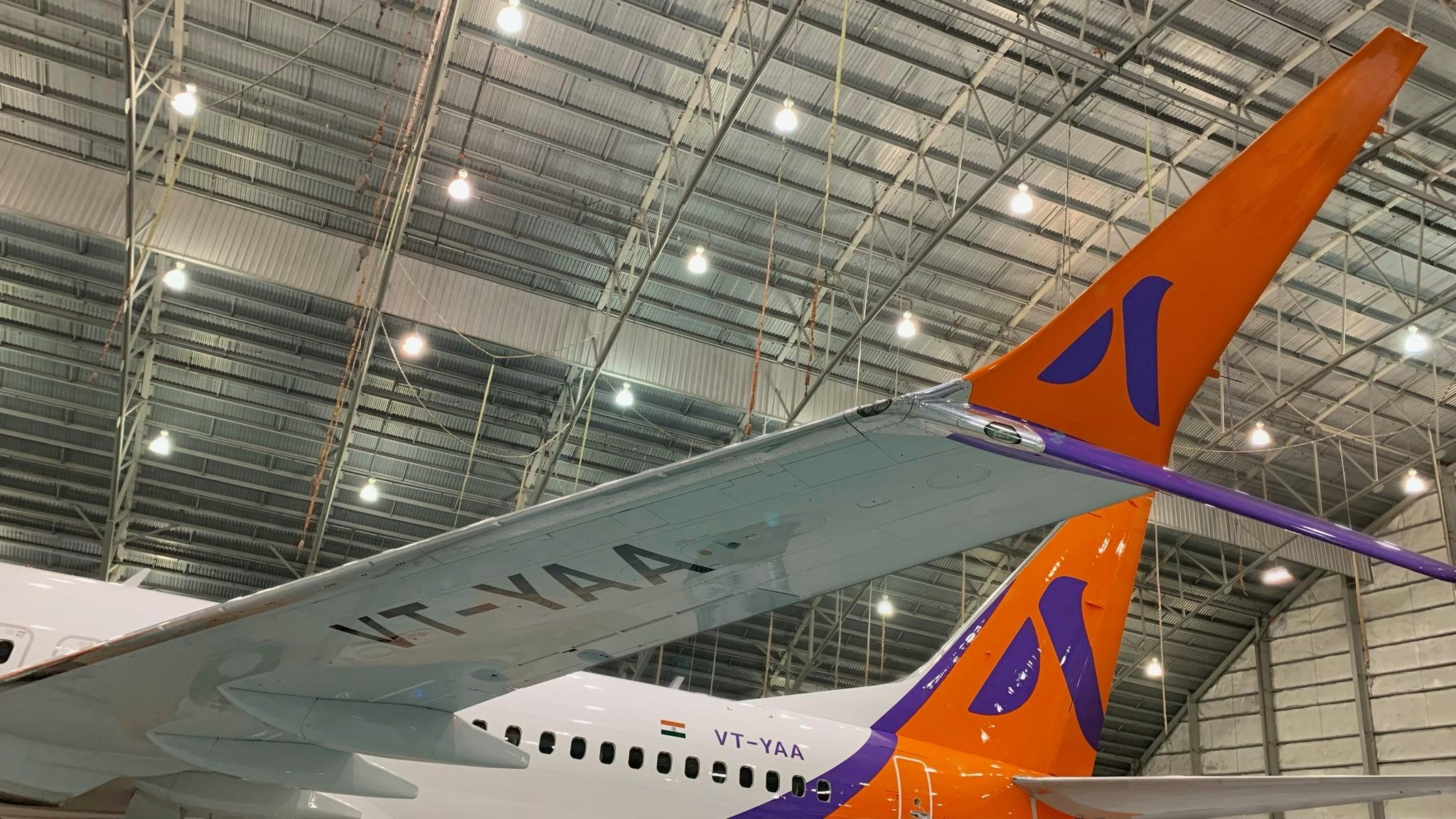
Akasa Air Expands Fleet to 37 with Two New Boeing 737 MAX Jets

Akasa Air has reached a significant milestone in its rapid expansion by increasing its fleet to 37 aircraft with the addition of two Boeing 737 MAX 8-200 jets. The 36th aircraft, registered VT-YBJ, arrived at Bengaluru’s Kempegowda International Airport on March 30 after a multi-leg journey from Seattle via Keflavik and Cairo. The 37th jet, VT-YBI, has completed its ceremonial handover in Seattle and is expected to join the fleet in India in early April.

Aircraft Configuration and Fleet Growth

Both new jets are tailored to Akasa Air’s specifications, featuring Safran Z200 seats that offer a four-inch recline, enhanced cushioning, and onboard USB-A and USB-C charging ports. These additions bring the airline’s total aircraft inductions for the first quarter of 2026 to six, representing a 35% year-on-year increase since Akasa Air’s launch in August 2022. This aggressive fleet expansion underscores the airline’s commitment to scaling operations rapidly in a competitive market.

Industry Context and Boeing Production Challenges

Akasa Air’s growth aligns with a broader industry trend, as airlines worldwide increase their orders for the Boeing 737 MAX. Competitors such as Air Algérie, which recently ordered 10 Boeing 737 MAX 8 jets, and Tarom, preparing for its own deliveries, are similarly expanding their fleets with this aircraft model. This intensifying competition is likely to drive strategic adjustments across the sector as carriers seek to strengthen their market positions.

The surge in demand for the 737 MAX has also brought increased scrutiny to Boeing’s production capabilities. Despite ongoing challenges related to wiring and seat installations, Boeing delivered 51 jets in February alone, including 43 737 MAX aircraft, highlighting the model’s strong market appeal. Akasa Air’s operational strategies and market positioning will be influenced not only by Boeing’s delivery schedule but also by the competitive dynamics within the industry.

Long-Term Commitment to Growth

Akasa Air currently holds an order book of 226 Boeing 737 MAX aircraft, with 189 scheduled for delivery over the next six years. This substantial commitment reflects the airline’s long-term growth strategy and confidence in the expanding Indian aviation market, where rising demand for air travel continues to drive industry-wide expansion.

Since its inception, Akasa Air has steadily broadened its domestic and international presence while maintaining a focus on operational reliability. As the airline integrates its latest fleet additions, it faces both opportunities and challenges amid a competitive landscape shaped by evolving market dynamics and the ongoing development of the Boeing 737 MAX program.

More news
Vertical Aims to Raise $850 Million for Air Taxi Certification

Vertical Aims to Raise $850 Million for Air Taxi Certification

Vertical Aerospace Secures $850 Million Financing Package to Advance Air Taxi Certification Comprehensive Funding to Support Valo eVTOL Certification Through 2026 and Beyond Vertical Aerospace, the U.K.-based manufacturer of electric vertical takeoff and landing (eVTOL) air taxis, announced on Monday that it has secured a nonbinding agreement for a financing package valued at up to $850 million. The funds are intended to support the certification process of its flagship Valo aircraft through 2026 and potentially extend beyond that timeline. This announcement follows a recent warning from the company regarding cash flow concerns that raised questions about its financial sustainability. The financing package was arranged in collaboration with Vertical’s longstanding investor Mudrick Capital Management and Yorkville Advisors Global. If finalized, the agreement would inject substantial capital into the company, including up to $800 million in investments directed toward Vertical’s facilities through 2027 and beyond. Yorkville has committed to purchasing up to $250 million in Series A convertible equity and establishing a $500 million equity line of credit over 36 months, enabling Vertical to draw funds as required. Mudrick Capital will contribute an additional $50 million through new convertible notes and has agreed to extend the repayment deadline for existing notes from December 2028 to December 2030, aligning with the anticipated entry into service of the Valo air taxi. Vertical estimates the certification process for the Valo will require approximately $700 million. According to its latest earnings report, the company held $93 million in cash and cash equivalents at the end of 2025, supplemented by an expected $28 million from tax relief and government grants. The company’s cash burn for 2025 was $112 million, consistent with prior projections, and it reported an operating loss of $127 million, which was smaller than anticipated. Over the next 12 months, Vertical plans to allocate roughly $195 million to accelerate flight testing, certification, and manufacturing activities. CEO Stuart Simpson described the financing package as a pivotal development for the company, stating, “We have assembled a comprehensive, flexible financing package designed to execute our strategic plan and materially strengthened our ability to build and certify Valo.” Intensifying Competition and Legal Challenges in the eVTOL Sector The announcement comes amid escalating competition within the eVTOL industry, where companies such as Archer Aviation and Joby Aviation have unveiled ambitious plans to launch air taxi services. This competitive environment has intensified the race for certification and market entry. Market reaction to Vertical’s financing news has been positive, interpreting it as a sign of renewed financial stability and robust investor confidence. The new capital also reduces Vertical’s reliance on a backstop financial provider, granting the company greater flexibility in selecting strategic partners. Despite these advances, the competitive landscape remains fraught with legal disputes. Archer Aviation has accused Joby Aviation of fraud related to alleged ties with China and has initiated a patent infringement lawsuit against Vertical, alleging that the Valo design infringes on elements of Archer’s Midnight aircraft. Nevertheless, Vertical’s leadership remains resolute in the face of these challenges. On the same day as the financing announcement, Vertical disclosed it had raised an additional $50 million through the issuance of common equity shares. When combined with existing cash reserves, anticipated tax relief, and government grants, the company now has approximately $160 million available to support Valo’s certification efforts in 2026. Chairman Domhnall Slattery underscored the significance of the new funding, emphasizing that the package provides immediate working capital and flexible mechanisms to access further capital efficiently as the company advances through its certification milestones. The partners involved in the financing expect to finalize the terms of the agreement by April 19, after which the funds will be deployed to accelerate Vertical’s certification and manufacturing objectives.
Documentary Examines Aerospace Valley’s Contribution to Flight Test Innovation

Documentary Examines Aerospace Valley’s Contribution to Flight Test Innovation

Documentary Examines Aerospace Valley’s Contribution to Flight Test Innovation Aerospace Valley: A Historic Hub of Flight Testing A new documentary produced by the Flight Test Historical Foundation (FTMF) in collaboration with KLCS-TV highlights California’s Aerospace Valley and its enduring influence on the evolution of flight. The film provides rare access to the engineers and test pilots who are pioneering advancements in hypersonic aircraft, electric air mobility, and commercial spaceflight. Spanning from the U.S. Air Force Plant 42 to the Mojave Air and Space Port, Aerospace Valley has been a cornerstone of aerospace innovation for decades. Since Chuck Yeager’s landmark breaking of the sound barrier in 1947, the region has served as a global center for flight testing. It has been the birthplace of legendary programs such as the North American X-15, which achieved speeds of Mach 6.7 and laid the foundation for human spaceflight, as well as iconic aircraft like the Lockheed SR-71 Blackbird. Today, Aerospace Valley continues to lead with cutting-edge projects, including NASA and Lockheed Martin’s X-59 supersonic demonstrator. Collaborative Ecosystem Driving Innovation The documentary explores the dynamic ecosystem that defines Aerospace Valley, where established aerospace giants such as Northrop Grumman, Boeing, and Lockheed Martin operate alongside emerging companies like Stratolaunch, Blue Origin, and Joby Aviation. Educational institutions, including the United States Air Force Test Pilot School and the National Test Pilot School, play a critical role in training the next generation of flight test professionals. Through a combination of archival footage and interviews with aerospace leaders, test pilots, and engineers, the film traces the region’s rich history while examining its ongoing impact on emerging technologies. It addresses the challenges facing the industry, such as regulatory complexities illustrated by the AW609’s protracted certification process and market acceptance difficulties exemplified by Vertical Aerospace’s recent financial setbacks. The documentary also highlights skepticism surrounding new electric vertical takeoff and landing (eVTOL) aircraft, driven by technological uncertainties and competition from established manufacturers. In response, companies are intensifying research and development efforts and forging strategic partnerships, as demonstrated by Vertical Aerospace’s collaborations with Honeywell and other industry leaders. Insights into Hypersonic Flight and Commercial Spaceflight The film features in-depth interviews with key figures from Boeing, Northrop Grumman, Lockheed Martin, Scaled Composites, Pratt & Whitney, Joby Aviation, and the U.S. Air Force flight test community. It offers a detailed look at the future of hypersonic flight testing, with insights from U.S. Air Force engineers and private innovators such as Art Thompson, who discusses the engineering challenges and potential of this rapidly evolving field. Additionally, the documentary examines the emerging era of commercial human spaceflight, featuring conversations with Jared Isaacman and Todd Ericson about the objectives and implications of the Polaris Dawn program. Supported by grant funding from the Air Force Research Laboratory’s STEM outreach initiative, the documentary emphasizes how rigorous flight testing continues to transform ambitious concepts into operational aerospace systems, while inspiring future generations of engineers, scientists, and pilots. The program is scheduled to air on KLCS-TV on March 31 at 7:00 p.m. EST. Further information about the Flight Test Museum Foundation is available at www.FlightTestMuseum.org.
Aviation Technology Leadership and Investor Outlook

Aviation Technology Leadership and Investor Outlook

Aviation Technology Leadership and Investor Outlook Innovative Solutions & Support (ISIN: US45772M1018) has emerged as a significant contributor to the aerospace sector, specializing in advanced cockpit avionics and military-grade display systems. For investors in North America seeking stable growth amid increasing air travel demand, the company provides access to a resilient industry where continuous technological upgrades are generating sustained value. This analysis explores the company’s business model, market positioning, associated risks, and the broader industry environment. Company Overview and Core Business Model Headquartered in Exton, Pennsylvania, Innovative Solutions & Support focuses on delivering sophisticated avionics and display technologies for both commercial and military aviation markets. Its product range includes glass cockpit displays, air data systems, and integrated flight management solutions. These digital upgrades enable airlines to modernize their fleets efficiently, avoiding the expense of complete aircraft overhauls. The company’s emphasis on retrofit solutions is complemented by recurring revenue streams derived from aftermarket services, maintenance contracts, and software updates. Commercial aviation constitutes the primary source of revenue, while military contracts provide diversification and a measure of stability. This dual approach helps mitigate the cyclical nature of commercial demand and leverages consistent defense spending. Notable products such as the FMS-90 flight management system and HD Air Data Computers have gained acceptance in regional jets and business aircraft. These systems integrate GPS, inertial navigation, and predictive weather routing to enhance operational efficiency and safety. Market Position and Competitive Landscape Operating in a sector dominated by industry leaders like Honeywell and Collins Aerospace, Innovative Solutions & Support has successfully established a niche by offering cost-effective retrofit solutions tailored to smaller operators. Its agility and capacity for customization appeal particularly to regional airlines and general aviation customers, insulating the company from direct competition in large original equipment manufacturer (OEM) contracts. The firm benefits from ongoing industry trends toward cockpit digitalization, driven by aging aircraft fleets and evolving air traffic management standards that necessitate technological upgrades. Its systems support compliance with ADS-B regulations and are designed to meet future navigation requirements, ensuring continued relevance as regulatory frameworks advance. North America remains the company’s core market, with strong penetration among U.S. regional carriers and cargo operators. Expansion efforts into European and Asian markets present additional growth opportunities, although currency fluctuations pose minor challenges. The company’s debt-light financial structure supports organic growth initiatives without the risk of shareholder dilution. Industry Dynamics and Emerging Challenges The aviation sector’s recovery following the pandemic has stimulated demand for Innovative Solutions & Support’s products. Rising passenger volumes and increased cargo activity, propelled by the growth of e-commerce, have led to higher fleet utilization and maintenance expenditures. Nonetheless, the industry faces emerging challenges. Workforce reductions at competitors, exemplified by Supernal’s recent decision to lay off 80% of its staff, underscore potential risks to innovation and project delivery timelines. Market responses to such developments are mixed; some investors express concern over long-term viability, while others view these moves as opportunities to streamline operations. These shifts may intensify competition for skilled talent and market share, particularly within the advanced air mobility segment. Furthermore, structural barriers in regional markets, as highlighted by the CEO of Azul in reference to Brazil’s aviation environment, illustrate the complexities confronting investors on a global scale. Such challenges influence investor sentiment and shape competitive dynamics as companies strive to maintain leadership amid rapid industry evolution. Outlook Innovative Solutions & Support’s strategic focus on niche innovation, balanced revenue streams, and operational adaptability positions the company favorably amid sector recovery and ongoing technological transformation. While industry headwinds and competitive pressures remain, the company offers North American investors a compelling opportunity to engage with the evolving landscape of aviation technology.
Gateretail and JK Tech Transform Inflight Shopping with AI Automation

Gateretail and JK Tech Transform Inflight Shopping with AI Automation

Gateretail and JK Tech Transform Inflight Shopping with AI Automation Aviation retail is undergoing a significant transformation as gateretail and JK Tech deepen their strategic partnership to revolutionize inflight shopping through advanced artificial intelligence (AI) automation. By combining gateretail’s expertise in onboard services with JK Tech’s technological capabilities, the collaboration aims to develop a sophisticated retail planning platform tailored to the unique challenges of selling goods and food at cruising altitudes. AI-Driven Innovation: JIVA and Agentic Automation At the heart of this initiative lies JK Tech’s JIVA platform, which employs agentic automation—a technology that surpasses traditional software by autonomously analyzing extensive datasets and executing complex tasks in real time. This innovation enables airlines to transition from static, spreadsheet-based planning methods to dynamic, data-driven strategies. The integration of JIVA sets a new benchmark for leveraging technology to enhance ancillary revenue streams within the aviation sector. Enhancing Demand Forecasting and Stock Management One of the longstanding difficulties in inflight retail has been accurately predicting passenger purchasing behavior. Airlines have historically grappled with the dual issues of overstocking, which leads to waste, and understocking, which results in lost sales opportunities. The AI-powered predictive models developed through this partnership analyze variables such as flight duration, passenger demographics, and historical buying patterns to forecast demand with remarkable precision. This advancement is anticipated to substantially improve onboard retail profitability. In addition to forecasting, the platform addresses inventory challenges through intelligent stock management. JIVA monitors inventory levels across entire fleets, automatically generating restocking orders and minimizing human error. This automation streamlines the supply chain, optimizes aircraft weight for fuel efficiency, and ensures the consistent availability of high-margin products. Furthermore, the system’s insights are expected to significantly reduce waste associated with perishable food items. Dynamic Pricing and the Future of Retail Media The application of AI extends to pricing strategies, where the technology assists airlines in identifying optimal price points for various products and routes. As inflight retail becomes increasingly digitized, new challenges arise, particularly in measuring the effectiveness of retail media advertisements on platforms such as Facebook and Instagram. The industry is still developing the necessary tools and metrics to accurately assess these digital marketing efforts. Challenges and Industry Response Despite the promising potential of AI automation, gateretail and JK Tech face several obstacles. The absence of standardized technology protocols for AI-driven commerce in aviation complicates integration across different carriers and systems. Additionally, concerns persist regarding the impact of automation on traditional service roles, sparking debate about the future of hands-on inflight service jobs. Market reactions to these developments have been mixed. While some industry experts commend the efficiency improvements, others remain cautious about AI’s capacity to replicate the nuanced, personal interactions that characterize the inflight experience. Meanwhile, competitors are accelerating their efforts to develop more advanced AI tools, aiming to secure a foothold in the rapidly evolving retail media landscape. As gateretail and JK Tech advance their partnership, they are set to reshape inflight shopping by balancing technological innovation with the practical realities of a changing industry.
African MRO Summit Advances Goal of Self-Reliant Aviation Ecosystem

African MRO Summit Advances Goal of Self-Reliant Aviation Ecosystem

African MRO Summit Advances Goal of Self-Reliant Aviation Ecosystem A growing movement within Africa’s aviation sector is driving efforts to establish a self-reliant maintenance, repair, and overhaul (MRO) ecosystem. Airlines, maintenance providers, and industry organizations are increasingly focused on reducing reliance on overseas facilities, aiming to retain a greater share of aviation value within the continent. This shift reflects a strategic priority to strengthen Africa’s aftermarket capabilities and enhance the sustainability of its aviation industry. Consolidating Africa’s MRO Capacity The African Airlines Association has announced a dedicated Africa MRO Summit to be held in Addis Ababa, designed to unify the continent’s fragmented MRO capacity and provide airlines with more accessible options for heavy maintenance. The summit will convene a broad spectrum of stakeholders, including airlines, original equipment manufacturers, independent MRO providers, and training institutions, all under the shared objective of “building Africa’s sustainable MRO ecosystem.” The event will combine high-level policy discussions with technical workshops, facility tours, and business-to-business meetings. This format aims to translate strategic ambitions into tangible contracts and investment commitments. Organizers intend to address longstanding challenges that have driven African aircraft maintenance offshore, such as limited hangar space, certification complexities, foreign currency risks, and supply chain disruptions. By highlighting these obstacles, the summit seeks to stimulate both regulatory reforms and private sector investment in the aftermarket segment. Strategic Importance of Reducing Overseas Dependence Reducing dependence on foreign MRO services remains a central goal. Analyses of African airline cost structures reveal that outsourcing heavy maintenance and component overhauls abroad constitutes one of the largest drains on foreign exchange reserves. Aircraft and engine checks conducted in Europe, the Middle East, or Asia often result in prolonged aircraft downtime, costly ferry flights, and operational disruptions. The summit explicitly targets this reliance by promoting partnerships aimed at expanding in-continent capabilities for airframe, engine, and component maintenance. The ambition is to gradually relocate scheduled heavy maintenance, cabin retrofits, and certain engine services to African facilities that comply with international standards, thereby reducing turnaround times and mitigating exposure to currency fluctuations. Building a Competitive and Sustainable MRO Ecosystem Achieving a competitive African MRO sector will require substantial investment and collaboration. Market responses are expected to emphasize the development of a self-sustaining ecosystem across the continent. African airlines may increasingly seek strategic alliances with both local and international MRO providers to broaden their service networks and optimize costs. Partnerships with established global MRO firms could play a critical role in bridging capability gaps as Africa advances toward a more resilient and autonomous aviation maintenance industry. Encouraging signs of progress are already visible. Airline-affiliated MRO divisions in countries such as Ethiopia, Kenya, Egypt, and South Africa are actively marketing their services to third-party customers throughout the region. These facilities have demonstrated that, given sufficient scale and regulatory support, African MRO providers can compete effectively on quality and price, particularly for narrowbody fleets. This emerging capacity signals a promising trajectory for the continent’s aviation sector as it seeks to enhance industrialization and global competitiveness through a robust aftermarket infrastructure.
LaGuardia Crash Highlights Potential Role of AI in Air Traffic Control

LaGuardia Crash Highlights Potential Role of AI in Air Traffic Control

LaGuardia Crash Highlights Potential Role of AI in Air Traffic Control A Tragic Incident and a Technological Contrast On March 22, a devastating collision occurred at New York City’s LaGuardia Airport when an Air Canada Express jet carrying 76 passengers struck a fire truck shortly after landing. The impact destroyed the aircraft’s cockpit, resulted in the deaths of both pilots, and obliterated the emergency vehicle, which was attempting to cross the runway. This tragic event has drawn attention to the immense challenges faced by air traffic controllers and the potential for artificial intelligence (AI) to enhance safety in such high-stakes environments. In a striking parallel, a simulation conducted inside a mock control tower near Hong Kong International Airport demonstrates how AI can intervene to prevent similar disasters. The virtual scenario depicts a passenger jet approaching a runway just as an unexpected vehicle moves onto it. Unlike the LaGuardia incident, the AI system instantly identifies both the aircraft and the intruding vehicle, issuing a warning to the human controller and thereby averting a collision. This AI-powered technology, already operational at Hong Kong’s airport, integrates advanced software with data from high-resolution cameras to monitor runway activity in real time. The Strain on Air Traffic Control and the Promise of AI Wesley Yung, chief air traffic control officer at Hong Kong’s Civil Aviation Department, underscores the difficulty of spotting vehicles on runways under challenging conditions. He notes that while human controllers may miss such hazards, AI systems can provide critical alerts, enhancing situational awareness and safety. The LaGuardia crash has exposed the intense pressures on air traffic controllers, particularly during overnight shifts when staffing levels are low. Controllers must manage multiple aircraft and service vehicles simultaneously, often under stressful conditions and while responding to emergencies. The aviation sector is currently navigating a complex landscape marked by pandemic-related disruptions, supply chain challenges, and geopolitical tensions that have unsettled global air travel. Aircraft manufacturers face difficulties in replacing aging fleets, and shortages of experienced air traffic controllers and airport personnel further strain the system. At the same time, global passenger demand is expected to more than double by 2050, intensifying the operational challenges. AI Integration: Opportunities and Limitations The deployment of AI to assist in air traffic management is increasingly viewed as essential to addressing these challenges. While the neural network technology used in Hong Kong cannot eliminate all risks—given the potential for software errors, hardware failures, and the necessity of human oversight—it offers significant advantages. The system can process vast amounts of data, tracking multiple flights and moving vehicles simultaneously, a task that can overwhelm human controllers, especially during periods of fatigue or adverse weather. The LaGuardia tragedy has also influenced market dynamics, prompting increased investment in AI technologies for air traffic control. Industry players are accelerating efforts to develop and enhance AI capabilities to maintain competitive advantages. As the aviation sector confronts rising demand and growing operational complexity, the integration of AI is poised to become a critical component in improving safety and efficiency in the skies.
Delta Air Lines Jet Engine Fails Shortly After Takeoff

Delta Air Lines Jet Engine Fails Shortly After Takeoff

Delta Air Lines Jet Engine Failure Forces Emergency Return to São Paulo Delta Air Lines Flight 104, operating an Airbus A330-300 en route to Atlanta, encountered a critical engine failure shortly after departing from São Paulo’s Guarulhos International Airport on the morning of Monday, March 30. As the aircraft ascended, the left engine erupted in flames, scattering debris over the surrounding area and igniting a brush fire near the runway. Witnesses captured dramatic footage showing multiple explosions and burning fragments falling to the ground. Emergency Response and Passenger Safety The flight crew promptly declared a Mayday and executed an emergency return to Guarulhos, landing safely just nine minutes after takeoff. All passengers and crew were evacuated without injury, and those onboard were transported to the terminal by bus. The incident caused a temporary suspension of airport operations as emergency responders addressed the fire caused by the falling debris. Delta Air Lines has announced efforts to accommodate passengers affected by the disruption. The airline also commended the professionalism and swift actions of the flight crew, underscoring its ongoing commitment to safety. Investigation and Industry Context The cause of the engine failure remains under active investigation. Authorities from the National Transportation Safety Board (NTSB) and Brazilian aviation regulators are working jointly to determine the factors that led to the engine’s malfunction. This incident adds to a recent series of engine-related emergencies involving Delta aircraft. Despite operational challenges and the pressure of rising jet fuel prices impacting its stock performance, Delta continues to maintain a competitive position in the aviation sector. The airline’s ownership of the Monroe Energy refinery provides a strategic advantage in managing fuel costs amid market volatility. Further updates will be released as the investigation progresses.
Delta Flight to Atlanta Returns to Brazil Due to Engine Issue

Delta Flight to Atlanta Returns to Brazil Due to Engine Issue

Delta Flight to Atlanta Returns to São Paulo Following Engine Malfunction Delta Air Lines Flight 104, carrying more than 270 passengers and 14 crew members, was compelled to return to São Paulo/Guarulhos International Airport on Sunday evening after experiencing a mechanical problem shortly after departure. The flight, bound for Atlanta, encountered an issue with the aircraft’s left engine, prompting the pilots to abort the journey and safely land back at the airport, according to a Delta spokesperson. Incident and Airport Disruption Upon landing, passengers were promptly assisted by Aircraft Rescue and Firefighting teams. The incident caused a temporary suspension of operations at Guarulhos International Airport after debris reportedly fell from the plane, igniting a brush fire near the runway. Emergency responders acted swiftly to contain the fire and secure the area, ensuring the safety of all passengers, crew, and airport personnel. Airline Response and Ongoing Investigation Delta emphasized that passenger and crew safety remains its highest priority and expressed regret for the disruption to travelers’ plans. The airline is actively working to rebook affected passengers and facilitate their onward travel. No injuries were reported as a result of the incident. Delta is conducting a thorough investigation into the engine malfunction and is cooperating fully with local aviation authorities in accordance with standard safety protocols. This event highlights the operational challenges faced by airlines operating in Brazil, where aviation infrastructure continues to evolve amid rising demand for air travel.
Delta Air Lines Flight Returns Shortly After Takeoff Due to Engine Fire

Delta Air Lines Flight Returns Shortly After Takeoff Due to Engine Fire

Delta Air Lines Flight Returns to São Paulo Following Engine Fire Delta Air Lines Flight 104, en route from São Paulo Guarulhos International Airport to Atlanta, was compelled to return shortly after takeoff due to an engine fire. The Airbus A330-323, registered as N813NW and in service for two decades, departed at approximately 11:49 p.m. local time. The aircraft ceased its ascent at around 4,500 feet when the left engine caught fire, prompting an immediate decision by the flight crew to return to the airport. The plane safely landed back at Guarulhos at 11:59 p.m., roughly ten minutes after departure. Incident Details and Crew Response Dramatic footage from inside the cabin captured flames erupting from the left Pratt & Whitney PW4168A engine. Debris from the malfunctioning engine fell onto a grassy area adjacent to the runway, igniting a minor brush fire. Additional reports suggested that the left landing gear may have also caught fire, potentially caused by overheated brakes or sparks generated during the emergency landing procedure. The cockpit crew responded with professionalism and composure, promptly communicating with air traffic control and executing established emergency protocols. After halting the climb, the pilots conducted safety checklists and returned to the nearest suitable airport. Although the Airbus A330 is engineered to operate safely on a single engine, the situation was complicated by the aircraft’s heavy fuel load for the long-haul journey, which increased the risk of brake overheating and extended stopping distances upon landing. Passengers seated near the affected engine witnessed the fire firsthand, an understandably distressing experience. Despite the alarming circumstances, all passengers and crew disembarked safely without injury. Aftermath and Industry Implications In the wake of the incident, Delta faces the operational challenge of rebooking affected passengers and managing potential compensation claims. The event may also exert short-term pressure on Delta’s stock price and invite heightened scrutiny of engine safety protocols within the aviation industry. Competitors might attempt to leverage any reputational impact to gain market share. Nevertheless, recent market data indicates that Delta’s shares continue to outperform those of its rivals, reflecting sustained investor confidence in the airline’s operational resilience and strategic advantages, including its in-house refinery operations. Delta has yet to issue a detailed statement regarding the cause of the engine failure or the extent of the damage sustained. Aviation authorities have launched an investigation into the incident.
Projected Growth in North American Engine MRO Demand

Projected Growth in North American Engine MRO Demand

Projected Growth in North American Engine MRO Demand Steady Expansion Amid Fleet Evolution The demand for engine maintenance, repair, and overhaul (MRO) services in North America is set for steady growth, propelled by the increasing deployment of new-generation narrowbody aircraft alongside the sustained operation of aging legacy fleets. Industry forecasts anticipate that North America will continue to be one of the largest global markets for engine MRO through the mid-2030s, despite experiencing a growth rate somewhat slower than that of faster-expanding regions. Recent analyses of global fleet and MRO outlooks project that North American MRO spending will increase by approximately 2 to 3 percent annually through the mid-2030s. This growth rate is modest compared to the global maintenance expansion, which is expected to approach the mid-3 percent range. Within the broader MRO sector, engine maintenance is forecasted to remain the largest and fastest-growing segment, surpassing airframe, component, and line maintenance. This trend is driven by the complexity and high costs associated with modern powerplants, as well as emerging durability challenges in some next-generation engines. Market Dynamics and Regional Positioning Globally, engine maintenance value is projected to grow at around 7 percent annually, with North America capturing a significant portion—estimated to represent roughly 20 to 25 percent of global engine MRO expenditure over the next decade. While the Asia Pacific region may outpace North America in terms of growth rate, the substantial size and aging profile of the North American fleet ensure the region remains among the top markets in absolute dollar terms. As aircraft utilization returns to or surpasses pre-pandemic levels and new aircraft deliveries accelerate, both passenger and cargo fleets will require more frequent and intensive engine maintenance. The primary driver of this growth in North America is the single-aisle, narrowbody segment. Market research indicates that the largest share of regional engine MRO spending is concentrated on turbine engines powering narrowbody jets, particularly the CFM56, LEAP, V2500, and geared turbofan families prevalent in U.S. and Canadian fleets. Legacy CFM56 engines, especially the -5 and -7 variants, continue to account for a substantial portion of anticipated shop visits, supported by the high utilization rates of Boeing 737NG and older Airbus A320 family aircraft. Although these airframes are gradually being retired, their high cycle counts and extended service lives sustain a robust pipeline of overhauls. Emerging Trends and Competitive Landscape Simultaneously, the rapid adoption of newer engine platforms—such as the LEAP-1A and LEAP-1B, Pratt & Whitney’s PW1000G geared turbofan family, and other current-generation narrowbody engines—is reshaping market forecasts. This expansion has prompted significant responses from parts providers and MRO operators. Companies like AerSale report intense competition for used aircraft and engines, driving increased investment in feedstock and MRO facility capacity. The competitive landscape is evolving through strategic expansions and acquisitions, exemplified by ITP Aero’s integration into Pratt & Whitney’s global GTF engine maintenance network and its acquisition of CFM56 specialist Aero Norway, reflecting efforts to capture a larger share of the growing market. Meanwhile, a decline in heavy check demand for regional aircraft in North America signals a shift in MRO focus toward narrowbody and next-generation engine segments. As the region adapts to these changes, moderate percentage growth is expected to translate into a substantial expansion of the engine shop-visit pipeline, reinforcing North America’s critical role in the global engine MRO market.
line










