
Orchestrer les insights d’IA pour les transformer en actions

Tendances
Categories
Wizz Air Adds Two A321neo Aircraft to Fleet
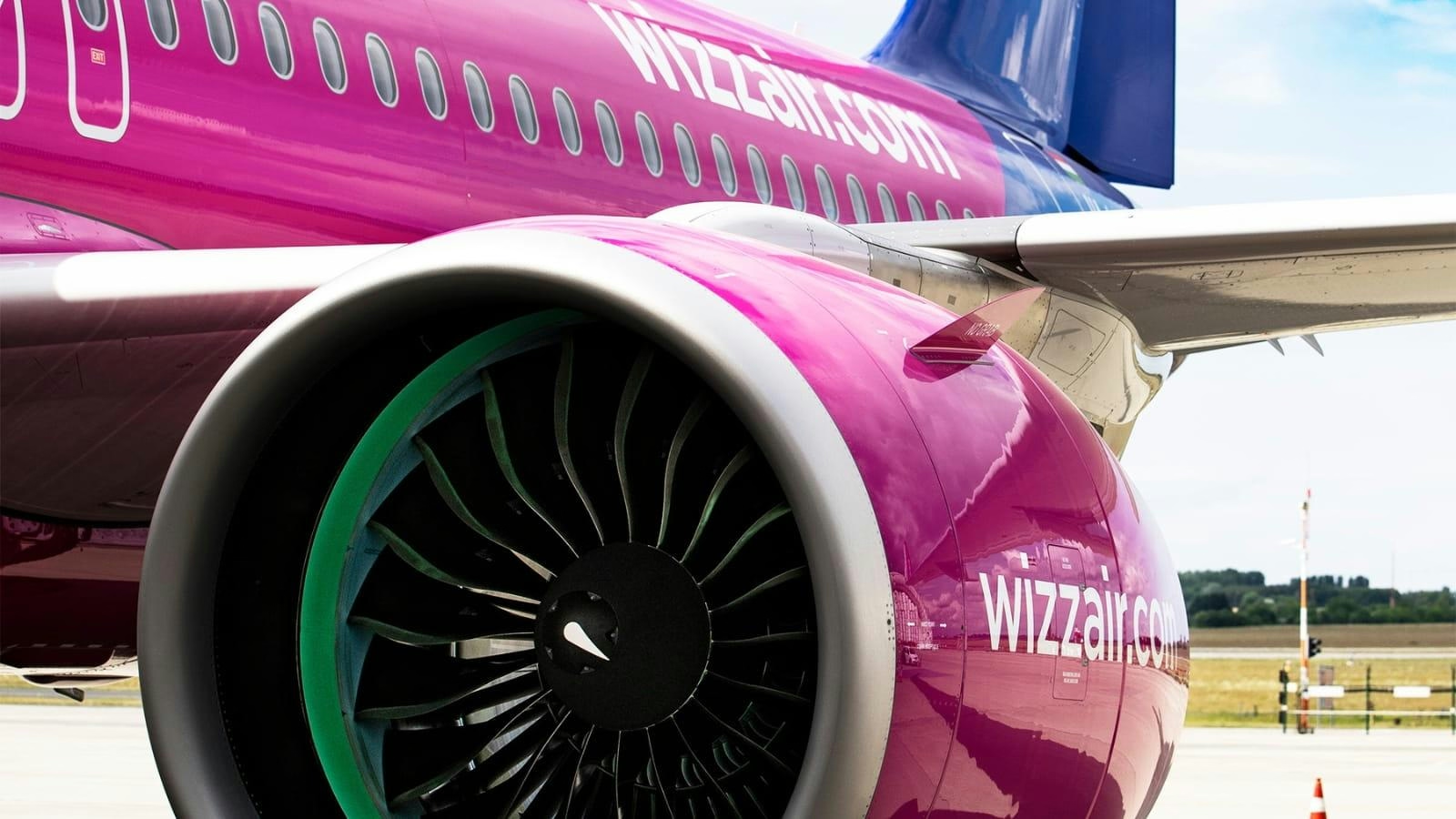
Wizz Air Expands Fleet with Two New Airbus A321neo Aircraft
Wizz Air, the prominent European low-cost carrier, has taken delivery of two Airbus A321neo aircraft, leased from AerDragon Aviation Leasing Company. This acquisition represents the initial phase of a planned four-aircraft sale-and-leaseback (SLB) agreement, integral to Wizz Air’s broader strategy of fleet modernization and expansion. The two jets, delivered in February 2025, are now operational, with the remaining pair expected to join the airline’s fleet in the near future.
Strategic Financing and Operational Benefits
Under the terms of the SLB arrangement, AerDragon purchased the aircraft and leased them to Wizz Air on long-term contracts. This financing model is widely adopted in the aviation sector, particularly by low-cost carriers aiming to upgrade their fleets without the substantial capital expenditure associated with outright ownership. By utilizing such leasing structures, Wizz Air can introduce more fuel-efficient aircraft while preserving financial flexibility, supporting its rapid network growth across Central and Eastern Europe, the United Kingdom, and Germany.
The introduction of the A321neo marks a significant enhancement in Wizz Air’s operational capabilities. The aircraft delivers a 20 to 30 percent improvement in fuel efficiency and offers an extended range compared to earlier models. These advancements enable the airline to serve routes with higher demand, expand its network reach, and improve overall operating economics. This aligns with Wizz Air’s objective to connect major European hubs, secondary airports, and longer, less frequented routes, thereby providing travelers with increased options and flexibility.
Industry Challenges and Competitive Landscape
Despite these positive developments, the airline’s expansion occurs amid persistent industry challenges. Supply chain disruptions, as highlighted in a recent International Air Transport Association (IATA) report, are expected to cost airlines approximately $11 billion in 2025 and may delay aircraft production and delivery schedules. Such disruptions pose risks to fleet renewal efforts, as evidenced by operational setbacks experienced by carriers like Volaris, which faced grounding of aircraft equipped with Pratt & Whitney’s GTF engines due to engine recalls. Should similar issues arise, Wizz Air’s growth trajectory could be affected.
The competitive environment is also evolving rapidly. Major airlines, including American Airlines, are investing in pilot training for the longer-range A321XLR, signaling shifts in fleet strategies that may influence market dynamics and route planning. As European carriers pursue their own modernization programs, Wizz Air’s acquisition of A321neos positions it to maintain competitiveness, though it must carefully manage operational risks and respond to market developments.
Implications for Travelers and Sustainability
For passengers and the tourism industry, Wizz Air’s fleet expansion promises increased capacity, more frequent services, and the potential introduction of new routes, particularly in key markets such as Germany, the UK, Hungary, and Poland. The deployment of modern aircraft typically enhances connectivity, supports competitive pricing, and improves service quality.
Furthermore, the transition to the A321neo aligns with broader industry objectives to reduce fuel consumption, carbon dioxide emissions, and noise pollution, addressing mounting regulatory and consumer demands for sustainability. As Wizz Air integrates these new aircraft, its ability to balance growth ambitions with operational resilience and environmental responsibility will be closely observed within the European aviation sector.

Etihad Airways Suspends Airbus A380 Flights on Key Route

Aditya Birla Group Seeks Approval for Aircraft Leasing in GIFT City

Qatar Airways Highlights Innovation and Connectivity at Arabian Travel Market 2026

Hong Kong's Five-Year Plan Includes Andrew Fan's Aircraft Parts Processing Hub Proposal

ACIA Aero Leasing Delivers ATR72-600 to Air Nostrum

RTX Appoints Jill Albertelli as Head of Pratt & Whitney

TAT Technologies Joins Beyond Aero Hydrogen Aircraft Program

AURAK Study Highlights Barriers to Air Taxi Adoption in Emerging Economies

Xiamen Air Selects Altitude for 787 Maintenance at Heathrow

Etihad and Swissport Extend Global Partnership
