
AIによるインサイトを行動へとつなげる

現在のトレンド
Categories
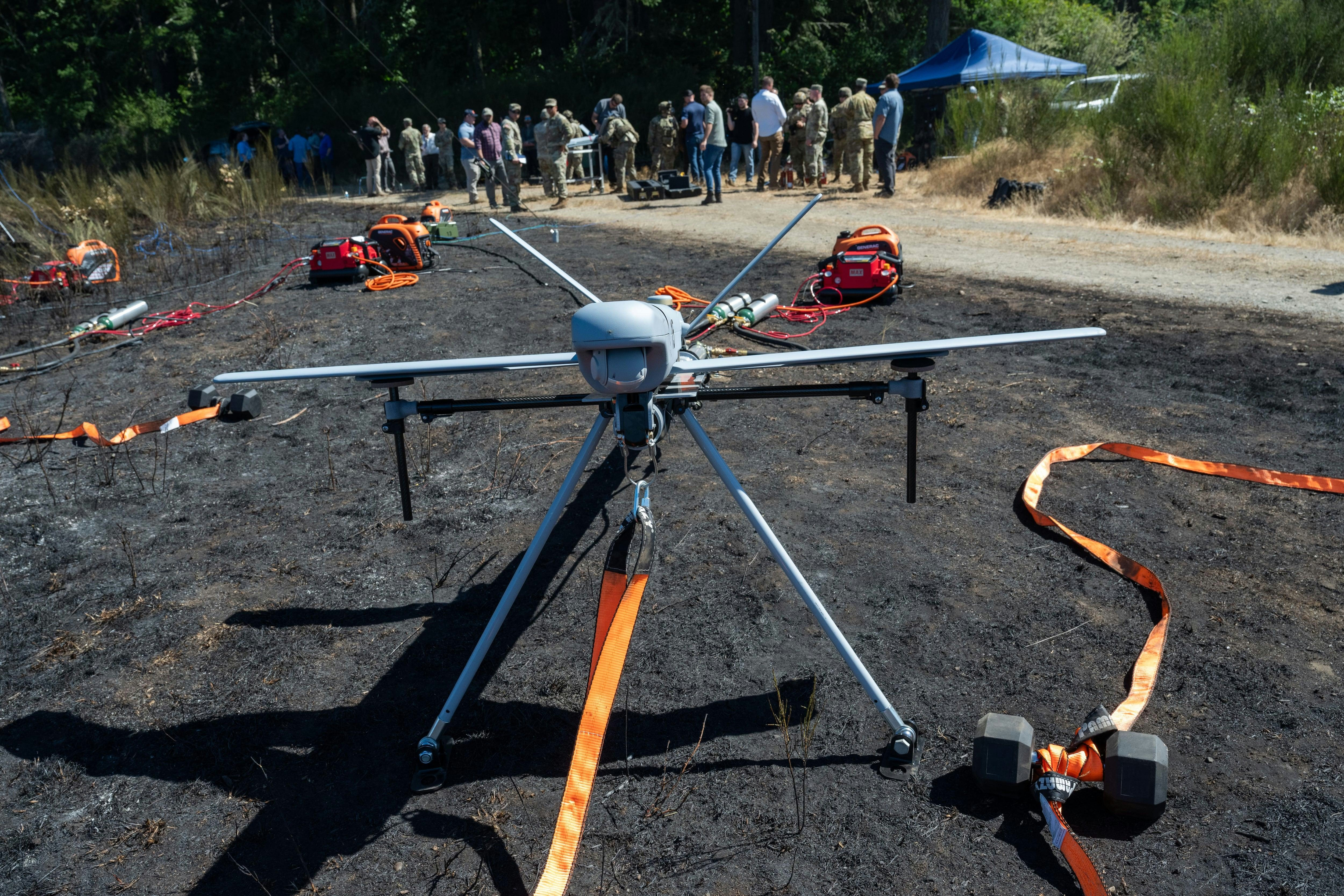
Advances Highlighted at Drone Warfighter Competition
Advances Highlighted at Drone Warfighter Competition
Innovation and Multinational Collaboration at Grafenwoehr
GRAFENWOEHR, Germany – The recent U.S. Army Europe and Africa Best Drone Warfighter Competition, hosted by the 7th Army Training Command at Grafenwoehr Training Area from December 8 to 10, 2025, showcased significant advancements in unmanned aerial system (UAS) capabilities. Bringing together teams from the United States, allied, and partner nations, the event tested proficiency in drone operations, enhanced interoperability, and highlighted new tactics, techniques, and procedures (TTPs) developed through ongoing experimentation across Europe.
Ten multinational teams faced a series of rigorous challenges, including aerial reconnaissance and strike missions, aerial land navigation, first-person-view (FPV) drone maneuvering through complex obstacle courses, team coordination exercises, and a comprehensive written UAS knowledge examination. Participants were required to operate under realistic combat conditions, contending with dense terrain, unpredictable weather, and stringent time constraints that reflected the complexities of modern warfare.
Spanish Legion Brigade Triumphs Amid Challenging Conditions
The overall winner of the competition was the six-member team from Spain’s Legion Brigade, whose performance demonstrated exceptional readiness and innovation. Team leader 1st Lt. Carlos Castro Raffia described the victory as a reflection of their consistent daily training rather than event-specific preparation. He emphasized the challenges posed by synchronizing short-range reconnaissance platforms with FPV drones, particularly under adverse weather conditions such as heavy fog and humidity, which affected drone connectivity. Despite these obstacles, the team adapted effectively, underscoring the importance of coordination between the team leader, intelligence, surveillance, and reconnaissance (ISR) drones, and FPV systems.
Broader Implications for Military Innovation and Drone Warfare
The competition’s focus on realistic operational environments and multinational cooperation mirrors broader trends in military innovation. As drone warfare evolves rapidly, established defense contractors including Lockheed Martin, Boeing, and General Atomics are increasingly competing with agile startups, fueling substantial investment in research and development. This dynamic is exemplified by the U.S. Air Force’s recent allocation of $789.4 million toward autonomous “loyal wingmen” drones, reflecting a significant commitment to advancing unmanned capabilities.
International partnerships are also reshaping the drone warfare landscape. Collaborative efforts such as the joint drone production agreement between Ukraine and Norway aim to strengthen defense capabilities, while France’s plan to deploy drone swarms within the next two years signals a strategic shift toward networked, autonomous systems on the battlefield.
For U.S. Army Europe and Africa, insights gained from integrating advanced drone technologies during competitions like this directly inform future warfighting concepts and operational tactics. The event demonstrated that innovation is cultivated not only in research laboratories but also in challenging training environments, where collaboration with NATO partners brings diverse expertise and fresh perspectives.
As militaries worldwide accelerate efforts to harness the potential of unmanned systems, the Best Drone Warfighter Competition underscores the critical role of adaptability, interoperability, and continuous innovation in shaping the future of defense.

Etihad Airways Suspends Airbus A380 Flights on Key Route

Aditya Birla Group Seeks Approval for Aircraft Leasing in GIFT City

Qatar Airways Highlights Innovation and Connectivity at Arabian Travel Market 2026

Hong Kong's Five-Year Plan Includes Andrew Fan's Aircraft Parts Processing Hub Proposal

ACIA Aero Leasing Delivers ATR72-600 to Air Nostrum

RTX Appoints Jill Albertelli as Head of Pratt & Whitney

TAT Technologies Joins Beyond Aero Hydrogen Aircraft Program

AURAK Study Highlights Barriers to Air Taxi Adoption in Emerging Economies

Xiamen Air Selects Altitude for 787 Maintenance at Heathrow

Etihad and Swissport Extend Global Partnership
