
AIによるインサイトを行動へとつなげる

現在のトレンド
Categories
AI in Aviation Maintenance Projected to Reach $171 Billion
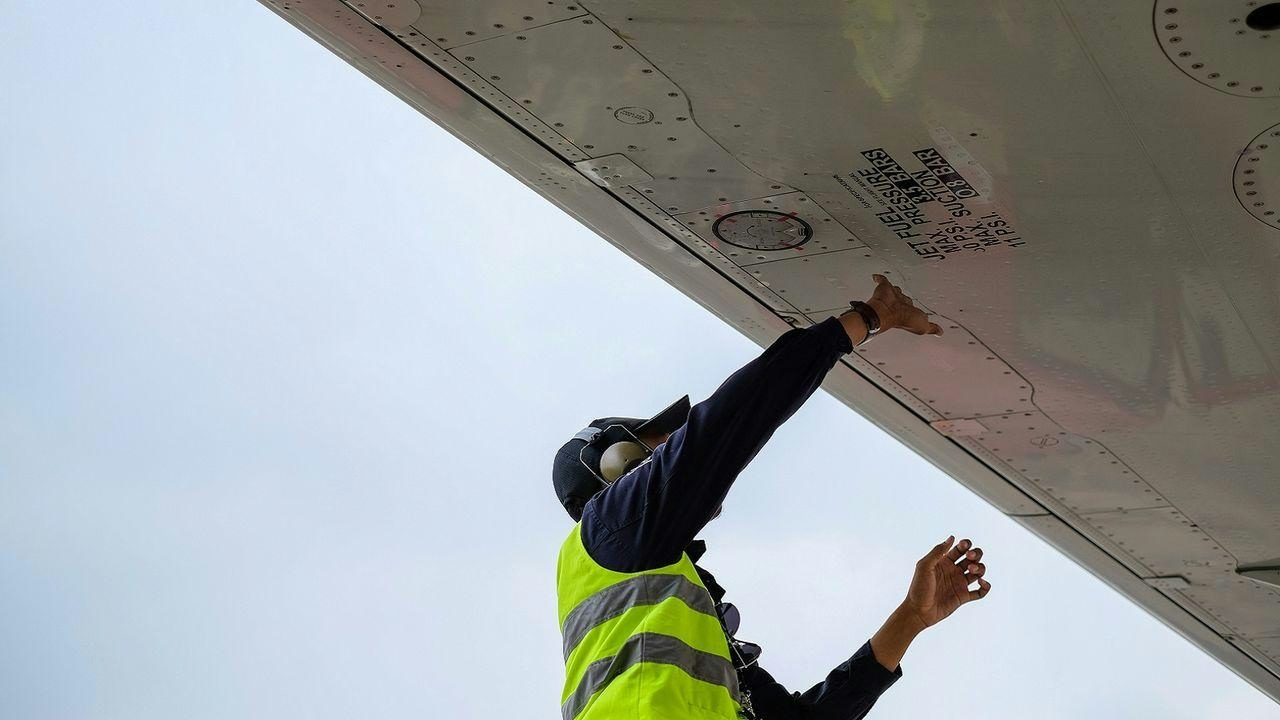
AI in Aviation Maintenance Market Set to Reach $171 Billion by 2033
The global market for artificial intelligence (AI) in aviation maintenance is on the cusp of remarkable expansion. According to a recent report by SNS Insider, the sector is valued at $8.63 billion in 2025 and is projected to surge to $171.53 billion by 2033. This dramatic growth is largely driven by the widespread adoption of AI-powered predictive maintenance, which allows airlines to anticipate equipment failures, reduce downtime, and lower maintenance costs.
Transforming Maintenance Through Predictive Technologies
Predictive maintenance remains the most significant and transformative application of AI in aviation. By harnessing machine learning for advanced analytics and employing computer vision for automated aircraft inspections, airlines are shifting from traditional reactive maintenance approaches to proactive strategies. These technologies enable more accurate diagnostics and timely interventions, fundamentally changing how maintenance operations are conducted.
Regional Trends and Industry Innovations
North America currently dominates the AI aviation maintenance market, supported by substantial investments from airlines in predictive maintenance solutions. Meanwhile, the Asia Pacific region is experiencing the fastest growth, with carriers in China, India, Japan, and South Korea rapidly integrating AI-enabled maintenance technologies to boost operational efficiency.
Leading aerospace companies are responding to these developments with innovative training initiatives. In March 2025, Airbus introduced an AI-enabled A320 simulator, enhancing pilot training through immersive technology. Similarly, Boeing launched a virtual training platform in November 2025, leveraging Microsoft Azure to provide customizable training experiences tailored to pilot needs.
Challenges and Competitive Dynamics
Despite the promising outlook, the integration of AI systems into existing maintenance frameworks presents significant challenges. Ensuring data accuracy and reliability remains critical, alongside navigating complex regulatory compliance requirements that vary across jurisdictions. These factors demand meticulous strategic planning as the market expands.
The anticipated $171 billion valuation by 2033 has spurred increased investment from key industry players such as Lufthansa Technik and ATS, who are leading the deployment of AI technologies in maintenance operations. In response to intensifying competition, companies are pursuing strategic partnerships, collaborations, and the development of proprietary AI solutions to maintain a competitive advantage.
Outlook
As AI continues to reshape aviation maintenance, the industry confronts both substantial opportunities and intricate challenges. The ability of airlines and service providers to effectively integrate advanced technologies, uphold regulatory standards, and adapt to a rapidly evolving competitive environment will be crucial to future success.

Etihad Airways Suspends Airbus A380 Flights on Key Route

Aditya Birla Group Seeks Approval for Aircraft Leasing in GIFT City

Qatar Airways Highlights Innovation and Connectivity at Arabian Travel Market 2026

Hong Kong's Five-Year Plan Includes Andrew Fan's Aircraft Parts Processing Hub Proposal

ACIA Aero Leasing Delivers ATR72-600 to Air Nostrum

RTX Appoints Jill Albertelli as Head of Pratt & Whitney

TAT Technologies Joins Beyond Aero Hydrogen Aircraft Program

AURAK Study Highlights Barriers to Air Taxi Adoption in Emerging Economies

Xiamen Air Selects Altitude for 787 Maintenance at Heathrow

Etihad and Swissport Extend Global Partnership
