
AIによるインサイトを行動へとつなげる

現在のトレンド
Categories
Air Peace Denies Fire Alert on Wet-Leased Aircraft
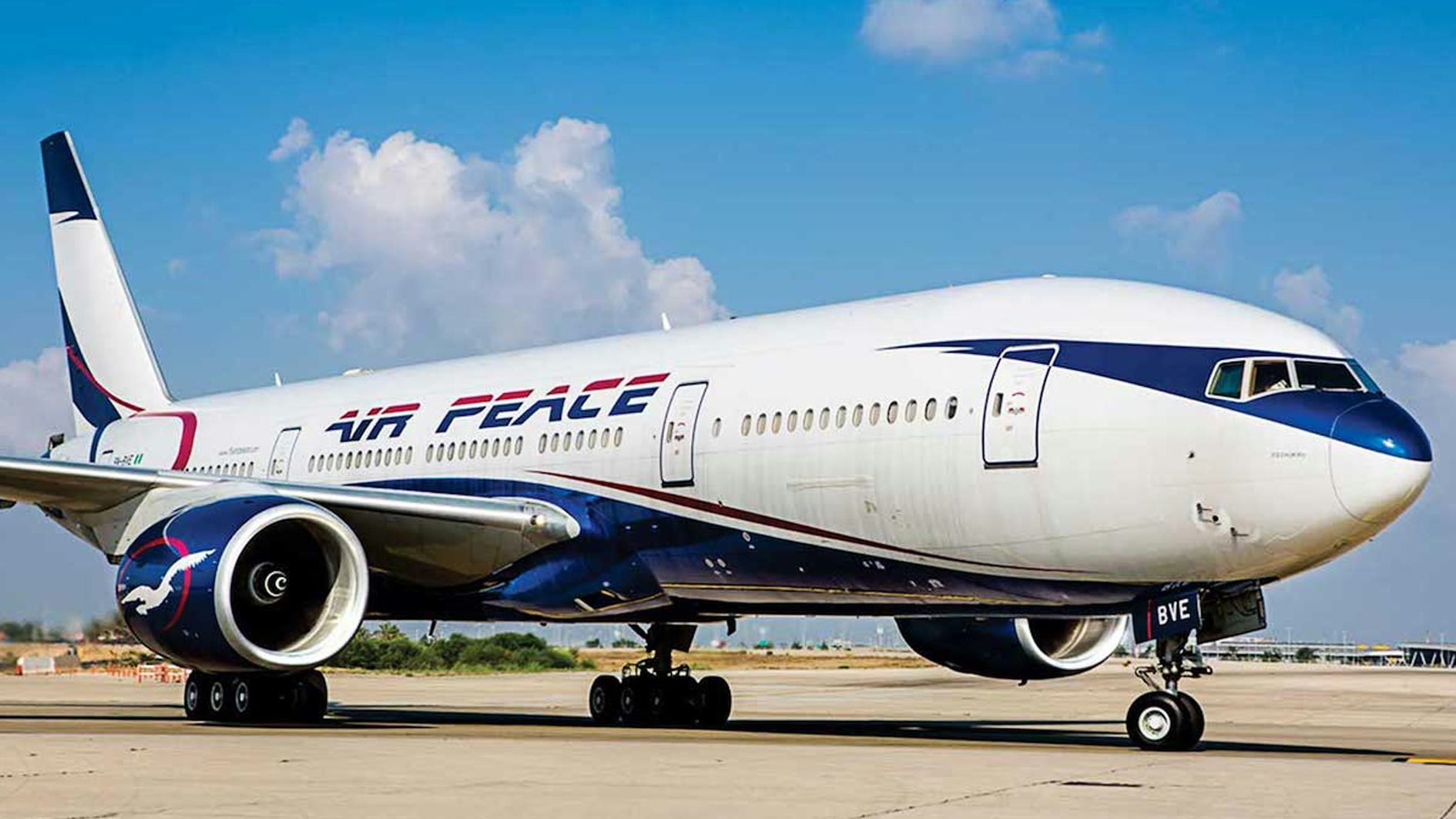
Air Peace Denies Fire Alert on Wet-Leased Aircraft, Affirms Passenger Safety
Air Peace has officially refuted reports of a fire incident involving one of its wet-leased aircraft at Murtala Muhammed Airport in Lagos. The airline clarified that a fire alarm triggered in the cockpit after landing was a false alert. In a statement released on Sunday, Air Peace confirmed that all passengers were safely evacuated without injury and that no fire was detected at any point during the incident.
Incident Details and Response
The event occurred after the aircraft had completed its scheduled flight and was parked at the terminal. As passengers were preparing to disembark, the cockpit fire alarm sounded, prompting the flight crew to implement precautionary safety measures. The airline’s Maintenance and Engineering team promptly initiated a thorough investigation to determine the cause of the warning. Air Peace praised the swift and coordinated response of its crew, ground personnel, and airport emergency services, while also expressing gratitude to passengers for their cooperation during the evacuation process.
A wet lease arrangement, under which the aircraft was operating, involves leasing an aircraft along with its crew, maintenance, and insurance, with operations conducted under the leasing agreement. This incident comes amid heightened scrutiny of Air Peace following a series of operational and safety-related events over the past year. These include a runway excursion in Port Harcourt in July 2025, a ground-handling collision at Lagos airport in December 2025, a suspected bird strike forcing a return to Abuja in March 2026, and a weather-related flight diversion in August.
Operational Challenges and Industry Implications
The recurrence of such incidents has raised concerns regarding operational risks and passenger confidence. Aviation industry observers note that even false safety alerts can attract regulatory attention and potentially damage the airline’s reputation. Competitors may also leverage these events to emphasize their own safety records and operational reliability.
Compounding Air Peace’s challenges are previous claims by the airline of $42 million in revenue losses attributed to poor aircraft handling. Analysts suggest that, when considered alongside recent operational disruptions, these issues may be perceived as indicative of a broader pattern of negligence. This perception increases pressure on Air Peace to demonstrate stringent safety protocols and effective risk management.
Despite these difficulties, Air Peace continues to expand its operations. Data from aviation analytics provider OAG indicates that the airline recorded the largest increase in scheduled airline seats among African carriers in July 2026, adding approximately 121,000 seats compared to the previous year—a 50.6 percent increase.
Air Peace has reiterated its commitment to passenger safety and confirmed that its Maintenance and Engineering team remains actively engaged in investigating the cause of the false fire alarm.

Etihad Airways Suspends Airbus A380 Flights on Key Route

Aditya Birla Group Seeks Approval for Aircraft Leasing in GIFT City

Qatar Airways Highlights Innovation and Connectivity at Arabian Travel Market 2026

Hong Kong's Five-Year Plan Includes Andrew Fan's Aircraft Parts Processing Hub Proposal

ACIA Aero Leasing Delivers ATR72-600 to Air Nostrum

RTX Appoints Jill Albertelli as Head of Pratt & Whitney

TAT Technologies Joins Beyond Aero Hydrogen Aircraft Program

AURAK Study Highlights Barriers to Air Taxi Adoption in Emerging Economies

Xiamen Air Selects Altitude for 787 Maintenance at Heathrow

Etihad and Swissport Extend Global Partnership
