
AIによるインサイトを行動へとつなげる

現在のトレンド
Categories
Air Taxis Overcome Final Major Obstacle

Air Taxis Overcome Final Major Obstacle, Target 2026 Launch
After years of anticipation and substantial investment, electric air taxis are poised to carry their first paying passengers in the United States, potentially as early as the summer of 2026. Industry frontrunners Joby Aviation and Archer Aviation have both achieved critical regulatory milestones, bringing the long-envisioned era of quiet, emissions-free urban flight closer to fruition.
Regulatory Progress and Certification Milestones
Joby Aviation has advanced to stage four of the Federal Aviation Administration’s (FAA) five-stage type-certification process and has commenced flights with its first production-conforming aircraft. Archer Aviation, meanwhile, asserts it is the first to complete phase three of the FAA’s four-phase certification process. Both companies stand to benefit from the FAA’s new electric vertical-takeoff-and-landing (eVTOL) Integration Pilot Program (eIPP), which authorizes pre-certified eVTOL aircraft to operate across 26 states.
These regulatory breakthroughs represent significant steps toward commercial viability. The FAA’s certification process, designed to ensure safety and reliability, has long been the primary barrier to the deployment of eVTOL aircraft. With these advancements, Joby and Archer are positioned to transition from experimental prototypes to operational air taxis.
From Concept to Commercial Reality
eVTOL aircraft, capable of vertical takeoff like helicopters and efficient cruising like airplanes, have promised to revolutionize urban mobility by drastically reducing travel times—for example, cutting a 90-minute drive to a seven-minute flight. However, the most formidable challenge has been securing regulatory approval, demonstrating that these novel aircraft meet stringent safety standards comparable to those of traditional airliners.
Both Joby and Archer have conducted hundreds of test flights, yet the path ahead involves more than just certification. Scaling production, certifying manufacturing facilities, training pilots, and establishing sustainable operational models remain significant hurdles. Several well-funded competitors have already faltered at this stage, expending considerable capital without achieving commercial service.
Market Dynamics and Ongoing Challenges
Despite recent progress, regulatory uncertainties persist. A recent U.S. government report underscored ongoing questions regarding the timeline for electric aircraft entering commercial service, reflecting the complexities inherent in certifying new aviation technologies. These uncertainties have tempered investor enthusiasm, with market sentiment cooling as projected timelines shift.
The competitive environment is intensifying, with Joby and Archer currently engaged in legal disputes that highlight the high stakes and fierce rivalry in the race to launch the first commercial air taxi service. Nonetheless, Archer remains optimistic about its 2026 debut, supported by the White House’s eVTOL Integration Pilot Program.
Toward a New Era of Urban Air Mobility
Should either company succeed in flying paying passengers by 2026, it would mark the inception of a new category of air travel—one that moves beyond conceptual designs and test flights to real-world application. The coming years will be critical in determining whether air taxis can fulfill their promise of fast, clean, and convenient urban transportation.
Sources: Federal Aviation Administration; Flying Magazine; Airways; Joby and Archer investor updates.
ALMA Air Granted Provisional Permit for Colombia’s First Amphibious Airline Operations
United Airlines Declines to Purchase Former Emirates 777X Aircraft

Cincinnati Airport Announces New Transatlantic Partnership for Innovation
IndiGo to End Norse Atlantic Lease by October 31, Shift Amsterdam Route to A321XLR

Commercial Court Rules on Aircraft Leasing Indemnities in FW Aviation v. VietJet Trial
Indonesia’s $10 Billion KAAN P1 Taxi Export Contract Requires US-Free Engines
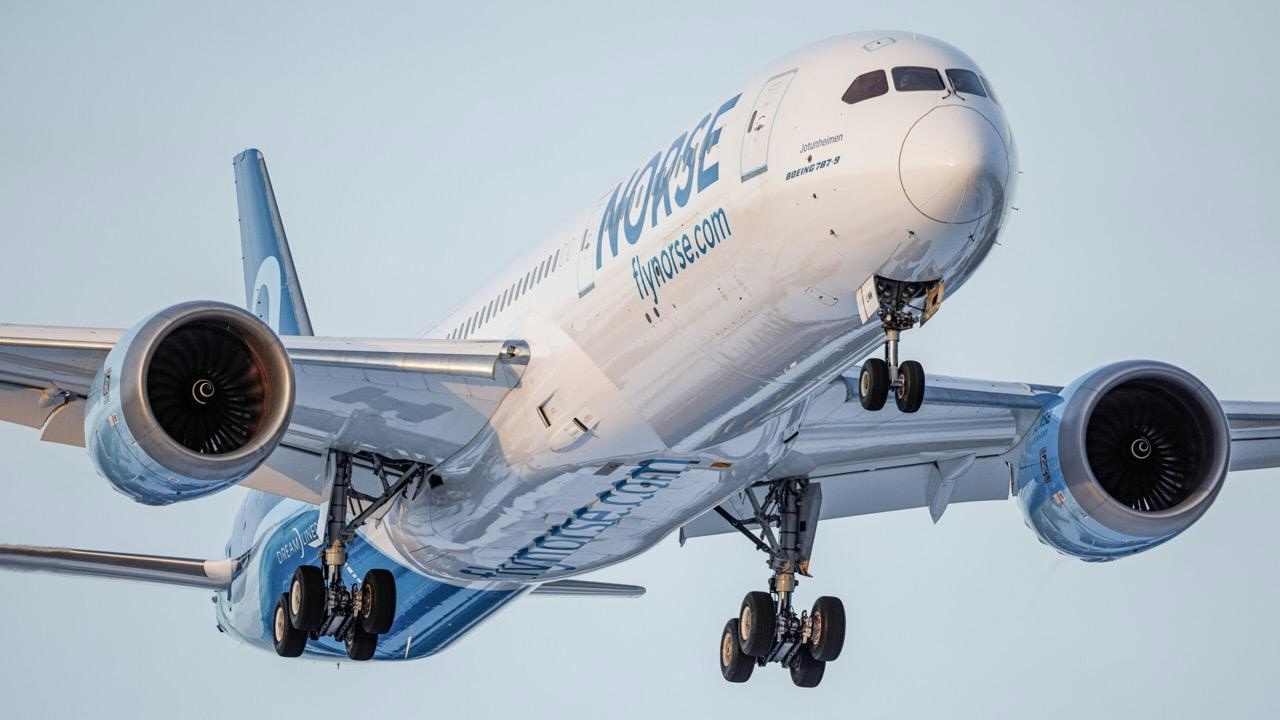
Norse Atlantic and IndiGo End 787 Lease Agreement Amid Long-Haul Route Issues

Sling Unveils Details of Planned MOSAIC Light Twin Aircraft
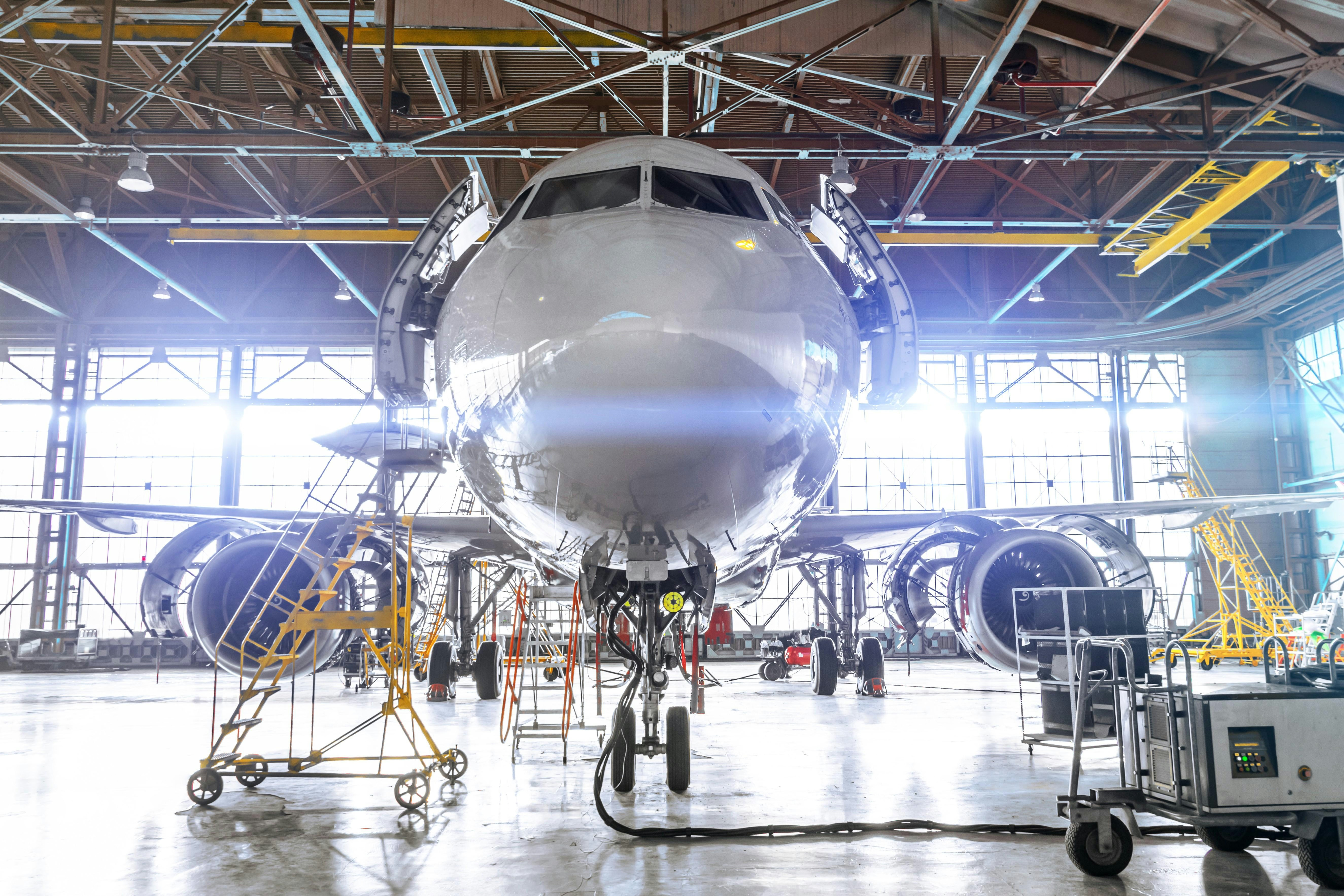
Porter and Smart AMS Launch Heavy Maintenance Facility in Ottawa

Axinom Celebrates 25 Years in Digital Technology
