
AIによるインサイトを行動へとつなげる

現在のトレンド
Categories
Airbus Introduces Uncrewed U145 Helicopter Based on H145 Platform
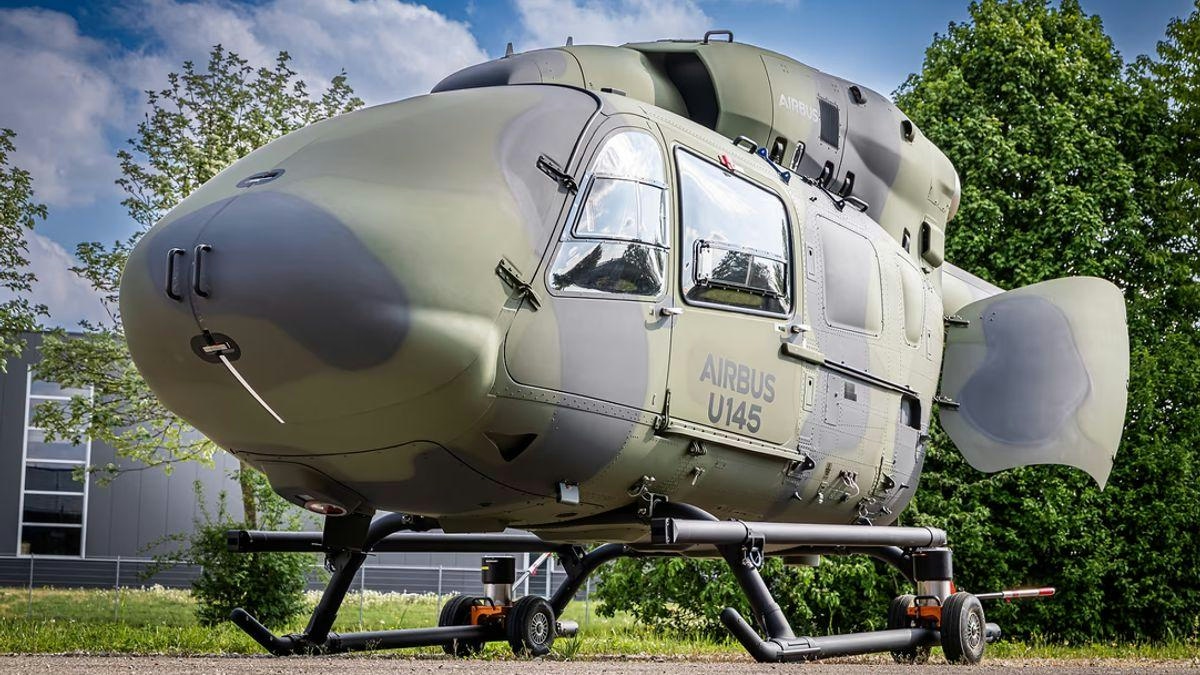
Airbus Introduces the U145 Uncrewed Helicopter Based on the H145 Platform
At the ILA Berlin Air Show, Airbus Helicopters unveiled the U145, an uncrewed aircraft derived from its widely used H145 light twin-engine helicopter. This new addition to Airbus’s portfolio of uncrewed aerial systems is designed to support a diverse range of civil and military missions. The U145 is scheduled to undertake its first flight, with a safety pilot on board, before the end of 2026, with entry into service anticipated in the early 2030s.
Design and Capabilities
The U145 builds upon the proven H145 platform by removing the conventional cockpit and integrating autonomous flight systems powered by a combination of sensors and artificial intelligence. Airbus has tailored the U145 primarily for cargo operations, incorporating features such as a nose-loading door, a foldable loading table, and a dedicated cargo floor to facilitate efficient freight transport. With a maximum takeoff weight of 3,800 kilograms, the U145 is intended to support a variety of missions including logistics, disaster relief, firefighting, surveillance, and military operations.
In addition to its cargo capabilities, Airbus envisions the U145 functioning as a drone mothership capable of deploying airborne effects. This capability is being developed in partnership with missile manufacturer MBDA, underscoring the platform’s versatility. The H145 family, on which the U145 is based, boasts a global fleet of more than 1,800 units and has accumulated over 8.5 million flight hours. Powered by two Safran Arriel 2E engines, the H145 is widely employed in emergency medical services, law enforcement, military transport, and utility missions.
Strategic Context and Challenges
The U145 program follows Airbus’s earlier development of the VSR700, an uncrewed aircraft based on the smaller Cabri G2 helicopter. Unlike the VSR700, the U145 leverages a platform already established in civil, parapublic, and military operations, potentially accelerating its adoption across various sectors.
Despite its promising capabilities, the U145 faces significant challenges, particularly in securing regulatory approval and safety certification. Authorities continue to evaluate the integration of autonomous systems within existing airspace and infrastructure, which remains a complex and evolving process. Market reception is expected to be mixed; while some sectors may embrace the innovation for its potential to improve efficiency and reduce operational risks, others may raise concerns regarding job displacement and the safety of autonomous aircraft.
Competitors are likely to respond by developing comparable uncrewed systems or enhancing their current offerings to keep pace with Airbus’s technological advancements. With the U145’s service entry projected for the early 2030s, rival manufacturers have a critical window to adapt their strategies accordingly.
Parallel Developments in the United States
In parallel with the U145 initiative, Airbus is advancing a similar concept in the United States through Airbus U.S. Space & Defense. Collaborating with Shield AI, L3Harris, and Parry Labs, the company is offering the MQ-72C—an autonomous variant of the UH-72B Lakota—to the U.S. Marine Corps. This effort further demonstrates Airbus’s commitment to the development and deployment of uncrewed rotary-wing aviation technologies on a global scale.

Etihad Airways Suspends Airbus A380 Flights on Key Route

Aditya Birla Group Seeks Approval for Aircraft Leasing in GIFT City

Qatar Airways Highlights Innovation and Connectivity at Arabian Travel Market 2026

Hong Kong's Five-Year Plan Includes Andrew Fan's Aircraft Parts Processing Hub Proposal

ACIA Aero Leasing Delivers ATR72-600 to Air Nostrum

RTX Appoints Jill Albertelli as Head of Pratt & Whitney

TAT Technologies Joins Beyond Aero Hydrogen Aircraft Program

AURAK Study Highlights Barriers to Air Taxi Adoption in Emerging Economies

Xiamen Air Selects Altitude for 787 Maintenance at Heathrow

Etihad and Swissport Extend Global Partnership
