
AIによるインサイトを行動へとつなげる

現在のトレンド
Categories
Airbus Q4 Profit Rises 7% as 2026 Deliveries Expected to Fall Short Due to Engine Shortage
Airbus Reports 7% Increase in Q4 Profit Amid Engine Supply Challenges
Airbus Group announced a 7% rise in its fourth-quarter profit, reporting earnings per share of €3.27 for the period ending December 31. This figure exceeded both the previous year’s results and analyst expectations, which had forecast €2.34 per share. The company’s revenue for the quarter increased by 5% to €25.98 billion, although this fell short of market estimates of €27.5 billion. Airbus’s consolidated order intake reached €123.3 billion by the end of 2025, contributing to a robust order book valued at €619 billion, underscoring strong global demand for its aircraft.
Delivery Outlook and Production Adjustments
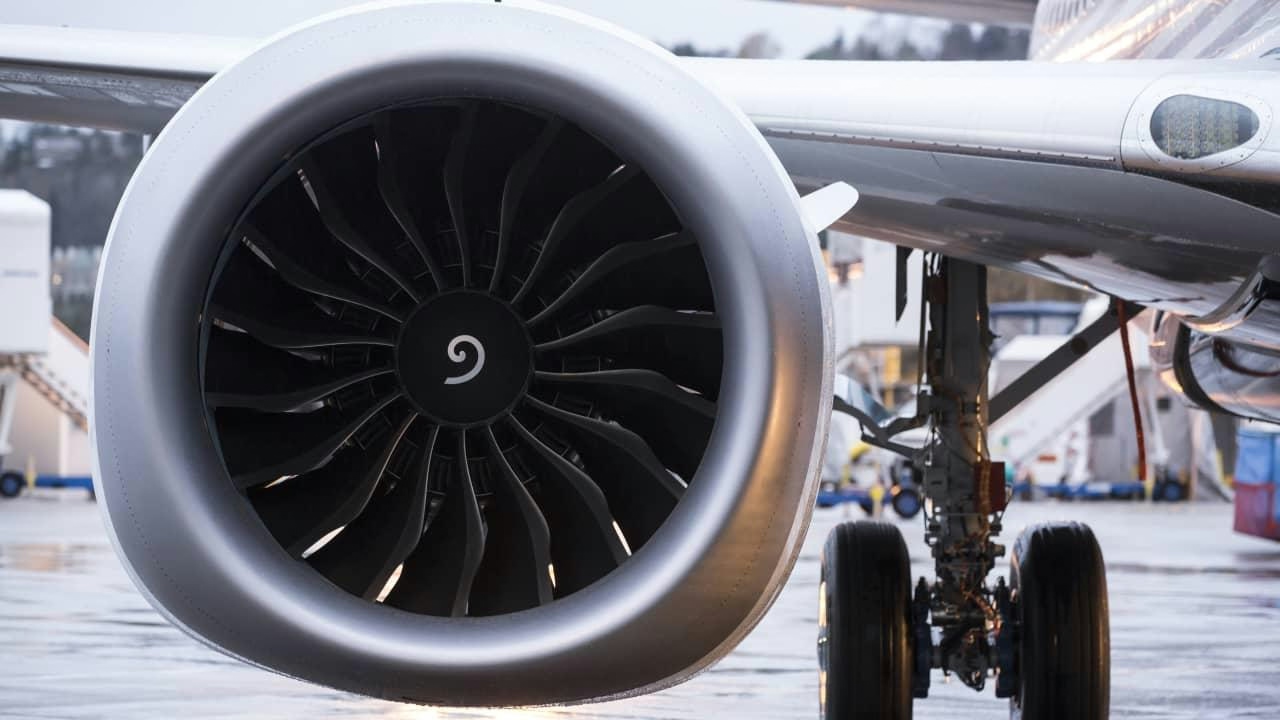
Despite these positive financial results, Airbus issued a cautious forecast for 2026, projecting commercial aircraft deliveries of 870 units—below Bloomberg’s estimate of approximately 896 planes. CEO Guillaume Faury attributed this shortfall primarily to significant shortages of Pratt & Whitney engines, produced by a unit of RTX Corp, which have constrained production capacity. These supply chain disruptions have compelled Airbus to revise its narrowbody aircraft production targets, now aiming for a monthly output of 70 to 75 units by the end of 2027, with a steady rate of 75 units per month thereafter. This adjustment represents a delay from the company’s earlier goal of achieving 75 units per month by 2027.
Faury emphasized that ongoing engine availability issues could continue to affect delivery schedules and potentially impact future profitability. The market’s response to these developments has been mixed, as investors remain attentive to how prolonged supply constraints might influence Airbus’s financial performance and its ability to satisfy strong customer demand.
Industry Competition and Strategic Implications
The aerospace sector remains highly competitive, with Boeing, Airbus’s principal rival, poised to leverage these challenges by intensifying efforts to regain market share in the narrowbody segment. Concurrently, Embraer is expected to focus on expanding sales of its E2 jets to strengthen its position within the market. The contrasting supply chain and production difficulties faced by Airbus and Boeing in 2026 highlight the evolving dynamics and persistent pressures shaping the global aerospace industry.
In response to its financial performance, Airbus has proposed a dividend of €3.20 per share for 2025. As the company contends with ongoing supply chain disruptions, industry analysts and stakeholders will be closely monitoring how Airbus and its competitors navigate these operational challenges and adapt to shifting market conditions.

Etihad Airways Suspends Airbus A380 Flights on Key Route

Aditya Birla Group Seeks Approval for Aircraft Leasing in GIFT City

Qatar Airways Highlights Innovation and Connectivity at Arabian Travel Market 2026

Hong Kong's Five-Year Plan Includes Andrew Fan's Aircraft Parts Processing Hub Proposal

ACIA Aero Leasing Delivers ATR72-600 to Air Nostrum

RTX Appoints Jill Albertelli as Head of Pratt & Whitney

TAT Technologies Joins Beyond Aero Hydrogen Aircraft Program

AURAK Study Highlights Barriers to Air Taxi Adoption in Emerging Economies

Xiamen Air Selects Altitude for 787 Maintenance at Heathrow

Etihad and Swissport Extend Global Partnership
